

Africa’s AI boom is accelerating, with startups transforming health, agriculture, and finance sectors through innovative solutions tailored to local challenges. Key hubs like South Africa, Kenya, and Nigeria attract significant investment, while emerging regions benefit from government support and strategic efforts. Despite hurdles like infrastructure gaps and skill shortages, regional collaborations and international partnerships are fueling growth. If you want to explore how these developments are shaping Africa’s future and creating new opportunities, there’s more to uncover ahead.
Key Takeaways
- Africa’s AI market is projected to reach $16.5 billion by 2030, driven by rapid growth and increasing investments.
- Key startup hubs in South Africa, Nigeria, Kenya, and Egypt lead regional AI innovation and funding.
- AI innovations are transforming healthcare, agriculture, fintech, and infrastructure to address local challenges.
- Regional disparities and infrastructure gaps remain barriers, but governments and collaborations are fostering growth.
- Emerging AI ecosystems across Africa are expanding beyond traditional hubs, boosting the continent’s role in the global AI landscape.

allsun Pro Ultrasonic Leak Detector & Industrial Stethoscope,High Sensitivity Machine Diagnostic Tool for Engine Noise, Bearing, Valve, Pump, Pipe Flow,Mechanic Tool Kit(Includes Long/Short Probe & Carry Bag)
【DETECT HIDDEN MACHINE FAULTS EARLY & SAVE COSTS】Pinpoint the exact source of abnormal noises (valve quiver, tappet tremolo,…
As an affiliate, we earn on qualifying purchases.
As an affiliate, we earn on qualifying purchases.
The Rapid Growth of Africa’s AI Market and Investment Trends

Africa’s AI market is experiencing unprecedented growth, driven by increasing investment and expanding digital infrastructure. In 2025, the sector’s value reaches between $4.5 and $4.9 billion, with projections to hit $16.5 billion by 2030. This rapid expansion is fueled by an annual growth rate exceeding 27%, highlighting the continent’s rising tech momentum. Investment flows are also increasing; over $600 million was secured in 2024 alone, with African startups raising a total of $803.2 million by mid-2025. Funding peaked at nearly $168 million in 2022 but dipped to $17.9 million in 2023, showing volatility, yet recovery is underway. Key countries like Kenya, Nigeria, South Africa, and Egypt dominate early-stage funding, signaling confidence in Africa’s AI potential. Additionally, the adoption of home theatre projectors and other advanced tech solutions is gradually gaining ground across the continent, further fueling innovation and digital transformation. Furthermore, the emphasis on technology private placement investments reflects a strategic approach to funding high-growth sectors like AI, fostering sustainable development and digital infrastructure for long-term growth. The development of specialized AI hubs and innovation centers also plays a crucial role in nurturing local talent and research capabilities, accelerating progress across the continent.

Innovation in Africa for Industry 4.0: AI, Data Analytics and Digital Transformation (Artificial Intelligence, Data Analytics, and Digital Transformation for Sustainable Development in Africa)
As an affiliate, we earn on qualifying purchases.
As an affiliate, we earn on qualifying purchases.
Key Regions Driving Innovation: South Africa, Kenya, Nigeria, and Emerging Hubs

South Africa, Kenya, Nigeria, and emerging hubs like Rwanda and Ghana are accelerating Africa’s AI innovation landscape. South Africa leads with the highest number of startups and initiatives, leveraging its robust tech ecosystem. Kenya and Nigeria, often called “Silicon Savannahs,” serve as regional tech powerhouses, attracting significant investment and talent. They focus on mobile banking, agriculture, and logistics, addressing local challenges. Rwanda and Ghana are emerging as key hubs, benefiting from government support, strategic positioning, and increasing startup activity. These regions dominate AI funding, accounting for most investments across the continent. Their combined efforts foster innovation tailored to Africa’s unique needs, from healthcare to financial services. This geographic concentration creates opportunities but also highlights vulnerabilities, emphasizing the importance of diversifying regional AI growth.
mobile banking devices Africa
As an affiliate, we earn on qualifying purchases.
As an affiliate, we earn on qualifying purchases.
Sectors Transforming Africa: Healthcare, Agriculture, Finance, and Beyond

AI is reshaping crucial sectors across Africa, improving healthcare access and delivering innovative solutions for disease detection and patient care. In agriculture, it helps boost productivity through precision farming and crop monitoring, addressing food security challenges. These advancements are transforming local economies and creating new opportunities for growth and development. Additionally, the adoption of bank swiftifs codes facilitates secure international transactions, supporting the growth of emerging startups and cross-border investments across the continent. Embracing environmental considerations ensures that these technological progressions are sustainable and minimize ecological impact, highlighting the importance of creative practice in developing innovative and resilient solutions. Furthermore, understanding personality traits can enhance teamwork and leadership within these evolving industries. Integrating well-being tips into workplace culture can also improve employee satisfaction and productivity, fostering a healthier work environment.
Healthcare Innovation and Access
Innovations driven by AI are revolutionizing healthcare access across the continent, addressing longstanding challenges like limited infrastructure and resource shortages. AI-powered telemedicine platforms connect underserved communities with medical professionals, reducing travel time and costs. Diagnostic tools using AI analyze medical images and patient data quickly, enabling earlier detection of diseases such as cancer and tuberculosis. Mobile health apps provide essential health information, track symptoms, and remind patients about treatments, improving adherence. AI also optimizes supply chains for medicines and equipment, reducing waste and shortages. In regions with scarce healthcare workers, AI-driven chatbots and virtual assistants support basic medical advice. These innovations make healthcare more accessible, affordable, and efficient, empowering communities to overcome barriers and improve health outcomes across Africa. Additionally, integrating home furnishings like heated mattress pads in healthcare facilities can improve patient comfort during recovery and treatment. Recognizing the importance of digital health tools, many organizations are investing in scalable AI solutions to expand healthcare reach.
Agricultural Productivity Boost
Advances in technology are transforming Africa’s agricultural landscape, boosting productivity and addressing food security challenges. AI-driven tools now help farmers monitor crops, predict yields, and optimize resource use. Drones and sensors gather real-time data on soil health, weather, and pest presence, enabling targeted interventions. Mobile platforms provide farmers with access to market prices, weather forecasts, and expert advice, reducing risks and increasing income. Startups develop AI solutions tailored to local needs, such as disease detection and irrigation management. These innovations improve crop yields, reduce waste, and promote sustainable farming practices. Implementing vertical storage solutions can further enhance storage efficiency and reduce post-harvest losses. Additionally, AI-powered analytics facilitate data-driven decision making, helping farmers adapt to changing environmental conditions. Upgrading storage infrastructure can significantly decrease spoilage and losses during transit. Incorporating capacity building and training programs can further empower farmers to make the most of these technologies. Embracing organic farming techniques can also improve soil health and long-term productivity. As a result, agriculture becomes more resilient, supporting both smallholders and large-scale farmers. This shift accelerates food security and economic growth across Africa, transforming the continent’s agricultural future.

Argentina – Passion
As an affiliate, we earn on qualifying purchases.
As an affiliate, we earn on qualifying purchases.
Challenges Hindering Progress and Policy Responses

Despite the rapid growth of Africa’s AI sector, significant hurdles still slow its progress. Limited digital infrastructure remains a major barrier, with nearly 40% of Africans lacking internet access, restricting AI adoption. Skill shortages also hamper development, as there’s a scarcity of trained AI professionals across the continent. Funding constraints persist, with investments fluctuating and unevenly distributed—Kenya, Nigeria, South Africa, and Egypt attract most capital, leaving other regions behind. Additionally, Africa contributes less than 1% to global AI research, highlighting a knowledge gap. Policymakers have responded by enacting data protection laws in 40 countries and emphasizing inclusive digital transformation, but implementation remains inconsistent. Overcoming these challenges requires targeted investments, expanded training programs, and stronger regional cooperation to ethical hacking and unlock AI’s full potential. Developing digital literacy across diverse communities is essential to ensure broader participation and equitable benefits from AI advancements. Furthermore, fostering collaboration between academia and industry can accelerate local innovation and address the knowledge gap more effectively. Building AI expertise through dedicated education initiatives can also help bridge the talent divide and promote sustainable growth.
The Role of Startups in Addressing Local and Regional Challenges

Startups in Africa are playing a vital role in tackling the continent’s unique challenges by developing tailored AI solutions. They focus on issues like food security, healthcare access, and infrastructure gaps, providing practical, region-specific innovations. These startups:
- Use AI for crop monitoring and precision agriculture
- Develop mobile health platforms for underserved communities
- Create logistics tools to improve supply chains
- Implement financial tech solutions to combat fraud and expand banking
- Design energy management systems for renewable projects
- Leverage whole-house water filtration systems to address the need for clean water access in underserved regions, emphasizing the importance of sustainable and holistic health approaches in community development. Incorporating innovative technology is crucial for scaling these solutions across diverse environments and ensuring long-term impact. Additionally, integrating water quality monitoring can further enhance the effectiveness and safety of these systems, promoting healthier communities. Furthermore, adopting asset division strategies in project management can facilitate fair resource allocation among stakeholders, fostering sustainable growth in the startup ecosystem.
Opportunities for Global Collaboration and Investment
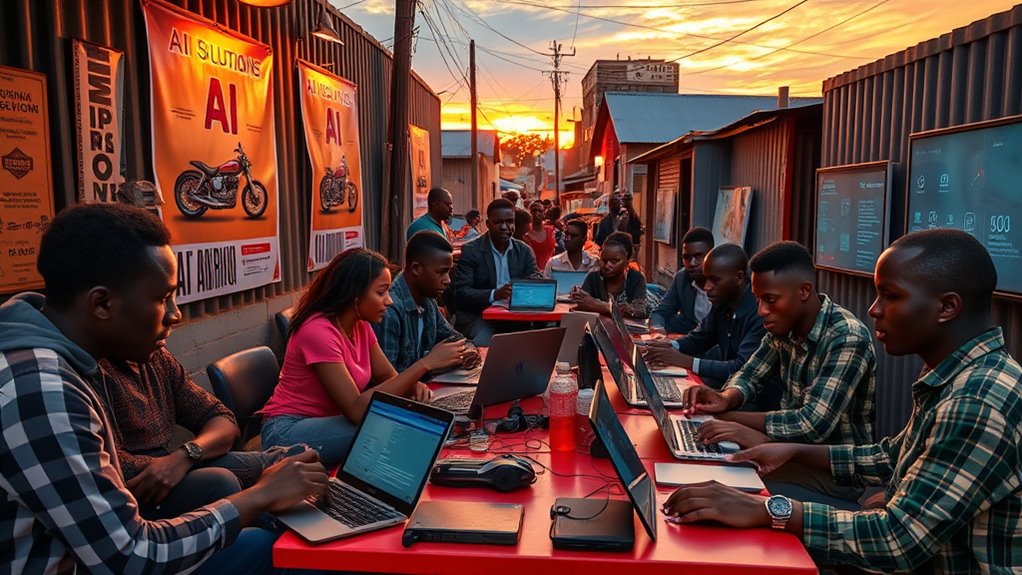
You can play a key role in fostering cross-border partnerships that accelerate Africa’s AI growth and innovation. Investing in local talent helps build sustainable ecosystems and open new market opportunities. By collaborating globally, you support Africa’s AI sector in addressing local challenges while expanding your own reach.
Fostering Cross-Border Partnerships
Cross-border partnerships present a crucial opportunity to accelerate Africa’s AI growth by attracting global investment and expertise. These collaborations can open new markets, foster knowledge exchange, and strengthen local ecosystems. By forming strategic alliances, you can access advanced technologies, shared research, and funding opportunities. Consider these key benefits:
- Facilitating cross-country knowledge transfer
- Accessing international funding and grants
- Sharing technical expertise and best practices
- Expanding market reach for startups
- Building regional innovation hubs
Partnering with global tech firms, universities, and investors enables Africa’s AI startups to scale faster and solve unique local challenges. Such collaborations can bridge infrastructure gaps, diversify talent pools, and foster inclusive growth—paving the way for sustainable AI development across the continent.
Investing in Local Talent
Building a strong pool of local AI talent is key to sustaining Africa’s tech growth and attracting global investment. By developing skills locally, you can guarantee sustainable innovation and reduce dependency on external expertise. Investment in education, training programs, and partnerships with universities opens Africa’s human potential. You can also collaborate with international organizations to transfer knowledge and resources. Here’s a snapshot of talent development in Africa:
| Country | Focus Areas | Key Initiatives |
|---|---|---|
| South Africa | Data science, AI research | Partnerships with top universities |
| Kenya | Mobile tech, fintech | Tech hubs & coding bootcamps |
| Nigeria | Software development | Government-led training programs |
Investing in local talent creates a vibrant ecosystem that attracts further funding and accelerates regional AI impact.
Future Outlook: What’s Next for Africa’s AI Ecosystem

As Africa’s AI ecosystem continues to evolve, the future holds significant potential for accelerated growth and innovation. You can expect increased investment, enhanced infrastructure, and more collaborative efforts across the continent. The momentum will likely lead to more mature startups and broader application of AI in critical sectors. Key developments to watch include:
- Expansion of funding sources beyond traditional investors
- Greater government support and policy initiatives
- Growth of regional AI hubs beyond South Africa, Kenya, and Nigeria
- Increased focus on AI solutions for local challenges like healthcare and agriculture
- Improved digital infrastructure and internet access boosting adoption
These shifts will position Africa as a significant player in the global AI landscape, transforming local economies and addressing pressing societal needs. Your engagement and innovation will shape this promising future.
Frequently Asked Questions
How Is AI Education Evolving Across African Countries?
You’ll see AI education rapidly evolve across African countries, driven by increased investments and government initiatives. Many nations are launching specialized programs, coding bootcamps, and university courses focused on AI and data science. You can participate in online platforms and local workshops that aim to bridge skill gaps. As more Africans gain access to digital tools, AI literacy will grow, empowering your community to innovate and thrive in the digital economy.
What Role Do Local Languages Play in AI Development?
You recognize that local languages are crucial in AI development because they enable more inclusive, accessible technology. By incorporating African languages, you help guarantee AI tools serve diverse communities, improve digital literacy, and preserve cultural identity. You can develop natural language processing models tailored to local dialects, making AI more effective and relevant. This approach bridges language barriers, empowering users and fostering broader adoption across the continent’s varied linguistic landscape.
How Are Ethical Concerns and AI Governance Addressed in Africa?
Think of Africa’s AI landscape as a delicate balance beam, where ethical concerns and governance are carefully managed. You’ll find that many countries are enacting data protection laws, with nearly 40% having strengthened legislation by 2025. Local governments and international organizations are working together to establish guidelines, promote responsible AI use, and guarantee inclusivity. This proactive approach aims to build trust and foster sustainable AI growth across the continent.
What Environmental Impacts Are Associated With AI Deployment in Africa?
You should be aware that deploying AI in Africa impacts the environment through increased energy consumption, especially from data centers and hardware manufacturing. E-waste management becomes a concern as outdated devices accumulate. Additionally, the extraction of raw materials for AI tech can harm local ecosystems. To minimize these impacts, it’s essential to promote sustainable practices, renewable energy use, and responsible recycling within the AI ecosystem across Africa.
How Can International Partnerships Support African AI Startups?
International partnerships can support your African AI startup by providing vital funding, technology transfer, and expertise. You benefit from access to global markets, mentorship, and collaborative research, which help overcome local infrastructure and skill gaps. These alliances also facilitate knowledge sharing and capacity building, enabling you to develop innovative solutions tailored to regional challenges. Ultimately, international support accelerates your growth, boosts local innovation, and helps integrate your startup into the global AI ecosystem.
Conclusion
As Africa’s AI landscape blooms like a vibrant savannah at dawn, you see the promise of innovation transforming lives across the continent. With startups fueling change and new collaborations on the horizon, you stand at the edge of a digital sunrise. The horizon sparkles with opportunity, inviting you to imagine a future where technology bridges gaps and ignites growth. Embrace this journey, and watch Africa’s AI story unfold into a beacon of hope and progress.