
📊 Full opportunity report: Two Channels: How the Pentagon Just Split Frontier-AI Procurement in Half on ThorstenMeyerAI.com — validation score, market gap, and execution plan.
TL;DR
The Pentagon announced a division of its AI procurement process, creating two distinct channels—one for classified, multi-vendor systems and another for frontier cybersecurity. Anthropic is excluded from the classified channel but remains in the cybersecurity channel, reflecting a strategic segmentation rather than exclusion.
The Pentagon has formally divided its artificial intelligence procurement into two separate channels, with Anthropic placed solely in the cybersecurity-focused stream, a move that clarifies earlier reports of exclusion but represents strategic segmentation rather than outright rejection.
On May 1, 2026, the Department of Defense announced classified-network AI agreements with seven companies, including OpenAI, Google, Microsoft, AWS, Nvidia, SpaceX, Reflection AI, and Oracle. Notably absent from this list was Anthropic, which was previously considered a front-runner for DoD AI contracts. This absence initially led to headlines claiming Anthropic was excluded; however, the DoD clarified that this was a result of a deliberate procurement segmentation. The department created two distinct procurement channels: the first, a multi-vendor classified network environment for impact level 6 and 7 operations, emphasizing redundancy and vendor lock-out protection; the second, a cybersecurity-focused, single-source channel for frontier capabilities, specifically Anthropic’s Mythos model, which is designed for offensive cybersecurity and vulnerability detection.
Anthropic’s Mythos model, launched in April 2026, is actively used by multiple federal agencies, despite the supply-chain-risk designation that led to legal disputes and an injunction against a formal ban. Pentagon CTO Emil Michael explained that Mythos’s capabilities are treated as a separate national security category, with its own access regime, distinct from the supply-chain concerns affecting other vendors. The strategic division allows the Pentagon to maintain redundancy and vendor diversity in its classified networks while also acquiring specialized frontier capabilities through sole-source contracts with Anthropic.
Two channels.
How the Pentagon just split frontier-AI procurement in half.
On May 1, 2026 the Pentagon signed classified-network AI agreements with seven companies — and the press read it as exclusion. The deeper story: the Pentagon split federal AI procurement into two channels and put Anthropic, exclusively, on the more strategically important one. Channel One is redundancy. Channel Two is capability.
One Pentagon. Two channels. One vendor in each role.
Pentagon CTO Emil Michael, March 2026: “I need redundancy.” The May 1 announcement is the architecture of that redundancy — eight vendors in Channel 1, the procurement model designed to prevent any one of them from becoming dominant. Channel 2 is the inverse: a single-source procurement architecture for capability the redundant pool cannot match.
Multi-vendor commodity AI.
Single-source frontier capability.

How AI Works: From Sorcery to Science
As an affiliate, we earn on qualifying purchases.
As an affiliate, we earn on qualifying purchases.
Eight ways to fail. Eight ways to swap.
The redundancy logic does not depend on the dispute.
Pre-Anthropic-conflict trajectory was already toward multi-vendor classified procurement — JWCC’s four-cloud structure is the precedent. The May 1 announcement accelerated the timeline. It did not invent the architecture. The eight fall into three rough buckets.
Amazon (AWS)
Google (GCP + Gemini)
Oracle (multi-vendor)
Reflection AI ($2B raise · ex-DeepMind · “tens of trillions of tokens”)
SpaceX/xAI (Grok · politics · satellites)
classified AI systems for defense
As an affiliate, we earn on qualifying purchases.
As an affiliate, we earn on qualifying purchases.
The part the courts cannot reverse.
The supply-chain-risk designation has a second-order effect that extends well beyond the Pentagon itself. It limits what defense contractors can use. Lockheed, RTX, Northrop Grumman, General Dynamics, BAE — the whole industrial base — has now had three months to migrate. The market structure that emerged is the new baseline.
Even if Anthropic wins in court, the procurement environment around it has shifted.
Defense contractor model migration.
Primes that had Anthropic baked into delivery pipelines have migrated. Replacements: Microsoft (Azure OpenAI), Amazon (Bedrock minus Anthropic = Mistral, Llama, Cohere), Google (Gemini). Procurement-driven distribution gain — durable.
The compliance-friction tax on smaller AI vendors.
Cohere, Mistral, AI21, the open-weight cohort all face the same procurement standard Anthropic was excluded under. Most lack the lobbying or legal resources. Either accept the standard contractual language preemptively or lose access by inaction.
The international read-across.
UK MoD, France’s defense AI, Germany’s Bundeswehr, Israel’s MOD — all running internal assessments of whether the U.S. classification cascades into their own eligibility decisions. Anthropic’s international defense market shrinking on the same timeline as its U.S. defense market.
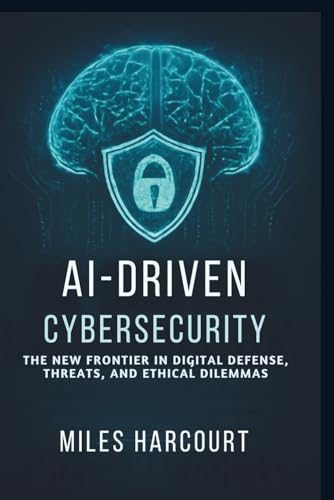
AI-DRIVEN CYBERSECURITY: The New Frontier In Digital Defense, Threats, and Ethical Dilemmas (Blueprints of the Machine Age)
As an affiliate, we earn on qualifying purchases.
As an affiliate, we earn on qualifying purchases.
Three reasons it does not collapse back to one.
The natural prediction is temporary: Trump and Amodei reach a deal, the SCR designation lifts, Anthropic re-enters Channel 1. This prediction is probably wrong.
The redundancy logic predates the dispute.
Pentagon was already moving toward multi-vendor classified procurement. JWCC’s four-cloud structure is the precedent. May 1 accelerated the timeline. Even if Anthropic returns to Channel 1, it returns as one of nine — not the pre-2026 dominant vendor.
Mythos’s capability profile is not easily replicated.
None of the other seven has shipped a model with Mythos’s specific offensive-cyber profile. The capability gap may close in 12–18 months — or not. Either way, the Channel 2 architecture, once built, becomes the template for any frontier capability the Pentagon cannot get from a redundant pool.
The political symmetry favors keeping both.
Channel 1 satisfies the political coalition that drove the SCR designation. Channel 2 keeps superior capability flowing to Pentagon staff and intelligence-community personnel who consider Claude superior. Both constituencies get their preferred outcome.
The Pentagon did not exclude Anthropic. It segmented procurement. Channel 1 is the redundancy channel. Channel 2 is the capability channel. Anthropic is exclusively present in the one that matters more.

CLAUDE FABLE 5: Professional Guide, Practical Tutorial, and Research into the First Mythos-Class AI
As an affiliate, we earn on qualifying purchases.
As an affiliate, we earn on qualifying purchases.
Four assignments. By role.
The next 18 months are a market-share war among eight peers.
$32B addressable spend. Win by GenAI.mil integration depth, IL6/IL7 deployment speed, willingness to compress accreditation timelines. Vendor lock-in to a specific cloud or compute substrate works against you.
The SCR designation creates precedent. Smaller vendors will be reviewed against it.
Be proactive about your defense compliance posture. If you do not have a federal sales motion, the procurement-driven distribution gap to your hyperscaler-distributed competitors is widening monthly.
Your AI delivery stack needs an operational answer to “what if our model vendor gets an SCR?”
The May 1 precedent makes that question operational, not theoretical. Multi-vendor delivery architectures are now a procurement requirement, not a best practice.
Model both channels. Channel 2 revenue should be a higher multiple.
The “multiple billions” CFO Krishna Rao warned about are partially offset by Mythos and federal-agency adoption. Q4 / Q1 disclosures will reveal the split. The pre-IPO valuation should incorporate Channel 1 exclusion AND Channel 2 inclusion.
Implications of the Dual-Channel Procurement Strategy
This segmentation reflects a nuanced approach to national security and technological risk management. By creating two procurement streams, the Pentagon aims to ensure operational redundancy in its classified networks while securing cutting-edge cybersecurity capabilities through targeted, sole-source contracts. This approach affects vendor relationships, potentially favors certain companies over others, and signals a shift in how the military balances operational security with innovation. For AI vendors, this division highlights the importance of strategic positioning within the Pentagon’s evolving procurement architecture, influencing future contract opportunities and collaboration models.
Background on the Pentagon’s AI Procurement and Anthropic Dispute
In early 2026, the Pentagon’s AI procurement process was under scrutiny after reports of legal and political conflicts involving Anthropic. The company refused to accept the Pentagon’s broad contractual language allowing AI use for “all lawful purposes,” demanding explicit guardrails against autonomous weapons and domestic surveillance. This dispute, coupled with the Trump administration’s February 2026 designation of Anthropic as a supply chain risk, led to legal challenges and a temporary injunction. Despite these legal setbacks, Pentagon personnel continued unofficial use of Anthropic’s models, highlighting the company’s strategic importance. The May 2026 announcement of separate procurement channels marks a formalization of this segmentation, aiming to balance operational needs with risk mitigation.
“Mythos’s capabilities are treated as a separate national security category, with its own access regime.”
— Pentagon CTO Emil Michael
Remaining Questions About Procurement and Legal Status
It is still unclear whether the legal disputes involving Anthropic will be fully resolved or if the company will be formally barred from future classified contracts. The precise scope of Anthropic’s exclusion from the classified channel and the potential for future legal or legislative action remains uncertain. Additionally, the long-term impact of this segmentation on vendor competition and innovation within the Pentagon’s AI ecosystem is still developing.
Next Steps in Pentagon AI Procurement and Legal Proceedings
The Pentagon is expected to finalize the formal procurement processes for the two channels, with ongoing legal disputes involving Anthropic likely to influence future contracts. The company is pursuing legal remedies, including injunctions, and may seek negotiations or legislative intervention. Meanwhile, other vendors are monitoring the evolving architecture to assess opportunities within the classified and cybersecurity channels. The department may also clarify or expand its procurement framework based on legal and strategic developments in the coming months.
Key Questions
Why was Anthropic excluded from the classified procurement channel?
Anthropic was excluded because it refused to accept the Pentagon’s contractual language allowing use for “all lawful purposes” without explicit guardrails against autonomous weapons and domestic surveillance. This refusal led to its placement in the cybersecurity-focused, sole-source channel.
Does this mean Anthropic is permanently barred from Pentagon contracts?
Not necessarily. Legal disputes are ongoing, and an injunction currently prevents a formal ban. The final outcome depends on legal rulings and potential negotiations.
What are the implications for other AI vendors?
Vendors now see a dual-channel architecture that offers opportunities for both redundant, multi-vendor classified systems and specialized frontier capabilities through sole-source agreements. Strategic positioning within these channels will be crucial.
How does this affect the Pentagon’s cybersecurity capabilities?
The cybersecurity channel allows the Pentagon to acquire advanced frontier models like Mythos from Anthropic exclusively, enhancing offensive cybersecurity without compromising the redundancy of its classified networks.
What is the significance of the legal disputes involving Anthropic?
The disputes highlight tensions between commercial AI development, legal restrictions, and national security needs, potentially shaping future procurement and legal frameworks.
Source: ThorstenMeyerAI.com