
📊 Full opportunity report: The Power Bottleneck: AI Data Centers and the Grid Cliff Approaching 2027-2028 on ThorstenMeyerAI.com — validation score, market gap, and execution plan.
TL;DR
The rapid growth of AI data centers is hitting a power supply limit that is unlikely to be resolved before 2027-2028. This mismatch between hyperscaler investments and grid expansion poses risks to AI deployment and industry growth.
Power availability is now a critical bottleneck for AI data center expansion, with industry leaders like Microsoft and AWS unable to deploy capacity at the rate demanded by AI workloads due to grid constraints, according to recent industry analyses. AI data centers trigger massive ‘irreversible’ 76% electricity price spike in largest US region — federal watchdog demands tech giants pay for their own power infrastructure.
In May 2026, industry reports confirmed that the mismatch between hyperscaler capital expenditure (capex) commitments—totaling hundreds of billions of dollars—and the slow pace of grid expansion is creating a tangible power supply constraint. Microsoft has committed $15.2 billion to data centers in the UAE, where power supply exceeds U.S. markets, yet global AI data center electricity demand is projected to reach approximately 1,050 terawatt-hours (TWh) by 2026, making data centers the fifth-largest energy consumer worldwide.
Hyperscalers such as Microsoft, Amazon, and Alphabet are rapidly deploying new data centers, with capex plans spanning 12-24 months. However, grid expansions in major regions like PJM Interconnection take 4-8 years from approval to deployment, creating a structural lag. As a result, power costs are rising sharply—by 30-50% on new contracts—due to increased grid modification expenses, and capacity auctions like PJM’s have hit record levels, driven by data center demand.
Industry leaders have publicly acknowledged the power constraint. Nvidia CEO Jensen Huang stated at GTC 2026 that power, not silicon, is the rate-limiting factor for next-phase AI buildout. The concentration of power capacity in regions such as Northern Virginia, Dallas, and Singapore further amplifies regional vulnerabilities, with some regions approaching grid saturation limits.
Capex meets
the grid cliff.
Capex deploys in 12-24 months. Grid responds in 4-10 years. The mismatch is structural.
Global data center electricity 1,050 TWh by 2026 — fifth-largest in the world. Demand growth 12% CAGR vs 2-3% for total grid. Microsoft committed $15.2B to UAE for power-rich location. Three Mile Island restart 2028. PJM auction cleared $15B. AI service costs rise 5-20% through 2027-2028.
2024 → 2026 → 2030. The grid wasn’t designed for this.
Data center electricity demand has been compounding at 12% annually since 2017. Four times faster than total global electricity consumption. A single AI task uses up to 1,000× the electricity of a traditional web search.
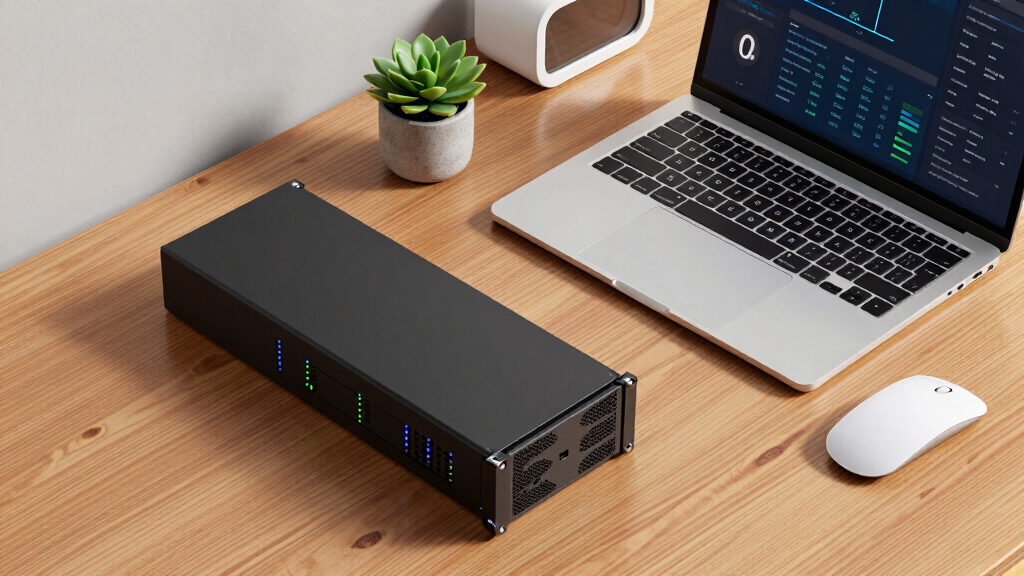
AI data center power management systems
As an affiliate, we earn on qualifying purchases.
As an affiliate, we earn on qualifying purchases.
Four strategies. None sufficient alone.
Geographic relocation · nuclear restart · off-grid microgrids · battery storage. Most hyperscaler strategies combine elements of all four.

Mastering Eco-Hosting: Sustainable Infrastructure ROI | Energy-Efficient Cooling | Eco-Conscious Data Management | Green Certifications IT | Carbon Footprint Reduction | Innovative IT Renewable Sol.
As an affiliate, we earn on qualifying purchases.
As an affiliate, we earn on qualifying purchases.
Three paths. One constraint.
30/50/20 probability allocation reflects response-side execution uncertainty. Base scenario is most likely because the response strategies are real and beginning to deploy, but timelines are aggressive and execution risk is meaningful.
- Nuclear on timeTMI + SMRs deliver as announced.
- BYOP scales fastCrusoe-style proliferates.
- Costs +30-50%Plateau through 2028.
- AI prices +5-12%Pass-through manageable.
- Outcome: Capex deploys with 6-12 mo delays max.
- Nuclear delays 1-3ySMRs 18-36 mo late.
- Relocation acceleratesUAE / Norway / Iceland.
- Costs +50-80%New contracts.
- AI prices +12-20%Material pass-through.
- Outcome: Capex delays 12-24 mo systematic.
- Nuclear fails / delaysSMRs 24-48 mo late.
- Storage supply chainLithium / rare earths bind.
- Costs +80-120%Severe pass-through.
- AI prices +20-35%Demand destruction risk.
- Outcome: Capex delays 24-36 mo · impairment cycles 2028-29.
AI infrastructure is now an infrastructure problem more than a software problem. The companies that solve power constraint while solving the other constraints — architectural, capability, regulatory — capture durable advantage. The next 18-36 months produce the data on which side of the line each major player ends up on.
high-capacity uninterruptible power supplies (UPS) for servers
As an affiliate, we earn on qualifying purchases.
As an affiliate, we earn on qualifying purchases.
Four assignments. By role.
Update capex models for 12-24 month delays.
Differentiate on power-strategy quality: Microsoft (UAE + nuclear + microgrid) and Alphabet (Iceland + SMR + storage) best-positioned. Meta most exposed (mostly grid-dependent in Louisiana). Track nuclear-restart project execution as forward indicator. Power strategy is now material to capex returns.
Lock in long-term pricing now.
Negotiate hyperscaler partnership pricing now to lock current cost structure. Plan margin guidance for 5-20% service-cost uplift through 2026-2028. Evaluate alternative deployment regions (Norway, Iceland, UAE) for capacity expansion bypassing primary-market constraint. China sphere price gap compounds.
Begin scale expansion planning.
Transmission and substation expansion at scales matching DC load growth. Engage public utility commissions on rate-base investment + customer-class assignment. Develop time-of-use pricing incentivizing DC load profiles aligned with grid availability. Data center demand is structural, not transitional.
Negotiate with price-discount escalators.
Multi-region AI service architecture (US + Europe + Asia-Pacific) reduces single-region power-constraint exposure. Long-term commitments capture current pricing; short-term commitments preserve optionality but face upward repricing risk through 2027-2028. Geographic diversification matters now.

How to Design an Energy-Efficient Cooling System for Modern Data Centers
As an affiliate, we earn on qualifying purchases.
As an affiliate, we earn on qualifying purchases.
Implications of Power Constraints on AI Industry Expansion
This power bottleneck threatens to slow or delay the scaling of AI infrastructure, potentially impacting AI service availability, innovation timelines, and economic growth. The inability to expand data center capacity as planned could lead to increased costs for AI companies and customers, and may force strategic shifts among hyperscalers, including geographic diversification or investment in alternative energy sources. The situation underscores the urgency of accelerating grid modernization and infrastructure investments to meet future demand.
Background of Growing Power Demand and Infrastructure Lag
Since 2017, AI workloads have driven a 12% annual growth in data center electricity demand, outpacing global demand growth of 2-3%. AI workloads are significantly more power-dense than traditional cloud tasks, with future racks projected to consume up to 300 kW each. Major hyperscalers have announced capex plans exceeding $725 billion in 2026 alone, with deployment timelines of about 18 months for infrastructure. Conversely, grid expansion timelines in key markets like PJM and Europe range from 4 to 10 years, creating a persistent mismatch.
Recent developments include record-setting capacity auction prices, rising costs of grid modifications, and strategic investments such as Microsoft’s UAE data center expansion. Industry experts warn that without significant acceleration in grid infrastructure, the AI buildout may face substantial delays, impacting technological progress and market dynamics.
“Power, not silicon, is the rate-limiting factor for the next phase of AI development.”
— Jensen Huang, Nvidia CEO
Unresolved Questions About Power Infrastructure Expansion
It remains unclear whether accelerated grid expansion initiatives will be sufficient to meet the looming demand by 2027-2028. The pace of regulatory approvals, technological upgrades, and regional differences could further delay solutions. Additionally, the impact of potential energy storage breakthroughs or alternative energy sources on alleviating the constraint is still uncertain.
Strategic Responses and Infrastructure Acceleration Plans
Industry stakeholders are expected to increase investments in grid modernization, including fast-tracking transmission projects and integrating renewable energy and storage solutions. Hyperscalers may also diversify deployment regions further and explore power-efficient hardware innovations. Monitoring regional grid expansion timelines and policy developments will be critical over the coming months to assess whether the power bottleneck can be alleviated before 2027-2028.
Key Questions
How soon could the power bottleneck impact AI deployment?
Based on current trends, significant impacts could begin to materialize by 2027-2028 if grid expansion does not accelerate sufficiently, potentially causing delays in new data center capacity deployment.
What regions are most vulnerable to power constraints?
Regions like Northern Virginia, Dallas, Singapore, and the UAE are most vulnerable due to high data center demand and slower grid expansion timelines.
Can renewable energy or storage mitigate the power bottleneck?
While renewable energy and storage can help, their current deployment timelines and capacity are insufficient to fully address the immediate bottleneck, but they are part of longer-term solutions.
What are hyperscalers doing to address this issue?
Hyperscalers are diversifying deployment locations, investing in regional infrastructure, and exploring energy-efficient hardware to reduce power demand and mitigate risks.
Will government policy accelerate grid expansion?
Policy initiatives vary by region; some governments are prioritizing grid modernization, but regulatory processes remain lengthy, and impact on timelines is uncertain.
Source: ThorstenMeyerAI.com