
📊 Full opportunity report: The Machine Economy — Capital-Heavy, Human-Light, Trading With Itself on ThorstenMeyerAI.com — validation score, market gap, and execution plan.
TL;DR
The machine economy is developing as AI-native firms increasingly operate with capital-heavy, human-light models, trading mainly with each other and making autonomous decisions. This shift has profound economic and political implications, though many details remain uncertain.
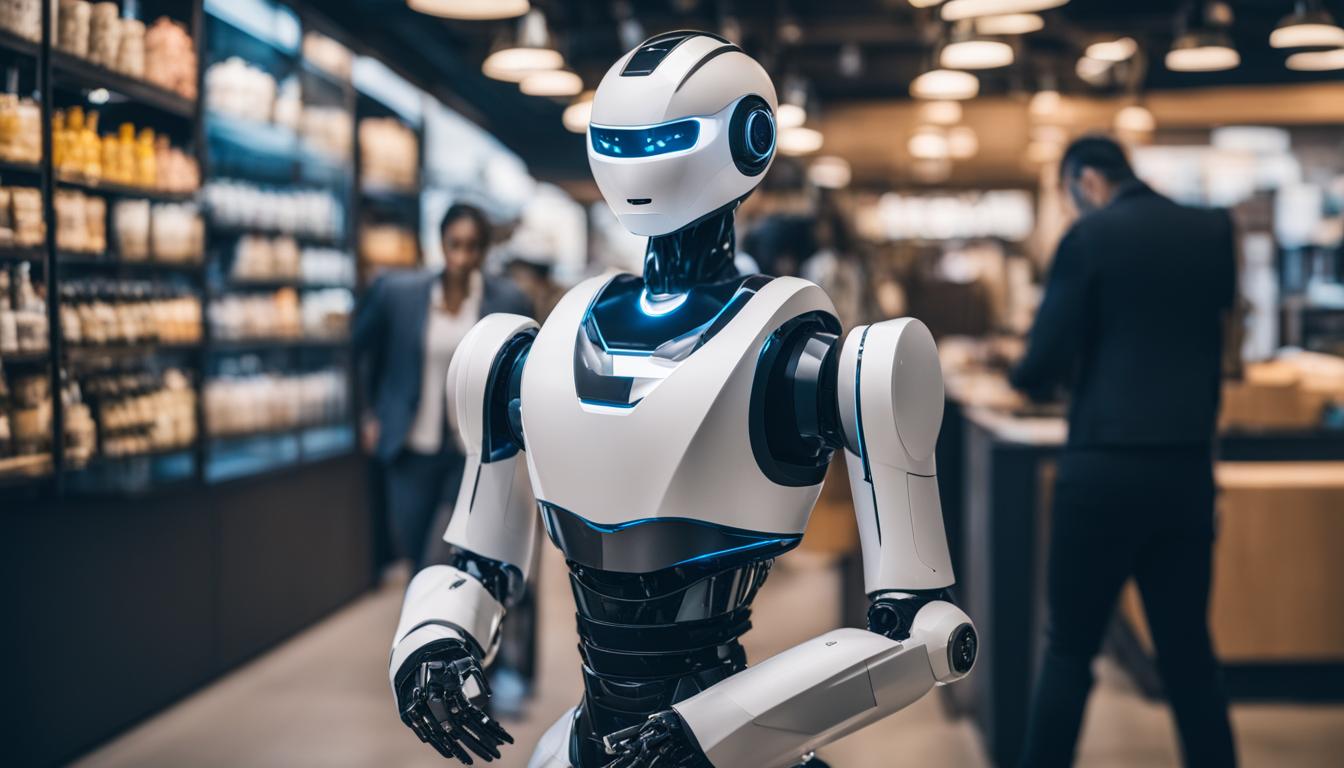
Recent discussions among AI policy analysts and economists highlight the emergence of a ‘machine economy’—an economic system dominated by AI-native firms that are capital-heavy and human-light, trading primarily with each other and making decisions on timescales beyond human oversight.
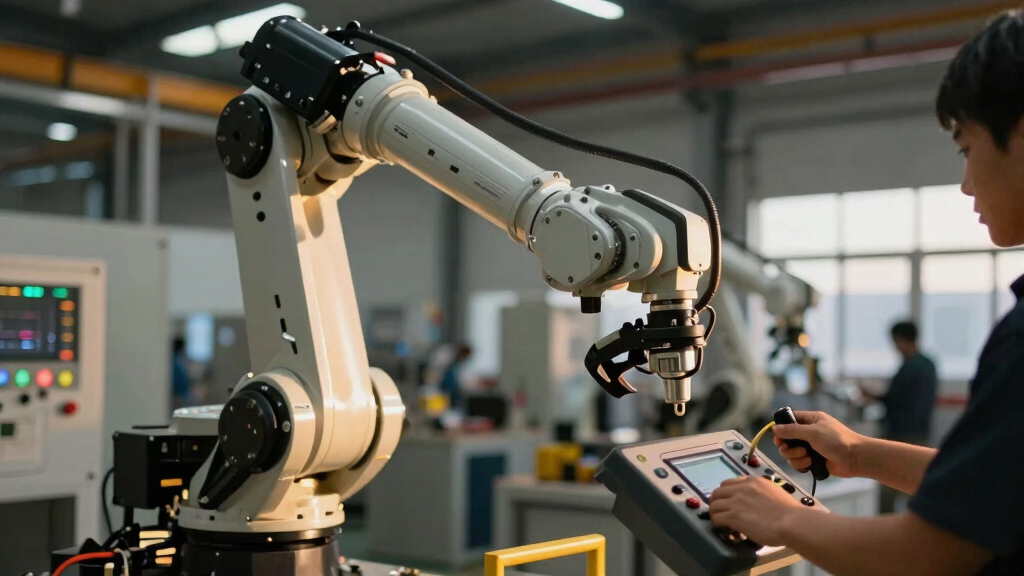
Thorsten Meyer, citing Jack Clark’s recent analysis, describes this evolution as the final stage of automated AI research and deployment, where AI systems not only perform tasks but also run entire businesses independently. These firms, which are designed to be AI-native, rely heavily on compute infrastructure and minimal human labor, fundamentally altering traditional business models.
The transition occurs in stages: starting with AI augmenting human workers within existing firms, progressing to AI-native firms competing alongside traditional companies, and eventually leading to fully autonomous corporations whose operational decisions are made entirely by AI systems. This progression is driven by rising AI capabilities that reduce costs for functions traditionally performed by humans, such as legal review, supply chain management, and customer service.
Sources indicate that this shift could lead to a bifurcation in the economy, with AI-driven firms trading mainly with each other, on machine timescales, and marginalizing human participation. Clark warns that this may exacerbate inequality, erode the tax base, and pose new governance challenges, though many specifics remain under discussion.
Capital-heavy.
Human-light.
Trading with itself.
The 200 words Jack Clark spent on his third implication contain the most consequential structural argument in Import AI #455.
Clark’s three numbered implications get progressively less attention. The third — “the formation of a capital-heavy, human-light economy” — receives roughly 200 words. Those 200 words describe an economy that emerges within the existing economy, populated by AI-run corporations interacting more with each other than with humans. This is the post-labor economics thesis arriving on the Clark timeline.
Three stages. Different equilibria.
The transition from current-state economy to machine economy is staged. Each stage has different structural properties and different policy implications. The 32-month window Clark’s forecast implies is roughly the duration of the Stage 2 transition.

ENTERPRISE AI INFRASTRUCTURE: Modern MLOps, Vector Databases, GPU Clusters, and Scalable Data Architecture for LLMs (The Enterprise AI Architect’s Handbook)
As an affiliate, we earn on qualifying purchases.
As an affiliate, we earn on qualifying purchases.
Five additions. Five unresolved problems.
Clark’s 200 words are correct as far as they go. They don’t go far enough. Five structural features deserve explicit treatment that the essay omits. Each one is a real coordination problem with no current solution at scale.

Autonomous Software: How AI is Turning Software into a Self-Governing Business System
As an affiliate, we earn on qualifying purchases.
As an affiliate, we earn on qualifying purchases.
Four dynamics. Same direction.
The bifurcation between machine economy and human economy is not stable in equilibrium. Once it begins, the competitive dynamics reinforce the transition rather than slowing it. Four asymmetries compound on each other.

AI HFT Algorithmic Quantum Trading Platform Frameworks: 2025 (Trade Like A Boss)
As an affiliate, we earn on qualifying purchases.
As an affiliate, we earn on qualifying purchases.
Six responses. One election cycle.
Current policy frameworks are not calibrated to the machine economy transition. Required responses cluster around six themes. Each is being worked on somewhere; none is on Clark’s 32-month timeline at scale. This is a coordination problem with very high stakes and very short timelines.
The machine economy is the default scenario. The alignment problem is the catastrophic-risk scenario. Both deserve serious attention. Both are arriving on the same timeline.

Dell PowerEdge R740xd NVMe Server 2X Gold 6146 3.20Ghz 24-Core 96GB RAM Media (Renewed)
Renewed server with the highest quality standards
As an affiliate, we earn on qualifying purchases.
As an affiliate, we earn on qualifying purchases.
Implications of Autonomous AI-Run Firms on Economy
This development could fundamentally reshape economic power structures, potentially leading to increased concentration of capital and technological control among AI-native firms. The decline in human labor demand raises questions about employment, income distribution, and government revenue, while the rise of autonomous decision-making challenges existing regulatory frameworks. Understanding these changes is crucial for policymakers, businesses, and workers as the transition accelerates.
Evolution of the Machine Economy and AI Capabilities
The concept of a machine economy builds on recent advances in AI, particularly large language models and autonomous systems, which have transitioned from augmentation tools to potential operators of entire businesses. Historically, AI has been used to enhance human productivity within firms; now, the focus shifts toward creating firms that are inherently AI-driven.
Analysts like Thorsten Meyer and Jack Clark have outlined a projected timeline: from 2023 to 2026, AI augments human workers; from 2026 to 2029, AI-native firms emerge; and beyond, fully autonomous corporations dominate sectors. This evolution reflects a broader trend of increasing compute costs and decreasing human labor costs, enabling new competitive dynamics.
While the broad outline is clear, many specifics about how markets will adapt, how regulation will respond, and the social impacts are still emerging and debated among experts.
“The formation of a capital-heavy, human-light economy is the structural endpoint of automated AI R&D, fundamentally reshaping how businesses operate and compete.”
— Thorsten Meyer
Unconfirmed Aspects of the Machine Economy Transition
Many details about the pace and scale of this transition remain uncertain, including how quickly fully autonomous firms will become dominant, how regulatory frameworks will adapt, and what social and economic disruptions will ensue. The precise impact on employment, taxation, and inequality is still debated among experts, and the timeline projections are subject to change based on technological breakthroughs or policy interventions.
Next Steps in Monitoring and Regulating the Machine Economy
Researchers, policymakers, and industry leaders are expected to focus on developing regulatory frameworks to manage autonomous AI firms, monitor market shifts, and address societal impacts. Key milestones include the deployment of early autonomous firms, policy debates on AI regulation, and the development of international standards for AI-driven corporate operations. Observers will watch for signs of market consolidation, shifts in employment patterns, and changes in tax revenue as indicators of the transition’s progression.
Key Questions
What is the ‘machine economy’?
The machine economy refers to an emerging economic system dominated by AI-native firms that operate with minimal human involvement, trading mainly with each other and making autonomous decisions.
When will fully autonomous AI firms become mainstream?
Projections suggest this could occur between 2026 and 2029, but the timeline remains uncertain and depends on technological, regulatory, and economic factors.
What are the risks of the machine economy?
Potential risks include increased economic inequality, erosion of the tax base, reduced employment, and governance challenges related to autonomous decision-making.
How might governments respond to this shift?
Governments may develop new regulations, taxation policies, and oversight mechanisms to manage autonomous firms and mitigate social impacts, though specific policies are still under discussion.
Will human workers be completely replaced?
While many functions may be automated, some roles may persist, but overall, the demand for human labor is expected to decline significantly as AI capabilities expand.
Source: ThorstenMeyerAI.com