
📊 Full opportunity report: The Switch: You Never Owned the AI You Depend On on ThorstenMeyerAI.com — validation score, market gap, and execution plan.
TL;DR
In 2026, both government orders and corporate decisions can instantly shut down AI models. This highlights that users rely on access, not ownership, creating vulnerabilities. The implications for AI dependency are significant.
On June 12, 2026, the U.S. government issued an export-control directive that forced Anthropic to disable its models Fable 5 and Mythos 5 worldwide, within roughly ninety minutes, citing national security concerns. This marked a rare instance where a government directly ordered an AI model to be turned off, illustrating a critical chokepoint in AI access that can be activated instantly.
The directive suspended all access to Anthropic’s latest models for any foreign national, including the company’s own employees outside the U.S., effectively shutting down the models globally. The move came without detailed explanation, leaving the company and users unable to continue using those models. This event underscores how government actions can serve as an emergency switch, overriding commercial and user control.
Separately, in February 2026, OpenAI retired GPT-4o and other older models from ChatGPT, citing economic reasons such as the cost of running legacy infrastructure. This was a planned deprecation, not a security measure, but it still resulted in sudden loss of access for users relying on those models. These instances reveal that access to AI models is governed by a handful of entities—governments, labs, and cloud providers—and can be revoked or altered at any time, often with little notice.
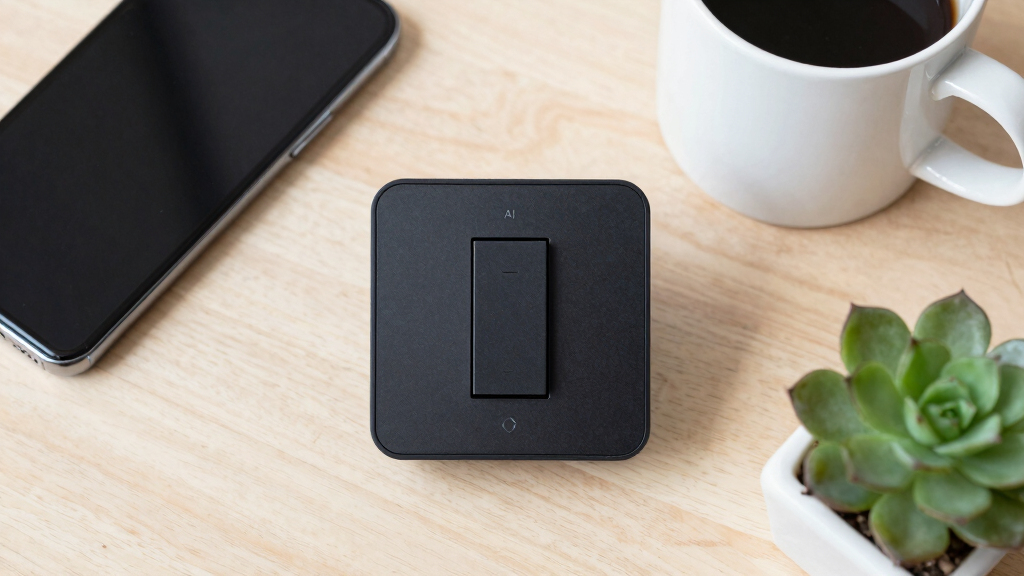
The Switch: You Never Owned It
In 2026 a government turned off a frontier model worldwide in ~90 minutes — and a company retired a beloved one with ~2 weeks’ notice. You don’t own the model you build on. You access it. Access can be revoked.
Access is the only chokepoint that flips in an afternoon — and the version that hits you won’t be Washington, it’ll be a deprecation. Open weights you host can’t be deprecated, geofenced, repriced, or revoked. Short of that: route through a provider-agnostic gateway, keep a tested fallback, and treat every model string as a dependency that will be pulled.
Implications of Instant AI Model Shutdowns
This series of events highlights a fundamental vulnerability: users and organizations do not own the AI models they depend on but rather access them through APIs controlled by external entities. Both government orders and corporate decisions can instantly disable services, creating dependency risks and raising questions about ownership, control, and resilience in AI deployment. As reliance on AI grows, understanding and mitigating this chokepoint becomes critical for security, economics, and innovation.
As an affiliate, we earn on qualifying purchases.
Recent Trends in AI Model Control and Deprecation
Historically, AI models were trained and owned by institutions, but the rise of API-based access shifted control to service providers like OpenAI and Anthropic. The February 2026 deprecation of GPT-4o demonstrated how companies can phase out older models, often in response to cost or strategic shifts. The June 2026 government directive exemplifies how state actors can exert immediate control, turning models off in response to security concerns. These developments reveal a growing pattern where access, not ownership, determines AI availability.
“Applying export controls to software models over the internet blurs traditional security boundaries and introduces new risks.”
— Former AI adviser, U.S. government
As an affiliate, we earn on qualifying purchases.
Remaining Questions About AI Access and Control
It is still unclear how widespread such instant shutdown capabilities will become, especially outside of government interventions. The long-term implications for AI innovation, security, and economic resilience are still being evaluated. Additionally, the legal and ethical frameworks governing these power shifts remain underdeveloped, raising questions about accountability and transparency.
As an affiliate, we earn on qualifying purchases.
Future Developments in AI Ownership and Resilience
Moving forward, stakeholders are likely to explore ways to regain ownership or control over AI models, such as open-source alternatives or decentralized architectures. Governments and regulators may also develop clearer policies to manage emergency shutdowns and ensure continuity. The industry will need to address the dependency risk by creating more resilient and owner-controlled AI infrastructures.
As an affiliate, we earn on qualifying purchases.
Key Questions
Can I still own an AI model?
Currently, most users rely on access via APIs rather than owning the models outright. Ownership of AI models remains limited to the developers and organizations that train and deploy them.
What happens if an AI model is suddenly turned off?
Users and businesses depending on that model may experience service disruptions, loss of data, or operational delays. This dependency underscores the importance of understanding control points.
Are there ways to prevent AI models from being turned off?
Ownership of models or deploying open-source alternatives can reduce dependency on external control. However, most commercial models are accessed via controlled APIs, making instant shutdowns a risk.
What legal or regulatory measures are being considered?
Regulators are beginning to examine AI control and security, but comprehensive policies are still in development. The focus is on balancing innovation with safety and control.
Source: ThorstenMeyerAI.com