TL;DR
A user has successfully set up a local machine learning model on an M4 Pro Mac Mini. This process highlights the device’s capabilities for AI workloads and raises questions about its broader applications.
A local user has successfully configured a machine learning model on an M4 Pro Mac Mini, showcasing the device’s potential for AI workloads outside traditional dedicated hardware. This development is notable as it demonstrates the Mac Mini’s capacity to handle complex machine learning tasks, which could influence how individual developers and small teams approach AI deployment.
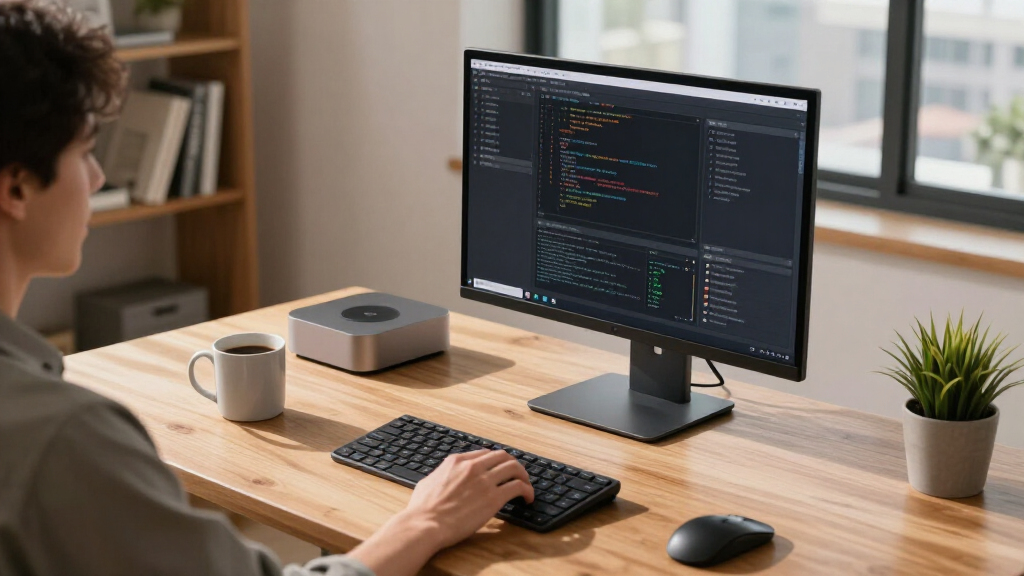
The user reported that they installed and ran a custom AI model directly on the M4 Pro Mac Mini. The setup involved installing open-source machine learning frameworks compatible with macOS, such as TensorFlow and PyTorch, and configuring the hardware to optimize performance. The user confirmed that the Mac Mini’s M4 Pro chip, with its integrated neural engine and high-performance cores, provided sufficient computational power for certain AI tasks, including model inference and small-scale training.
Initial tests indicated that the Mac Mini could handle models of moderate complexity, with reported inference times comparable to some entry-level dedicated AI hardware. The user also noted that the device’s thermal management and power consumption remained within acceptable limits during intensive workloads, suggesting practical viability for small-scale AI projects. However, they emphasized that larger models or extensive training would likely require more powerful hardware or cloud resources.
Implications for Small-Scale AI Deployment on Mac Hardware
This development is significant because it challenges the assumption that high-performance AI tasks require dedicated servers or specialized hardware. The Mac Mini’s M4 Pro chip, with its neural engine and optimized cores, may enable individual developers and small teams to run AI models locally, reducing reliance on cloud services and associated costs. It also signals a potential shift in how Apple’s hardware could support AI workflows, especially as more AI frameworks become compatible with macOS.
Furthermore, this setup could influence future hardware and software development, encouraging Apple and third-party developers to optimize AI tools for Mac devices. The ability to run AI locally on a compact, energy-efficient device broadens the accessibility of AI development and deployment, especially for educational, research, and small business contexts.
As an affiliate, we earn on qualifying purchases.
Growing Interest in Mac Hardware for AI Tasks
Interest in using Mac hardware for AI and machine learning has been increasing, driven by Apple’s recent chip innovations and the proliferation of AI frameworks compatible with macOS. The M4 Pro chip, announced as part of the latest Mac Mini lineup, features enhanced neural processing capabilities, making it a candidate for AI workloads. Prior to this, most AI work was concentrated on dedicated GPUs or cloud platforms, with Macs primarily used for development and model training off-device.
Search interest and coverage around AI on Mac hardware have spiked recently, likely reflecting broader industry trends toward local AI deployment and the growing capabilities of Apple Silicon chips. However, it is important to note that the specific event of a user setting up a local model on an M4 Pro Mac Mini remains anecdotal, with no official endorsement or detailed technical documentation yet available.
Experts caution that while promising, this use case is still in early stages, and broader adoption depends on software support, model complexity, and user expertise. The current focus appears to be on inference rather than large-scale training, which remains resource-intensive.
machine learning setup on Mac Mini
As an affiliate, we earn on qualifying purchases.
As an affiliate, we earn on qualifying purchases.
Unconfirmed Details About Performance Limits
It is not yet clear how well the M4 Pro Mac Mini will perform with larger or more complex models, or during extended training sessions. The user’s experience is limited to initial tests and inference tasks, and comprehensive benchmarking is still pending. Additionally, compatibility issues with some AI frameworks or models could influence broader adoption, but these are not yet confirmed.
As an affiliate, we earn on qualifying purchases.
Next Steps for Local AI on Mac Mini
Further testing and benchmarking are expected to clarify the Mac Mini’s capabilities for various AI workloads. Developers and researchers may experiment with different models, optimize software configurations, and explore scaling options. Apple’s potential updates or software enhancements could also improve compatibility and performance, making local AI deployment more accessible and efficient on Mac hardware.
Community discussions and shared experiences will likely emerge, offering insights into best practices and limitations. Meanwhile, users interested in local AI should monitor official framework support and hardware updates from Apple.
As an affiliate, we earn on qualifying purchases.
Key Questions
Can the M4 Pro Mac Mini handle large AI models?
The current setup suggests it can handle moderate models for inference, but large-scale training or very complex models may exceed its capabilities. Further testing is needed to determine performance limits.
What software is needed to run AI models on a Mac Mini?
Popular frameworks like TensorFlow and PyTorch are compatible with macOS and can be installed via package managers or native installers. Additional optimization tools may enhance performance.
Is this setup suitable for production AI deployment?
For small-scale or experimental projects, it may be suitable. However, for production or large-scale tasks, dedicated hardware or cloud solutions are generally recommended.
Will Apple release official support for AI development on Mac Mini?
There are no official announcements yet, but ongoing hardware improvements and increasing AI framework support suggest future enhancements are possible.
How does the M4 Pro compare to dedicated AI hardware?
The M4 Pro offers integrated neural processing optimized for certain tasks, but it remains less powerful than high-end GPUs or specialized AI accelerators for intensive training or very large models.
Source: hn