📊 Full opportunity report: Can Phone Footage Turn A Basketball Game Into Highlights And Stats? on IdeaNavigator AI — validation score, market gap, and execution plan.

Get business pricing on tech for your team
- Business-only prices and quantity discounts
- Tax-exempt purchasing
- Multiple users, one account, clear invoices
TL;DR
IdeaNavigator AI has outlined a product concept that would use phone-shot basketball footage to create player highlight reels, game stat lines and shareable season profiles. The proposal identifies families seeking an alternative to costly team video programs as its target customers, but it reports no tested product, accuracy results or subscription demand.
IdeaNavigator AI has proposed an app that would turn phone-recorded youth and recreational basketball games into player-specific highlight reels, stat lines and shareable season profiles. The concept targets parents and players seeking those materials without paying for a higher-cost team video program, but it is a product idea, not a report of a launched or validated service.
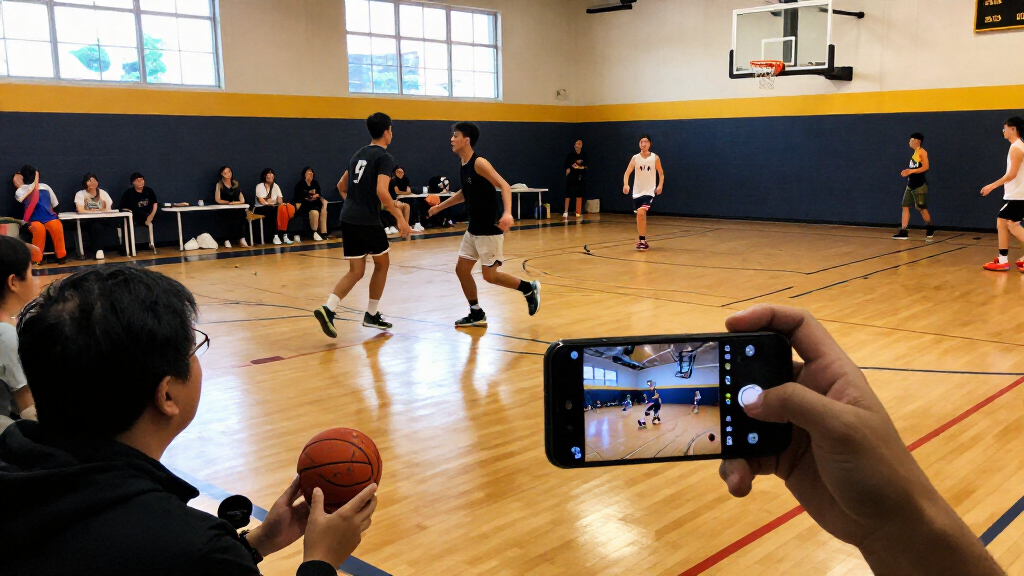
The proposed workflow starts with a user uploading a game video and selecting a player. The app would then identify that player in the footage, create a reel, add score overlays and produce a per-game statistical summary. IdeaNavigator AI also proposes a season profile that families could share. The concept depends on computer vision recognizing players and basketball events such as shots, rebounds and steals in ordinary phone recordings.
The proposed business model combines a family subscription for a season with fees for exporting individual reels. IdeaNavigator AI frames the customer problem as a gap between games being recorded on phones and those recordings being put to use: manually finding and clipping plays can take hours, while some families want highlights for recruiting profiles and stats to follow player development.
To test demand, the proposal recommends processing 100 games filmed by parents, measuring user satisfaction with highlight accuracy, and testing season-subscription conversion at AAU tournaments. Those are suggested validation steps, not completed trials. No product name, price, launch date, accuracy score, customer results or tournament findings are provided.
A Lower-Cost Route to Player Video
If the proposed workflow proves reliable, it could make game footage more useful to families who do not have access to a dedicated team video service. Automated editing could reduce the time needed to find a player’s appearances and assemble clips, while game-by-game stats and a season profile could organize information that otherwise remains in lengthy recordings. That could be useful for player development and recruiting materials, though the proposal does not establish that coaches or recruiters would accept its output.
The main practical question is whether footage recorded from changing locations, angles and distances can support accurate player identification and event counts. A polished reel may be useful even when some events are missed, but families could lose trust in statistics that misattribute a rebound or shot. The idea therefore hinges not just on producing clips quickly, but on accuracy that users find satisfactory and a price families will pay repeatedly.
For families, a subscription and per-export charge could still add up over a season. For a prospective operator, testing conversion at tournaments would help determine whether interest in highlights becomes paid demand. The proposal offers a way to frame that test, but provides no evidence yet about operating costs, subscription willingness or whether one workflow can serve different youth and recreational leagues.
As an affiliate, we earn on qualifying purchases.
From Sideline Video to Season Profiles
The proposal focuses on a familiar pattern in youth and recreational basketball: relatives record games on phones, but the footage can be difficult to review and edit. Manual clipping is presented as the obstacle between recording a game and producing a set of useful highlights or a player stat line. The suggested app aims to address that step rather than replace the act of filming.
IdeaNavigator AI argues that advances in on-device vision models may make player tracking and event detection possible using ordinary phone footage, where the concept says multi-camera systems were previously required. That is the proposal’s rationale for pursuing the idea now, not an independently documented benchmark or proof that a particular model can reliably analyze full games. The recommended 100-game pilot would test whether the technical premise and customer need hold up in actual parent-recorded video.
As an affiliate, we earn on qualifying purchases.
Accuracy and Demand Remain Untested
The proposal does not say whether an app has been built, who would operate it, or when it might become available. It supplies no measured figures for player-identification accuracy, event detection, processing time or the proportion of footage that would produce a usable reel. It also does not specify how the app would handle crowded scenes, players with similar uniforms, poor lighting, obstructed views or a camera that moves during play.
Pricing, privacy safeguards and data-retention policies are also unspecified. Those details matter because the videos may show minors, and users would need to know how footage and player profiles are stored and shared. The proposal does not report feedback from families, coaches or recruiters, nor evidence that season subscriptions or paid reel exports would convert at tournaments. The proposed test remains a plan, not a result.
As an affiliate, we earn on qualifying purchases.
The Proposed 100-Game Pilot
The next step described by IdeaNavigator AI is to collect and process 100 games recorded by parents, then ask whether users consider the highlights accurate enough. A separate test at AAU tournaments would assess whether families sign up for a season plan. Together, those measures could give an early indication of technical performance and willingness to pay, but the proposal does not provide a schedule or say that either test has begun.
Any further assessment would need to report how accuracy is measured, what kinds of footage are included and how errors affect the resulting stats and reels. Until such results, pricing details and privacy practices are available, the concept should be treated as an unvalidated product opportunity rather than a working service or proven recruiting tool.
Source: IdeaNavigator AI
automatic basketball game highlights
As an affiliate, we earn on qualifying purchases.
As an affiliate, we earn on qualifying purchases.
Key Questions
Is there already an app available?
No launch is reported. The information describes a product proposal and does not name an available app or provide a release date.
What would the proposed app create?
It would take uploaded game footage, identify a selected player, and produce a highlight reel, score overlays, per-game stats and a season profile.
How accurate are the highlights and statistics?
No accuracy results are provided. The proposal recommends testing satisfaction with highlight accuracy using 100 parent-recorded games.
How would the service make money?
The suggested model combines a family subscription for a season with charges for exporting individual highlight reels. No prices or sales results are given.
Would recruiters accept the player profiles?
That is not established. The concept identifies recruiting profiles as a possible use for highlights, but reports no evaluation by coaches or recruiters.
Source: IdeaNavigator AI
Halloween Picks
halloween
As an affiliate, we earn on qualifying purchases.