
TL;DR
Google Research and the Stanford Accelerator for Learning have launched “Polar Peaks,” the third AI Quest for students ages 11 to 14. The interactive lesson uses brain mapping to teach AI literacy, including data cleaning, model testing and the need for human oversight; teacher training for this quest is due next month.
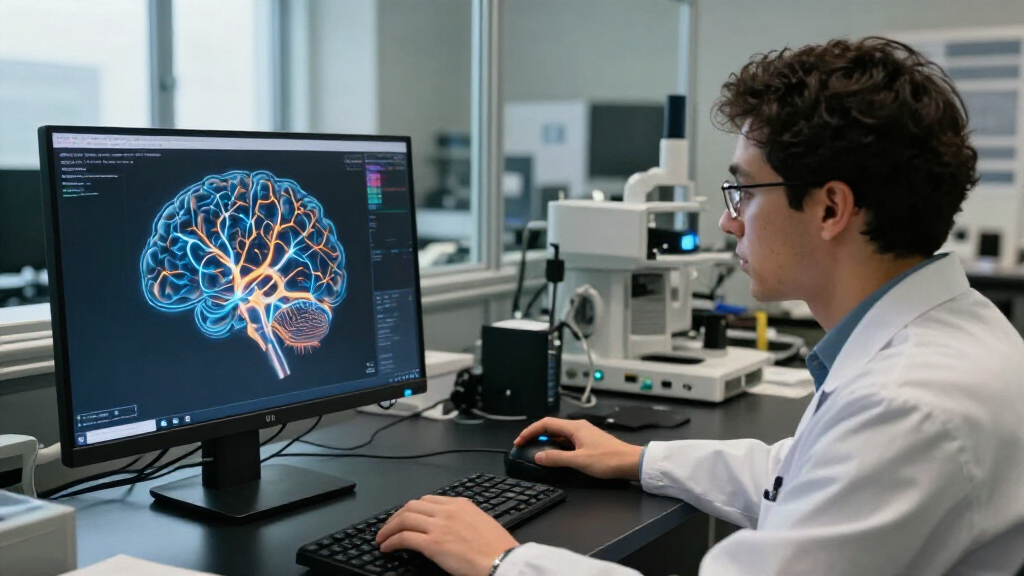
Google Research and the Stanford Accelerator for Learning have launched “Polar Peaks,” an interactive lesson that teaches students ages 11 to 14 about artificial intelligence through the challenge of mapping the human brain. The third installment in Google’s AI Quests series introduces tasks such as cleaning data and testing models, while emphasizing that AI research requires human oversight and critical thinking.

Get business pricing on tech for your team
- Business-only prices and quantity discounts
- Tax-exempt purchasing
- Multiple users, one account, clear invoices
In the game, students follow in-game mentors and scan and map neurons to investigate a character’s memory loss. Google says the activities are designed to help students see how AI can support scientific research, while learning that its outputs and processes require careful review. The company describes the quest as inspired by more than a decade of its work in connectomics, the study of mapping neural networks in the brain.
At the end of the quest, students hear from two researchers involved in real-world work, including the mapping of a complete fruit fly brain. Google describes that map as the largest brain map to date by number of neurons. The announcement does not say that the student game maps a human brain in full; the brain-mapping task is an educational simulation grounded in neuroscience research.
Google says the AI Quests series has had more than 400,000 completions and is available in 10 languages. The company is also releasing teacher training modules through the Google AI Educator Series. Modules for the first two quests are available, while training for “Polar Peaks” is expected next month, according to the announcement.
Teaching AI Through Brain Research
“Polar Peaks” links classroom AI literacy to a concrete scientific problem: understanding how neurons connect and how those connections relate to brain function. Rather than presenting AI only as a finished tool, the quest puts students through parts of a research workflow, including data preparation and model testing. That can help explain why AI results depend on the data and methods people choose and review.
The lesson is aimed at students ages 11 to 14, a group Google says it wants to engage with major research challenges through the quest format. Its focus on human oversight also gives teachers a way to discuss the limits and responsibilities involved in using AI, rather than treating automation as a substitute for judgment. The new teacher modules may support those discussions in classrooms, though Google has not reported independent evaluations of learning outcomes for this specific quest.
The announcement also brings neuroscience research into an educational setting without claiming that the game itself advances brain mapping. The value for readers is primarily educational: students are being introduced to how AI may assist scientists and to the work people must do to assess that assistance.
Products Worth Considering

Samsung Galaxy Tab A11+ Kids Edition, 128GB, Royal Blue

LG 27GS60QC-B Ultragear 27-inch Curved Gaming Monitor (QHD, 180Hz, 1ms, 1000R)

Bose QuietComfort Ultra Earbuds (2nd Gen), Wireless Noise-Cancelling Earbuds, Black
As an affiliate, we earn on qualifying purchases.
From Flood Forecasts to Neurons
“Polar Peaks” follows two earlier AI Quests. Google says the first addressed flood forecasting, inspired by its Flood Forecasting initiative, while the second focused on detecting eye disease and drew on an AI model for diabetic retinopathy screening. The new quest shifts the series to neuroscience but retains the format of students taking on research-inspired challenges.
The series is a collaboration between Google Research and the Stanford Accelerator for Learning. Google says it is designed for students ages 11 to 14 and invites them to take on the role of researchers exploring major challenges. The company reports more than 400,000 quests completed across 10 localized languages, but the announcement does not provide a breakdown by quest, language, school or student.
Google also says AI Quests received a 2026 Webby Award for AI Education and a Best Global K–12 Learning Solution award at the ETIH Innovation Awards. These awards are part of the company’s account of the program’s development; they do not establish the educational effect of “Polar Peaks.”
““Our newest quest, ‘Polar Peaks,’ has students travel to the frontiers of neuroscience and see how AI can speed up scientific research.””
— Ronit Levavi Morad, senior director at Google Research
What the Announcement Leaves Open
Google has not provided details about how “Polar Peaks” will be evaluated, whether researchers or educators have measured what students learn from it, or how the game adapts to different levels of prior knowledge. The company’s announcement also gives no completion or learning data specific to this third quest.
The source describes students mapping neurons in a game and says the lesson draws on connectomics research. It does not specify the technical tools or datasets used in the simulation, nor does it claim that students produce a scientifically complete map of the human brain. The fruit fly brain map is cited as a real-world research example; it should not be confused with the game’s fictional investigation of a character’s memory loss.
Google says the teacher module for the new quest will follow next month, but does not give a specific release date. Availability by country, school system and platform is also not detailed in the announcement.
Teacher Training Due Next Month
Google says the dedicated teacher training module for “Polar Peaks” is expected to launch next month through the Google AI Educator Series. Training modules for the first and second quests are already accessible, according to the company. The materials are intended to help educators connect the game’s AI literacy topics with classroom teaching and discussion.
Google says it plans to continue working with educators and partners to bring more quests to classrooms during the school year. It has not announced a release date or subject for a fourth quest. The next concrete update identified in the announcement is the planned teacher training for “Polar Peaks.”
Key Questions
What is Google’s new AI Quest?
“Polar Peaks” is the third AI Quest, developed by Google Research and the Stanford Accelerator for Learning. It teaches AI literacy through a neuroscience-themed game about scanning and mapping neurons.
Is the quest actually mapping a human brain?
No complete human brain mapping by students is described. The quest is an educational simulation in which students map neurons to investigate a game character’s memory loss, drawing inspiration from connectomics research.
Who is the quest designed for?
Google says AI Quests are aimed at students ages 11 to 14. The company has not provided further details about grade-level requirements or classroom availability.
What AI skills does “Polar Peaks” teach?
Google says students work on data cleaning and model testing, while learning about human oversight and critical thinking in AI research.
When will teacher training for the quest be available?
Google says the “Polar Peaks” teacher training module will follow next month through its Google AI Educator Series. The announcement does not give an exact release date.
Source: rss