TL;DR
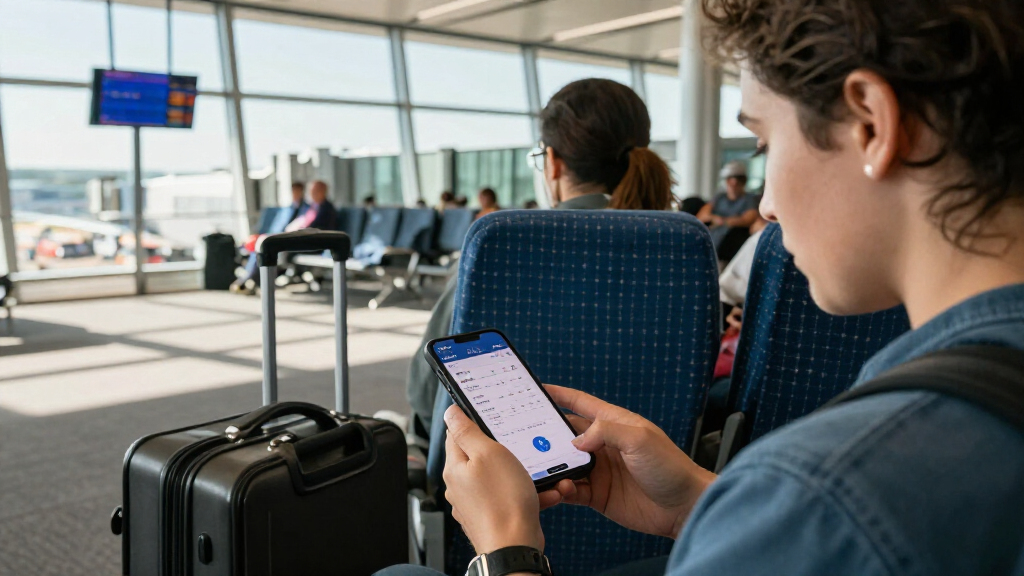
United Airlines said November 11, 2026, that it is restricting unauthorized third-party AI agents across its website, app and intermediary channels. Its revised contract prohibits agents from making, changing or servicing tickets, even when a passenger supervises them; people can still search with AI and complete purchases themselves, according to reporting cited in the source material.
United Airlines said November 11 it is restricting unauthorized third-party AI agents from using its website and app, as well as accessing its services indirectly through travel agencies and aggregators. The airline’s revised contract of carriage prohibits AI agents from making, modifying or servicing tickets, including when a passenger or another person supervises the software, putting limits on a growing proposed use of AI assistants for travel purchases.

Get business pricing on tech for your team
- Business-only prices and quantity discounts
- Tax-exempt purchasing
- Multiple users, one account, clear invoices
United’s announcement says the work includes updates to its booking, ticketing and distribution policies. The specific prohibition appears in Rule 6.J.6 of the revised contract of carriage, according to text reproduced by View from the Wing, One Mile at a Time and PPC Land. The source article says it could not load United’s website, so the contract wording is based on those publications’ quotations rather than an independent review of the live document.
The contract defines an AI agent broadly as software or a service that takes autonomous or semi-autonomous action to search for, book, purchase, ticket, service or manage a product offered by or through United. It covers AI-enabled browsers, standalone agents and assistants accessed through consumer platforms or travel intermediaries. The definition applies whether or not a passenger supervises or approves the actions, and the text does not name specific products.
Other quoted provisions describe possible consequences. Rule 5.H allows United to cancel reservations made, modified or serviced by AI agents without notice, according to PPC Land. The contract’s remedies clause includes invalidating tickets and other measures, but PPC Land says it does not specify whether United intends to apply those remedies to agent bookings. The source article reports that tickets issued before November 11 are governed by the contract in effect on their issue date.

How the Rule Changes AI Booking
The rule draws a line between using AI to find and compare flights and letting it act on a booking. The Wall Street Journal, as cited by View from the Wing, reported that an AI assistant may still search for United flights and present fares, while the traveler must complete the purchase. The contract language extends the restriction beyond initial checkout to ticket changes and servicing.
For travelers, the practical effect described in the source is that an agent cannot complete or manage a United ticket on their behalf, even with their approval. That may affect people who want software to handle routine booking steps or changes. United’s statement also raises a question for travel agencies and aggregators that connect automated tools to airline systems: the airline says it is restricting access through those routes as well as on its own digital platforms.
The announcement comes as companies explore AI-assisted travel services, but use remains limited in at least one cited example. The source says Uber counted four agent-booked rides in one week, out of about 320 million trips and orders during that week. That figure concerns Uber activity, not airline bookings, and the source provides no comparable count for United. It cannot establish how many travelers will be affected by United’s rule.
Products Worth Considering

Anker SOLIX C1000 Gen 2 Portable Power Station with 200W Solar Panel

LG UltraGear 34G600A-B 34-Inch Curved WQHD Gaming Monitor, 160Hz

Bose QuietComfort Wireless Over-Ear Noise-Cancelling Headphones, Sandstone
As an affiliate, we earn on qualifying purchases.
Airlines Face a New Booking Channel
Personal AI agents are marketed as tools that can take a travel request, search options and complete tasks such as booking or check-in. The source article says Meta CEO Mark Zuckerberg described travel as a “top use case” for Meta’s Muse agent, citing Skift. It also reports that Southwest and Expedia are working with ChatGPT, while Amazon and JPMorgan Chase have restricted access by outside agents.
Skift described United as the first U.S. airline to state this kind of restriction explicitly. That characterization is attributed to Skift; the source does not provide a survey of every airline’s policies. United’s contract change places agent use among prohibited practices that also include certain fare-related tactics.
The source says United cited account security, unintended purchases and possible conflicts with FAA and Department of Transportation rules. It gave flight check-in as an example, saying a passenger must acknowledge that checked bags do not contain banned substances such as explosives. The material does not include the full regulatory discussion or an agency response, so the scope of any legal requirement is not established here.
““United is taking steps to restrict access – directly within our digital platforms and indirectly via travel agencies and aggregators – to prohibit use by unauthorized, third-party personal AI agents or assistants.””
— United Airlines
Enforcement and Traveler Impact
United has not detailed, in the material provided, how it will identify agent activity, distinguish it from other automated browsing or apply the contract’s listed remedies. The contract permits cancellation of reservations it says were made, modified or serviced by agents, but the source says it is unclear whether United intends to use all listed penalties in these cases.
The source article cites reporting that AI tools may still search for United fares, but the airline announcement as reproduced here does not spell out the boundary between permitted search and prohibited action. It is also unclear how United will treat tools that help fill forms or assist a passenger who personally confirms each step. The contract’s definition includes supervised actions, though operational enforcement details are not given.
United’s policy rationale includes possible regulatory concerns, but the supplied material does not establish that a specific regulation prohibits every AI-assisted booking or check-in. Nor does it provide data on current agent bookings, cancellations, or customer complaints. Those details would be needed to measure the rule’s effect.
Watch for Booking Policy Details
Travelers planning a United trip should check the airline’s current contract and booking guidance before relying on an outside AI tool to purchase, change or service a ticket. The reported contract text says United may cancel reservations involving agent activity, while the airline’s public statement says it is updating booking, ticketing and distribution policies.
Further detail from United could clarify how the restriction is applied to travel agency and aggregator connections, what actions count as agent servicing, and how the airline handles reservations made before the revision. The source material does not identify a timetable for additional guidance or report a specific enforcement launch date beyond the November 11 announcement and contract revision.
Key Questions
Can an AI assistant still help me find a United flight?
According to The Wall Street Journal, as cited by View from the Wing, an assistant may search for United flights and show fares. The traveler must complete the purchase themselves.
Does supervising an AI agent make a United booking allowed?
The contract wording quoted by travel publications says the prohibition applies whether or not a passenger or another person supervises or approves the agent’s actions.
Can United cancel a reservation made by an AI agent?
Rule 5.H, as quoted by PPC Land, allows United to cancel reservations made, modified or serviced by AI agents without notice. The source material does not explain how often or in what circumstances United plans to use that provision.
Does the rule name specific AI products?
No specific product is named in the contract wording described in the source. It covers categories including AI-enabled browsers, standalone agents and assistants accessed through consumer platforms or intermediaries.
Source: Thorsten Meyer AI