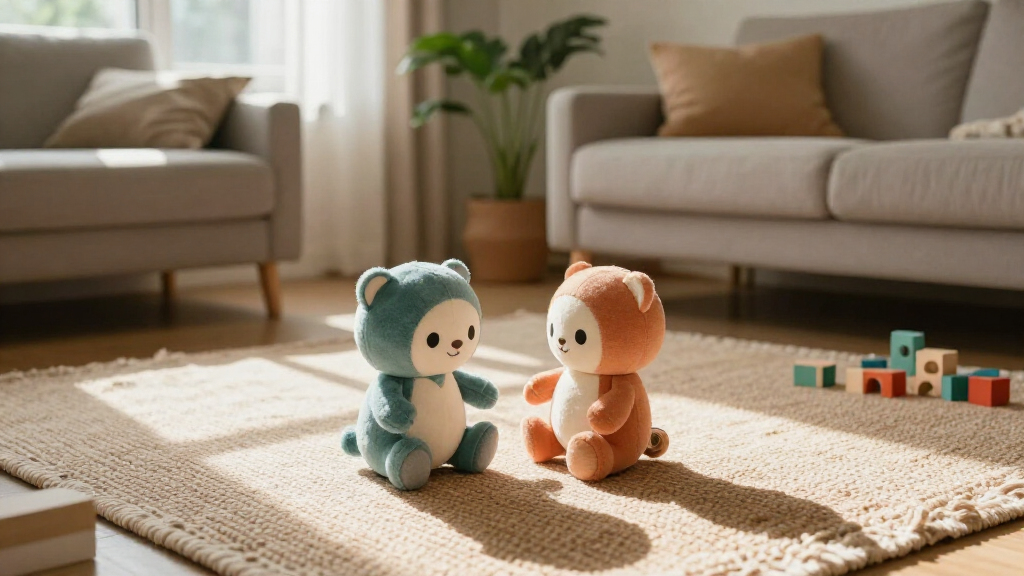

Among these AI toys for kids, I rank Loona best overall for families seeking voice and gesture interaction in a robot pet, while FITKOL stands out for language learning and parental controls. Haivivi BubblePal offers a simpler plush companion, and the Ruko 1088 puts programmable robot play ahead of conversation. The main tradeoffs are plush comfort versus hands-on robotics, screen-free play versus a built-in display, and richer interaction versus more setup and oversight. I weigh how each toy fits a child’s age, interests, and a family’s boundaries around connected features. Read on for the full comparison and picks by buyer type.

Get business pricing on tech for your team
- Business-only prices and quantity discounts
- Tax-exempt purchasing
- Multiple users, one account, clear invoices
Key Takeaways
- Loona is the broadest robot pet pick: voice and gesture controls give it more ways to play than the plush companions, though its moving robot format may not suit every child or household.
- FITKOL is the learning-focused choice: language features and parental controls make it more purpose-driven than toys centered on character conversation.
- BubblePal and the AI panda suit plush-first play: both lean toward a familiar soft-toy format, which may appeal to younger children more than a programmable robot or touchscreen model.
- The Ruko 1088 favors making over chatting: its programmable robot focus is a better match for children who want to direct actions than those seeking a bedtime companion.
- A screen changes the play equation: the 7-inch touchscreen model offers a visual interface, while several other picks center on plush, robot, or audio interaction.


| AI toys for kid | Model | Connectivity |
|---|---|---|
| Haivivi BubblePal Talking AI C | BubblePal | 2.4 GHz Wi-Fi or compatible mobile hotspot |
| Ruko 1088 Programmable Interac | 1088 (Ru4413) | — |
| Loona Interactive AI Robot Pet | KYO04LN01 | Wi-Fi and mobile hotspot |
| Just Play emotoBOT COR-A Inter | 81687 | No Wi-Fi, AI, or Bluetooth |
| AI Robot Toys for Kids | — | 2.4 GHz Wi-Fi and Bluetooth |
| FITKOL AI Interactive Plush To | HGB01 | — |
| Lovi AI Companion Interactive | — | — |
| AI Teddy Bear for Kids Ages 3– | — | — |
| Bao-ao Interactive AI Mouse Pl | A125-0008 | 2.4 GHz Wi-Fi |
| Haivivi BubblePal Interactive | BubblePal | 2.4 GHz Wi-Fi |
| alilo AI Toys for Kids | — | Bluetooth; computer connection for uploading custom content |
More Details on Our Top Picks
Haivivi BubblePal Talking AI Companion Toy for Kids, Ages 3+
For families seeking voice-based AI play without handing over a screen, BubblePal is the clearest fit in this group. Children can ask questions, hear stories, and continue conversations with 16+ character personalities, while parents choose characters and adjust volume in the app. Compared with the 7-inch AI Robot, BubblePal keeps play focused on listening and talking instead of videos, apps, and drawing. That simplicity also means it needs a parent to handle setup and an internet connection for conversations. It has no camera or GPS, a useful distinction from Loona, whose camera and depth sensor enable following and gesture play. The main catch is that the compatible plush is sold separately, so the included device is not a plush toy by itself.
Pros:- Voice conversations let children ask follow-up questions without a screen
- Includes stories and more than 16 AI character personalities
- Parent app offers character selection and volume controls
- No camera or GPS
Cons:- Conversations require an active internet connection
- A parent must set it up through the Haivivi app
- Compatible plush toy is not included
Best for: Parents of children ages 3–10 who want conversational, screen-free play and are comfortable setting up a connected toy
Not ideal for: Families seeking an offline toy or a complete plush companion in the box
- Brand:Haivivi
- Model:BubblePal
- Age range:3–10 years
- AI characters:16+
- Connectivity:2.4 GHz Wi-Fi or compatible mobile hotspot
- Included membership:12 months of AI membership from activation
- Privacy features:No camera or GPS
- Warranty:90 days against manufacturer defects
Our verdict“Choose BubblePal for screen-free AI conversation with parent-managed settings, provided Wi-Fi and a separate compatible plush suit your household.”
Ruko 1088 Programmable Interactive Robot Toy for Kids
The Ruko 1088 earns its place for children who want a robot to direct, move, and program, rather than mainly chat with. Its 15.8-inch body and nine flexible joints give dance routines and movement commands a physical presence, while basic programming offers a first step toward sequencing actions. Remote, app, voice, and phone-tilt controls give kids several ways to operate it; BubblePal, by comparison, is built around conversation and storytelling. Ruko also plays music and records, making it a more varied activity toy than COR-A’s smaller touch-and-music format. The tradeoff is that its AI role is less clearly defined: the listed functions emphasize programmed and controlled play, not open-ended AI conversation. Charging has a practical wrinkle too: USB-C to USB-C cables are not supported.
Pros:- Remote, Bluetooth app, voice, and phone-tilt control options
- Dance, storytelling, music, recording, and basic programming activities
- Up to 100 minutes of playtime per charge
- Nine flexible joints and a 15.8-inch height support expressive movement
Cons:- USB-C to USB-C cables will not charge the robot
- May need a 30-minute initial charge if it does not respond
- Listed activities emphasize programmed play over open-ended AI conversation
Best for: Children ages 4–9 who enjoy directing a moving robot, trying several controls, and experimenting with basic programming
Not ideal for: Families looking primarily for an AI chatbot or a toy that works without regular charging
- Brand:Ruko
- Model:1088 (Ru4413)
- Recommended age:4–9 years
- Height:15.8 inches
- Expressions:10
- Flexible joints:9
- Playtime:Up to 100 minutes per charge
- Controls:2.4 GHz remote, Bluetooth app, voice commands, and phone tilt
- Material:ABS
Our verdict“Pick Ruko for an interactive robot children can move and program, rather than a toy centered on ongoing AI conversation.”
Loona Interactive AI Robot Pet with Voice and Gesture Control and Charging Dock
Loona is the most pet-like choice here: its camera and depth sensor let it recognize faces, respond to gestures, and follow people around a room. That gives it a more active role than the Ruko 1088, which offers many controls and programmed routines but is less focused on following a child. Games, fetching, and laser chasing extend play beyond voice responses, and the charging dock can handle recharging along preset routes. Those capabilities come with a different kind of household commitment. Loona needs an open area for its dock, clear surfaces for its sensors, and good lighting for recognition. Its camera also makes it a less suitable choice for families who prefer toys without cameras; BubblePal has no camera or GPS. Voice interaction works best in quiet spaces with clear pronunciation.
Pros:- Recognizes faces and gestures and can follow people
- Voice commands support responses using Amazon Lex and ChatGPT
- Games include chasing a laser pen and fetching balls
- Charging dock supports automatic recharging along preset routes
Cons:- Camera and depth sensor work best on clean surfaces in good lighting
- Charging dock needs an open, unobstructed area
- Voice responses work best in quiet spaces with clear pronunciation
Best for: Families with children ages 6 and up who want a mobile robot pet for gesture games, following, and voice interaction
Not ideal for: Households that prefer toys without cameras or lack clear floor space and a well-lit play area
- Brand:Loona
- Model:KYO04LN01
- Age range:6 years and up
- Weight:1.1 kg
- Dimensions:19 × 18 × 18 inches
- Sensors:RGB camera and ToF depth sensor
- Connectivity:Wi-Fi and mobile hotspot
- Charging time:About 2.5 hours
- Warranty:1 year against manufacturer defects
Our verdict“Choose Loona for a mobile, sensor-driven robot pet if your family is comfortable with its camera and has room for the charging dock.”
Just Play emotoBOT COR-A Interactive Robot Toy with Accessories, Pink
COR-A suits families who want an interactive robot without Wi-Fi, an app connection, or AI chat. Touch and music prompt expressions, movement, and sound, with more than 100 play activities spanning games, jokes, dance, and yoga. Its six-inch size and included pretend phone, drink, and kitty-ear headphones make it a smaller, accessory-led option than Loona, which follows people and uses a camera and depth sensor. It also avoids BubblePal’s dependence on an internet connection, though its interactions are activity-based rather than open-ended conversations. English, German, and French language options broaden its fit for some households. One limitation matters for group play: some modes require a second emotoBOT. The rechargeable battery is built in, but the USB-C charging cable is not included.
Pros:- Works without Wi-Fi, AI, or Bluetooth
- Touch and music trigger animated expressions, movement, and sound
- More than 100 activities include games, dancing, yoga, and jokes
- Includes kitty-ear headphones, pretend drink, and pretend phone
Cons:- USB-C charging cable is not included
- Some modes require a second emotoBOT
- Activity-based interactions do not offer the open-ended AI conversation of BubblePal
Best for: Families with children ages 6 and up who want a compact, offline robot for touch, music, and activity-based play
Not ideal for: Children seeking open-ended AI conversation or families who want every play mode available with one robot
- Brand:Just Play
- Model:81687
- Age range:6 years and up
- Height:6 inches
- Screen:2-inch animated LED
- Languages:English, German, and French
- Play options:100+ activities
- Power:Built-in rechargeable battery
- Connectivity:No Wi-Fi, AI, or Bluetooth
Our verdict“Choose COR-A for offline, accessory-rich robot play if a preset set of activities is enough for your child.”
AI Robot Toys for Kids, AI Voice Interaction, 7″ Touch Screen
This 7-inch AI Robot combines voice chat with a broad set of screen-based activities: drawing lessons, letter learning, stories, songs, educational videos, and games. That makes it a better fit than BubblePal for children who enjoy tapping and tracing as well as talking, and its moving wheels add some physical play. The tradeoff is that this is the most tablet-like option in the lineup. Its Google Play access and streaming app support expand what it can do, but also mean more screen content than screen-free BubblePal or offline COR-A. The product data lists Wi-Fi, Bluetooth, storage, and battery capacity, but does not provide a brand or model name or clarify which AI services power its conversations. Families should weigh those unknowns alongside its many activities.
Pros:- Combines voice interaction with drawing, letters, stories, songs, and games
- Seven-inch HD touchscreen supports tracing and coloring activities
- Google Play Store access and expandable TF card support
- Moving wheels allow it to roll and dance
Cons:- Screen-centered activities make it less suitable for families limiting screen play
- Wi-Fi is needed for online features and app access
- Product data does not identify the brand, model, or AI service
Best for: Families seeking a touch-screen learning toy with drawing, early learning activities, apps, and voice interaction
Not ideal for: Parents prioritizing screen-free play, offline use, or clearly specified AI service and product details
- Display:7-inch HD touchscreen, 1024 × 600 resolution
- Operating system:Android
- Memory:1 GB RAM
- Internal storage:16 GB
- Expandable storage:TF card support
- Connectivity:2.4 GHz Wi-Fi and Bluetooth
- Battery:4000 mAh rechargeable
- Estimated continuous use:Approximately 4–6 hours per charge
- Weight:1.8 pounds
Our verdict“Pick this robot for a child who wants drawing and learning apps alongside voice interaction, and who is ready for a screen-based toy.”
FITKOL AI Interactive Plush Toy with Language Learning and Parental Controls
FITKOL is the learning-first pick in this group: its 200+ book library, quizzes, phonics practice, and ESL mode give children more structured language activities than the conversational focus of the AI Teddy Bear. Support for 18+ languages and adaptive difficulty may suit families who want a plush companion to reinforce reading and language practice. Its 300+ stories and custom story creation add room for less formal play, while app-based parental controls and chat summaries give caregivers a way to review interactions. The tradeoff is that some features depend on the companion app, and the listing does not state the toy’s dimensions or charging time. Compared with Haivivi BubblePal, FITKOL emphasizes a larger reading and quiz library; families seeking a transferable device for other plush toys may prefer Haivivi instead.
Pros:- Combines stories, conversation, phonics practice, and reading quizzes
- Offers 200+ books and adaptive quiz difficulty
- Supports 18+ languages and an ESL learning mode
- Rechargeable 2000mAh battery is rated for 8+ hours of use
Cons:- Some features depend on the companion app
- Charging time and physical dimensions are not specified
Best for: Families looking for a plush companion that supports reading practice, phonics, or ESL learning across multiple languages
Not ideal for: Caregivers who want an app-independent toy or need clear dimensions and charging-time details before choosing
- Model:HGB01
- Reading library:200+ books
- Stories:300+ classic stories, plus custom story creation
- Supported languages:18+
- Battery capacity:2000mAh
- Battery life:8+ hours
- Charging:USB-C rechargeable
- Recommended age:3 years and up
- Parental controls:App with chat summaries
Our verdict“Choose FITKOL if reading and language practice matter more to your family than a transferable plush device or app-light setup.”
Lovi AI Companion Interactive Robot, Smart Emotional Talking Toys for Kids
Lovi puts character and audio variety at the center of its appeal. Its LCD screen displays 20+ emotions, and eight character modes with six voices give conversations more visible personality than the simple one-button AI Teddy Bear. The library of 300+ AI-generated tracks, custom bedtime stories, and routine reminders also makes it a broader playmate for children who like switching between chatting, music, and daily prompts. That range comes with a shorter stated talk time: 4–5 hours, compared with the teddy bear’s 3–4 hours, and the listing gives no battery capacity. Lovi also needs an app for setup and syncing. Families prioritizing plush cuddling or longer stated playback may prefer Bao-ao, which lists up to 15 hours, while Lovi suits kids drawn to a screen-based character.
Pros:- LCD screen shows 20+ emotions, with eight character modes and six voices
- Includes 300+ AI-generated music tracks and custom bedtime stories
- Adds daily reminders alongside conversation and play
- Portable plush design includes a carry strap
Cons:- Requires an app for setup and syncing
- Continuous talk time is listed as 4–5 hours
- Battery capacity and charging time are not specified
Best for: Children ages 3–12 who enjoy expressive robot characters, music, bedtime stories, and playful routine reminders
Not ideal for: Families seeking a screen-free plush companion, a long talk-time session, or a toy that works without app setup
- Character modes:8
- Voice options:6
- LCD emotions:20+
- AI music library:300+ tracks
- Talk time:4–5 hours
- Standby time:Up to 20 hours
- Dimensions:9.1 × 8.6 × 7.1 inches
- Material:Polyester
- Recommended age:3–12 years
Our verdict“Pick Lovi for a child who wants a characterful, music-playing robot companion and is comfortable with app setup.”
AI Teddy Bear for Kids Ages 3–9, Real-Time AI Conversation & Intelligent Voice Responses, Screen-Free Interactive AI Companion for Bedtime, Stories, Play & Emotional Comfort
This teddy bear keeps the interaction straightforward: parents handle setup, then children can start a conversation with one button, without a subscription. Its soft 13-inch bear format is made for hugging and bedtime, while conversation memory is described as a way to continue companionship over time. That makes it a more cuddly, low-friction choice than the screen-equipped Lovi, which offers more visible character changes, music, and reminders. The tradeoff is a narrower feature set and a stated 3–4 hours of use per charge; Bao-ao lists up to 15 hours and more language support. The description recommends parental supervision but does not specify supported languages, parental controls, or how its memory is managed, so caregivers should weigh those unknowns before making it a child’s regular conversation partner.
Pros:- Soft bear design is suited to hugging and bedtime use
- One-button operation is simple for young children
- No subscription is required after parent setup
- Conversation memory is described as supporting continued companionship
Cons:- Battery lasts a stated 3–4 hours per charge
- Supported languages and parental control features are not specified
- Parents are advised to supervise use
Best for: Caregivers seeking a soft, simple voice companion for a young child’s stories, questions, and bedtime routine
Not ideal for: Families wanting detailed parental controls, specified language options, or longer battery life between charges
- Recommended age:3–9 years
- Size:13 inches
- Dimensions:7 × 4.33 × 13 inches
- Material:Polyester
- Battery:Rechargeable lithium battery
- Battery life:3–4 hours per charge
- Operation:One-button
- Subscription:None required
Our verdict“Choose the teddy bear for a young child who wants a simple, huggable conversation companion and whose caregiver can supervise use.”
Bao-ao Interactive AI Mouse Plush Toy, 11.8 Inches
Bao-ao stands out for long playback and broad language support: it lists up to 15 hours and 91 languages, giving it an advantage over the FITKOL plush on both stated battery life and language count. After setup, no app is required for interaction, which may make everyday play simpler; language settings still use an activated H5 webpage. Emotion-adaptive replies and long-term memory add conversational continuity, while poseable limbs and a detachable washable outfit give the mouse more hands-on play than the stationary AI Teddy Bear. There are practical compromises: connected features need 2.4 GHz Wi-Fi, the toy weighs 1000 g, and its face, hands, and feet are PVC rather than plush. This is a stronger fit for families who value multilingual conversation and longer sessions than for those seeking a fully soft toy.
Pros:- Supports 91 languages
- Playback time is listed at up to 15 hours
- Interaction does not require an app after setup
- Detachable washable outfit and poseable limbs add hands-on play
Cons:- Connected features require 2.4 GHz Wi-Fi
- Language settings use an activated H5 webpage
- Face, hands, and feet are PVC rather than plush
Best for: Families seeking a multilingual plush companion with long stated playback and poseable features
Not ideal for: Buyers who need a fully soft toy, do not have 2.4 GHz Wi-Fi, or want to change language settings without a web page
- Model:A125-0008
- Age range:3 years and up
- Dimensions:11 × 11.8 inches
- Weight:1000 g
- Connectivity:2.4 GHz Wi-Fi
- Supported languages:91
- Battery capacity:2500mAh
- Playback time:Up to 15 hours
- Materials:Polyester plush, PVC, bendable metal wire
Our verdict“Choose Bao-ao if long playback and broad language support matter more than an all-plush texture or app-free setup.”
Haivivi BubblePal Interactive AI Panda Plush for Kids
BubblePal’s detachable core is its clearest advantage: the AI device can move from the included panda to other plush toys, so a child can keep a familiar favorite while changing the character around it. Push-to-listen interaction supports screen-free chats, stories, and kid-friendly answers, while parent conversation summaries and one-click volume control offer more caregiver visibility than the AI Teddy Bear description provides. The set also offers 16+ AI characters and multilingual conversations. The tradeoff is setup through the Haivivi app and a 2.4 GHz Wi-Fi connection; the listing does not give battery life or supported language count. Compared with FITKOL, BubblePal is more adaptable as a device, while FITKOL supplies more explicit reading and phonics activities. Choose by whether plush flexibility or structured language learning matters more.
Pros:- Detachable core can be moved to other plush toys
- Push-to-listen interaction supports screen-free use
- Offers 16+ AI characters and multilingual conversations
- Includes conversation summaries and one-click volume control
Cons:- Requires the Haivivi app for setup
- Connected features require 2.4 GHz Wi-Fi
- Battery life and supported language count are not specified
Best for: Families whose child wants to move an AI companion between the included panda and other favorite plush toys
Not ideal for: Caregivers who want app-free setup, no Wi-Fi dependence, or clearly listed battery life and language counts
- Brand:Haivivi
- Model:BubblePal
- Character:Panda
- Age range:3–10 years
- AI characters:16+
- Connectivity:2.4 GHz Wi-Fi
- Core dimensions:2 × 1.5 inches
- Included components:Panda plush, BubblePal core, USB-C cable, user manual
- Certifications:FCC, CPC, CE, IC
Our verdict“Choose BubblePal if your child wants to use one AI companion core with multiple plush toys and you are comfortable with app and Wi-Fi setup.”
alilo AI Toys for Kids, Smart Companion with Real-Time Voice, 4 Agents & 91 Languages, Preloaded 48 Bunny English/50 Stories/66 Music/28 Lullabies/34 Classical Tunes, Bluetooth Speaker
alilo’s strongest distinction is its offline library: 50 stories, 66 music tracks, lullabies, and classical tunes give children screen-free listening without Wi-Fi. That makes it a better fit for bedtime and travel than voice-led options such as the Haivivi BubblePal Talking AI Companion Toy, whose appeal centers more on conversation. When its app subscription is activated, alilo adds real-time AI chat through four roles—a Comforter, Habit Builder, Teacher, and Storyteller—and support for 91 languages. Those modes offer varied ways to interact, though the listing does not explain how they differ in practice. The main tradeoff is subscription-dependent AI chat: the substantial preloaded library works offline, but the central AI feature requires app activation. Bluetooth playback, custom content uploads, and glowing ears add flexibility, while families seeking a fully specified conversational experience may want clearer details before choosing.
Pros:- Preloaded stories, music, lullabies, and classical tunes can play offline
- Four AI companion roles offer different conversation themes
- Supports voice interaction in 91 languages
- Bluetooth playback and computer content uploads give families more listening options
Cons:- AI chat requires activating an in-app subscription
- The listing does not specify parental controls or how the AI handles children’s questions
- The large audio library may matter more than the AI features for families seeking an interactive playmate
Best for: Families who want an offline audio companion for stories, music, and bedtime, with optional multilingual AI chat.
Not ideal for: Buyers who want AI conversation to work without activating an app subscription, or who need detailed information about parental controls and how the four chat modes work.
- AI companion roles:4: Comforter, Habit Builder, Teacher, and Storyteller
- Supported languages:91
- Preloaded content:48 bunny English songs, 50 stories, 66 music tracks, 28 lullabies, and 34 classical tunes
- Offline playback:Preloaded content can be enjoyed offline
- Connectivity:Bluetooth; computer connection for uploading custom content
- Night light:Glowing bunny ears
- Battery:1 nonstandard battery, included
- Material:Acrylonitrile Butadiene Styrene (ABS)
- Dimensions:8.57 × 4.06 × 3.29 inches
Our verdict“Choose alilo for a screen-free audio companion with optional multilingual chat, and skip it if subscription-dependent AI conversation is the main reason you are shopping.”
How We Picked
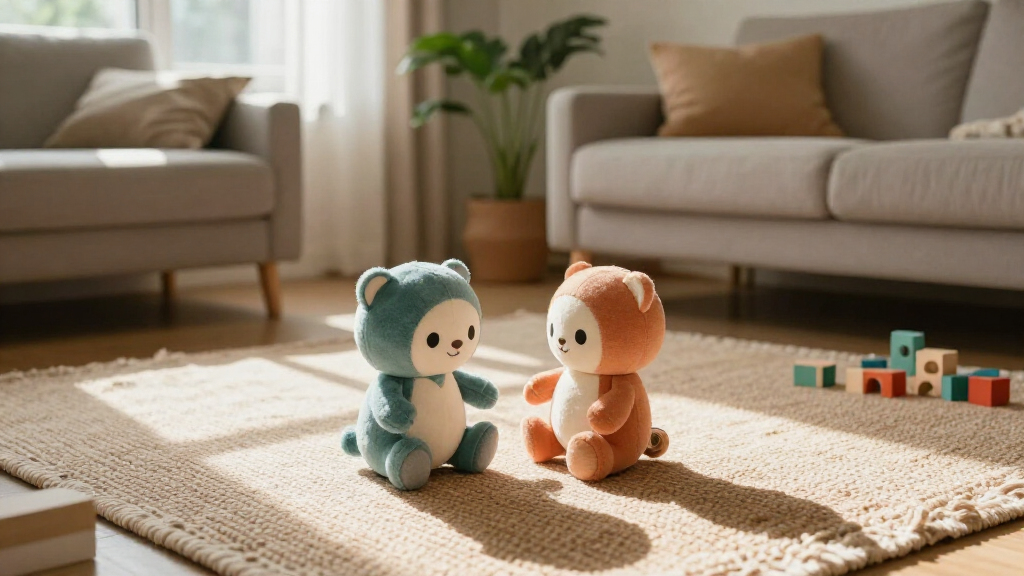
I compared the 11 options by how their advertised play modes match common family needs: companionship, language learning, programming, stories, music, and interactive robot play. I also considered age fit where specified, the presence of parental controls, whether a toy relies on a screen, and how much variety its interaction style appears to offer. These factors matter because an AI toy can be engaging yet still be a poor match for a child’s routines or a caregiver’s boundaries.
The order favors toys with a clear role, useful interaction modes, and a fit that can be explained to a specific buyer. Loona ranks first for its combination of voice and gesture control; more focused picks follow where their learning, programming, or plush format makes them a better choice for a narrower need. Product details here come from the supplied product descriptions, so I avoid claims about response quality, durability, or data practices that those descriptions do not establish.
Factors to Consider When Choosing AI Toys For Kids
I’d start with the kind of play your child returns to, then check how the toy’s connected features fit your household. A good match depends as much on routines and supervision as on the number of advertised functions.
Choose a Play Style Before a Feature List
Decide whether your child wants a character to talk with, a robot to direct, or a toy that supports a skill such as language learning. These are different kinds of engagement, even when each product uses AI in its description. A child who likes building routines and giving commands may get more from a programmable robot than from a story companion. A child who seeks comfort may prefer a soft toy that can join bedtime or quiet play. Avoid buying based on the longest feature list alone; features matter only when they support play your child already enjoys. If you are unsure, choose a toy with one clear main role over a device with several unrelated modes.
Set Boundaries for Voice, Screens, and Connectivity
Voice interaction can make a toy feel conversational, but it also changes how and when it can be used. Before buying, look for plain explanations of whether an internet connection, account, app, or microphone access is needed. Check what parental controls actually let a caregiver manage, since that phrase can cover very different tools. For a screen-free routine, favor audio or plush interaction and confirm that the toy does not depend on a display for its main play. A touchscreen can help a child navigate visual activities, but it may not fit a family trying to limit device time. Build your household rules around the setup, not just the toy’s marketing description.
Match the Toy to the Child’s Age and Independence
Use the stated age range as a starting point, then think about how independently your child can follow instructions and handle connected devices. A younger child may benefit from simple prompts and familiar plush form, while an older one may want programming or more active controls. Consider whether an adult will need to set up accounts, manage charging, or help with the interface. A toy that asks for frequent adult involvement can be a poor fit when the goal is independent play. Also look for clear information about small accessories, moving parts, and care needs before choosing for a young child. The right age fit is about daily use and supervision as much as the number on the box.
Look for Repeat Play, Not Just a Long Content Count
Large counts of songs, stories, or languages can sound valuable, but quantity does not tell you whether a child will return to them. Ask whether the toy supports open-ended play, repeatable activities, or a skill that grows with practice. A fixed library may work well for predictable bedtime listening, while interactive controls can matter more for a child who wants to change what happens. If learning is the goal, check whether the product description explains how the child participates rather than just naming supported languages. Parents can easily overvalue a long list of included content and overlook the way it is accessed. Choose the format that fits how your child likes to revisit an activity.
Factor in Care, Charging, and the Play Space
Interactive toys need practical care: charging, storage, cleaning, and sometimes a stable area for movement. A plush toy may fit on a bed or travel bag more easily than a robot with a charging dock, while a moving model needs room to operate. Check whether cleaning instructions are available before treating a connected plush like an ordinary stuffed animal. Think about where the toy will live when it is not in use and whether its charging routine fits your household. These details rarely shape the first impression, but they can decide whether a toy stays in regular rotation. When product information leaves care or power needs unclear, verify them before purchase.
Frequently Asked Questions
Are AI toys suitable for a child who is not ready for a tablet?
Some options in this roundup use plush or robot forms, while one is described with a 7-inch touchscreen, so “AI toy” does not automatically mean screen-free. Start by checking whether the toy needs an app, account, or display for its main activities. For a child not ready for a tablet, favor a product whose play centers on audio, physical interaction, or a soft companion, and confirm its setup requirements. Ask how the toy behaves when offline if that matters to your family. The product descriptions provided do not establish the connectivity details for every model.
What should I check before letting a child talk to an AI toy?
Find out whether the toy connects to the internet, what microphone access it uses, and whether conversations or account details are stored. Review the maker’s privacy information and caregiver controls before enabling voice features. If those details are hard to find, treat that as a reason to investigate further rather than assuming the toy works like an offline recording. Set rules for where and when the child can use voice interaction, especially around bedtime and shared spaces. Adult setup and periodic review remain useful even when a toy advertises parental controls.
Should I choose a plush companion or an interactive robot?
Choose a plush format if softness, portability, and quiet companionship matter most; choose a robot if your child wants movement, gestures, or commands to shape play. The plush options here include talking companions and story or language features, while Loona and Ruko point more toward robot interaction. Think about the child’s preferred play rather than assuming a more active toy is automatically more engaging. A robot may also need more space and charging attention. For a younger child or bedtime routine, a familiar soft form may be easier to fit into daily life.
Does a toy with many languages or stories make a better learning toy?
A large content library can offer variety, but it does not show how actively a child learns or whether the material fits their level. Check whether the toy invites speaking, listening, repetition, or other participation, and whether caregivers can guide the activity. FITKOL is positioned around language learning and parental controls, while alilo advertises multiple languages alongside stories, music, and lullabies. Those descriptions suggest different approaches, not a guaranteed learning result. If language practice is the priority, look for clear examples of lessons and age guidance before choosing.
What if my child loses interest in a conversational toy?
Conversation alone may not sustain play for every child, so consider whether the toy offers another activity the child already likes, such as programming, stories, music, or interactive movement. The products in this roundup vary widely in that respect, from robot control to plush companionship and audio content. A toy with a defined use, such as bedtime listening or language practice, may still earn a place even if open-ended chat fades. Avoid relying on promised conversational novelty as the only reason to buy. If possible, align the choice with an existing routine so the toy has a natural role.
Conclusion
I’d choose Loona as the best overall for a child who wants an interactive robot pet with voice and gesture controls. For best value in function, the Ruko 1088 is the more purposeful pick for children drawn to programming; its appeal is narrower than Loona’s. FITKOL is best for beginners who want a learning angle and caregiver controls, while Haivivi BubblePal is the simpler plush-first option for younger children who prefer a soft companion. For a more feature-rich plush and audio mix, alilo suits families interested in stories, music, and language variety; choose the touchscreen model only if a display fits your household rules. Compare setup, privacy details, and care needs before deciding, since the product descriptions do not answer every connected-toy question.