
AI can help you close global learning gaps by offering personalized education tailored to your strengths, needs, and cultural background. It breaks language barriers with accurate translations and provides instant feedback to keep you motivated. While infrastructure and human support are essential, responsible AI use can create more inclusive and accessible learning environments worldwide. Keep exploring to find out how these innovations are making education more equitable for everyone.

Get business pricing on tech for your team
- Business-only prices and quantity discounts
- Tax-exempt purchasing
- Multiple users, one account, clear invoices
Key Takeaways
- AI personalizes learning, addressing individual needs and overcoming traditional educational barriers globally.
- Language translation tools facilitate access to diverse content, promoting cross-cultural understanding.
- Real-time assessment and feedback enable continuous improvement tailored to learners’ progress.
- Responsible AI implementation ensures fair, unbiased, and inclusive educational experiences.
- Infrastructure and educator involvement are essential for AI to effectively reduce global learning gaps.
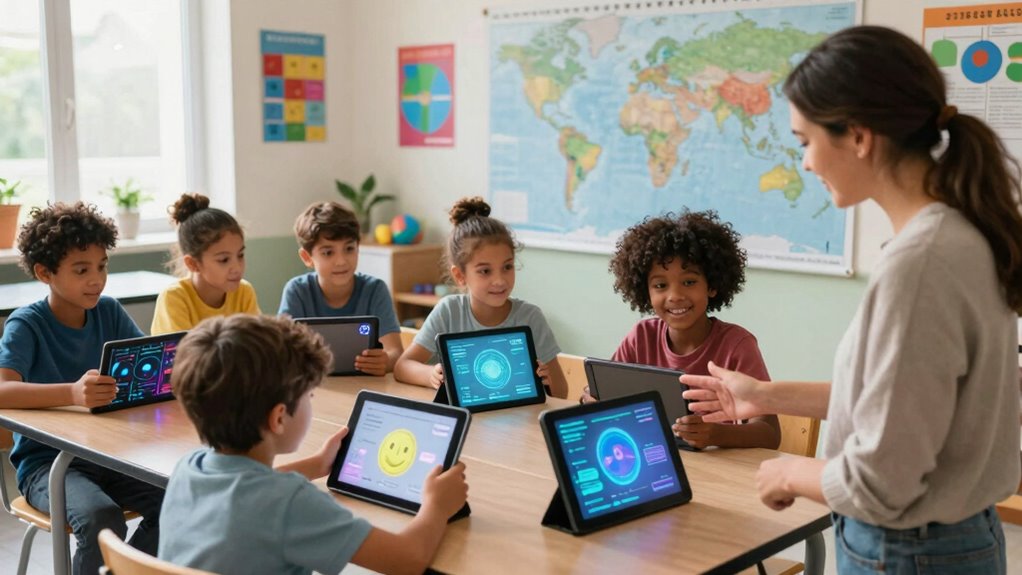
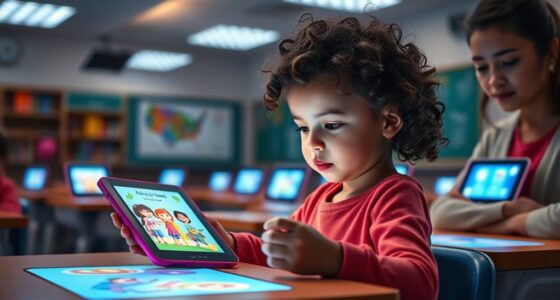
Artificial intelligence has the potential to transform education by offering personalized learning experiences that can address disparities worldwide. When you use AI-powered tools, you can receive personalized tutoring tailored to your unique learning style, strengths, and weaknesses. This means you’re not stuck with a one-size-fits-all approach; instead, the system adapts in real-time, providing explanations, exercises, or challenges that suit your needs. For students in underserved regions or those struggling with traditional teaching methods, personalized tutoring can bridge gaps that often seem insurmountable. It enables learners to progress at their own pace, guaranteeing they grasp foundational concepts before moving on, which is vital for closing learning gaps on a global scale.
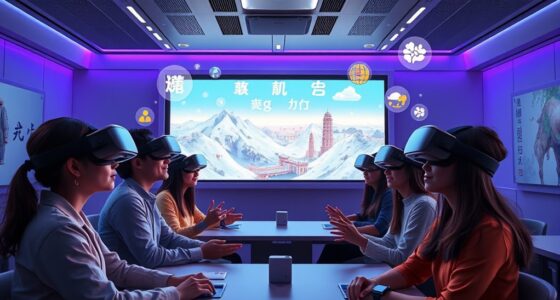
Language barriers are a significant obstacle for many learners across the world. AI-powered language translation tools can break down these barriers, allowing students to access educational content in their native language or learn new languages more efficiently. When you use AI-driven translation, you can understand complex materials that were previously inaccessible due to language limitations. This democratizes learning by making high-quality resources available regardless of your location or language background. It also fosters greater cross-cultural exchange, enriching your educational experience and broadening your perspective. As these translation tools become more accurate and context-aware, the gap between learners in different parts of the world diminishes, making global education more equitable. Additionally, the integration of emerging trends in digital publishing can enhance the accessibility and dissemination of educational materials, ensuring that innovative content reaches a wider audience.
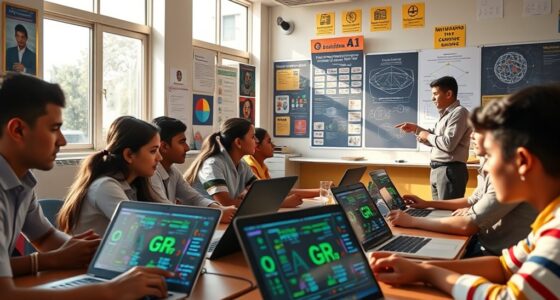
Furthermore, AI facilitates continuous assessment and feedback, which helps you stay motivated and understand your progress better. Instead of waiting for periodic evaluations, AI can analyze your work instantly, pinpointing areas that need improvement and suggesting targeted exercises. This immediate feedback loop guarantees you don’t get lost or discouraged, especially if traditional educational systems lack personalized attention. Additionally, AI can identify patterns in your learning behavior, enabling educators and institutions to refine their strategies to support you more effectively. The use of data-driven insights enhances the ability to tailor education to individual needs, making learning experiences more effective and engaging. In this way, AI can contribute to creating a more inclusive educational environment that adapts to diverse learner backgrounds and needs. Moreover, the ongoing development of AI algorithms relies heavily on large datasets, which can improve the accuracy and relevance of educational tools over time. Being aware of ethical considerations is also essential, as responsible AI implementation ensures fair and unbiased learning experiences.
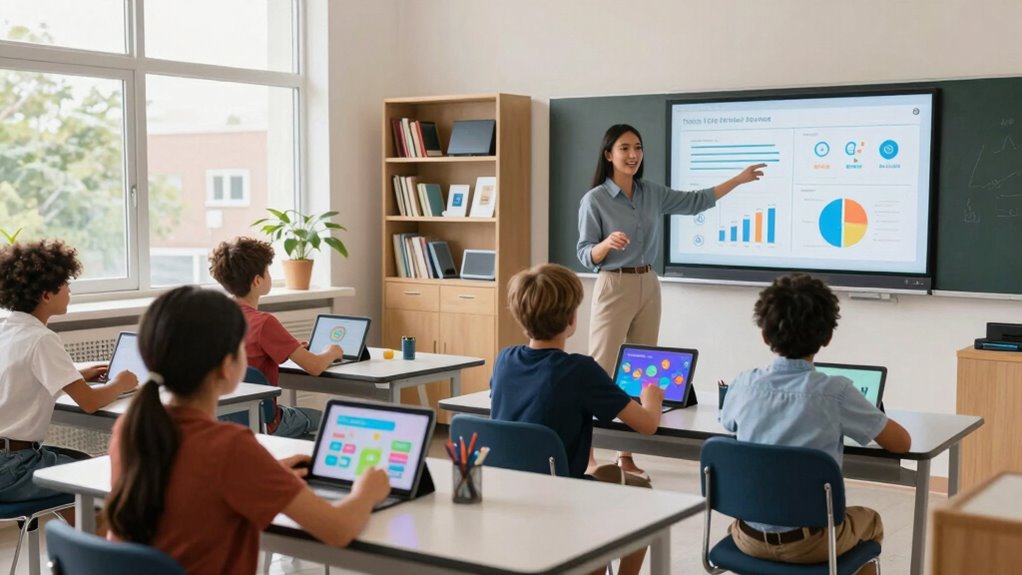
While AI offers promising solutions for closing learning gaps, it’s essential to recognize that technology alone isn’t enough. You need access to reliable internet and devices, and educators must be involved to guide and contextualize AI-driven insights. When these elements align, AI can be a powerful ally in creating more inclusive, tailored, and accessible education for learners worldwide. It holds the potential not just to educate but to empower you by removing barriers and fostering a more equitable global learning environment.
As an affiliate, we earn on qualifying purchases.
Frequently Asked Questions
How Does AI Adapt to Diverse Cultural Educational Needs?
AI adapts to diverse cultural educational needs through cultural customization and language diversity. You can see it tailor content to different cultural contexts, ensuring relevance and respect. AI recognizes various languages, dialects, and cultural nuances, making learning more accessible and engaging for everyone. By analyzing user interactions, AI continually improves its understanding, allowing it to meet individual needs effectively and promote inclusive education worldwide.
What Are the Costs Associated With Implementing AI in Education?
Implementing AI in education involves significant costs, including a thorough cost analysis to understand expenses. You’ll need to invest in infrastructure, such as reliable internet and hardware, to support AI tools effectively. Additionally, ongoing costs like software updates, staff training, and maintenance are essential. While these investments can be high initially, they aim to improve learning outcomes and bridge gaps, making the effort worthwhile for long-term educational benefits.
How Do Students Without Internet Access Benefit From AI?
You might think students without internet miss out, but AI’s offline access changes that. It provides personalized learning through downloaded content and local servers, making education accessible anywhere, anytime. So, even without the world wide web, AI can transform learning for those in remote areas, proving that technology’s true power lies in its ability to reach everyone—whether online or not. Who knew that offline access could be so revolutionary?
What Are the Risks of Data Privacy in Ai-Driven Learning?
You should be aware that data privacy risks in AI-driven learning involve potential breaches of data security and privacy concerns. Personal information may be vulnerable if not properly protected, leading to misuse or unauthorized access. To minimize these risks, make sure that AI platforms follow strict data security protocols, and stay informed about privacy policies. Being proactive helps safeguard your information and builds trust in AI educational tools.
Can AI Replace Teachers in Underserved Regions?
AI can’t replace teachers in underserved regions, but it can act as a helpful compass guiding local educators. You benefit by using AI for teacher training and curriculum development, which bolsters your skills and resources. Think of AI as a supportive tool that amplifies your efforts, rather than replacing your essential role. It empowers you to adapt lessons and address student needs more effectively, creating a bridge toward equitable education.
language translation educational apps
As an affiliate, we earn on qualifying purchases.
As an affiliate, we earn on qualifying purchases.
Conclusion
Imagine a world where every child, no matter where they’re from, walks into a classroom illuminated by the gentle glow of AI-powered tools. As these tools adapt and respond to each learner’s needs, they become beacons of hope, guiding students through the vast ocean of knowledge. With AI’s help, you can see a future where learning isn’t a privilege but a universal journey—bright, inclusive, and endless. Together, we can make this vision a reality.
real-time learning assessment software
As an affiliate, we earn on qualifying purchases.
As an affiliate, we earn on qualifying purchases.
digital learning platforms for global education
As an affiliate, we earn on qualifying purchases.
As an affiliate, we earn on qualifying purchases.
Halloween Picks
halloween
As an affiliate, we earn on qualifying purchases.