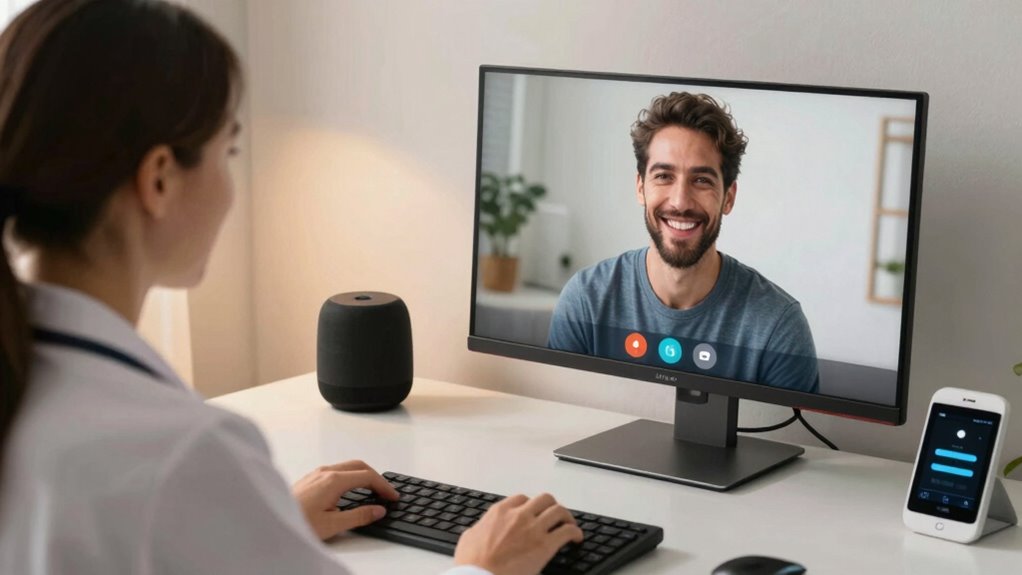
AI can make telehealth feel more human by analyzing your tone, facial expressions, and words to understand your emotional state. It personalizes your care, remembers previous conversations, and adapts responses to create a more authentic and empathetic experience. Technologies like immersive visuals and emotion detection help bridge the gap between digital and personal care. Keep exploring to discover how these advances are shaping a more compassionate virtual healthcare environment.
Key Takeaways
- AI analyzes emotional cues like facial expressions and tone to foster more empathetic virtual interactions.
- It adapts responses based on detected emotions, creating a more personalized and human-like experience.
- Emotional recognition technology enhances understanding of patient feelings, improving care quality.
- Personalization features remember past interactions, making telehealth feel more attentive and supportive.
- Combining visual, auditory, and textual data provides richer, more authentic communication in digital healthcare.

As telehealth becomes increasingly common, many wonder if artificial intelligence can help make virtual medical visits feel more personal and compassionate. It’s a natural question, especially as patients seek not just clinical accuracy but also emotional connection. AI has the potential to bridge this gap by focusing on emotional recognition and enabling personalized interactions. When you’re speaking with a healthcare provider online, AI can analyze your tone of voice, facial expressions, and even word choice to gauge your emotional state. This helps the system understand if you’re anxious, confused, or upset, allowing the virtual assistant or doctor to respond with greater empathy. Such emotional recognition isn’t about replacing human compassion but enhancing the way it’s delivered in a digital setting. Additionally, incorporating natural communication techniques can make interactions feel more authentic and engaging for patients. Imagine AI-powered tools that monitor your expressions during a consultation, noticing if your eyes look tired or if your voice trembles when discussing certain symptoms. These cues help the system adapt its responses, perhaps offering reassurance or asking more probing questions to clarify your concerns. This creates a more nuanced, human-like interaction that goes beyond standard scripted responses. Moreover, understanding projector technology can improve how visual information is presented during telehealth sessions, making digital interactions feel more immersive and clear. It’s also worth noting that emotion detection technology can help identify subtle cues that might otherwise go unnoticed, further enhancing the empathetic quality of virtual care. Recent advancements in multimodal AI enable systems to combine visual, auditory, and textual data for even more accurate emotional insights. Personalized interactions become possible because AI can remember your previous conversations, preferences, and medical history. It can tailor advice, reminders, and follow-up questions based on what it learns about you over time. If you’ve mentioned feeling anxious about a medication before, the system might check in on your mood or ask if you’re experiencing side effects during subsequent visits. Such emotional recognition is a promising development that can help bridge the gap between digital and human care, making patients feel more understood and supported. This ongoing, customized dialogue can make you feel truly heard and understood.
AI-powered emotion detection device
As an affiliate, we earn on qualifying purchases.
As an affiliate, we earn on qualifying purchases.
Frequently Asked Questions
How Does AI Address Cultural Differences in Telehealth Interactions?
AI helps address cultural differences in telehealth by enhancing cultural sensitivity and reducing language barriers. It uses multilingual translation tools to communicate effectively with diverse patients, ensuring they understand diagnoses and treatments. AI can also recognize cultural nuances, allowing providers to tailor their approach accordingly. By bridging these gaps, AI makes telehealth interactions feel more personalized, respectful, and accessible, ultimately improving patient trust and health outcomes across different cultural backgrounds.
Can AI Recognize Non-Verbal Cues During Virtual Consultations?
Yes, AI can recognize non-verbal cues like facial expressions and body language during virtual consultations. While it can’t fully replicate human intuition, advanced algorithms analyze visual cues to detect emotions and discomfort. This capability helps providers better understand patient responses, bridging the gap created by physical distance. By interpreting these subtle signals, AI enhances communication, making telehealth feel more personal and responsive, despite the virtual setting.
What Are Ai’s Limitations in Emotional Intelligence for Telehealth?
AI still faces empathy gaps and struggles with emotional detection in telehealth. You can’t fully rely on AI to interpret subtle emotional cues or provide genuine understanding, as it lacks human intuition and nuanced empathy. While AI can assist with recognizing patterns, it can’t replace human connection. For now, its limitations mean that emotional intelligence remains a challenge, and personal interaction remains essential for truly compassionate care.
How Secure Is Patient Data When AI Is Involved in Telehealth?
Your patient data is generally secure when AI is involved in telehealth, thanks to robust data privacy measures and encryption protocols. These safeguards protect sensitive information from unauthorized access. However, you should remain vigilant, as no system is completely foolproof. Regular updates, strong passwords, and compliance with privacy regulations help guarantee the highest level of security, maintaining your patients’ trust in the telehealth platform.
Will AI Replace Human Healthcare Providers Entirely?
AI won’t replace human healthcare providers entirely. While 80% of patients want digital tools to assist doctors, AI still faces challenges like bias and data privacy concerns. You might worry about AI bias leading to misdiagnoses or data privacy breaches, but humans are essential for empathy and nuanced care. AI acts as a helpful supplement, enhancing your experience without fully replacing the compassionate touch of human providers.
telehealth facial expression monitor
As an affiliate, we earn on qualifying purchases.
As an affiliate, we earn on qualifying purchases.
Conclusion
As you explore the future of telehealth, consider how AI can make interactions feel more personal—like you’re truly seen and heard. Did you know that 78% of patients feel more satisfied when technology enhances their care experience? By integrating AI thoughtfully, you can bridge the gap between virtual and human touch, making healthcare more compassionate and accessible for everyone. Embrace these innovations, and you’ll help create a more comforting, human-centered telehealth experience.

Thought-Spot I Know What to Do Flipbook | Emotions Wheel & Feelings Chart | Emotional Regulation Tool for Home, Class, or Calm Down Corner | Helps Kids Learn Coping Skills | Autism Must-Have
Understand & Express Everyday Feelings: Visually guides children ages 3–5 to recognize and name their emotions. This flipbook…
As an affiliate, we earn on qualifying purchases.
As an affiliate, we earn on qualifying purchases.

Digital Health: Telemedicine and Beyond
As an affiliate, we earn on qualifying purchases.
As an affiliate, we earn on qualifying purchases.