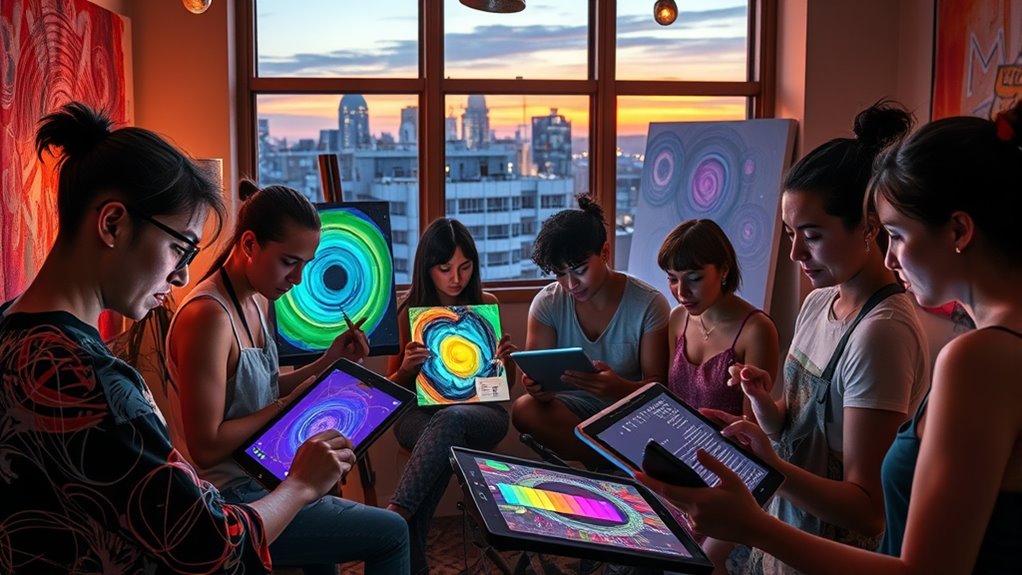

You’re witnessing artists collaborate with algorithms and AI tools to explore new creative possibilities. These partnerships enhance experimentation, offering suggestions, variations, and technical refinements that push artistic boundaries. This fusion democratizes art creation and sparks innovation while raising questions about originality and ownership. As technology advances and public attitudes evolve, understanding these collaborations helps clarify how AI is shaping the future of art. Keep exploring to discover how this evolving synergy is redefining creativity.
Key Takeaways
- Artists collaborate with AI algorithms to expand creative possibilities and generate innovative artworks through experimentation and iteration.
- Human intuition guides AI-generated outputs, enabling artists to push boundaries and explore new artistic styles.
- AI tools like style transfer and image generators assist artists in refining techniques and visual concepts.
- The partnership fosters hybrid art forms, blending human expression with machine-driven creativity.
- Ethical and legal considerations shape how artists integrate AI, ensuring transparency, ownership, and authenticity in collaborative works.
The Rise of AI-Enabled Artistic Tools and Techniques
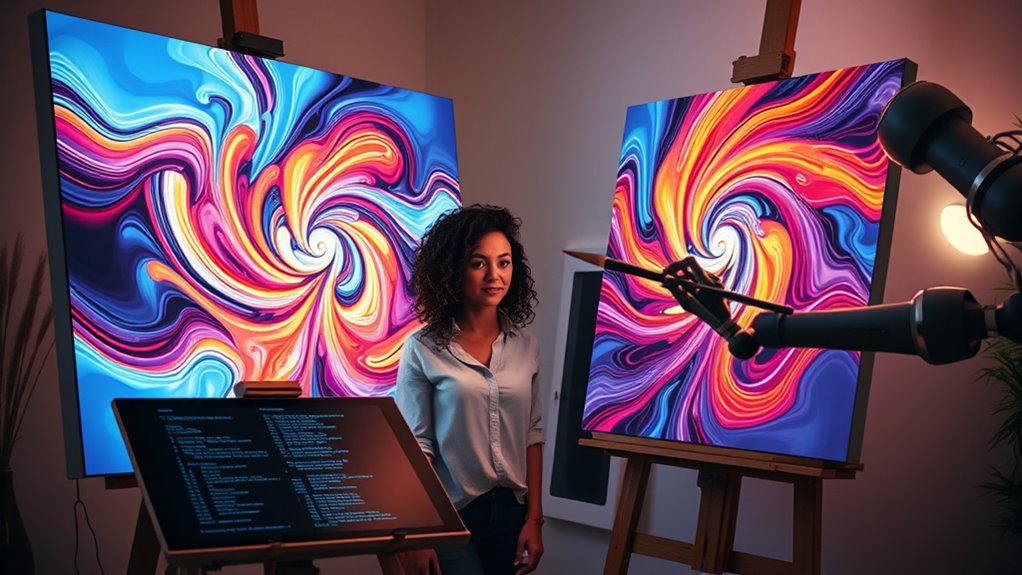
The rise of AI-enabled artistic tools and techniques has revolutionized how creators produce and refine visual content. You can now generate complex images, explore new styles, and experiment with innovative ideas faster than ever. Software like Adobe’s AI-powered features in Fresco and Illustrator make sophisticated editing accessible to both professionals and hobbyists. Algorithms such as AICAN allow AI to autonomously produce artworks that sell for thousands, showcasing its growing artistic legitimacy. These tools use machine learning to emulate and enhance human creativity, solving cognitive limits and enabling rapid iteration. AI art generators like Magic Hour democratize access, breaking down traditional skill barriers. Additionally, color accuracy plays a vital role in ensuring that AI-generated artworks have true-to-life hues and consistent visual quality. This technological advancement enhances visual fidelity, allowing artists to achieve more precise and realistic results. Moreover, the integration of machine learning techniques enables continuous improvement and adaptation of artistic tools based on user preferences. As a result, creators have more power and flexibility, pushing the boundaries of what’s possible in visual art, all while transforming the industry at a rapid pace. Furthermore, remote collaboration tools facilitate artists working together across distances, fostering a global creative community that leverages AI innovations.
Enhancing Creativity Through Human-AI Collaboration
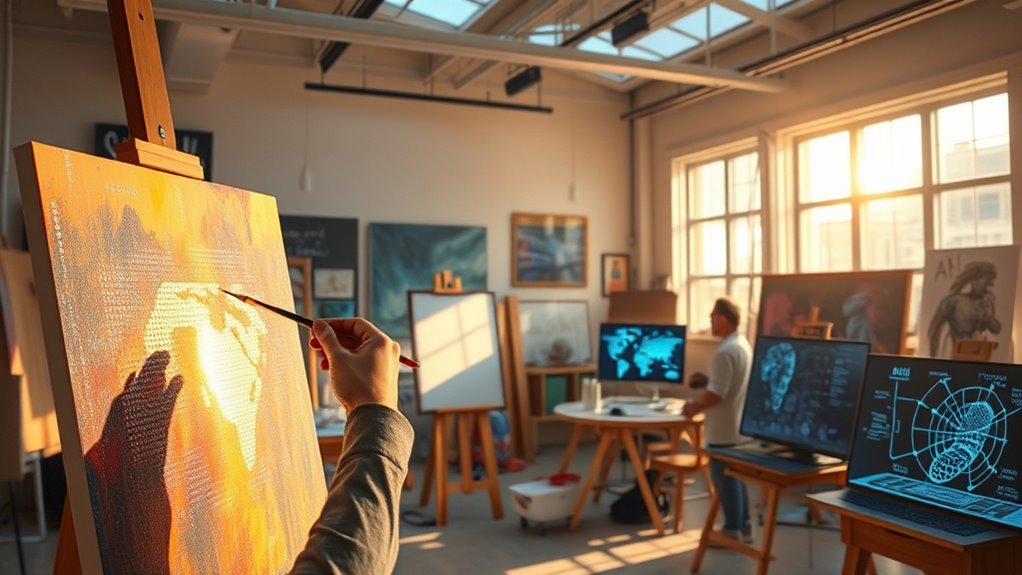
Human artists are increasingly teaming up with AI tools to expand their creative possibilities, transforming how art is conceived and produced. This collaboration fuels innovation, allowing you to explore new styles and iterate rapidly. AI provides suggestions, variations, and technical refinement, enabling you to push boundaries you might not reach alone. By working together, you enhance your skills and create more complex, compelling works. The synergy is evident in projects like Refik Anadol’s “Unsupervised,” where human intuition guides algorithmic output. This partnership fosters experimentation and accelerates artistic discovery, making your creative process more dynamic. Additionally, understanding how AI security measures are developed and maintained can help artists navigate ethical considerations in their use of AI tools. Recognizing AI-generated art as a legitimate form of expression can further inspire innovative collaborations between humans and machines. Embracing creative experimentation with AI can open new avenues for artistic exploration and personal growth, as it encourages embracing novel creative workflows that blend technology with traditional techniques. Furthermore, exploring algorithmic processes can deepen your understanding of the underlying systems shaping AI-driven creativity.
Changing Perceptions: Public and Industry Attitudes Toward AI Art
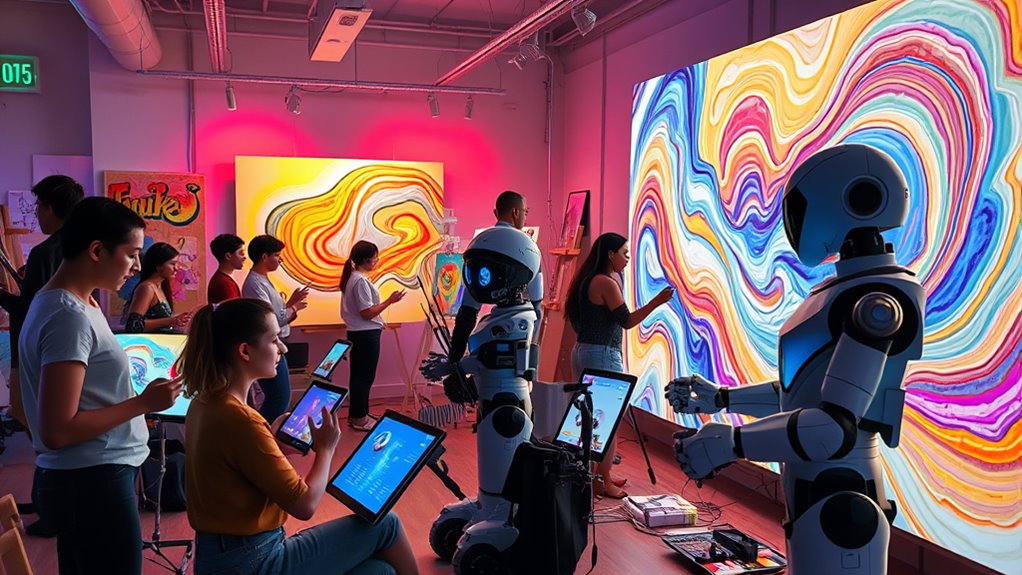
As collaborations between artists and AI tools become more common, perceptions of AI-generated art are shifting among both the public and industry insiders. Many people remain skeptical, with 76% of Americans opposing calling AI art “true art,” fearing it lacks authenticity. Artists express concern about inadequate copyright laws (89%) and the potential financial impact (55%), reflecting unease about AI’s growing role. Meanwhile, some audiences and collectors are beginning to embrace AI art, with 29% showing interest in purchasing it. Industry players recognize AI’s potential, as major platforms like Shutterstock include AI visuals. Overall, attitudes are evolving from initial suspicion to cautious acceptance, driven by technological advancements, increasing exposure, and growing recognition of AI’s creative capabilities. Additionally, understanding the health benefits of complementary tools like AI in art creation can foster more informed and positive perceptions. Recognizing the role of education in demystifying AI art may help bridge the gap between skepticism and acceptance. Furthermore, the rise of digital payment solutions highlights how technological integration is transforming creative industries, encouraging more innovative collaborations. Promoting awareness of textile art techniques and their integration with digital tools can also contribute to more nuanced appreciation of AI-assisted art forms. Incorporating personal development frameworks such as goal setting and self-reflection can help artists and audiences alike navigate the evolving landscape of AI in art.
Navigating Ethical and Legal Challenges in AI-Generated Creativity
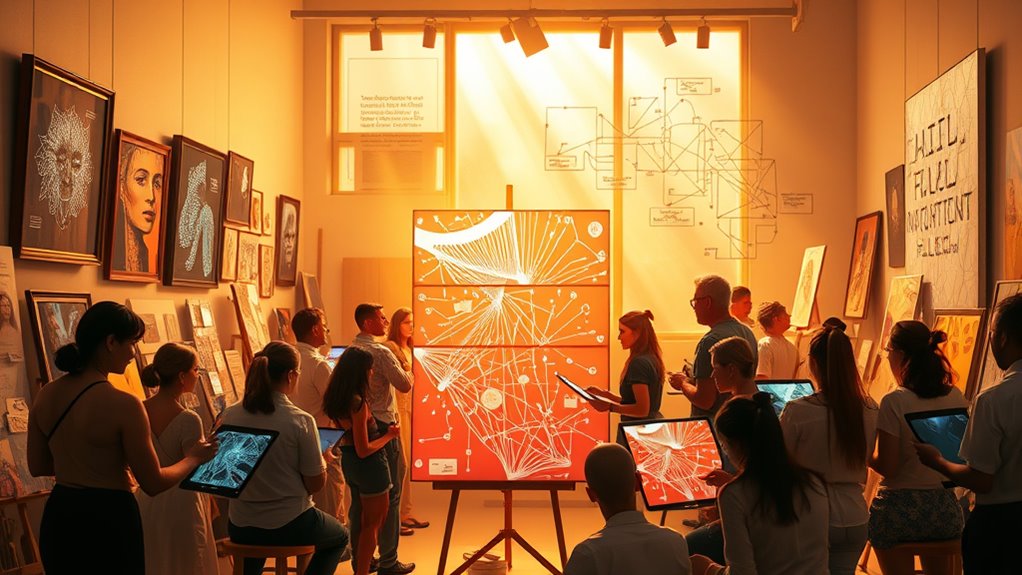
Exploring the ethical and legal landscape of AI-generated creativity presents significant challenges because current frameworks haven’t kept pace with rapid technological advancements. You need to consider who owns AI-created works—the programmer, user, or AI itself—raising complex copyright questions. Transparency is vital; audiences should know if a piece is AI-generated, but disclosure isn’t standardized. Ethical concerns also include bias in training data, which can perpetuate stereotypes or misinformation. You must navigate the risk of intellectual property infringement when AI models use copyrighted material without permission. As AI tools become more autonomous, establishing regulations that protect artists’ rights and guarantee fair compensation becomes urgent. Additionally, Honda Tuning enthusiasts and creators should be aware of how intellectual property laws might apply to customized or modified content. Ensuring ethical AI use requires ongoing dialogue among creators, legal experts, and policymakers. Furthermore, understanding the legal ownership of AI works is crucial for establishing clear rights and responsibilities in this evolving landscape. Recognizing the importance of dog names in personalizing AI-generated content can also influence how creators approach branding and audience engagement, emphasizing the need for thoughtful integration of cultural elements. Moreover, awareness of divorce laws in various jurisdictions can inform creators about legal rights in collaborative projects or disputes, illustrating the importance of legal literacy across fields.
The Future of Artistic Expression in a World of Algorithms
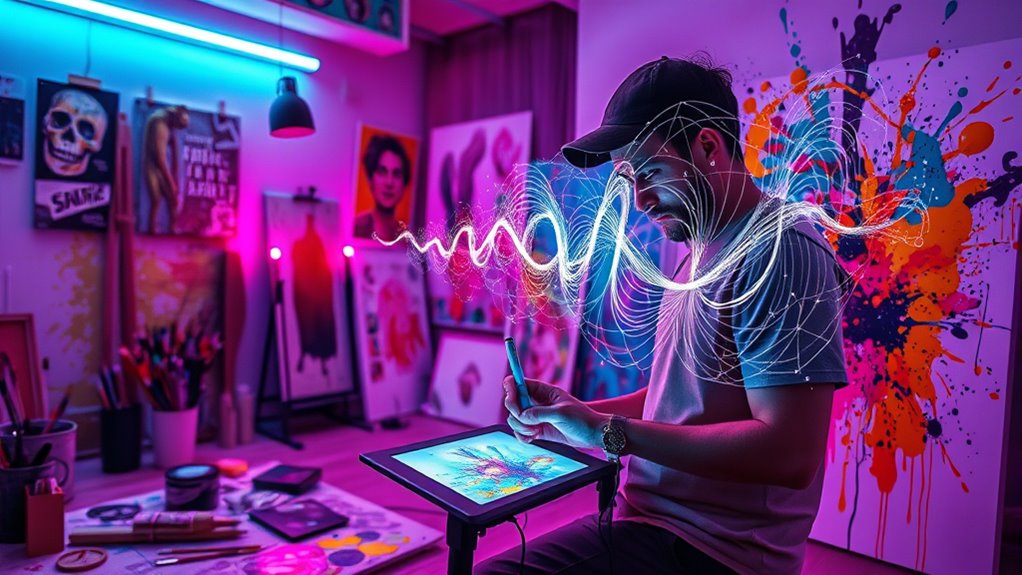
The evolving legal and ethical landscape surrounding AI-generated art sets the stage for a new era of creative expression driven by algorithms. As technology advances, you’ll find that the boundaries of artistic possibility expand, blending human intuition with machine innovation. Future art will likely emphasize collaboration over competition, fostering hybrid forms that challenge traditional notions of authorship. To navigate this shift, consider how the following factors will influence your creative role:
| Factor | Impact | Challenge |
|---|---|---|
| Legal Frameworks | Define ownership and rights | Ambiguity in intellectual property |
| Cultural Acceptance | Shape audience engagement | Overcoming skepticism |
| Technological Innovation | Enhance creative tools | Ensuring ethical use |
| Market Dynamics | Drive economic growth | Balancing profit with authenticity |
| Artistic Identity | Evolve personal style | Maintaining originality |
Additionally, understanding the importance of authenticity in art creation will be crucial as artists seek to retain their unique voice in an increasingly algorithm-driven landscape. As artists experiment with new mediums, they will need to develop a clear understanding of artistic integrity] to preserve their reputation and connect genuinely with their audience.
Frequently Asked Questions
How Do AI Algorithms Learn to Generate Artistic Images?
AI algorithms learn to generate artistic images by analyzing vast amounts of existing art data. You train them using machine learning models, especially deep learning, which helps the AI recognize patterns, styles, and features. As the AI processes more images, it refines its understanding, enabling it to create new, unique visuals. Continuous feedback and adjustments improve their accuracy, allowing you to produce increasingly sophisticated and creative artworks.
What Skills Are Necessary for Artists to Work With AI Tools?
You need to develop digital literacy and familiarity with AI tools, as 81.2% of visual artists use AI to boost productivity. You should learn how to effectively communicate your artistic vision through algorithms, understand basic coding or software functionalities, and stay updated on technological trends. Cultivating adaptability and openness to experimentation will help you leverage AI’s potential, fostering innovative collaborations that blend human intuition with machine-generated insights.
How Do Copyright Laws Apply to Ai-Created Artworks?
Copyright laws currently struggle with AI-created artworks, often leaving artists uncertain about ownership. You need to understand that existing laws favor human authorship, so AI-generated art may not qualify for copyright protection unless a human considerably directs or influences the work. Staying informed about evolving legal frameworks and documenting your creative input can help you safeguard your rights. Collaborate with legal experts to navigate this complex landscape effectively.
Can AI Truly Replicate Human Emotional Expression in Art?
AI can’t truly replicate human emotional expression in art because it lacks genuine feelings, intuition, and personal experiences. While it can generate visuals that mimic emotional depth, you still need human input to infuse authentic emotion into your work. You, as an artist, bring nuanced understanding and personal context that AI can’t replicate. It’s a tool that enhances your creativity but doesn’t replace the depth of human emotional expression.
What Are the Best Practices for Ethical AI Art Creation?
You need to prioritize transparency, disclose AI involvement, and respect intellectual property rights. While embracing innovation, keep a close eye on evolving laws and ethical standards. To avoid pitfalls, engage with diverse perspectives, and guarantee your work aligns with societal values. By doing so, you’ll navigate the gray areas of AI art responsibly, preventing misuse and fostering trust — but beware, the line between ethical and unethical creation can blur unexpectedly.
Conclusion
As you explore this evolving landscape, remember that technology is a tool, not a replacement. Embrace AI’s potential to expand your creative horizons, but stay mindful of ethical and legal boundaries. Collaborating with algorithms can unlock new possibilities, but always prioritize your unique voice. As the saying goes, “The pen is mightier than the sword”—trust that your human touch remains the true artist’s power in this digital age.