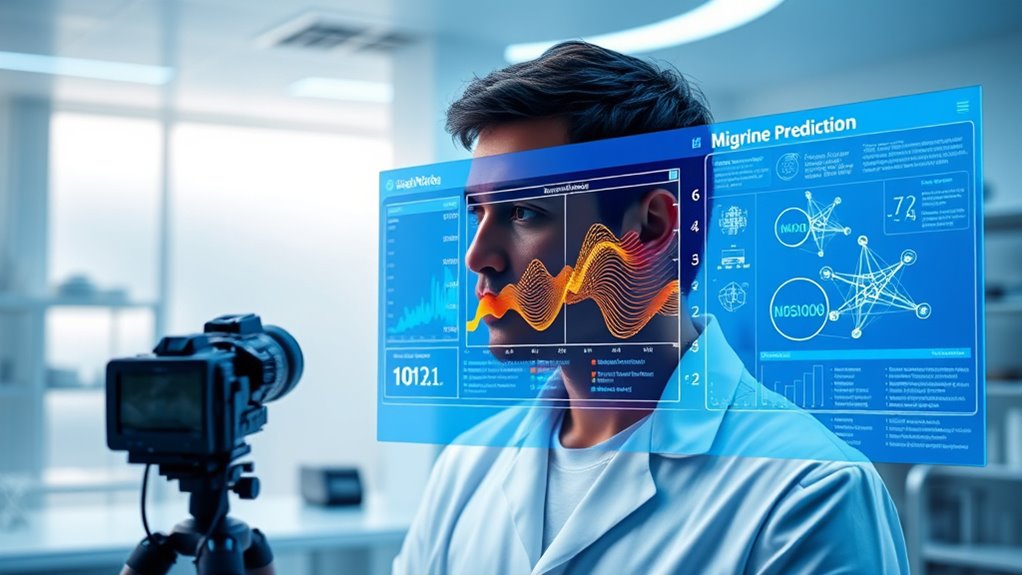

AI for predictive migraine management analyzes your symptoms, lifestyle, and environmental data to forecast when attacks might happen. It helps you identify triggers in real-time and adjust behaviors proactively, reducing the frequency and severity of migraines. This technology also personalizes treatment options by predicting how you’ll respond to specific medications, saving time and minimizing trial-and-error. If you’re curious about how these innovations could improve your migraine care, there’s more to explore below.

Get tech for your team delivered free — and shop member deals
- Fast, free delivery on millions of items
- Access to Prime Big Deal Days deals on October 6–7
- Prime Video, Amazon Music and more included
Key Takeaways
- AI forecasts individual responses to preventive medications with high accuracy, reducing trial-and-error in treatment plans.
- Predictive models analyze patient data to identify likely migraine onset triggers in real-time.
- Machine learning algorithms assist in early detection of migraine patterns, enabling proactive management.
- AI-driven tools personalize trigger profiles and treatment strategies for improved migraine control.
- Integration of AI in telemedicine enhances remote monitoring and anticipatory care for migraine patients.
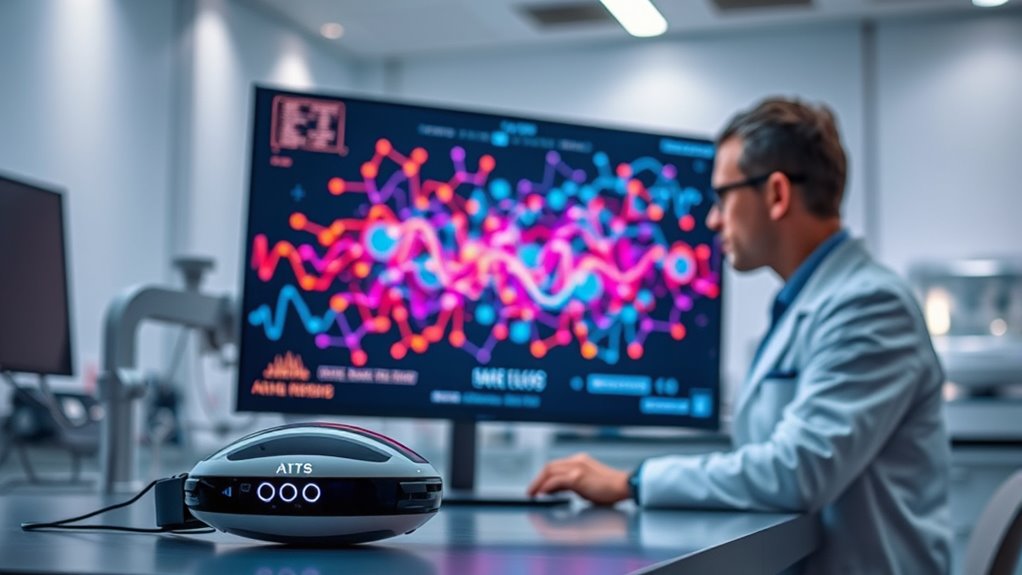
Artificial intelligence is transforming how we predict and manage migraines by enabling more accurate diagnoses, personalized treatment plans, and proactive trigger identification. When you visit a healthcare provider, AI models analyze your patient history and symptoms to improve diagnostic accuracy, helping differentiate migraines from other headache disorders like cluster headaches. These advanced tools support even non-headache specialists in managing migraines, making expert care more accessible. Symptom tracking apps, powered by AI, gather real-time data on your migraine episodes, identifying patterns that might otherwise go unnoticed. While early-stage limitations exist—mainly due to the variability in how migraines present and incomplete datasets—these tools are steadily improving your ability to understand and predict your condition.
Predictive modeling is another breakthrough, allowing AI to forecast how you might respond to various migraine preventive medications before you even start them. Recent studies from 2024 show AI can predict responses to seven different medications with significant accuracy, helping your doctor tailor treatments more effectively. These models boast an area under the curve (AUC) of 0.86, indicating they perform well in predicting outcomes. By providing personalized insights, AI reduces the frustrating trial-and-error process often associated with finding the right medication, saving you time and minimizing side effects. However, some predictive studies carry a high bias risk, emphasizing the need for better validation and standardized protocols to guarantee reliability.
AI also plays a vital role in identifying and managing migraine triggers. By analyzing lifestyle, environmental, and physiological data—collected through wearables and mobile apps—AI can recognize potential onset factors in real-time. This ongoing monitoring helps you adjust your behaviors proactively, potentially preventing attacks before they occur. Personalized trigger profiles empower you to take control of your condition and work alongside your healthcare provider to develop effective management strategies. Nonetheless, these trigger detection systems are still evolving, requiring larger and more diverse datasets to enhance their accuracy and dependability. Additionally, understanding newborn sleep patterns can contribute to overall health management, even in conditions unrelated to migraines.
In the realm of clinical trials and drug development, AI makes processes more efficient by identifying suitable candidates and predicting responses to experimental treatments. It uncovers new drug targets by analyzing genetic and biological markers, accelerating the discovery of more effective therapies. This integration reduces costs and shortens the time needed to bring new migraine medications to market. Meanwhile, AI is also transforming clinical practice by automating patient intake, assisting in diagnosis, and guiding treatment decisions through decision support systems. Telemedicine platforms now incorporate AI for remote monitoring, making migraine management more convenient. However, challenges such as data privacy, system interoperability, and clinician training remain hurdles to widespread adoption. Despite these obstacles, AI continues to shape a future where migraine management is more precise, proactive, and personalized, ultimately improving your quality of life.
As an affiliate, we earn on qualifying purchases.
Frequently Asked Questions
How Accurate Are AI Predictions Compared to Traditional Methods?
You might wonder how predictions compare between AI and traditional methods. AI offers high accuracy, often exceeding 90%, and can analyze large datasets to identify patterns precisely. Traditional methods rely on clinical judgment and patient history, which can be less accurate and more time-consuming. By providing personalized insights and faster diagnoses, AI generally outperforms traditional approaches, leading to better treatment outcomes and more efficient migraine management.
Can AI Detect All Types of Migraines?
You ask if AI can detect all types of migraines. Currently, AI models achieve up to 98% accuracy in detecting and classifying migraine subtypes, but they’re not perfect. While AI can identify many migraine types using MRI and EEG data, some less common or complex cases might still be missed. Ongoing improvements in datasets and models are essential to expand AI’s ability to detect all migraine varieties accurately.
What Are Privacy Concerns With AI Migraine Data?
You should be aware that privacy concerns with AI migraine data include risks of data breaches, especially if sensitive health info isn’t well-secured. Sharing data with third parties can lead to privacy violations, and current laws might not fully protect your info. Plus, you have to trust that your data is properly encrypted, and that you give informed consent. Staying informed and cautious helps protect your privacy when using these systems.
How Accessible Is AI Technology for Patients?
Imagine AI technology as a bridge connecting you to better health. You find it highly accessible because it’s on your devices—smartphones, tablets, or computers—so you can use it anytime, anywhere. It supports pre-visit screening, helps differentiate headaches, and guides treatment. Wearables monitor your symptoms in real time, and telemedicine offers remote consultations. With such tools, you’re empowered to manage migraines proactively, no matter where you are.
Will AI Replace Neurologists in Migraine Management?
You’re wondering if AI will replace neurologists in migraine management. The truth is, AI isn’t meant to replace doctors but to support them. It helps identify symptoms, suggest treatments, and streamline diagnoses, making healthcare more efficient. You’ll still need a neurologist for personalized care and complex decision-making. AI acts as a helpful tool, enhancing your overall treatment experience without taking over the essential role of healthcare professionals.
As an affiliate, we earn on qualifying purchases.
Conclusion
Just as a lighthouse guides ships through stormy seas, AI illuminates the path to better migraine management. By harnessing its power, you can anticipate attacks before they strike, steering life’s turbulent waters with confidence. Imagine a future where migraines no longer hold you hostage, where technology becomes your compass in the fog. Embrace this innovation, and take control — your journey toward relief begins now, shining brightly like a beacon in the night.
personalized migraine treatment wearable
As an affiliate, we earn on qualifying purchases.
As an affiliate, we earn on qualifying purchases.
As an affiliate, we earn on qualifying purchases.
Fall Picks
fall essentials
As an affiliate, we earn on qualifying purchases.