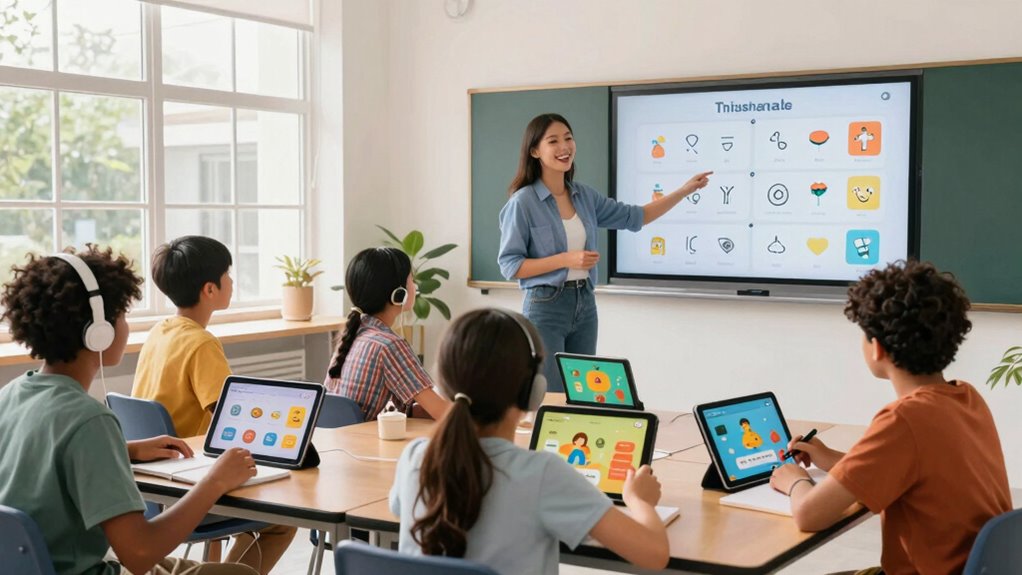

Yes, AI can support multilingual classrooms more effectively by providing real-time translation, instant bilingual support, and personalized learning experiences. It helps you communicate clearly, reducing language barriers and encouraging student questions. AI also promotes cultural inclusivity by tailoring content to diverse backgrounds and offering culturally relevant examples. By analyzing performance data, it helps you identify students needing extra support and adapt your lessons accordingly. If you keep exploring, you’ll discover even more ways AI can transform your teaching environment.

Get business pricing on tech for your team
- Business-only prices and quantity discounts
- Tax-exempt purchasing
- Multiple users, one account, clear invoices
Key Takeaways
- AI provides real-time translation and transcription, enhancing communication for multilingual students and teachers.
- AI adapts content and language tone to reflect diverse cultural contexts, promoting inclusivity.
- Data analysis identifies students needing extra linguistic support, enabling personalized instruction.
- AI customizes curriculum materials to incorporate cultural relevance, fostering engagement and understanding.
- Advanced natural language processing helps AI better understand and respond to interactions in multilingual classrooms.
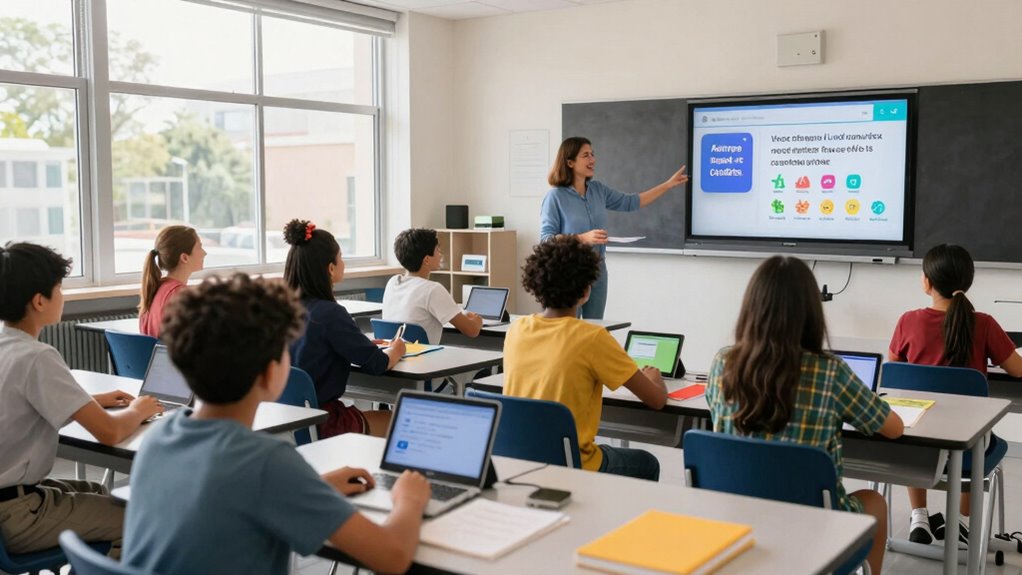
In today’s diverse classrooms, AI tools are transforming how teachers support students who speak multiple languages. These technologies help bridge gaps that once challenged educators, making it easier to foster cultural inclusivity and address language barriers. When you incorporate AI into your teaching, you create an environment where every student feels seen, heard, and valued, regardless of their linguistic background. AI-powered translation apps and real-time language processing help students understand lessons without delay, reducing frustration and ensuring they stay engaged. This immediate support makes communication smoother, allowing you to focus more on teaching rather than troubleshooting language issues.
AI tools help diverse students understand lessons quickly, fostering inclusion and reducing frustration in the classroom.
Cultural inclusivity becomes more achievable with AI because these tools can recognize and adapt to different cultural contexts. For example, AI can suggest culturally relevant examples or adjust language tone to better resonate with students from diverse backgrounds. As a result, your classroom becomes a place where students see their identities reflected and respected. This not only boosts their confidence but also encourages participation, which is vital for learning. AI-driven content customization enables you to tailor lessons that honor various cultural perspectives, enriching the overall educational experience. Students who might otherwise feel marginalized or misunderstood find it easier to connect with the material and their peers.
Addressing language barriers with AI isn’t just about translation; it’s about creating a seamless learning environment. You can leverage tools that transcribe spoken language or provide instant bilingual support, making it easier for students to follow along during lessons. This real-time assistance minimizes confusion and allows students to ask questions confidently, fostering a more inclusive classroom climate. Moreover, AI can analyze student performance data across languages, helping you identify who might need extra help and how best to support them. Such insights enable you to develop targeted strategies that address individual needs, ensuring no student is left behind due to linguistic differences. Incorporating educational technology can further enhance your understanding of how these tools impact learning outcomes and engagement. Additionally, understanding industry trends in AI can help you stay ahead and adapt effectively to new educational innovations, especially as the field of digital publishing continues to evolve.
Furthermore, integrating natural language processing techniques allows for more nuanced understanding of student interactions, fostering deeper engagement and comprehension. While AI isn’t a complete substitute for human connection, it significantly enhances your ability to meet the needs of multilingual students. By reducing language barriers and promoting cultural inclusivity, these tools empower you to create a more equitable learning space. Students are more likely to participate actively when they feel their language and culture are acknowledged and valued. As AI continues to evolve, your capacity to support diverse learners will only grow stronger, making your classroom a truly inclusive environment where every student has the opportunity to succeed.
Products Worth Considering

Jackery HomePower 3600 Plus Portable Power Station, 3584Wh, 3600W

Sony WH-1000XM6 Wireless Noise-Canceling Over-Ear Headphones, Blue, Bundle

Logitech MX Mechanical Wireless Illuminated Keyboard, Tactile Quiet, Graphite
As an affiliate, we earn on qualifying purchases.
Frequently Asked Questions
How Do AI Tools Address Cultural Differences in Multilingual Classrooms?
AI tools address cultural differences by promoting cultural sensitivity and reducing language barriers. You’ll find that AI adapts content to diverse cultural contexts, respecting traditions and norms. It also offers real-time translation, helping students communicate more effectively across languages. By personalizing learning experiences and recognizing cultural nuances, AI fosters an inclusive environment where all students feel understood and valued, making multilingual classrooms more equitable and engaging.
What Are the Privacy Concerns With AI in Education?
You should be aware that AI in education raises privacy concerns, especially regarding data security. When using AI tools, there’s a risk of sensitive student information being compromised if data isn’t properly protected. That’s why obtaining parental consent is essential before collecting or sharing student data. Ensuring robust data security measures and clear consent processes helps protect student privacy and builds trust in AI-driven educational environments.
Can AI Adapt to Individual Student Learning Styles?
AI can adapt to your learning style like a chameleon blending into its environment, making personalized learning more effective. It analyzes your responses to provide adaptive feedback tailored to your strengths and weaknesses. This dynamic approach helps you stay engaged and progress at your own pace, ensuring that each lesson feels like a custom-fit suit. With AI’s support, your learning journey becomes more responsive, flexible, and uniquely yours.
How Accessible Is AI Technology for Underfunded Schools?
AI technology remains limited in underfunded schools due to resource allocation challenges. You might find that integrating AI tools is difficult without sufficient funding for devices, internet access, and training. These schools often struggle to adopt new technology quickly, making AI less accessible. To improve this, targeted support and investments are essential, ensuring equitable access so that all students benefit from AI’s potential to enhance multilingual education.
What Training Is Needed for Teachers to Use AI Effectively?
You’ll need targeted teacher training to use AI integration effectively; studies show that only 30% of educators feel confident with new tech. To improve, attend workshops on AI tools, focus on digital literacy, and learn how to customize AI-driven resources for diverse learners. Staying updated on AI advancements and collaborating with tech specialists will help you incorporate AI seamlessly into your classroom, enhancing multilingual learning experiences.
Conclusion
Imagine AI as a bridge spanning diverse languages, turning chaos into harmony. It can be your trusty guide, helping students navigate multilingual waters with ease. By breaking down language barriers, AI transforms your classroom into a vibrant tapestry of understanding and connection. Embrace this digital ally, and watch your students flourish in a symphony where every voice, no matter the tongue, can be heard loud and clear. The future of learning is waiting—are you ready to lead the way?