AI helps you spot rare diseases earlier by analyzing vast amounts of genetic and clinical data quickly and accurately. It recognizes subtle genetic patterns and complex markers that humans might miss. This speeds up diagnoses, reducing delays and unnecessary tests. By integrating diverse information like symptoms and imaging results, AI provides an all-encompassing view of your health. If you want to understand how this technology transforms early diagnosis and treatment, keep exploring.
Key Takeaways
- AI analyzes vast genetic data to identify subtle mutations linked to rare diseases early.
- It rapidly compares patient data with known disease profiles, reducing diagnostic delays.
- AI integrates clinical records, imaging, and symptoms for a comprehensive, holistic assessment.
- It enables personalized treatment plans based on individual genetic profiles, improving early intervention.
- AI’s detailed analysis accelerates diagnosis, leading to timely treatment and better patient outcomes.
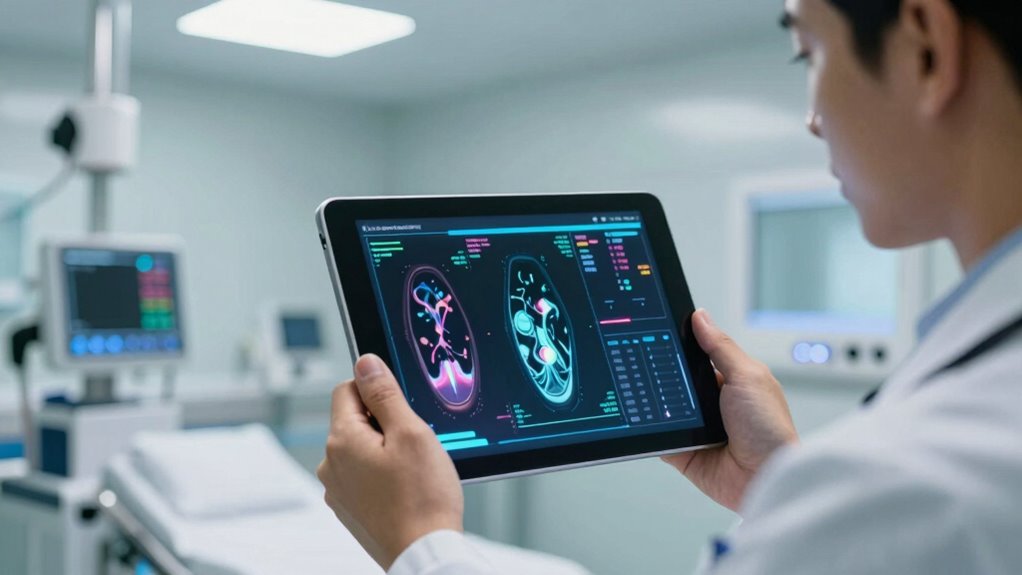
Have you ever wondered how artificial intelligence is transforming healthcare? AI is revolutionizing the way doctors identify and treat rare diseases, making it possible to detect these conditions earlier and more accurately than ever before. One of the key ways AI achieves this is through advanced genetic analysis. By examining vast amounts of genetic data, AI algorithms can recognize subtle patterns and mutations that might escape human detection. This detailed genetic analysis helps pinpoint the underlying causes of rare diseases, which often have complex and elusive genetic markers. As a result, doctors can gain a clearer understanding of a patient’s unique condition, leading to more precise diagnoses.
With AI-powered tools, diagnostic accuracy improves markedly. Traditional methods might require extensive testing and sometimes result in misdiagnosis or delayed diagnosis, especially for rare diseases that are less well-understood. AI streamlines this process by rapidly sifting through large datasets, comparing patient data to known disease profiles, and highlighting potential matches. This accelerates the diagnostic timeline, which is essential because early detection can dramatically influence treatment outcomes and quality of life. When doctors have access to AI-driven insights, they can make more confident decisions, reducing uncertainty and minimizing the chances of oversight. Additionally, AI’s ability to analyze multiple data sources simultaneously enhances the thoroughness of diagnosis, ensuring no critical detail is missed.
Furthermore, AI’s ability to integrate diverse data sources enhances the diagnostic process. Besides genetic analysis, AI considers clinical records, imaging results, and even patient symptoms to build a complete picture of the patient’s health. This holistic approach guarantees that no critical detail is overlooked, increasing the likelihood of catching rare diseases before they progress. AI’s integration of diverse data sources enables a more comprehensive understanding of complex medical conditions, ultimately improving patient outcomes. This multidisciplinary approach aligns with Hydrotherapy techniques, which combine various therapeutic methods to optimize recovery and health. Moreover, the use of advanced data integration techniques ensures that complex medical conditions are approached with a more complete perspective, reducing diagnostic errors. For patients, this means fewer invasive procedures, less time spent on unnecessary tests, and a quicker route to the appropriate treatment.
The potential of AI in spotting rare diseases earlier is not just about faster detection but also about opening new avenues for personalized medicine. By understanding the genetic makeup of individual patients, doctors can tailor treatments that are more effective and have fewer side effects. This precision medicine approach is especially essential in rare diseases, where standard treatments often fall short. As AI continues to evolve, its role in early diagnosis and personalized care will only grow, offering hope to those with conditions that might otherwise remain hidden until they cause significant harm.
Overall, the integration of AI in healthcare signifies a major shift towards more accurate and timely diagnoses, with advanced genetic analysis playing a central role in this transformation. In essence, AI helps doctors see the unseen—by leveraging genetic analysis and enhancing diagnostic accuracy, it enables earlier intervention, ultimately saving lives and improving outcomes for patients with rare diseases.

AncestryDNA Genetic Test Kit: Personalized Genetic Results, DNA Ethnicity Test, Origins & Ethnicities, Complete DNA Test
TOP-SELLING CONSUMER DNA TEST: From your origins in over 3,600 places around the world to the most connections…
As an affiliate, we earn on qualifying purchases.
As an affiliate, we earn on qualifying purchases.
Frequently Asked Questions
How Accurate Is AI in Diagnosing Rare Diseases?
AI’s accuracy in diagnosing rare diseases is improving thanks to analyzing genetic markers and symptom patterns. You can trust that AI models compare vast datasets to identify subtle clues that might elude traditional methods. While not perfect, AI offers a valuable tool for early detection, helping doctors make more informed decisions. As technology advances, expect AI to become even more precise, reducing misdiagnoses and speeding up treatment options.
What Types of Data Does AI Analyze for Diagnosis?
Think of AI as a detective with a magnifying glass, examining clues to solve mysteries. It analyzes genomic data, like a DNA map revealing hidden secrets, and imaging analysis, which interprets scans and pictures to spot anomalies. These data types act as the clues guiding AI’s diagnosis. By combining genetic insights with visual evidence, AI helps you and your doctor uncover rare diseases earlier, leading to better, more targeted treatments.
Are There Privacy Concerns With AI in Healthcare?
Yes, there are privacy concerns with AI in healthcare. You need to guarantee patient consent is obtained before collecting or analyzing their data, respecting their privacy rights. Data security measures are essential to protect sensitive health information from breaches or unauthorized access. By prioritizing transparency, secure systems, and informed consent, you can help address these concerns and build trust in AI-driven healthcare solutions.
How Does AI Integrate With Existing Medical Systems?
Seamlessly, AI integrates into existing medical systems by syncing with software and systems already in place. You’ll see AI training improve medical algorithms, making them smarter and more suited to your needs. This integration involves data exchange, system synchronization, and real-time updates, allowing healthcare providers to leverage AI’s analytical power without disrupting workflows. As a result, your care becomes more accurate, efficient, and responsive, all while complementing traditional medical practices.
Can AI Replace Doctors in Diagnosing Rare Diseases?
AI can’t fully replace doctors in diagnosing rare diseases because of ethical considerations and the importance of patient-doctor trust. While AI can assist by analyzing complex data quickly, it lacks empathy and nuanced judgment that only humans provide. Relying solely on AI risks undermining trust, so doctors remain essential for ethical decision-making, personalized care, and ensuring patients feel understood and supported throughout the diagnostic process.

XTOOL Advancer AD20 Pro AI-Assisted Wireless OBD2 Scanner Diagnostic Tool, Car Code Reader for iPhone&Android, All System Scan Tool with Free Updates -Check Engine, Oil Reset, Performance/Battery Test
【NO Subscriptions & Wide Vehicle Support】 AD20PRO OBD2 Scanner is built for simple, long-term ownership with no ongoing…
As an affiliate, we earn on qualifying purchases.
As an affiliate, we earn on qualifying purchases.
Conclusion
As AI continues to advance, you might wonder how many lives it can save by catching rare diseases early. With its ability to analyze vast amounts of data quickly, AI empowers you to make faster, more accurate diagnoses. Imagine a future where no patient suffers because their condition went unnoticed—how different would your practice look? Embracing AI isn’t just about technology; it’s about transforming patient care for the better. Are you ready to be part of this change?
The 2027-2032 World Outlook for Medical Imaging Analysis Software
As an affiliate, we earn on qualifying purchases.
As an affiliate, we earn on qualifying purchases.
AncestryDNA Genetic Test Kit: Personalized Genetic Results, DNA Ethnicity Test, Origins & Ethnicities, Complete DNA Test
TOP-SELLING CONSUMER DNA TEST: From your origins in over 3,600 places around the world to the most connections…
As an affiliate, we earn on qualifying purchases.
As an affiliate, we earn on qualifying purchases.