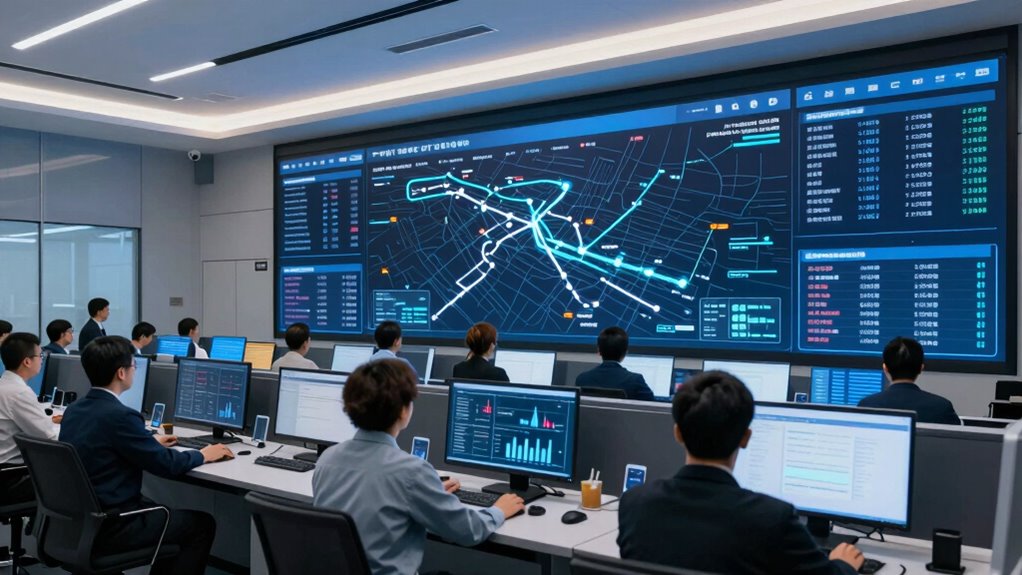

Yes, AI can considerably improve your supply chain resilience by predicting risks, identifying vulnerabilities, and optimizing responses in real time. It analyzes data such as supplier performance, weather patterns, and transportation delays to help you stay ahead of potential issues. AI enables proactive management, real-time monitoring, and smarter decision-making, reducing disruptions and enhancing efficiency. If you want to discover how AI can transform your supply chain’s agility and robustness, keep exploring this topic further.
Key Takeaways
- AI enables predictive analytics to identify potential risks early, allowing proactive mitigation strategies.
- It facilitates real-time monitoring of supply chain components for quick response to disruptions.
- AI-driven scenario analysis helps optimize response plans for various supply chain crises.
- Advanced AI algorithms detect vulnerabilities like supplier instability or logistical delays before they escalate.
- Continuous AI learning improves risk forecasting accuracy and overall supply chain resilience over time.
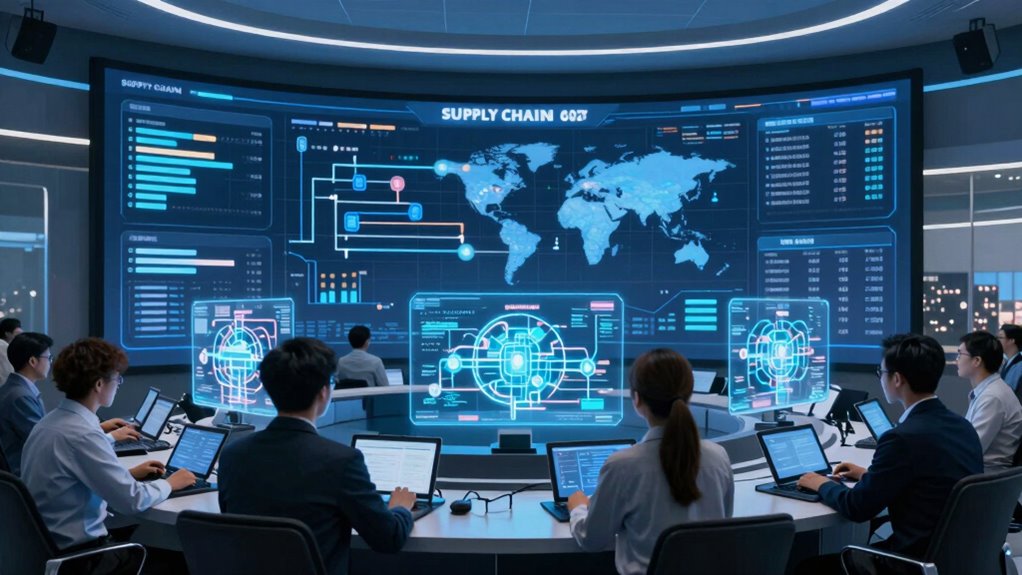
In today’s unpredictable global economy, AI has become a crucial tool for strengthening supply chain resilience. With disruptions happening more frequently—from natural disasters to geopolitical tensions—your ability to adapt quickly hinges on how well you anticipate and respond to potential issues. AI leverages predictive analytics to give you a clearer view of upcoming risks, enabling you to make smarter decisions before problems escalate. Instead of reacting to crises after they occur, you can proactively manage risk by analyzing vast amounts of data—such as supplier performance, weather patterns, and transportation delays—to forecast disruptions accurately. This foresight allows you to create contingency plans, diversify suppliers, or adjust inventory levels, keeping your supply chain more flexible and resilient.
By integrating AI into your risk management strategies, you gain the ability to identify vulnerabilities early. AI algorithms sift through complex data sets to pinpoint patterns that signal potential threats, whether it’s a supplier’s financial instability or an impending port strike. This proactive approach means you’re not caught off guard when issues arise but are instead prepared to act swiftly. AI-powered risk management tools also help you weigh different scenarios, assessing the impact of various disruptions and optimizing your response strategies. As a result, you reduce downtime, avoid costly delays, and maintain customer satisfaction even during turbulent times. Incorporating predictive analytics can further enhance your ability to forecast and mitigate risks effectively.
Furthermore, AI enhances your visibility across the entire supply chain. Real-time tracking and predictive analytics work together to provide you with up-to-the-minute insights into inventory levels, shipment statuses, and supplier health. This transparency allows you to quickly adjust plans, reroute shipments, or source alternative suppliers without losing momentum. In addition, AI-driven demand forecasting helps prevent stockouts or overstocking, balancing your inventory with actual market demand. Incorporating accurate forecasting and comprehensive visibility enables you to make smarter, data-informed choices, minimizing risks and improving overall resilience. Leveraging natural language processing can also improve communication with suppliers and partners, streamlining decision-making processes. Additionally, integrating machine learning can continuously improve your risk prediction capabilities by adapting to new data patterns over time. Moreover, implementing data integration across your systems ensures that AI tools operate with complete and consistent information for optimal decision-making.
AI supply chain risk management software
As an affiliate, we earn on qualifying purchases.
As an affiliate, we earn on qualifying purchases.
Frequently Asked Questions
How Do AI Algorithms Adapt to Unexpected Supply Chain Disruptions?
You leverage AI algorithms that adapt quickly to unexpected supply chain disruptions by using real-time monitoring to gather instant data. These adaptive algorithms analyze this information, identifying patterns and potential issues. As a result, you can make immediate adjustments, rerouting shipments or adjusting inventories, minimizing delays. This proactive approach guarantees your supply chain remains resilient, even amid unforeseen disruptions, by continuously learning and evolving to tackle new challenges effectively.
What Are the Cost Implications of Implementing AI in Supply Chains?
Implementing AI in supply chains involves significant costs upfront, but it can lead to long-term savings through improved efficiency and risk management. You should conduct a thorough cost analysis to understand expenses for technology, training, and ongoing maintenance. Investment strategies should focus on scalable solutions that align with your business goals, ensuring you maximize ROI while gradually integrating AI to manage costs effectively.
Can AI Predict Long-Term Supply Chain Risks Effectively?
Yes, AI can predict long-term supply chain risks effectively through advanced predictive analytics. By analyzing historical data and identifying patterns, AI helps you anticipate potential disruptions before they happen. This proactive approach enables better risk mitigation, ensuring your supply chain remains resilient. AI’s ability to provide actionable insights allows you to make informed decisions, reducing vulnerabilities and maintaining smooth operations over the long term.
How Does AI Handle Data Privacy Concerns in Supply Chain Management?
AI handles data privacy concerns by implementing robust data encryption, making your sensitive information nearly invulnerable to hackers. It also strictly follows privacy policies, guaranteeing compliance with regulations like GDPR. Think of AI as an impenetrable digital fortress that protects your supply chain data. By continuously updating security measures and monitoring for breaches, AI assures your information stays private, even when millions of transactions happen every second.
What Industries Benefit Most From Ai-Driven Supply Chain Resilience?
You’ll find industries like manufacturing, retail, and healthcare benefit most from AI-driven supply chain resilience. AI enhances inventory optimization, reducing excess stock and shortages, while supplier collaboration becomes more seamless through real-time data sharing. This leads to quicker responses to disruptions, improved forecasting accuracy, and streamlined operations. By adopting AI, these sectors strengthen their supply chains, ensuring better service levels and cost savings amid uncertainties.
real-time supply chain monitoring tools
As an affiliate, we earn on qualifying purchases.
As an affiliate, we earn on qualifying purchases.
Conclusion
So, if you harness AI wisely, you’re building a fortress around your supply chain, making it resilient against disruptions. Like a skilled navigator, AI guides you through stormy waters, anticipating problems before they hit. Embracing this technology isn’t just smart; it’s essential for staying afloat in today’s unpredictable world. With AI as your compass, you’ll steer your supply chain smoothly, turning challenges into opportunities and ensuring your business sails forward confidently.

Prescriptive Analytics Guide: Data Modeling and Integration | Healthcare Analytics Solutions | Financial Risk Management | Supply Chain Efficiency Tactics | Retail and E-commerce Analytics
As an affiliate, we earn on qualifying purchases.
As an affiliate, we earn on qualifying purchases.
As an affiliate, we earn on qualifying purchases.