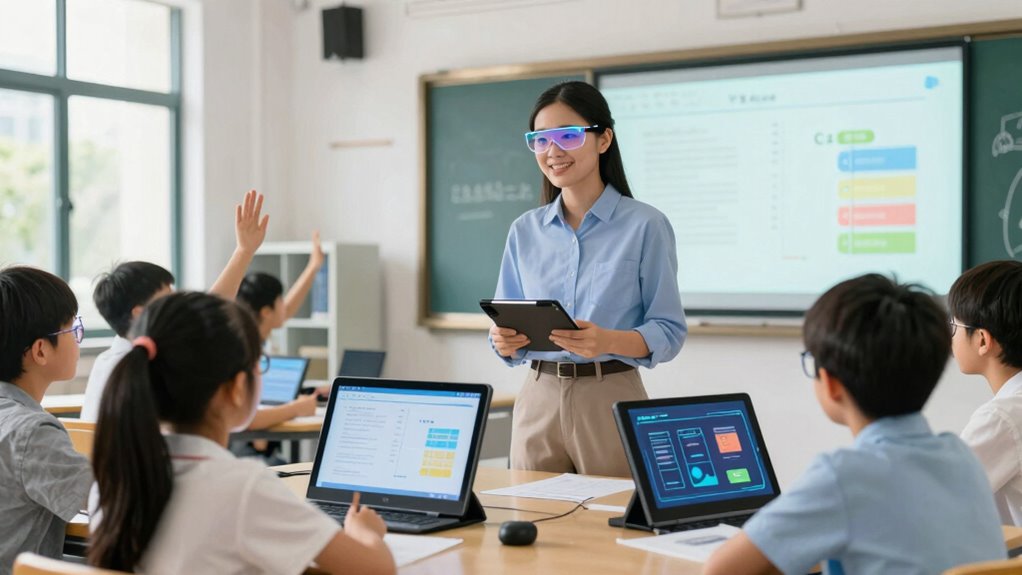

AI teaching gear helps reduce classroom friction by personalizing learning experiences to match students’ needs and styles, keeping them engaged and motivated. It guides behavior through targeted support, reducing misunderstandings and disruptions. Tasks like answering questions and providing reminders are automated, easing your workload. Additionally, AI fosters a supportive environment with better communication tools and collaborative activities. If you keep exploring, you’ll discover even more ways this technology can make your classroom run smoothly.

Get business pricing on tech for your team
- Business-only prices and quantity discounts
- Tax-exempt purchasing
- Multiple users, one account, clear invoices
Key Takeaways
- AI platforms personalize learning, reducing student frustration and misunderstandings that can lead to classroom conflicts.
- Adaptive techniques address individual needs, promoting inclusivity and minimizing behavioral issues.
- Automated communication tools streamline responses, decreasing teacher workload and classroom disruptions.
- AI-driven feedback and progress tracking foster better student-teacher interactions, enhancing classroom harmony.
- Collaborative learning tools supported by AI build community, reducing friction caused by social or academic challenges.
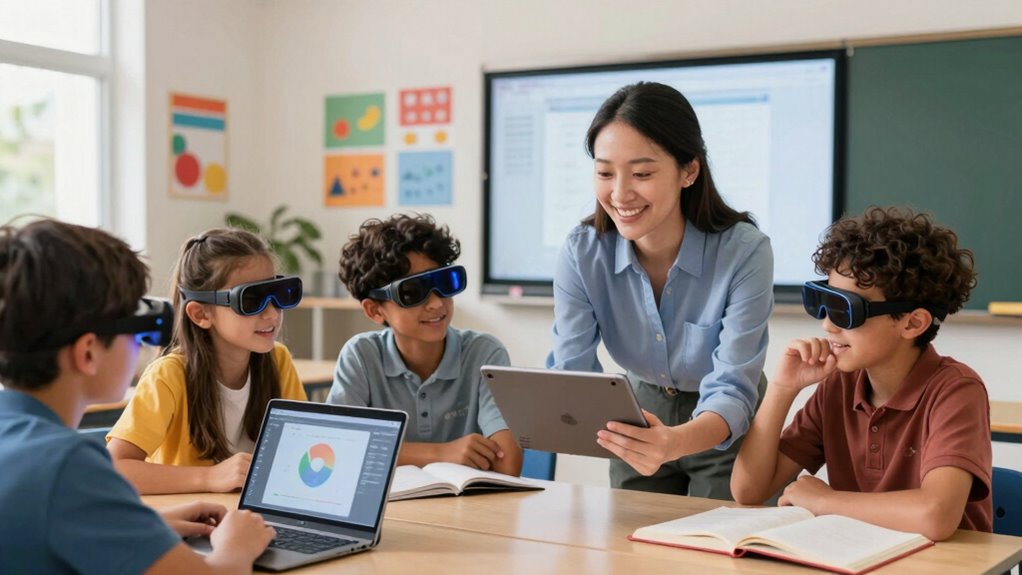
As classrooms become increasingly diverse and technology-driven, friction between teachers and students can hinder effective learning. This friction often manifests through disengagement, miscommunication, or behavioral issues that drain both your energy and patience. Luckily, AI teaching gear offers promising solutions to ease these challenges, especially when it comes to boosting student engagement and managing your workload. By automating routine tasks and providing personalized learning experiences, AI tools help create a more harmonious classroom environment.
When students are actively engaged, they’re more likely to participate, understand material, and stay motivated. AI-powered platforms can analyze individual learning styles and adapt content accordingly, ensuring each student receives the support they need. For example, intelligent tutoring systems can identify when a student struggles with a concept and offer tailored hints or alternative explanations. This personalized approach keeps students involved and prevents boredom or frustration, reducing behavioral issues that often cause friction. As a result, you spend less time managing disruptions and more time fostering meaningful learning interactions. Incorporating best practices such as regular feedback and reflection can further optimize your teaching strategies and reduce friction. Moreover, leveraging adaptive learning techniques ensures that instruction remains responsive to each student’s evolving needs, further minimizing misunderstandings and frustration. Additionally, understanding student diversity can help tailor approaches to meet various needs more effectively. Recognizing the importance of collaborative learning can also promote a more inclusive and engaging classroom environment, helping to mitigate potential conflicts and build a stronger community.
Engaged students participate, understand better, and stay motivated through AI-driven personalized support and tailored learning experiences.
Furthermore, integrating quality assurance principles into your teaching practices—such as establishing clear criteria and regularly reviewing student progress—can further reduce friction and enhance overall learning outcomes. Furthermore, AI-driven communication tools facilitate better interaction between you and your students. Chatbots or virtual assistants can answer common questions, provide resources, or remind students about deadlines, reducing confusion and frustration. These tools create a more responsive environment where students feel supported, and you’re less bogged down by routine inquiries. This not only improves student engagement but also helps you manage your workload more efficiently.
As an affiliate, we earn on qualifying purchases.
Frequently Asked Questions
How Cost-Effective Is AI Teaching Gear for Schools With Limited Budgets?
AI teaching gear can be cost-effective for schools with limited budgets when you explore strategic funding options. Budget constraints might initially seem tough, but you can leverage grants, partnerships, or government funding strategies to offset costs. Implementing AI tools gradually allows you to spread expenses over time. These approaches make AI technology more accessible, helping you improve classroom experiences without straining financial resources.
What Training Is Needed for Teachers to Effectively Use AI Teaching Tools?
Imagine opening a new level of teaching—your training is the key. You’ll need focused teacher training and ongoing skill development to master AI teaching tools effectively. This includes hands-on workshops, tutorials, and peer collaboration to build confidence. By embracing continuous learning, you’ll turn AI into a powerful ally, enhancing student engagement and learning outcomes. With the right training, you’ll harness AI’s full potential effortlessly.
How Does AI Gear Ensure Student Data Privacy and Security?
AI gear guarantees your student data stays private by using robust student data encryption, protecting information from unauthorized access. It also complies with privacy regulations, so you can trust that your school’s data practices meet legal standards. By prioritizing privacy compliance, AI tools safeguard sensitive student details, giving you peace of mind and allowing you to focus on teaching while the system handles data security effectively.
Can AI Teaching Tools Adapt to Diverse Learning Styles and Needs?
Did you know that 85% of teachers say personalized learning improves student engagement? AI teaching tools adapt to diverse learning styles and needs by analyzing individual performance and preferences. They enable personalized learning and adaptive instruction, ensuring every student receives tailored support. This technology helps you address unique challenges, fostering a more inclusive classroom where each learner can thrive and reach their full potential.
What Are the Potential Technical Challenges of Implementing AI in Classrooms?
You might face technical challenges like ensuring adequate technical infrastructure, including reliable internet and devices, and gaining teacher acceptance. Implementing AI requires robust systems that handle data securely, which can be complex. Teachers may also need training to feel comfortable using new tools. Addressing these challenges involves investing in infrastructure and providing ongoing support, helping you smoothly integrate AI into classrooms and reduce friction for both teachers and students.
interactive collaborative learning tools
As an affiliate, we earn on qualifying purchases.
As an affiliate, we earn on qualifying purchases.
Conclusion
Imagine a classroom where friction fades away, thanks to AI teaching gear. With personalized learning, you could see engagement soar—studies show students using AI tools perform 20% better on tests. By embracing this technology, you’re not just reducing disruptions; you’re creating an environment where every student can thrive. The future of education is here, and it’s designed to empower both you and your learners. Let AI help you transform challenges into opportunities for success.
educational chatbots for classrooms
As an affiliate, we earn on qualifying purchases.
As an affiliate, we earn on qualifying purchases.
personalized learning platforms for students
As an affiliate, we earn on qualifying purchases.
As an affiliate, we earn on qualifying purchases.
Halloween Picks
halloween
As an affiliate, we earn on qualifying purchases.