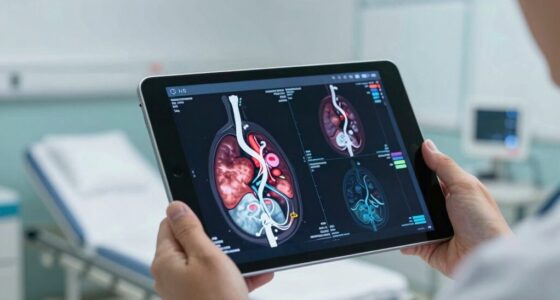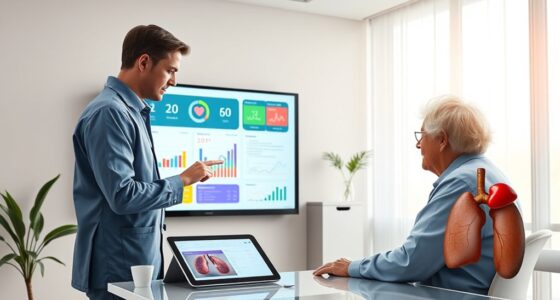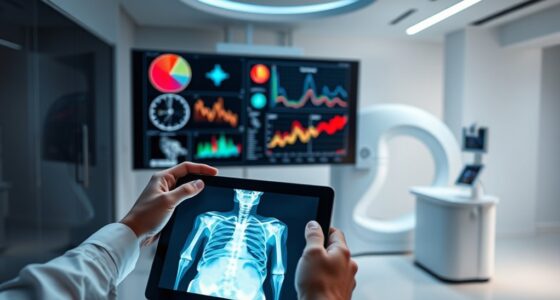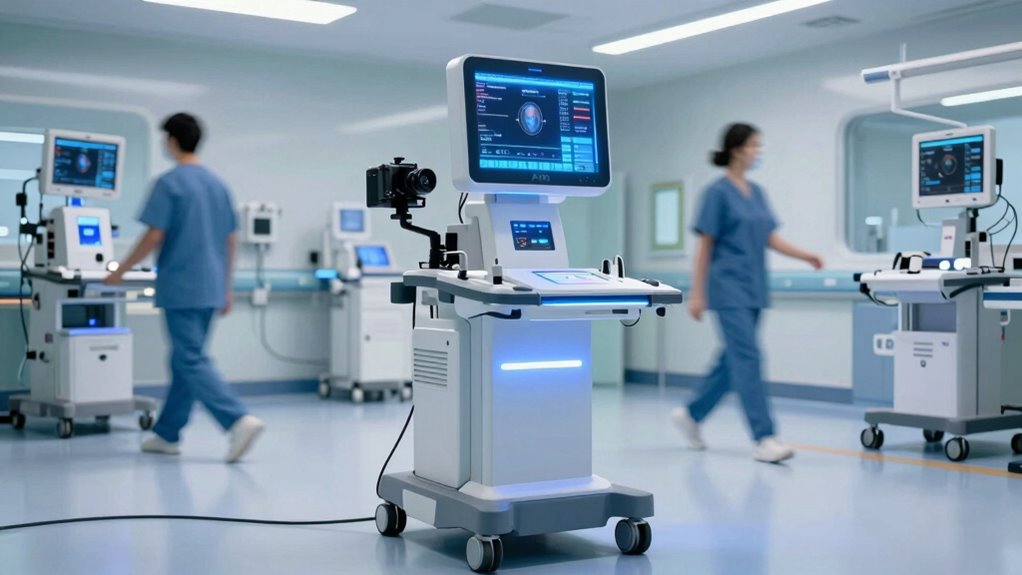
AI triage tools are set to transform emergency rooms by providing fast, accurate assessments that help you prioritize critical cases and reduce delays, especially during busy shifts. They analyze symptoms, essential signs, and patient history almost instantly, minimizing human errors and biases. With continuous learning, these systems improve over time, making care more precise and equitable. If you want to understand how these innovations could change your experience and patient care, there’s more to explore below.
Key Takeaways
- AI triage tools evaluate symptoms rapidly, improving accuracy and prioritization in high-pressure emergency settings.
- They reduce human error and bias, ensuring consistent and data-driven patient assessments.
- Integration streamlines workflows, minimizing delays and enhancing overall triage efficiency during busy periods.
- Continuous learning allows AI systems to adapt and improve, maintaining high standards amid changing patient volumes.
- AI-driven triage enables faster, more equitable emergency care, empowering staff to focus on critical cases.
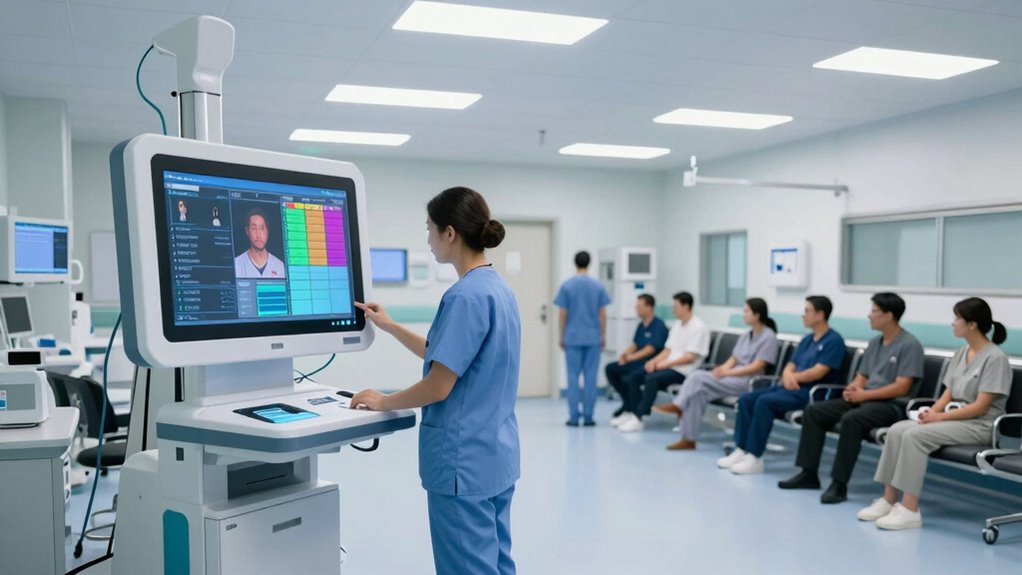
As emergency rooms become increasingly crowded, AI triage tools are transforming how hospitals prioritize patient care. These systems use advanced algorithms to evaluate symptoms quickly and assign urgency levels, helping staff make faster, more informed decisions. The focus on triage accuracy is essential here; the goal is to guarantee that patients with life-threatening conditions receive immediate attention, while less urgent cases wait their turn without risking adverse outcomes. AI integration into existing hospital workflows streamlines this process, reducing human error and minimizing delays that can occur during busy shifts.
AI triage enhances accuracy, speeds up decision-making, and reduces errors in crowded emergency rooms.
You might notice that AI triage tools can analyze a patient’s reported symptoms, vital signs, and medical history almost instantaneously. This rapid assessment allows emergency teams to prioritize effectively, guaranteeing that critical cases get the prompt care they need. Unlike traditional methods, which rely heavily on human judgment and can be influenced by fatigue or bias, AI provides a consistent, data-driven approach. This consistency is essential for maintaining high triage accuracy across different shifts and staff members, ultimately saving lives and improving patient outcomes.
Furthermore, AI integration isn’t just about speed; it also enhances the overall quality of care. These tools can flag subtle symptoms or patterns that might escape manual detection, alerting clinicians to potential complications early. For example, an AI-powered system might identify early signs of stroke or sepsis based on nuanced data points, prompting immediate action. This proactive approach reduces the risk of missed diagnoses and allows medical teams to intervene sooner.
You should also consider that AI triage tools can adapt and improve over time. Through continuous learning, they incorporate new data, refine their algorithms, and become more accurate in their assessments. This ongoing improvement helps hospitals maintain high standards of triage accuracy, even as patient volumes fluctuate or new health threats emerge. Additionally, understanding the importance of standby generators in supporting hospital infrastructure during power outages can ensure continuous operation of these AI systems, especially in critical emergencies.
In essence, the integration of AI into emergency room triage processes promises a future where care is faster, more precise, and more equitable. It empowers medical staff to focus their expertise where it’s needed most, reduces the likelihood of human error, and guarantees that no patient’s needs are overlooked. As these tools evolve and become more widely adopted, they have the potential to change emergency medicine forever—making care safer, more efficient, and more responsive to the demands of modern healthcare.

Cynamed Medical Student Diagnostic Kit – Includes Reflex Hammer, Tuning Fork Set C 128hz and C 512hz, Bandage Scissors 5.5 inch, and Penlight with Pupil Gauge – Nursing, EMT, Medical Student Tool kit
ESSENTIAL DIAGNOSTIC TOOLS: Equip yourself with a Reflex Hammer, Tuning Fork Set, Bandage Scissors, and Penlight – all…
As an affiliate, we earn on qualifying purchases.
As an affiliate, we earn on qualifying purchases.
Frequently Asked Questions
How Do AI Triage Tools Handle Rare or Complex Cases?
AI triage tools handle rare or complex cases by leveraging advanced algorithms trained on diverse datasets, aiding in rare case management and complex diagnostics. They analyze symptoms and medical histories quickly, flagging unusual patterns that might be overlooked. While they’re highly effective, human clinicians review AI suggestions to guarantee accuracy. This combination improves diagnosis accuracy, speeds up decision-making, and enhances patient outcomes, even in challenging situations.
What Are the Privacy Concerns With AI in Emergency Triage?
Sure, because nothing screams “trust us with your sensitive info” like AI handling patient confidentiality. Your biggest privacy concern? Data security, of course. These tools collect and store personal health info, risking breaches or misuse. You might think it’s all safe, but as history shows, even the most advanced tech can be hacked. So, yes, AI in emergency triage sparks privacy worries you’d rather not have to worry about.
Can AI Replace Human Triage Nurses Entirely?
AI can’t fully replace human triage nurses because AI ethics emphasize empathy, judgment, and understanding, which are essential for patient trust. While AI can assist by quickly analyzing data and prioritizing cases, it lacks the compassion and nuanced decision-making humans provide. You need human nurses to build trust and guarantee ethical care, making AI a valuable tool rather than a complete replacement in emergency triage.
How Accurate Are AI Triage Assessments Compared to Humans?
Imagine a world where AI triage assessments rival human judgment, like a futuristic robot doctor. You’ll find that triage accuracy and AI reliability are improving rapidly, often matching or exceeding human performance in consistent evaluations. While AI may not yet replace seasoned nurses entirely, it offers precise, swift assessments that help prioritize care efficiently. So, you can trust these tools to support emergency teams with increasingly reliable, accurate triage decisions.
What Training Is Needed for Staff to Use AI Triage Systems Effectively?
To use AI triage systems effectively, you need thorough staff training focused on technology integration. You should learn how to operate the software confidently, interpret AI-generated assessments accurately, and understand its limitations. Training also involves familiarizing yourself with troubleshooting common issues and maintaining data privacy. Regular updates and hands-on practice ensure your team stays current with evolving AI features, ultimately improving patient care and streamlining emergency room workflows.
emergency room triage software
As an affiliate, we earn on qualifying purchases.
As an affiliate, we earn on qualifying purchases.
Conclusion
As you consider the future of emergency care, realize that AI triage tools could cut wait times by up to 30%, transforming patient experiences. These tools help prioritize urgent cases more accurately, ensuring those who need immediate attention get it faster. Imagine a world where over 80% of ER visits are handled more efficiently, saving lives and reducing stress. Embracing this technology could truly revolutionize emergency rooms, making them safer and more responsive for everyone.

MABOZOO Patient Turning Device with Handle Hole, U-Shaped Velvet Turning Pillow Bedridden Nursing Pillow, Helping The Elderly Turn Over Pillow for The Elderly, Paralyzed, Disabled, Bedridden Patient
【Help Patient Turn Over】: Bedridden patient turning device make bedridden patients turn over and clean up the body…
As an affiliate, we earn on qualifying purchases.
As an affiliate, we earn on qualifying purchases.

VivaDiagnostics Omni Spot Vital Signs Monitor with Mobile Cart, Monitor de signos vitales, Includes Thermometer
PRECISE: The vitals monitor provides precise and reliable measurements of multiple vital signs.
As an affiliate, we earn on qualifying purchases.
As an affiliate, we earn on qualifying purchases.