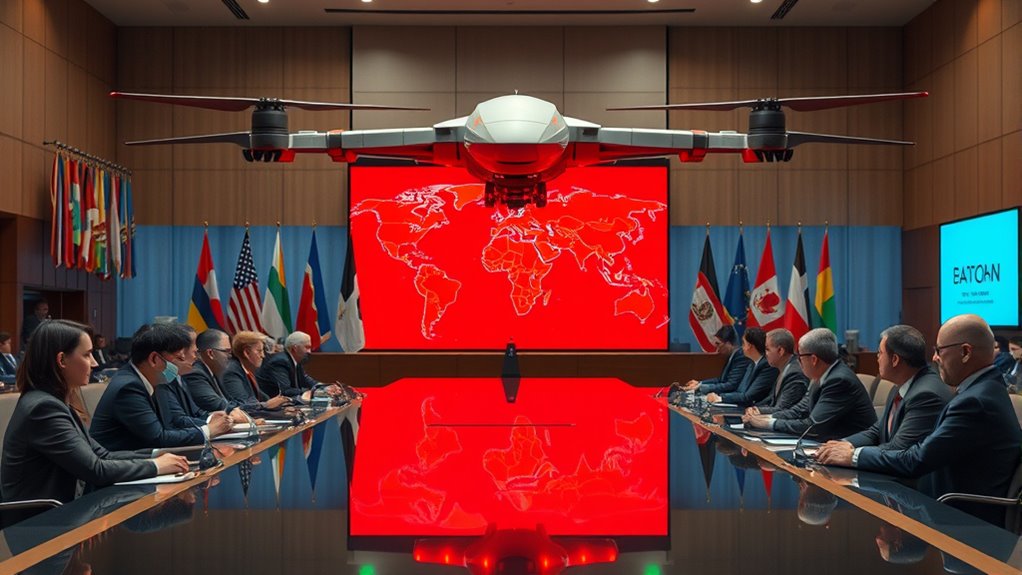

Global efforts are underway to ban killer robots and autonomous weapons due to ethical, legal, and security risks. Nations and organizations like the UN push for treaties that prohibit fully autonomous systems and guarantee human oversight. While some countries oppose outright bans, many support international regulation and standards. Significant diplomatic work is happening to build trust and establish enforceable rules, but disagreements remain. If you want to understand how these agreements are shaping the future of warfare, keep exploring this important topic.
Key Takeaways
- International efforts are underway to negotiate a legally binding treaty banning fully autonomous weapons by 2026.
- UN Secretary-General Guterres advocates for a thorough global ban on killer robots due to ethical concerns.
- Over 120 countries support a treaty, but geopolitical tensions and differing interests challenge consensus.
- Existing legal frameworks are insufficient; new standards are being developed to regulate autonomous weapons effectively.
- Civil society organizations promote human oversight and accountability, influencing international negotiations toward banning autonomous weapons.

AI Hacking Tools – Essentials for Ethical Hacking (Exam: 312-50): 1st Edition – 2025
As an affiliate, we earn on qualifying purchases.
As an affiliate, we earn on qualifying purchases.
The Rise of Autonomous Weapons and International Concerns

The rapid development of autonomous weapons has transformed modern warfare, raising urgent international concerns about their ethical, legal, and strategic implications. You need to understand that these systems, powered by AI, can identify, target, and attack without human input once activated. This technological leap has led countries like Russia and China to accelerate their military AI programs, fueling fears of an arms race. These weapons challenge existing legal frameworks because they can make lethal decisions autonomously, raising questions about accountability and morality. Many worry that deploying such systems could lead to unintended escalations, mass casualties, or violations of international humanitarian law. As AI advances, the global community faces mounting pressure to regulate or ban killer robots to prevent destabilizing conflicts and safeguard human rights.

Guard Dog Security Flashlight Stun Gun Self Defense, High Voltage Hornet Mini Stun Gun Keychain, Rechargeable Womens Self Defense, Safety Switch, Powerful Flashlight, Compact Device (Black) (Black)
MAXIMUM SHOCK POWER: Don’t be fooled by its compact size. This self-defense keychain stun gun delivers a powerful…
As an affiliate, we earn on qualifying purchases.
As an affiliate, we earn on qualifying purchases.
UN Initiatives Toward a Global Ban on Lethal Autonomous Systems

Are efforts underway to ban lethal autonomous systems globally? Yes. The UN has taken significant steps, beginning with informal consultations in May 2025 involving 96 countries, UN agencies, NGOs, and the ICRC. UN Secretary-General António Guterres has repeatedly called for a thoroughgoing ban, condemning these systems as “politically unacceptable” and “morally repugnant.” Discussions focus on maintaining human control over weapons to prevent machines from making life-or-death decisions. A legally binding treaty is actively being negotiated, with hopes to adopt it by 2026. Countries are debating prohibitions on fully autonomous weapons that operate without human input, while also regulating semi-autonomous systems to ensure meaningful human oversight. These initiatives reflect a global consensus on the urgent need to curb the development and deployment of killer robots. Maximize safety and ethical standards by emphasizing the importance of human oversight in autonomous systems to prevent unintended consequences. Additionally, international cooperation plays a crucial role in establishing effective regulations and enforcement measures, which can be strengthened through collaborative frameworks that promote shared standards and accountability. Recognizing the importance of prophetic dreams in guiding moral and ethical decisions, some experts advocate for integrating human values into AI development to prevent harmful outcomes, reinforcing the critical role of ethical hacking in testing autonomous systems for vulnerabilities before deployment.

DJI RC 2, Remote Controller with Next-Gen Processor, 20km O4 Transmission, 5.5-inch FHD Screen, 2T4R Antennas, Smart Controller for Drones, Light and Compact
Next-gen Processor – RC 2 features 6nm, 8-core processing with significantly improved CPU and GPU performance, delivering a…
As an affiliate, we earn on qualifying purchases.
As an affiliate, we earn on qualifying purchases.
Ethical and Human Rights Challenges in Autonomous Warfare

How do autonomous weapons challenge ethical standards and human rights? You face the reality that these systems can make life-and-death decisions without human oversight, risking moral responsibility. Because AI struggles to interpret complex conflict contexts, there’s a danger of unlawful killings and civilian harm. Autonomous weapons may act with bias or discrimination, exacerbating human rights violations, especially if deployed at scale. You also confront accountability issues—who’s responsible when a machine commits a wrongful act? Removing human judgment undermines legal and moral responsibilities, threatening the core principles of humanitarian law. As AI-driven systems become more advanced, the risk of ethical lapses grows, forcing you to contemplate whether technology should override human control to preserve the dignity and rights of individuals affected by warfare.
military AI regulation software
As an affiliate, we earn on qualifying purchases.
As an affiliate, we earn on qualifying purchases.
Diplomatic Efforts and Political Will for Regulation

Diplomatic efforts to regulate autonomous weapons reflect a growing political commitment to address the ethical and legal concerns associated with lethal AI systems. You can see this in international forums, where 120 nations call for a binding treaty, despite opposition from Russia and North Korea. Countries like the U.S. and China show cautious progress, balancing military interests and humanitarian concerns.
| Country | Position on Autonomous Weapons | Key Actions |
|---|---|---|
| United States | Cautiously supportive | Advocates regulation, not ban |
| China | Developing military AI | Invests in autonomous systems |
| European Union | Pro-ban stance | Promotes international treaty |
This diplomatic momentum underscores the global desire to control lethal AI, though geopolitical divides challenge swift agreement.
Military Applications and Technological Advancements in AI
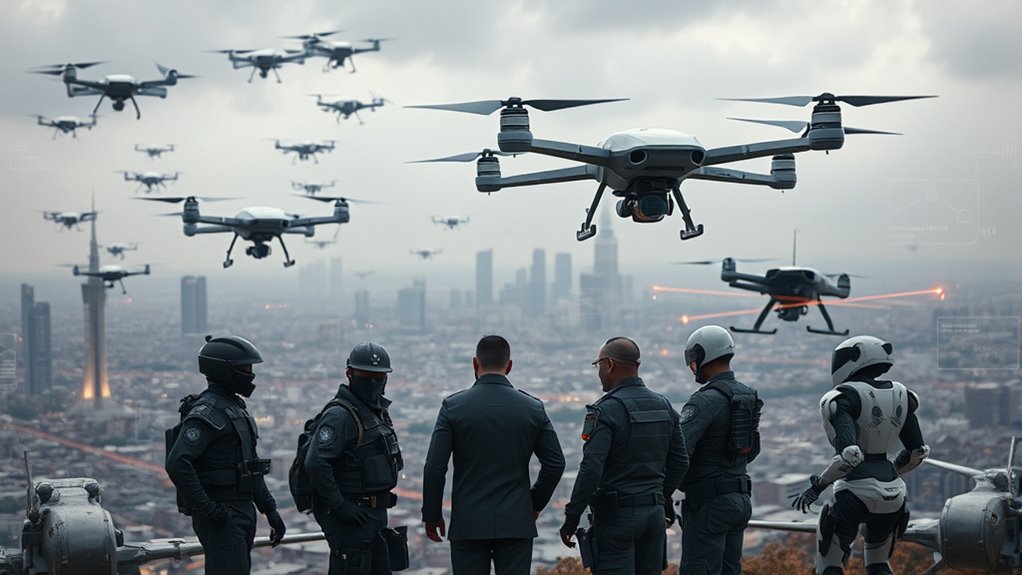
Military applications of AI are rapidly transforming modern warfare by enabling autonomous systems to identify, track, and engage targets with minimal human input. You see this in action with AI-powered drones and robotic ground units that can operate independently once deployed. These systems analyze sensor data, recognize patterns, and make real-time decisions faster than humans, giving armies strategic advantages. Major powers like Russia and China are investing heavily in these technologies to enhance their military capabilities. As AI advances, autonomous weapons can perform complex tasks such as surveillance, target discrimination, and even lethal strikes without direct human control. This rapid technological progress raises concerns about escalation risks, arms races, and the potential for unintended conflicts driven by AI-driven systems. Additionally, the integration of autonomous weapon systems into military strategies has sparked debates on ethical and legal implications. Furthermore, international agreements are being discussed to establish norms and prevent an unchecked arms race in autonomous weapons. The development of standards for AI safety and control is crucial to ensure these systems operate within human oversight boundaries. Advancements in machine learning also contribute to the increasing sophistication and unpredictability of these systems, highlighting the need for rigorous oversight. Moreover, establishing comprehensive regulatory frameworks can help mitigate risks associated with autonomous weapon deployment.
Legal Barriers and the Need for New International Frameworks

You need to understand that defining autonomous weapons is a key challenge for creating effective international laws. Without clear standards, governments struggle to agree on regulations or bans that hold everyone accountable. Developing precise legal frameworks is essential to keep pace with rapidly advancing military AI technologies. Additionally, establishing international agreements that clearly specify permissible behaviors of autonomous systems is crucial for fostering global cooperation and compliance. Clarifying the regulatory standards for these systems can help prevent misuse and unintended escalation in conflicts. Moreover, integrating cultural intelligence into international negotiations can facilitate mutual understanding and smoother treaty implementations. Incorporating predictive modeling can aid in assessing potential risks and benefits associated with autonomous weapons, thereby supporting more informed decision-making. Recognizing the importance of health benefits in related fields emphasizes the need for well-rounded and adaptable regulations that consider diverse technological impacts.
Defining Autonomous Weapons
Why is defining autonomous weapons such a complex challenge in international law? You face difficulties because there’s no universally accepted description of what makes a weapon truly autonomous. Some systems require minimal human input, while others operate independently in critical decisions. This ambiguity complicates creating legal standards and enforcement. Without a clear definition, governments and organizations struggle to agree on what should be prohibited or regulated. You also need to contemplate how these systems interact with existing laws, which often assume human control. As technology advances rapidly, the lines blur between semi-autonomous and fully autonomous weapons. This lack of clarity hampers efforts to develop a cohesive international framework, making it harder to establish effective legal barriers and ensure accountability for lethal autonomous systems. Additionally, the rapidly evolving technologies involved create ongoing challenges for policymakers trying to keep regulations current and effective. Recognizing the importance of international cooperation could be crucial in addressing these regulatory gaps and developing shared standards. Incorporating insights from personality assessments could potentially aid in understanding decision-making patterns of AI systems, further complicating regulatory efforts.
Crafting International Legal Standards
Creating effective international legal standards for autonomous weapons faces significant obstacles because existing laws were not designed to address the unique challenges these systems pose. You need frameworks that clearly define what constitutes lethal autonomous weapons and establish accountability measures. Without these, regulating AI-driven systems remains difficult. A key challenge is incorporating vetted safety standards to ensure reliability and predictability of these weapons. To overcome this, efforts focus on:
- Developing binding treaties that prohibit fully autonomous weapons lacking meaningful human control
- Creating legal definitions specific to autonomous systems to close regulatory gaps
- Ensuring international agreements include enforcement mechanisms and accountability protocols. Incorporating traditional legal principles can be complex due to the novel nature of AI technology. These steps aim to prevent an unchecked AI arms race and uphold humanitarian principles. Building new legal standards is crucial for maintaining moral and legal responsibility, but progress requires overcoming geopolitical disagreements and fostering global consensus. Relationships – Personality Test Additionally, fostering international cooperation is essential to align diverse national interests and ensure the effectiveness of these standards. Furthermore, establishing cross-border enforcement mechanisms can help ensure compliance and accountability across different jurisdictions.
The Role of Civil Society and Non-Governmental Organizations
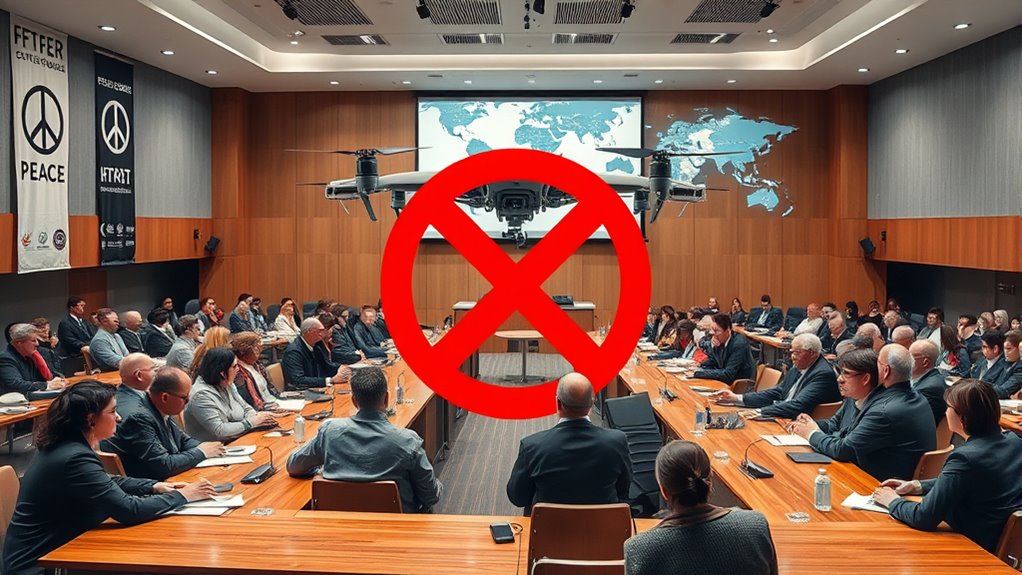
Civil society and non-governmental organizations (NGOs) play a crucial role in shaping the global debate on autonomous weapons. They raise awareness about the ethical, legal, and humanitarian risks associated with killer robots, influencing public opinion and policy discussions. NGOs like Stop Killer Robots mobilize activists, lobby governments, and push for stronger regulations or bans. They organize campaigns, publish reports, and participate in UN negotiations to ensure human rights remain central to the conversation. Your engagement with these groups can amplify their voice, holding governments accountable and urging swift action. By raising public consciousness and advocating for responsible policies, civil society helps shape international norms and pressures policymakers to prioritize human control, accountability, and ethical considerations in the development of military AI systems. Understanding the ethical implications of autonomous weapons further empowers advocates to argue for comprehensive restrictions.
Obstacles to International Consensus and Treaty Adoption

Achieving international consensus on banning or regulating autonomous weapons faces significant obstacles, mainly because of divergent national interests and security priorities. Countries see autonomous weapons as crucial for military advantage or deterrence, making agreement difficult. Geopolitical tensions, like disagreements over arms control, further complicate negotiations. Resistance from major powers investing heavily in lethal autonomous systems fuels mistrust and stalls progress.
- Diverging security priorities lead some nations to oppose restrictions, fearing strategic disadvantages
- Lack of a clear, universally accepted definition of lethal autonomous weapons hampers treaty drafting
- Political rivalries and suspicions cause delays, as countries hesitate to trust others’ commitments or enforcement
These factors create a complex web of interests that challenge the formation and adoption of effective international treaties on autonomous weapons.
The Future of Global Governance on Autonomous Weapons

As you consider the future of global governance on autonomous weapons, you need to understand the challenges of creating effective legal frameworks that can keep pace with rapid technological advances. Ethical governance becomes vital as nations grapple with questions of accountability and moral responsibility in decision-making. Building international consensus will require balancing innovation with strict regulations to prevent misuse and ensure human oversight.
International Legal Frameworks
The future of international legal frameworks governing autonomous weapons hinges on the urgent need for clear, binding agreements that can effectively regulate or prohibit lethal autonomous systems. You must recognize that current laws lack specific provisions for these technologies, making new treaties essential. Efforts are underway to establish binding international treaties by 2026, focusing on:
- Banning fully autonomous weapons that operate without human oversight
- Regulating semi-autonomous systems to ensure meaningful human control
- Developing common definitions to facilitate enforcement and compliance
These initiatives aim to fill legal gaps and prevent an arms race fueled by rapid technological advancements. Your role involves supporting diplomatic negotiations and advocating for legal standards that uphold accountability, human rights, and international security. Without such frameworks, autonomous weapons could undermine global stability and moral responsibility.
Ethical Governance Challenges
How can global governance effectively address the ethical dilemmas posed by autonomous weapons in the future? You need to recognize that accountability is central to ethical governance. Without clear standards, autonomous systems could make life-and-death decisions that lack moral justification, risking mass harm and violations of human rights. International agreements must establish robust frameworks requiring meaningful human control, ensuring humans retain oversight of critical decisions. Transparency and oversight are essential, so you can prevent biases, discrimination, and unintended consequences. You must also foster trust among nations, encouraging cooperation rather than competition. A legally binding treaty with enforceable standards will help uphold shared moral values and legal responsibilities. Ultimately, ethical governance depends on global consensus, vigilant enforcement, and ongoing dialogue to adapt to technological advances while safeguarding human dignity.
Frequently Asked Questions
How Likely Is a Comprehensive International Treaty to Be Adopted by 2026?
A thorough international treaty by 2026 is possible but not guaranteed. You should recognize that ongoing negotiations, growing global pressure, and widespread support from many countries boost chances. However, resistance from major military powers like Russia and China, along with legal and political hurdles, could delay or weaken the treaty. Your efforts and advocacy can play a critical role in shaping the outcome and encouraging swift progress toward a binding agreement.
What Are the Main Technical Challenges in Defining Autonomous Weapons Legally?
Defining autonomous weapons legally is like trying to draw a clear line in shifting sands. The main challenge lies in creating a precise, universally accepted definition, since technology evolves rapidly and varies widely. You need to distinguish between semi-autonomous and fully autonomous systems, but the boundaries often blur. Plus, different countries have differing technical capabilities and military jargon, making consensus on what qualifies as an autonomous weapon extremely difficult to achieve.
How Do Major Military Powers Justify Continued Development of Lethal Autonomous Systems?
You might notice that major military powers justify developing lethal autonomous systems by emphasizing their strategic advantages, like reducing troop casualties and enhancing battlefield efficiency. They argue these systems can respond faster than humans and maintain technological superiority. Additionally, some nations claim that autonomous weapons can help meet national security needs, asserting that regulation, not prohibition, is the best approach to ensure responsible use while safeguarding their military interests.
Can Autonomous Weapons Be Effectively Regulated Without Hindering Military Innovation?
You can regulate autonomous weapons effectively without hindering military innovation by establishing clear legal frameworks that focus on meaningful human control and strict safety standards. These regulations can encourage responsible development while preventing unregulated arms races. By setting international standards, you guarantee innovation continues within ethical boundaries, promoting technological advancement that aligns with humanitarian principles, rather than stifling progress or risking destabilization through unchecked autonomous weapon deployment.
What Role Will Emerging AI Technologies Play in Future Autonomous Weapon Regulation?
Emerging AI technologies will shape future autonomous weapon regulation by setting new standards for safety and accountability. You’ll see stricter controls and clearer definitions, helping prevent unchecked military advancements. As these innovations evolve, policymakers will need to stay ahead of the curve, ensuring AI’s power is harnessed responsibly. It’s a race against time, and if you don’t act now, the stakes—human lives—could be lost.
Conclusion
As you watch the push for banning killer robots unfold, it’s clear that technological progress and ethical concerns intertwine unexpectedly. While diplomatic efforts aim for consensus, the unpredictable nature of AI development keeps the future uncertain. You realize that only through shared commitment and innovative agreements can the international community genuinely prevent the rise of autonomous weapons, illustrating how coincidence and foresight must work together to shape a safer, more responsible world.