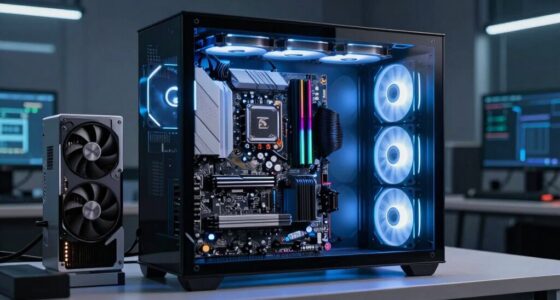
For anyone working with ai composition, choosing the right midi keyboard is essential to streamline creativity and maximize productivity. The best overall pick is the M-Audio Oxygen 49 MKV, offering a balanced mix of features and affordability. Arturia KeyLab mk3 stands out for its build quality and extensive control options, while the Akai MPK Mini Plus provides a compact, portable solution perfect for on-the-go production. As these devices vary widely in key count, control features, and connectivity, buyers face tradeoffs between size, versatility, and budget. Keep reading to see which midi keyboard best fits your ai composition needs.

Get business pricing on tech for your team
- Business-only prices and quantity discounts
- Tax-exempt purchasing
- Multiple users, one account, clear invoices
Key Takeaways
- The number of keys significantly impacts workflow, with larger keyboards offering more expressive control but at a higher cost and size.
- Build quality and tactile feel are crucial for long sessions, making premium models like Arturia KeyLab mk3 worth the investment for serious users.
- Compatibility with your DAW and seamless integration is key, especially for ai workflows that rely on automation and plugin control.
- Portability matters for mobile creators; compact models like Akai MPK Mini Plus excel here but may sacrifice some control features.
- Price ranges are broad, but investing a bit more often results in better durability, more features, and future-proofing for evolving ai tools.
| M-Audio Oxygen 49 MKV USB MIDI Keyboard Controller |  | Best Overall for Versatile AI Composition and Production | Keys: 49 velocity-sensitive full-size piano-style keys | Drum Pads: 16 backlit velocity-sensitive pads | Assignable Knobs: 8 | VIEW ON AMAZON | See Our Full Breakdown |
| M-Audio Keystation 61 MK3 USB MIDI Controller |  | Best for Beginners and Quick Setup | Keys: 61 full-size velocity-sensitive keys | Controls: Pitch and mod wheels, volume fader, transport/directional buttons | Connectivity: USB plug-and-play (Mac/PC), iOS via Apple USB Camera Adapter | VIEW ON AMAZON | See Our Full Breakdown |
| Nektar SE61 USB MIDI Controller Keyboard with DAW Integration, Black |  | Best for DAW Integration & Seamless Workflow | Keys: 61 full-size velocity-sensitive keys | Connectivity: USB | Supported Software: Bitwig, Cubase, Garageband, Logic, Nuendo, Reaper, Studio One, and more | VIEW ON AMAZON | See Our Full Breakdown |
| Akai Professional MPK Mini Plus 37-Key USB MIDI Keyboard Controller |  | Best for Compact Versatility with Modular Connectivity | Keys: 37 mini keys, 3 octaves | Connectivity: USB, CV/Gate, MIDI I/O | Controls: 8 RGB MPC pads, 8 rotary knobs | VIEW ON AMAZON | See Our Full Breakdown |
| Arturia MiniLab 3 Universal MIDI Controller, White |  | Best Compact Controller for Versatile AI Workflow | Keys: Velocity-sensitive | Pads: 8 drum pads | Faders: 4 | VIEW ON AMAZON | See Our Full Breakdown |
| Akai Professional MPK Mini IV 25-Key USB-C MIDI Keyboard Controller, Black |  | Best for Portable Production and Quick Setup | Keys: 25 mini velocity-sensitive keys | Pads: 8 velocity- and pressure-sensitive MPC pads | Knobs: 8 assignable 360° knobs | VIEW ON AMAZON | See Our Full Breakdown |
| Akai Professional MPK Mini MK3 25-Key USB MIDI Keyboard Controller |  | Best for Studio and Beat Makers on a Budget | Keys: 25 velocity-sensitive mini keys | Pads: 8 backlit MPC-style pads | Knobs: 8 assignable knobs | VIEW ON AMAZON | See Our Full Breakdown |
| Arturia KeyLab mk3 USB MIDI Keyboard Controller, 61-Key – Black |  | Best for Professional Studio Use and Extended Play | Keys: 61 aftertouch and pressure-sensitive keys | Pads: 12 performance pads | Encoders: 9 assignable encoders | VIEW ON AMAZON | See Our Full Breakdown |
| Akai Professional LPK25 25-Key USB MIDI Keyboard Controller |  | Best for Portability and Basic Composition | Keys: 25 mini keys | Controls: Octave up/down, sustain button | Arpeggiator: Built-in | VIEW ON AMAZON | See Our Full Breakdown |
| Arturia KeyLab Essential mk3 — 61-Key USB MIDI Keyboard Controller | 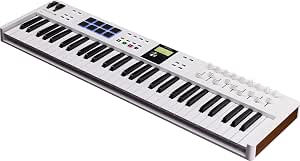 | Best for Creative Composition and Deep DAW Integration | Keys: 61 keys | Display: 2.5″ LCD | Pads: RGB-backlit, pressure and velocity sensitive | VIEW ON AMAZON | See Our Full Breakdown |
| Novation Launchkey 61 MK4 USB MIDI Keyboard Controller |  | Best Overall for Deep DAW Integration and Creative Flexibility | Number of Keys: 61 | Keybed: Semi-weighted | Drum Pads: 16 FSR pads with polyphonic aftertouch | VIEW ON AMAZON | See Our Full Breakdown |
| M-Audio Keystation Mini 32 MK3 USB MIDI Controller |  | Best Compact MIDI for On-the-Go Creativity | Keys: 32 mini velocity-sensitive keys | Controls: Pitch bend, modulation buttons, octave up/down, volume knob, sustain button | Connectivity: USB (plug-and-play) | VIEW ON AMAZON | See Our Full Breakdown |
| midi keyboards for ai composition | Connectivity | Keys | Controls |
|---|---|---|---|
| M-Audio Oxygen 49 MKV USB MIDI | USB MIDI | 49 velocity-sensitive full-size piano-style keys | — |
| M-Audio Keystation 61 MK3 USB | USB plug-and-play (Mac/PC), iOS via Apple USB Camera Adapter | 61 full-size velocity-sensitive keys | Pitch and mod wheels, volume fader, transport/directional buttons |
| Nektar SE61 USB MIDI Controlle | USB | 61 full-size velocity-sensitive keys | — |
| Akai Professional MPK Mini Plu | USB, CV/Gate, MIDI I/O | 37 mini keys, 3 octaves | 8 RGB MPC pads, 8 rotary knobs |
| Arturia MiniLab 3 Universal MI | USB | Velocity-sensitive | Instrument and track controls |
| Akai Professional MPK Mini IV | USB-C (USB 3.0), full-size MIDI Out | 25 mini velocity-sensitive keys | — |
| Akai Professional MPK Mini MK3 | USB | 25 velocity-sensitive mini keys | 4-way thumbstick for pitch/modulation |
| Arturia KeyLab mk3 USB MIDI Ke | USB-C | 61 aftertouch and pressure-sensitive keys | — |
| Akai Professional LPK25 25-Key | USB | 25 mini keys | Octave up/down, sustain button |
| Arturia KeyLab Essential mk3 | USB | 61 keys | — |
| Novation Launchkey 61 MK4 USB | USB, MIDI | — | — |
| M-Audio Keystation Mini 32 MK3 | USB (plug-and-play) | 32 mini velocity-sensitive keys | Pitch bend, modulation buttons, octave up/down, volume knob, sustain button |
More Details on Our Top Picks
M-Audio Oxygen 49 MKV USB MIDI Keyboard Controller
The M-Audio Oxygen 49 MKV stands out as the most comprehensive option for AI-driven music creation, thanks to its full 49-key velocity-sensitive keyboard combined with extensive control features like 16 backlit drum pads, 8 knobs, and 9 faders. These features give a musician the ability to manipulate virtual instruments and effects with expressiveness, making it ideal for producers who want a hands-on experience with their AI compositions. Its inclusion of a robust software bundle, including Ableton Live Lite and MPC Beats, enhances its value for those integrating AI tools into their workflow. Compared with the Arturia MiniLab 3, the Oxygen 49 offers more keys and control options, though it requires setup and software installation, which can be a hurdle for beginners. This makes it better suited for serious producers or advanced hobbyists who want a fully featured controller that can handle complex compositions, including AI-assisted workflows.
Pros:- 49 velocity-sensitive full-size keys for expressive control
- Extensive hands-on controls including pads, knobs, and faders
- Includes a comprehensive software bundle for immediate use
Cons:- Requires software and firmware setup, which may be complex for newcomers
- Dependent on a computer or DAW environment for full functionality
Best for: Producers and advanced hobbyists who need a versatile, feature-rich MIDI controller for AI composition and detailed music production
Not ideal for: Beginners or users seeking a compact, portable controller without extensive setup, as the software installation and configuration can be time-consuming
- Keys:49 velocity-sensitive full-size piano-style keys
- Drum Pads:16 backlit velocity-sensitive pads
- Assignable Knobs:8
- Assignable Faders:9
- Performance Controls:Pitch and mod wheels, arpeggiator, Smart Chord, Smart Scale
- Connectivity:USB MIDI
- Pedal Input:Sustain pedal
- Included Software:MPC Beats, Ableton Live Lite, AIR Music Tech instruments, expansion packs
Our verdict“This is the best choice for experienced producers who want a versatile MIDI controller capable of integrating AI tools into a full production setup.”
M-Audio Keystation 61 MK3 USB MIDI Controller
The M-Audio Keystation 61 MK3 offers a straightforward approach to AI composition, with 61 full-size velocity-sensitive keys that support expressive play, making it a solid choice for newcomers or those who want a reliable, plug-and-play controller. Its simple, no-fuss design means you can connect directly to your Mac or PC without drivers, and it includes essential controls like pitch and modulation wheels alongside a volume fader and transport buttons—features that facilitate basic control of AI-based instruments and DAWs. Compared to the Nektar SE61, the Keystation 61 is easier to set up and use immediately, but it lacks advanced controls like assignable knobs or pads, limiting its flexibility in complex AI compositions. This makes it well-suited for beginners or those experimenting with AI music tools who don’t need extensive hands-on controls.
Pros:- Full-size velocity-sensitive keys for expressive playing
- Plug-and-play USB connection with no driver installation
- Includes a good software bundle and free lessons
Cons:- Limited controls—lacks pads and assignable knobs
- Semi-weighted keys may not satisfy players seeking authentic piano feel
Best for: Beginners or hobbyists starting with AI-assisted composition who need a simple, reliable MIDI keyboard
Not ideal for: Advanced producers or live performers requiring more control options and expressive features, as it has limited control surface elements
- Keys:61 full-size velocity-sensitive keys
- Controls:Pitch and mod wheels, volume fader, transport/directional buttons
- Connectivity:USB plug-and-play (Mac/PC), iOS via Apple USB Camera Adapter
- Included Software:MPC Beats, Ableton Live Lite, Velvet, Xpand!2, Mini Grand
- Power:USB bus-powered
- Platform Compatibility:Mac, PC, iOS
Our verdict“Ideal for beginners or casual users seeking an easy-to-use MIDI controller for AI music projects without complex controls.”
Nektar SE61 USB MIDI Controller Keyboard with DAW Integration, Black
The Nektar SE61 excels for users who want tight integration with their digital audio workstation, making it especially suitable for AI composition workflows that rely on seamless DAW control. Its 61 velocity-sensitive keys support expressive playing, while the standout feature is Nektar’s DAW integration, compatible with most major platforms like Logic, Cubase, and Ableton. This allows real-time control over AI-generated sounds and parameters without reaching for your mouse. Unlike the Arturia MiniLab 3, it offers more keys and direct DAW controls, but it doesn’t include onboard displays or extensive physical controls beyond basic performance features, which could limit real-time editing. This pick makes the most sense for producers who want a straightforward MIDI controller with deep DAW integration for AI-assisted production.
Pros:- 61 velocity-sensitive keys for expressive performance
- Deep DAW integration supports most popular platforms
- Plug-and-play USB setup on Mac, PC, and iOS
- Includes Bitwig Studio 8-track and sound content
Cons:- Lacks onboard display and extensive physical controls
- No dedicated pitch/mod wheels in specifications
Best for: Producers or composers who prioritize DAW control and compatibility with AI tools within their existing software environment
Not ideal for: Users seeking a compact, portable controller or those needing extensive onboard controls for live performance
- Keys:61 full-size velocity-sensitive keys
- Connectivity:USB
- Supported Software:Bitwig, Cubase, Garageband, Logic, Nuendo, Reaper, Studio One, and more
- Included Software:Bitwig Studio 8-track + sound content
- Platform Compatibility:Mac, PC, iOS
- DAW Integration:Supported
Our verdict“Best suited for users who value tight DAW integration and want a straightforward MIDI controller to enhance AI composition workflows.”
Akai Professional MPK Mini Plus 37-Key USB MIDI Keyboard Controller
The Akai MPK Mini Plus offers a compact yet powerful solution for AI composition, featuring 37 mini keys with a Gen 2 dynamic keybed that supports expressive play across three octaves. Its standout feature is the extensive connectivity, including CV/Gate and MIDI I/O, making it suitable for integrating with modular synths and hardware gear—highlighting its appeal over larger controllers like the Arturia KeyLab mk3. The built-in 64-step sequencer adds a unique layer of creative control, ideal for AI-driven sequencing and pattern generation. However, its mini keys might feel cramped for those used to full-size keyboards, and the sequencer’s two-track limit can restrict complex compositions. This makes it a great choice for producers who want a portable, adaptable controller capable of hardware integration and sequencing.
Pros:- 37 mini keys across 3 octaves for portability
- Flexible connectivity including CV/Gate and MIDI I/O
- Built-in 64-step sequencer for standalone composing
Cons:- Mini keys may be less comfortable for long sessions
- Limited to two sequencer tracks, restricting complex arrangements
Best for: Mobile producers or modular synth enthusiasts who need a compact controller with sequencing and extensive hardware connectivity
Not ideal for: Piano players or those needing a full-size key experience, or users requiring multiple tracks for complex AI arrangements
- Keys:37 mini keys, 3 octaves
- Connectivity:USB, CV/Gate, MIDI I/O
- Controls:8 RGB MPC pads, 8 rotary knobs
- Sequencer:64-step built-in
- Software Included:MPC Beats, Komplete 15 Select, Splice
- Power:USB-powered
Our verdict“Ideal for modular synth users and mobile producers seeking a compact controller with sequencing and versatile hardware options.”
Arturia MiniLab 3 Universal MIDI Controller, White
The Arturia MiniLab 3 strikes a balance between portability and control, with velocity-sensitive keys, 8 drum pads, and 4 faders that adapt well to various AI composition setups. Its small footprint makes it suitable for musicians who need a portable solution that can still deliver hands-on control for virtual instruments and effects. Compared to the M-Audio Keystation 61 MK3, it offers fewer keys but adds tactile pads and faders, giving more expressive options for manipulating AI-generated sounds. Its simplicity is a plus for those who want an easy-to-use controller, but the limited number of pads and faders might not satisfy users aiming for extensive real-time control during complex compositions. This makes it perfect for mobile producers or those with minimal space who want a flexible entry-level controller.
Pros:- Compact and portable design
- Velocity-sensitive keys for expressive playing
- Includes drum pads and faders for hands-on control
Cons:- Limited number of pads and faders for complex control
- Less suitable for detailed editing or live performance requiring extensive controls
Best for: Producers and hobbyists seeking a compact, versatile MIDI controller for AI composition and live tweaking
Not ideal for: Producers needing extensive control surfaces or full-size keys for detailed performance and editing
- Keys:Velocity-sensitive
- Pads:8 drum pads
- Faders:4
- Controls:Instrument and track controls
- Connectivity:USB
- Color:White
Our verdict“A flexible, portable MIDI controller ideal for those who need a compact device with essential controls for AI music creation.”
Akai Professional MPK Mini IV 25-Key USB-C MIDI Keyboard Controller, Black
The Akai MPK Mini IV stands out for its compact design, making it ideal for creators who need a portable solution without sacrificing essential controls. Compared with the Akai MPK Mini MK3, this model adds a full-color display and RGB MPC pads, enhancing visual feedback and performance versatility. However, its mini keys may feel cramped for players accustomed to full-sized instruments, and only having 8 MPC pads limits its drum programming capabilities. This pick makes the most sense for mobile producers, gigging musicians, or home studio owners with limited space who want a plug-and-play device that integrates seamlessly with major DAWs and offers a rich software bundle.
Pros:- Highly portable with plug-and-play USB-C connectivity
- Pre-mapped DAW controls for quick setup
- Rich software bundle including 1000+ sounds and Splice samples
- Versatile tools like arpeggiator and scale modes
Cons:- Mini keys may hinder expressive playing for some users
- Limited to only 8 MPC pads, restricting beat-making options
Best for: Traveling producers and songwriters needing a lightweight, versatile MIDI controller with software integration.
Not ideal for: Pianists or keyboard players preferring full-sized keys and extensive control surfaces for detailed performance or studio work.
- Keys:25 mini velocity-sensitive keys
- Pads:8 velocity- and pressure-sensitive MPC pads
- Knobs:8 assignable 360° knobs
- Display:Full-color screen with push/turn encoder
- Connectivity:USB-C (USB 3.0), full-size MIDI Out
- Compatibility:Mac, PC, mobile
Our verdict“Best suited for creators seeking a compact, feature-rich MIDI controller for mobile production and quick DAW setup.”
Akai Professional MPK Mini MK3 25-Key USB MIDI Keyboard Controller
The MPK Mini MK3 is a well-rounded choice for beginners and budget-conscious producers, offering 25 velocity-sensitive mini keys and a suite of performance controls like MPC-style pads, knobs, and a joystick for pitch and modulation. It surpasses the Nektar SE61 in control surface, thanks to its backlit pads and fully assignable knobs, making it more adaptable for creative workflows. Yet, the compact size and mini keys limit expressive playing and might not satisfy advanced pianists or those needing more extensive controls. This device makes the most sense for bedroom producers, beat makers, and DJs who prioritize portability and straightforward integration with DAWs and virtual instruments.
Pros:- Compact and lightweight for easy transport
- Includes MPC-style pads with Note Repeat and Full Level
- Two months of Splice sample access included
- Customizable via editor software
Cons:- Mini keys may limit expressive playing
- Fewer physical controls compared to larger controllers
Best for: Beginners and hobbyists looking for an affordable, portable MIDI keyboard with versatile control features.
Not ideal for: Advanced performers or pianists requiring full-size keys and extensive control surfaces for detailed performances.
- Keys:25 velocity-sensitive mini keys
- Pads:8 backlit MPC-style pads
- Knobs:8 assignable knobs
- Controls:4-way thumbstick for pitch/modulation
- Connectivity:USB
- Compatibility:Mac, PC, major DAWs
Our verdict“Ideal for entry-level producers who want portability and a comprehensive control surface at an affordable price.”
Arturia KeyLab mk3 USB MIDI Keyboard Controller, 61-Key – Black
The Arturia KeyLab mk3 offers 61 keys with aftertouch and pressure sensitivity, making it suitable for detailed performance and expressive playing. It provides a robust control surface with nine assignable encoders, pressure-sensitive pads, and multiple pedal inputs, giving it a clear edge over smaller controllers like Akai MPK Mini IV for serious studio work. Nonetheless, its size may be less ideal for tight spaces, and it does not include built-in sounds or speakers. This controller makes the most sense for professional producers, keyboardists, or performers who need extensive control for complex arrangements and prefer dedicated hardware for software integration.
Pros:- Excellent aftertouch and pressure-sensitive keys
- Multiple assignable encoders and pads for versatile control
- Supports comprehensive software including Analog Lab Pro
- Durable metal and wood construction
Cons:- Limited to USB-C, may need adapters for some setups
- No built-in sounds or onboard speakers
Best for: Producers or performers requiring a full-size, expressive MIDI keyboard with deep control options.
Not ideal for: Travelers or hobbyists with limited space or those seeking a budget-friendly, lightweight controller.
- Keys:61 aftertouch and pressure-sensitive keys
- Pads:12 performance pads
- Encoders:9 assignable encoders
- Connectivity:USB-C
- Supported Software:Analog Lab Pro, Ableton Live Lite
- Material:Aluminum, wood
Our verdict“Best suited for professional musicians and producers who need expressive control and a full-size keyboard for studio work.”
Akai Professional LPK25 25-Key USB MIDI Keyboard Controller
The LPK25 is a straightforward, compact MIDI controller designed for on-the-go music creation, featuring 25 mini keys, octave controls, and a built-in arpeggiator. It surpasses larger controllers like the Arturia KeyLab mk3 in portability but falls short in control surface complexity. Its mini keys may not satisfy expressive pianists, and the limited controls restrict detailed editing, making it better suited for quick sketching or basic beat-making. This device makes the most sense for songwriters, hobbyists, or mobile producers who need a simple, plug-and-play MIDI solution without extra bulk.
Pros:- Extremely portable and lightweight
- Built-in arpeggiator and octave buttons
- Eight programmable preset slots
- Plug-and-play compatibility
Cons:- Mini keys limit expressive playing
- Limited control surface for complex editing
Best for: Mobile musicians, songwriters, and students needing a small, reliable MIDI controller for basic tasks.
Not ideal for: Advanced producers or keyboardists requiring full-size keys and extensive control features for complex arrangements.
- Keys:25 mini keys
- Controls:Octave up/down, sustain button
- Arpeggiator:Built-in
- Connectivity:USB
- Preset Slots:8 programmable
- Power:USB-powered
Our verdict“Great for those seeking a simple, portable MIDI controller for songwriting and basic production on the move.”
Arturia KeyLab Essential mk3 — 61-Key USB MIDI Keyboard Controller
The KeyLab Essential mk3 combines 61 keys with intuitive tools like Scale Mode, Chord Mode, and an Arpeggiator, making it ideal for composers and producers who want creative control. It supports deep integration with popular DAWs such as Ableton Live, Logic Pro, and FL Studio, providing seamless workflow enhancements. Its large bundled software package, including Analog Lab V and UVI instruments, adds value but may be overwhelming for beginners. Its size could be a drawback in small setups, but for users seeking a versatile, feature-rich MIDI controller that facilitates complex compositions, this is a compelling choice.
Pros:- Includes innovative tools like Scale and Chord modes
- Deep DAW integration for workflow efficiency
- Large software bundle with high-quality presets
- Bright LCD and RGB pads for real-time feedback
Cons:- Bulkier size may not suit small desks
- Some included software are subscriptions, not permanent licenses
Best for: Intermediate to professional producers looking for a versatile controller with advanced composition tools and extensive software support.
Not ideal for: Travelers or hobbyists with limited space or those preferring a smaller, simpler MIDI device.
- Keys:61 keys
- Display:2.5″ LCD
- Pads:RGB-backlit, pressure and velocity sensitive
- Features:Scale Mode, Chord Mode, Arpeggiator
- Included Software:Analog Lab V, UVI Model D, NI The Gentleman
- Connectivity:USB
Our verdict“Best for producers seeking a comprehensive, creative MIDI controller with advanced features and software integration.”
Novation Launchkey 61 MK4 USB MIDI Keyboard Controller
The Novation Launchkey 61 MK4 stands out for its extensive integration with all major DAWs and its versatile creative tools, making it ideal for producers who want a seamless workflow. Compared with the M-Audio Keystation Mini 32 MK3, it offers a full-sized 61-key semi-weighted keybed, which provides a more expressive playing experience, especially for melodic and chord-based compositions. The inclusion of 16 FSR drum pads with polyphonic aftertouch adds a layer of performance control rarely found on comparable controllers, turning it into a mini production hub. However, its larger footprint demands more desk space, which could be a drawback for smaller studios. The depth of features might overwhelm beginners, but for those already familiar with DAWs, this keyboard offers unmatched versatility and integration. The bundled software, including Ableton Live Lite and Melodics lessons, further enhances its value for serious creators.
Pros:- Seamless integration with all major DAWs for a smooth workflow
- 16 FSR drum pads with polyphonic aftertouch enable expressive performance and triggering
- Built-in creative tools like Scale Mode, Chord Modes, and an editable Arpeggiator
Cons:- Large 61-key size requires substantial desk space
- Feature set may be overwhelming for new users unfamiliar with advanced DAW controls
Best for: Producers and composers seeking a comprehensive, DAW-integrated MIDI controller that doubles as a creative studio centerpiece
Not ideal for: Beginners or those with limited space who prefer a simple, portable MIDI controller without extensive features
- Number of Keys:61
- Keybed:Semi-weighted
- Drum Pads:16 FSR pads with polyphonic aftertouch
- Connectivity:USB, MIDI
- Compatible Devices:PC, Synthesizer, Groovebox
- Supported Software:Ableton Live, Logic Pro, Cubase, Reason, Reaper, FL Studio, Ardour
Our verdict“This controller is best suited for experienced producers who want deep DAW integration and versatile creative features.”
M-Audio Keystation Mini 32 MK3 USB MIDI Controller
The M-Audio Keystation Mini 32 MK3 excels in portability, providing a straightforward, plug-and-play solution for mobile producers and beginners. Its 32 mini velocity-sensitive keys are ideal for those who need a compact setup, especially compared to larger controllers like the Launchkey 61 MK4, which may be too bulky for travel or tight spaces. The inclusion of essential controls such as pitch bend, modulation buttons, and octave shift makes it versatile enough for basic melodic work, while the bundled MPC Beats software and Melodics lessons support learning and production. However, the mini keys can feel cramped for players used to full-sized keys, potentially limiting expressive control. The absence of dedicated pitch bend/modulation wheels, replaced by buttons, could also hinder nuanced performances. Still, for its size and simplicity, it offers solid value for those prioritizing mobility and ease of use over advanced features.
Pros:- Compact and lightweight design ideal for mobile setups
- Plug-and-play operation with no drivers or external power required
- Customizable velocity curves to match different playing styles
Cons:- Mini keys may feel small and less expressive for detailed playing
- Lacks dedicated pitch bend and modulation wheels, only buttons available
Best for: Mobile producers, beginners, or users with limited desk space seeking an easy-to-use MIDI controller
Not ideal for: Advanced musicians or studio users needing full-sized keys and extensive control options for complex compositions
- Keys:32 mini velocity-sensitive keys
- Controls:Pitch bend, modulation buttons, octave up/down, volume knob, sustain button
- Connectivity:USB (plug-and-play)
- Compatibility:Windows, Mac
- Power:USB bus-powered
- Included Software:MPC Beats, 60 Melodics MIDI lessons
Our verdict“This controller is perfect for on-the-go creators and beginners who prioritize portability and simplicity over extended control options.”

How We Picked
The products were evaluated based on their performance in ai composition workflows, build quality, ease of use, and integration capabilities. We prioritized models that offer a good balance of key count, control surfaces, and connectivity options, especially those optimized for digital creation and automation. Durability and user feedback played a role, as did value for the price. The ranking reflects how well each keyboard supports complex ai-driven projects, with an emphasis on versatility and future-proof features.Factors to Consider When Choosing Midi Keyboards For Ai Composition
Choosing a midi keyboard for ai composition involves considering several factors that influence your creative efficiency and workflow. Beyond basic features, understanding how control surfaces, connectivity, and compatibility affect your setup can prevent costly mistakes. This guide highlights key considerations to help you make an informed decision tailored to your specific needs.Number of Keys and Size
The size of your midi keyboard impacts both playability and portability. Larger models, like 61 or 76 keys, offer more expressive control, which is beneficial for detailed composition and expressive AI-driven performances. Smaller options, such as 25 or 32 keys, are ideal for mobile setups or limited space, but may restrict complex arrangements. Consider your typical workflow and whether you prioritize portability or playing comfort when selecting key count.
Control Surface and Features
Look for keyboards that provide a range of knobs, faders, and pads, especially if you work with AI tools that benefit from automation and modulation. More extensive control options can reduce your reliance on mouse and keyboard, speeding up creative processes. However, more controls often mean a steeper learning curve. Balance your need for control with ease of use, especially if you’re new to midi controllers.
Connectivity and Compatibility
Most midi keyboards connect via USB, but check for features like MIDI DIN ports or MIDI over Bluetooth if your setup requires them. Compatibility with your DAW and AI plugins is essential; some models offer dedicated DAW integration or software bundles that simplify setup. Be cautious about drivers and software support, especially if you plan to integrate with complex AI composition tools that demand stable, low-latency connections.
Build Quality and Durability
Frequent use calls for robust construction and quality keys. Plastic keys are common, but some models feature semi-weighted or full-weighted keys that feel more natural during prolonged sessions. Investing in a durable build can prevent issues like key sticking or hardware failure, which can disrupt your workflow, especially in high-pressure creative environments.
Price and Future-Proofing
The price of midi keyboards varies widely, and spending more often grants access to extended control options, better build quality, and longer-lasting hardware. Cheaper models may suffice for beginners or casual use but can fall short if your projects become more complex or AI tools evolve. Consider your budget carefully, but also think about how the keyboard will support your growth in AI composition over time.
Frequently Asked Questions
Can I use any midi keyboard for AI composition?
While most midi keyboards can be used for AI composition, compatibility with specific AI tools and DAWs varies. Look for models that support your preferred software and offer sufficient control features. Some keyboards come with dedicated integration or software bundles that streamline setup. Ensuring compatibility prevents frustration and helps you focus on creating rather than troubleshooting technical issues.
Is it better to buy a smaller or larger midi keyboard for AI work?
This depends on your workflow. Larger keyboards with more keys provide more expressive control, which is beneficial if your AI projects involve detailed arrangements. Smaller models are more portable and ideal for mobile setups or limited space, but might restrict complex performances. Consider your typical use case and whether portability or control depth takes priority.
Are weighted keys necessary for AI composition?
Weighted keys can improve your playing feel and comfort, especially during long sessions, but they are not strictly necessary for AI composition. Many users find semi-weighted or synth-action keys sufficient for controlling AI-driven instruments and plugins. Focus on key feel that supports your playing style and comfort rather than solely on weighted mechanisms.
How important is DAW integration for AI workflows?
Deep DAW integration can significantly streamline your AI composition process by enabling automation, quick control access, and seamless plugin management. Some midi controllers feature dedicated buttons and software that sync with popular DAWs, reducing setup time and improving efficiency. For complex AI projects, choosing a keyboard with strong integration capabilities can save time and improve your creative flow.
Should I prioritize control features over portability?
This depends on your working environment. If you primarily compose at a fixed studio setup, prioritizing control features and build quality makes sense. However, if you need to move between locations frequently, portability might outweigh extensive control options. Finding a balance that suits your workflow is key—consider models that offer essential controls in a compact form for flexible use.
Conclusion
For most users, the M-Audio Oxygen 49 MKV offers the best balance of features and price, making it ideal for versatile AI composition work. Beginners or those on a tight budget should consider the Akai MPK Mini Plus for its portability and ease of use. For professionals seeking durability and extensive control, the Arturia KeyLab mk3 stands out as a premium choice. Mobile creators or performers will find the Akai MPK Mini IV or Keystation Mini 32 excellent for on-the-go use. Tailor your choice based on your workflow, budget, and specific AI composition needs to get the most out of your midi keyboard in 2026.