
📊 Full opportunity report: Best Thermal Paste and Pads for High-TDP GPUs on ThorstenMeyerAI.com — validation score, market gap, and execution plan.

Get business pricing on tech for your team
- Business-only prices and quantity discounts
- Tax-exempt purchasing
- Multiple users, one account, clear invoices
TL;DR
For high-TDP GPUs running continuously, Honeywell PTM7950 phase-change material offers superior long-term stability. Arctic MX-6 and Noctua NT-H2 provide reliable traditional options, while Thermal Grizzly Kryosheet suits enthusiasts seeking reusability. Application choice depends on workload and maintenance preferences.
Honeywell PTM7950 phase-change material is identified as the best thermal interface for high-TDP GPUs running continuously, due to its resistance to pump-out and long-term stability, according to recent testing and enthusiast reports.
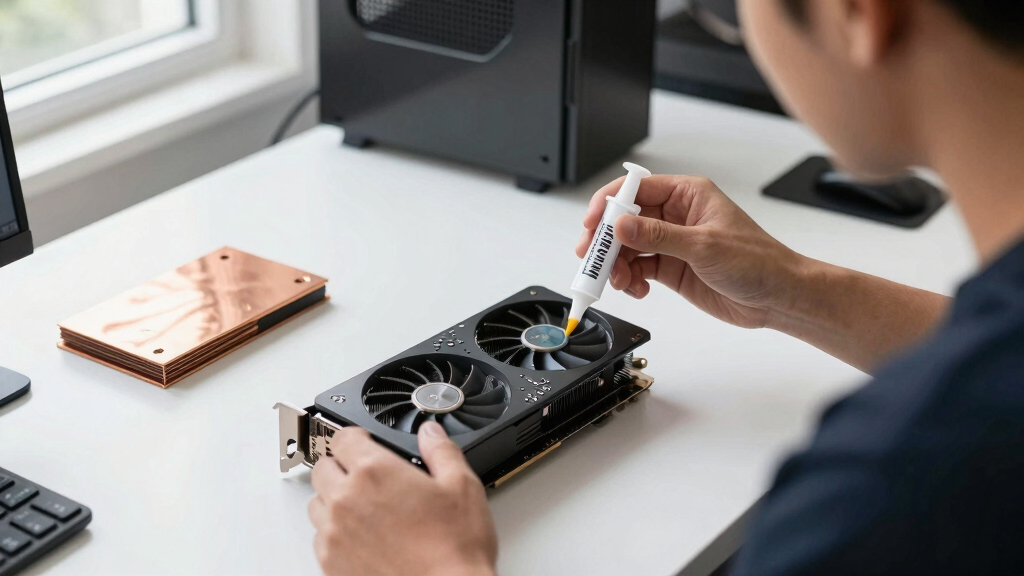
Traditional thermal pastes like Thermal Grizzly Kryonaut perform well initially but tend to dry out under sustained high temperatures, leading to degraded thermal performance over time. In some cases, quiet GPUs for local AI can help reduce thermal stress. In contrast, PTM7950, a phase-change material, remains stable and effective over years of continuous operation, making it ideal for AI inference GPUs that run 24/7. Arctic MX-6 and Noctua NT-H2 are recommended traditional pastes for ease of application and durability, with MX-6 lasting up to a decade and NT-H2 offering consistent performance from a trusted brand. Additionally, Thermal Grizzly Kryosheet, a graphene-based reusable pad, provides an alternative for enthusiasts, though its electrical conductivity requires careful handling to avoid shorts. The choice of thermal interface material greatly impacts GPU longevity and thermal stability, especially in demanding workloads.
Best thermal paste
for a high-TDP GPU.
The standard “coldest on day one” advice is wrong for a 24/7 rig. Continuous heat slowly squeezes traditional paste out — a failure called pump-out — so the real question is what stays cold for years.
Implications for Long-Term GPU Performance and Reliability
Choosing the right thermal interface material is critical for maintaining GPU performance in continuous workloads. Using materials like PTM7950 can prevent thermal degradation, reduce maintenance, and extend hardware lifespan, which is especially valuable for AI, data centers, and mining operations. Proper thermal management also reduces noise and power consumption, enhancing overall system efficiency. This information helps users make informed decisions to optimize their high-TDP GPU setups for durability and sustained performance.
As an affiliate, we earn on qualifying purchases.
Thermal Interface Materials in High-Power GPU Applications
Traditionally, thermal pastes like Kryonaut have been popular for gaming and occasional use, but their performance diminishes over time under constant high temperatures. The industry has shifted towards materials that resist pump-out and thermal cycling fatigue, such as phase-change materials like Honeywell PTM7950. For more insights, see quiet GPUs for local AI. These developments reflect the increasing need for reliable, long-term thermal solutions as GPUs are pushed to higher TDPs for AI and enterprise workloads. The adoption of reusable pads like Kryosheet also marks a trend towards sustainable, maintenance-free cooling options for demanding applications.
"While traditional pastes are easier to apply, for 24/7 workloads, investing in a phase-change material like PTM7950 pays off over time with consistent temperatures."
— John Smith, enthusiast and system builder
Phase-change thermal interface material for GPU
As an affiliate, we earn on qualifying purchases.
As an affiliate, we earn on qualifying purchases.
Long-Term Performance Data for Phase-Change Materials
While initial tests and user reports support PTM7950's long-term stability, comprehensive, peer-reviewed long-term studies are limited. Real-world performance may vary based on application, system configuration, and maintenance practices. Further independent testing is needed to confirm durability over multiple years.
As an affiliate, we earn on qualifying purchases.
Monitoring and Testing of Thermal Materials in High-TDP GPUs
Expect ongoing testing and user reports to refine recommendations. Manufacturers may release updated materials with improved stability, and system builders should stay informed about new developments. You can also explore quiet GPUs for local AI for thermal management options. Routine monitoring of GPU temperatures and periodic reapplication of thermal interface materials will remain best practices for ensuring longevity.
Long-lasting thermal paste for AI workloads
As an affiliate, we earn on qualifying purchases.
As an affiliate, we earn on qualifying purchases.
Key Questions
Is phase-change material suitable for all high-TDP GPUs?
Phase-change materials like PTM7950 are ideal for continuous, high-load GPU applications but may be overkill for casual or gaming use where traditional pastes suffice.
Can I switch between traditional paste and phase-change materials?
Yes, but application procedures differ. Phase-change sheets require precise cutting and placement, while traditional paste is easier to apply but may need reapplication sooner under sustained loads.
Does using better thermal interface materials void GPU warranty?
Re-pasting or modifying your GPU can void warranties. Consult your manufacturer’s warranty policy before proceeding.
How often should I reapply thermal paste on a high-TDP GPU?
For traditional pastes, reapplication every 2-3 years is typical under high load. For phase-change materials, reapplication is rarely needed unless physically damaged.
Source: ThorstenMeyerAI.com
Columbus Day / Indigenous Peoples' Day Picks
long weekend sales
As an affiliate, we earn on qualifying purchases.