AI boosts biometric security by making face and voice recognition faster, more precise, and more resistant to deception. It analyzes large datasets, detects signs of spoofing, and continuously learns to adapt to new threats. Combined face and voice biometrics create stronger, seamless authentication layers, while behavioral analysis helps spot suspicious activity early. If you keep exploring, you’ll discover even more ways AI is transforming biometric security and protecting your identity.
Key Takeaways
- AI improves facial recognition accuracy by analyzing large datasets and adapting to variations like lighting and expressions.
- Voice biometrics leverage AI for quick, accurate verification even in noisy environments, enhancing security.
- Multi-modal systems combine face and voice recognition for stronger, seamless biometric authentication.
- Anti-spoofing and liveness detection techniques use AI to identify fake images, videos, or audio, preventing deception.
- Continuous learning and behavioral analysis enable AI systems to adapt and detect suspicious activities in real-time.
The Role of AI in Advancing Facial Recognition Technologies
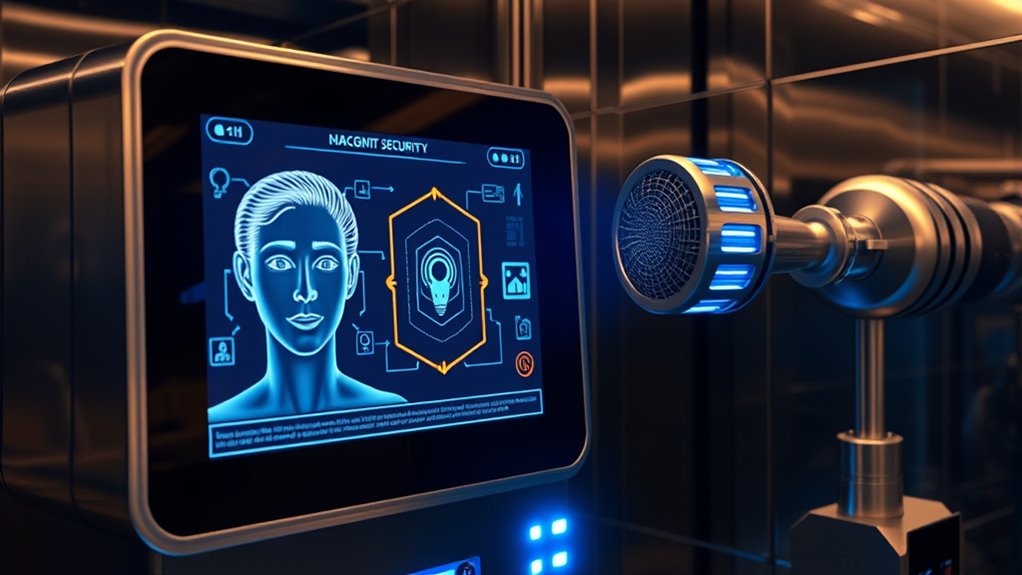
How exactly is AI transforming facial recognition technologies? AI enhances these systems by making them faster, more precise, and adaptable. Machine learning algorithms analyze vast amounts of facial data, improving recognition accuracy over time. They can identify individuals even with changes in lighting, angles, or expressions, reducing false positives. AI-powered liveness detection verifies that users are physically present, countering spoofing attempts with photos or videos. It also automates threat detection by flagging suspicious activities before security breaches occur. Additionally, AI enables contactless, hygienic verification, ideal for public spaces. Incorporating continuous learning allows these systems to adapt to evolving security challenges and new biometric data, further refining their performance. This adaptive capability ensures facial recognition remains reliable and secure, making it a crucial tool for modern biometric security and helping organizations stay ahead of emerging threats. Moreover, ongoing training data helps AI systems stay current with new techniques used in spoofing and tampering, maintaining their effectiveness. AI’s integration with biometric security systems also facilitates real-time analysis, enabling immediate responses to potential security incidents.
Voice Biometrics: Enhancing Security With Ai-Driven Verification
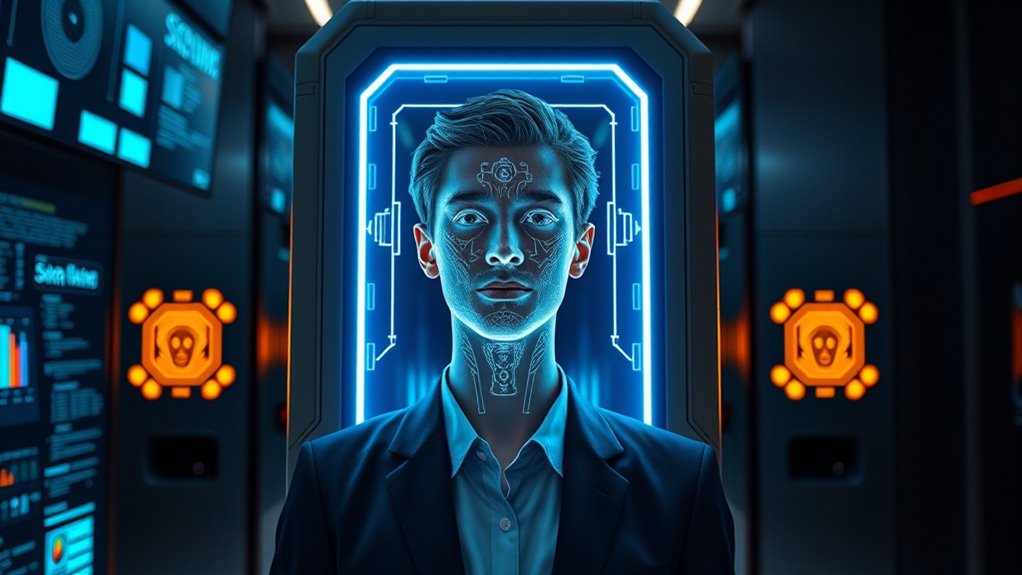
AI-powered voice authentication makes verifying identities faster and more accurate, even in noisy environments. Anti-spoofing and liveness detection are essential to prevent fake voices and ensure the speaker is physically present. By integrating these AI-driven features, you can substantially strengthen your voice biometric security system against emerging threats. Implementing real-time monitoring capabilities can also help detect and respond to potential security breaches promptly. Establishing a clear timeline for deploying such technologies can also streamline implementation and ensure timely enhancement of security measures. Additionally, ongoing advancements in cybersecurity vulnerabilities highlight the importance of continually updating biometric protocols to stay ahead of potential exploits. Incorporating multi-factor authentication further enhances security by combining voice recognition with other verification methods. Staying aware of technological advancements ensures your system remains resilient against evolving attack techniques.
AI-Powered Voice Authentication
Voice biometrics leverage AI-driven verification to provide a secure, seamless authentication experience. You benefit from quick, contactless access that adapts to your speech patterns, making it ideal for remote and mobile environments. AI analyzes unique vocal features, such as pitch, tone, and cadence, to authenticate your identity accurately. Continuous learning from your voice data allows the system to improve over time, reducing false rejections and false acceptances. This technology can detect subtle anomalies, helping prevent unauthorized access. By integrating AI-powered voice authentication, organizations bolster security without sacrificing user convenience. It’s especially useful for high-security settings, such as banking, healthcare, and enterprise systems. As AI advances, your voice becomes an even more reliable biometric, combining speed, security, and ease of use. Additionally, ongoing research into voice pattern recognition enhances the system’s ability to adapt to changes in your voice over time. Incorporating cybersecurity measures ensures comprehensive protection against evolving threats to your voice biometric data. Furthermore, improvements in natural language processing contribute to more accurate and intuitive verification processes. Understanding biometric technology further underscores the potential for integrating diverse modalities like voice and face recognition for enhanced security. Moreover, staying informed about grocery savings strategies can help users allocate resources toward advanced security solutions.
Anti-Spoofing and Liveness
To guarantee voice biometric systems remain secure against sophisticated attacks, anti-spoofing and liveness detection techniques are essential. These methods ensure the system can distinguish between genuine users and imposters using synthetic or recorded voices. AI-driven solutions analyze audio patterns, detect replay attacks, and verify physical presence through real-time responses. You benefit from advanced features like:
- Voice pitch and cadence analysis to identify synthetic voices
- Challenge-response prompts to confirm user presence
- Environmental and background noise detection to flag recordings
- Behavioral cues such as speech timing and hesitation patterns
- Multi-modal verification combining facial cues and voice signals
- Passive voice detection helps improve the clarity and accuracy of security assessments. Incorporating digital literacy strategies can further enhance user awareness of security practices. Promoting user awareness of potential security vulnerabilities can help prevent social engineering attacks. Additionally, understanding liveness detection techniques is crucial for maintaining robust biometric security. Staying informed about security best practices can significantly reduce risks associated with biometric authentication systems.
Multi-Modal Authentication: Combining Face and Voice for Greater Security
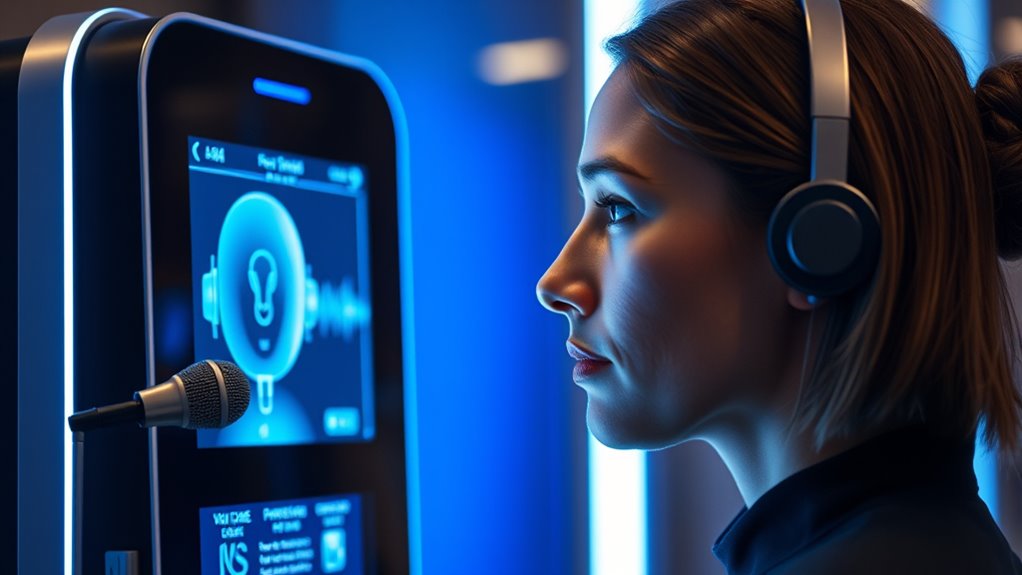
Combining face and voice biometrics creates stronger security layers that are harder to bypass. This multi-modal approach offers a seamless user experience, reducing friction while maintaining high accuracy. By integrating these modalities, you enhance protection against spoofing and false positives, making your system more resilient. Additionally, implementing Kia Tuning techniques can optimize biometric hardware performance for faster and more reliable authentication. Ensuring that hardware components are correctly installed and maintained further boosts the system’s overall effectiveness. Incorporating evidence-based insights can help identify the most effective hardware configurations and security protocols, especially when considering the hours of operation for various retail stores to better understand customer shopping patterns and adapt security measures accordingly.
Enhanced Security Layers
Enhanced security layers have become essential in biometric systems, especially when multiple modalities are integrated to strengthen authentication. Combining face and voice recognition creates a robust barrier against impersonation and fraud. AI plays a key role in this, enabling real-time threat detection and adaptive responses. You benefit from:
- Multi-modal verification, making it harder for attackers to bypass both methods
- AI-powered liveness detection to confirm physical presence and prevent spoofing
- Continuous monitoring during sessions to flag anomalies early
- Context-aware adjustments based on location or device risk factors
- Behavioral analysis to identify subtle deviations and prevent misuse
These layered defenses ensure that your biometric system remains resilient against sophisticated AI-generated threats, providing a higher level of security without sacrificing user convenience.
Seamless User Experience
Integrating face and voice biometrics creates a seamless user experience by enabling quick, contactless authentication that feels natural and unobtrusive. You can unleash devices or access secure areas effortlessly, without intrusive passwords or PINs. Multi-modal systems adapt to your context, reducing friction and delays. The combined use of face and voice adds layers of security while maintaining ease of use. Here’s how it benefits you:
| Benefit | Explanation |
|---|---|
| Faster Access | Instant verification without delays |
| Contactless | No need to touch surfaces or devices |
| Enhanced Security | Multiple biometrics reduce spoofing risks |
This approach simplifies security, making authentication smooth and trustworthy.
Behavioral Biometrics and AI Pattern Recognition for Fraud Prevention
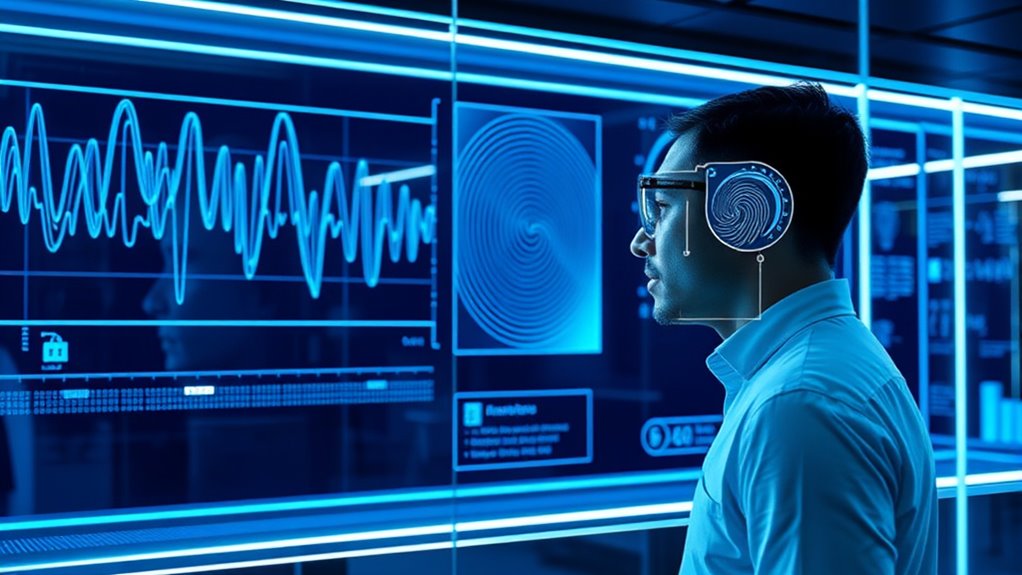
How can behavioral biometrics and AI pattern recognition work together to prevent fraud? You leverage behavioral biometrics to analyze how users interact with systems—like typing speed, gestures, or decision patterns. AI then detects subtle deviations from these established behaviors, flagging potential threats early. This layered approach helps catch fraud attempts before they escalate. Consider these key points:
- Behavioral biometrics create unique user profiles based on interaction patterns
- AI models identify anomalies indicating suspicious activity
- Continuous monitoring detects deviations during ongoing sessions
- Combining behavioral and physiological data enhances security
- AI refines algorithms, adapting to evolving user behaviors without compromising experience
Together, they form a dynamic defense, reducing fraud risks and strengthening user authentication without adding friction.
Ensuring Reliability: Liveness Detection and Anti-Spoofing Measures
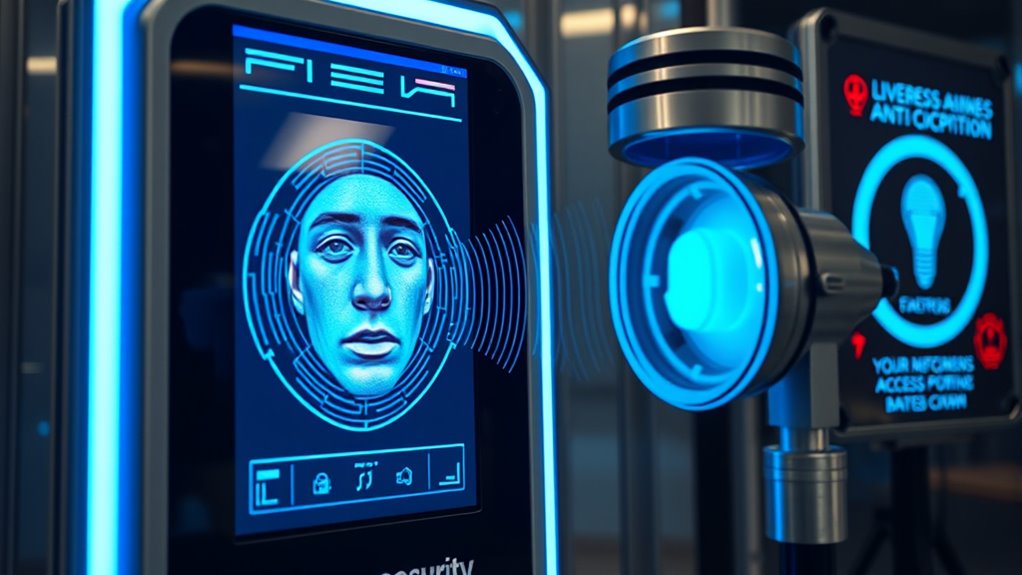
Ensuring the reliability of biometric security systems requires robust liveness detection and anti-spoofing measures that can distinguish real users from fake or manipulated inputs. AI-powered techniques analyze subtle signals, like eye blinking, facial micro-movements, or voice vibrations, to verify physical presence. These measures prevent deepfakes, masks, or voice synthesis from fooling the system. Here’s a visual representation:
| Real User | Spoofed Input |
|---|---|
| Genuine facial cues | Static mask or photo |
| Natural voice tone | Audio deepfake |
| Physical interaction | Recorded or synthetic |
This layered approach guarantees only authentic users gain access, safeguarding sensitive data and systems against sophisticated AI-generated threats.
Addressing Challenges: Ethical Considerations and Privacy in AI Biometrics

As biometric security systems become more sophisticated with AI, addressing ethical considerations and privacy concerns has moved to the forefront of implementation. You need to be aware of potential risks and how to mitigate them. Key issues include:
- Risks of synthetic identities and multimedia content manipulation
- Potential bias and unfair treatment in facial and voice recognition systems
- Lack of transparency around data collection and algorithm decision-making
- Privacy breaches from excessive or poorly protected biometric data
- Challenges in establishing trustworthy regulatory frameworks
To build user trust, you must prioritize fairness, transparency, and data protection. Incorporating ethical standards and responsible AI practices ensures your biometric solutions respect individual rights and promote inclusivity, minimizing misuse and bias.
Current Trends and Adoption of AI-Enhanced Biometric Solutions

The adoption of AI-enhanced biometric solutions is accelerating across various sectors, driven by their ability to improve security and streamline user experiences. You’ll notice organizations increasingly deploying facial recognition and voice biometrics for faster, contactless verification. Multi-modal systems combining multiple biometric methods are gaining popularity, especially in high-security areas like government and finance. AI’s real-time fraud detection and continuous authentication capabilities help reduce security breaches, with organizations reporting up to 83% fewer incidents. Passwordless authentication is becoming a strategic goal, despite deployment challenges. Governments, such as DHS, are expanding their use of advanced facial recognition, liveness detection, and video verification to counter sophisticated AI-driven threats. Overall, AI-driven biometrics are becoming essential for modern security infrastructures.
Future Outlook: Innovations and Security Enhancements in Biometric Systems

Innovations in biometric technology are poised to reshape security landscapes, building on the widespread adoption of AI-enhanced systems. You can expect emerging developments to focus on stronger defenses and smarter user verification. AI will enable even more precise detection of fraudulent activities, including deepfakes and spoofing attempts. It will also support adaptive authentication, adjusting security measures based on context and risk levels. Behavioral biometrics will become more sophisticated, analyzing subtle interaction patterns for continuous verification. Multi-modal systems will integrate facial, voice, and behavioral data seamlessly for layered security. Additionally, advanced liveness detection will combat AI-generated threats, ensuring physical presence. These innovations aim to make biometric systems faster, more reliable, and resilient against evolving attack methods, shaping the future of secure identities.
Frequently Asked Questions
How Does AI Improve Biometric System Accuracy Over Time?
AI improves biometric system accuracy over time by continuously learning from usage data. It adapts algorithms to changing user behaviors and environmental factors, reducing false positives and negatives. As you use the system, AI refines its models, spotting patterns and anomalies more precisely. This ongoing improvement enhances reliability, making your biometric authentication faster and more secure, ultimately providing a seamless experience while maintaining high security standards.
What Are the Main Privacy Concerns With Ai-Driven Biometrics?
Your main privacy concern with AI-driven biometrics is how your sensitive data is collected, stored, and used. You might worry about unauthorized access, data breaches, or misuse by third parties. AI systems can potentially track and analyze your behaviors and biometric information without your full consent or awareness. Ensuring transparency, robust data encryption, and strict access controls are essential to protect your privacy and prevent misuse of your personal biometric data.
Can AI Prevent All Types of Biometric Spoofing Attacks?
AI can’t prevent all types of biometric spoofing attacks. While it enhances liveness detection and anti-spoofing measures, sophisticated attackers develop deepfakes, 3D masks, or voice synthesis that can bypass AI defenses. You should combine AI with multi-layered security, such as behavioral biometrics and continuous monitoring, to strengthen protection. Relying solely on AI isn’t enough; an integrated approach is necessary to combat evolving spoofing techniques effectively.
How Do Ethical Issues Impact Biometric Technology Deployment?
Imagine standing at the dawn of a new age, like the first flight — exciting but fraught with risk. Ethical issues profoundly impact biometric deployment because concerns over privacy, bias, and fairness shape policies and user trust. You must guarantee transparency and inclusivity, addressing bias and respecting data rights. Without ethical safeguards, users might resist adoption, undermining security advances. Balancing innovation with responsibility is key to gaining public confidence and achieving effective, fair biometric systems.
What Future AI Innovations Will Further Enhance Biometric Security?
Future AI innovations will markedly boost biometric security by advancing liveness detection, making spoofing and deepfake attacks nearly impossible. You’ll see smarter behavioral biometrics that adapt in real-time, detecting subtle deviations for better fraud prevention. Multi-modal systems will seamlessly blend facial, voice, and behavioral data, creating layered defenses. Also, AI will enable more proactive threat identification, allowing you to respond faster and maintain higher security standards while ensuring user convenience remains a priority.
Conclusion
As you explore AI-driven biometric security, remember that combining face and voice recognition enhances protection. Imagine a bank using multi-modal authentication—if someone tries to spoof one method, the other detects the fraud. AI’s ability to analyze patterns and detect liveness makes these systems more reliable. Staying aware of ethical and privacy concerns guarantees responsible use. Embracing these innovations means you’ll benefit from safer, smarter security solutions now and in the future.