To build a smarter home lab for local AI, select scalable, energy-efficient hardware like modular servers or mini-ITX setups, and guarantee your network uses wired Ethernet for stability. Integrate cloud resources via APIs to handle intensive tasks and enable hybrid scalability. Use automation tools for routine management and optimize power with smart scheduling and passive cooling. Balancing performance with sustainability is key. Keep exploring how to refine your setup for the best results as you learn more.
Key Takeaways
- Integrate cloud services for scalable resources and seamless data synchronization in your local AI environment.
- Choose energy-efficient hardware components and implement smart power management practices to reduce power consumption.
- Use modular, scalable hardware like mini-ITX builds and ensure high-speed wired Ethernet for stable connectivity.
- Automate routine tasks and system updates with scripts and management dashboards for efficiency and security.
- Prioritize sustainable cooling solutions and monitor energy patterns to balance performance with environmental impact.
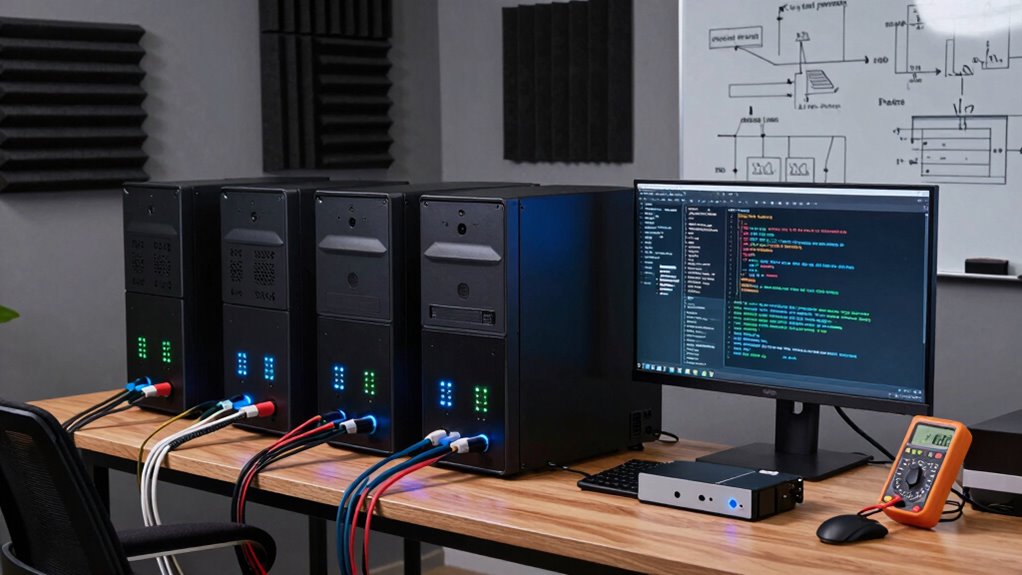
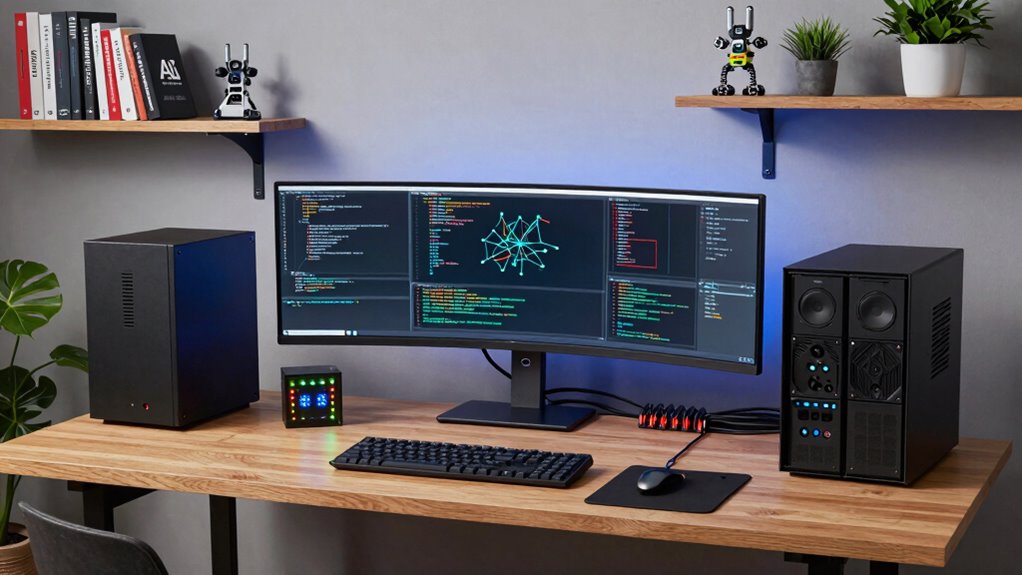
Ever wondered how to create a home lab that unlocks the full potential of local AI? Building a smarter home lab isn’t just about stacking hardware; it’s about designing a setup that’s efficient, scalable, and seamlessly integrated. To get started, you need to focus on a few core principles: effective cloud integration and energy efficiency. These elements ensure your home lab isn’t just powerful but also sustainable and easy to manage.
First, consider how cloud integration can enhance your local AI environment. Cloud services provide access to vast computational resources and storage, which complement your on-premises hardware. By connecting your home lab to the cloud, you can offload intensive tasks like training models or running complex simulations without overburdening your local system. This hybrid approach allows you to scale on demand, making your setup more flexible. Use APIs and automation tools to synchronize data and workflows between your local servers and cloud platforms like AWS, Azure, or Google Cloud. This integration not only boosts performance but also simplifies updates and backups, ensuring your AI projects stay current and secure. Incorporating hybrid cloud strategies can further optimize resource management across platforms.
Leverage cloud integration to scale AI tasks, synchronize workflows, and enhance performance for a flexible, secure home lab environment.
Next, prioritize energy efficiency in your home lab. Running high-performance hardware can consume significant power, but smart design choices can reduce your footprint. Invest in energy-efficient components such as low-power CPUs, SSDs, and power supplies with high efficiency ratings. Incorporate smart power management practices—schedule intensive tasks during off-peak hours, and utilize software that monitors energy consumption. Proper cooling is critical too; instead of relying solely on traditional fans, consider passive cooling solutions or efficient airflow layouts that minimize energy use. By optimizing your hardware and operational practices, you’ll lower electricity bills and lessen environmental impact, all while maintaining high performance. Understanding energy consumption patterns can help you further optimize your setup for sustainability.
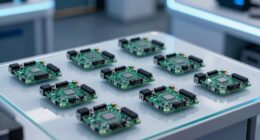
Another crucial aspect is hardware selection. Choose versatile, scalable hardware that supports your current needs and future expansion. Modular servers or mini-ITX builds can save space and energy, and they’re easier to upgrade as your AI projects grow. Combine this with a reliable network setup—preferably wired Ethernet for stability and speed—to ensure smooth communication between devices. Additionally, employ virtualization and containerization tools to maximize hardware utilization and isolate different AI environments, streamlining management and troubleshooting.
Finally, don’t forget the importance of a user-friendly interface. Automate routine tasks with scripts and management dashboards, so you can focus on developing AI models rather than juggling hardware. Regularly update your system and keep security in mind, especially when connecting to cloud services. With thoughtful planning, your home lab becomes a powerful, energy-efficient hub for local AI, capable of handling complex projects while remaining sustainable and manageable. Incorporating emerging trends in digital publishing can also help you stay informed about the latest tools and techniques to optimize your setup.
mini ITX home server
As an affiliate, we earn on qualifying purchases.
As an affiliate, we earn on qualifying purchases.
Frequently Asked Questions
What Are the Best Hardware Options for a Budget-Friendly AI Home Lab?
You should start with budget-friendly hardware like a Raspberry Pi or a low-cost NVIDIA Jetson Nano, which supports local AI processing and cloud integration. These options allow hardware customization and are energy-efficient. For more power, consider used servers or repurposed PCs with decent GPUs, balancing cost and performance. This setup helps you experiment, learn, and scale your home AI lab without breaking the bank.
How Do I Ensure Data Privacy in My Local AI Setup?
Think of your local AI setup as a fortress guarding your treasure. To keep your data private, you should implement strong data encryption like digital walls that only you can access. Regularly review and update your privacy policies, ensuring they clearly state how your data is handled. This way, you control who accesses your data, safeguarding your personal information from unauthorized eyes and maintaining your digital fortress’s strength.
Can I Integrate Smart Home Devices With My AI Lab Easily?
Yes, you can easily integrate smart home devices with your AI lab. Focus on choosing devices with broad compatibility and support for voice control systems like Alexa or Google Assistant. Make sure your AI setup can communicate with these devices via APIs or compatible protocols. By doing this, you’ll streamline control, automate routines, and enhance your smart home experience, all while maintaining your local AI’s privacy and security.
What Software Tools Are Essential for Managing Local AI Models?
You need essential software tools like TensorFlow or PyTorch for managing local AI models, especially for model deployment and data preprocessing. These tools streamline training, testing, and deploying models on your home lab. Additionally, consider using Jupyter Notebooks for data preprocessing and visualization, and Docker to containerize your environment. Together, these tools help you efficiently manage, deploy, and fine-tune your local AI models with ease.
How Scalable Is a Home AI Lab as My Projects Grow?
Your home AI lab can be quite scalable, but you’ll face scalability challenges as your projects grow. Upgrading hardware, adding more storage, and optimizing your network become essential for future expansion. Carefully plan your infrastructure to accommodate increased processing power and data needs. Regularly evaluate your setup, and consider cloud integration for heavy workloads, ensuring your lab remains flexible and capable of supporting more complex AI models over time.
energy-efficient power supply for PC
As an affiliate, we earn on qualifying purchases.
As an affiliate, we earn on qualifying purchases.
Conclusion
Now that you know how to build a smarter home lab, you’re practically on the verge of creating an AI powerhouse that could outthink a supercomputer! With the right hardware, smart networking, and a little bit of patience, you’ll open endless possibilities for local AI projects. Remember, your home lab isn’t just a setup — it’s your personal gateway to the future of technology. So go ahead, take the leap and make your smart home dreams a reality!
high-speed wired Ethernet switch
As an affiliate, we earn on qualifying purchases.
As an affiliate, we earn on qualifying purchases.
smart power management software
As an affiliate, we earn on qualifying purchases.
As an affiliate, we earn on qualifying purchases.