
The shift from chatbots to AI coworkers is happening because AI is becoming more integrated and proactive in daily work tasks. Instead of just answering questions, AI now helps with scheduling, data analysis, and project management, actively participating in team efforts. These AI coworkers learn from interactions, adapt to user needs, and improve workflows, making workplaces smarter. Keep exploring further to discover how this evolution is shaping the future of work and collaboration.

Get business pricing on tech for your team
- Business-only prices and quantity discounts
- Tax-exempt purchasing
- Multiple users, one account, clear invoices
Key Takeaways
- AI coworkers actively participate in daily tasks, unlike traditional chatbots that primarily handle basic inquiries.
- Integration of AI systems enhances team collaboration and automates complex workflows.
- AI coworkers provide real-time insights, assist with project management, and facilitate digital communication.
- AI systems adapt to user needs, learning from interactions to offer personalized support.
- The evolution signifies a fundamental shift in workplaces, transforming how teams collaborate and operate.
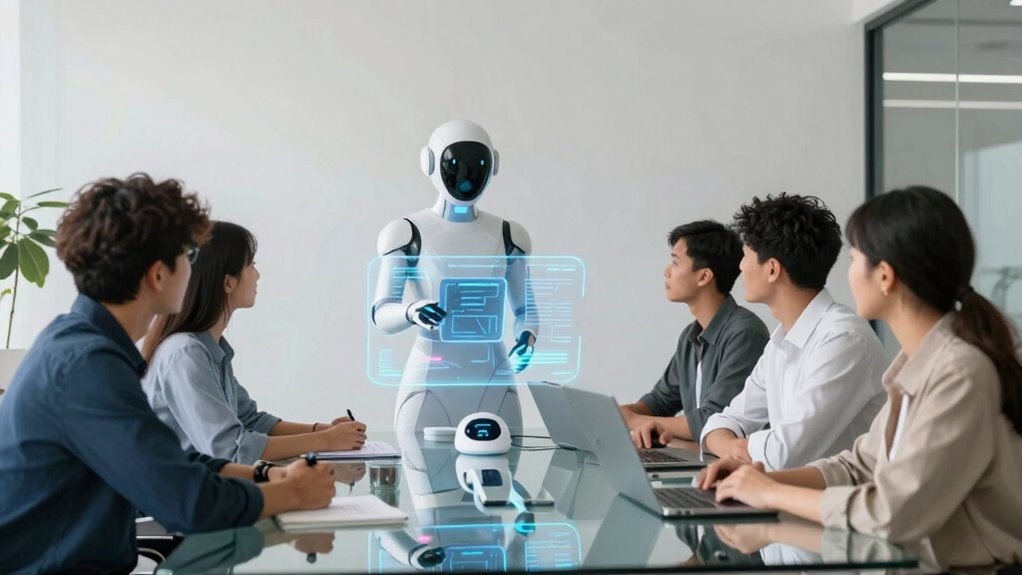
As artificial intelligence continues to advance, more workplaces are integrating AI coworkers to boost efficiency and productivity. Instead of relying solely on traditional chatbots, companies are now adopting AI-powered colleagues that actively participate in daily tasks, transforming how teams collaborate and operate. These AI coworkers go beyond simple customer service interactions; they assist with complex workflows, facilitate digital collaboration, and streamline workplace automation. You might find yourself working alongside AI systems that handle scheduling, data analysis, or even draft reports, freeing you up to focus on strategic or creative work.
AI coworkers are transforming workplaces by handling complex tasks, enhancing collaboration, and automating workflows to boost productivity.
This shift signals a move toward a more integrated use of AI within the workspace—AI coworkers are becoming proactive team members rather than just passive tools. They’re embedded into the fabric of your workday, participating in meetings, managing project timelines, or providing real-time insights. As you engage with these AI colleagues, you notice how they enhance digital collaboration by bridging communication gaps, offering instant updates, and synthesizing information from multiple sources. This creates a more seamless, connected working environment where ideas flow more freely and tasks are completed more efficiently.
Workplace automation is at the core of this transformation. Tasks that used to take hours or require manual input are now handled swiftly by AI coworkers. They automate repetitive processes, reduce human error, and ensure consistency across projects. You may see AI systems managing inventory, generating reports, or even handling customer interactions, all in the background. This automation not only speeds up operations but also allows your team to shift focus to higher-value activities, fostering innovation and problem-solving. The integration of AI is also supporting better decision-making processes, making the workplace more agile and responsive.
As AI coworkers become more sophisticated, your workplace becomes smarter. You can expect these systems to adapt to your needs, learn from interactions, and provide personalized assistance. Additionally, advancements in projector technology are increasingly used in corporate training and presentations to facilitate more engaging and dynamic communication, further integrating AI and digital tools into the modern workspace. This evolution makes digital collaboration more dynamic, allowing you to work more effectively with both human colleagues and AI counterparts. The integration of AI into daily workflows isn’t just a trend; it’s a fundamental change that’s redefining what it means to work in a modern environment.
As an affiliate, we earn on qualifying purchases.
Frequently Asked Questions
How Do AI Coworkers Impact Team Dynamics?
AI coworkers enhance team dynamics by boosting team collaboration and communication improvement. They streamline workflows, reduce misunderstandings, and handle routine tasks efficiently, freeing you and your teammates to focus on creative and strategic work. By providing instant data access and real-time support, AI coworkers foster a more connected and responsive environment. This shift encourages better coordination, minimizes delays, and ultimately strengthens your team’s overall effectiveness and cohesion.
What Industries Benefit Most From AI Coworker Integration?
You’ll find industries like healthcare, finance, and manufacturing benefit most from AI coworker integration, as they require high precision and efficiency. Industry adaptation speeds up processes, while AI ethics guides responsible implementation. This integration enhances productivity, reduces errors, and supports complex decision-making. Your team can focus more on strategic tasks, trusting AI coworkers to handle repetitive or data-intensive work ethically and effectively, transforming how work gets done across sectors.
Are AI Coworkers Cost-Effective for Businesses?
You’ll find AI coworkers are cost-effective, especially when you consider that companies report up to a 30% boost in productivity metrics. An AI cost analysis often shows reduced labor costs and faster task completion. By automating routine tasks, you save time and money, making AI coworkers a smart investment. They help streamline workflows, so you get more done without increasing your budget.
How Is Employee Privacy Protected With AI Coworkers?
You can protect employee privacy with AI coworkers by implementing clear privacy policies that specify how employee data is collected, stored, and used. Regularly review and update these policies to guarantee compliance with data protection laws. Limit access to sensitive information, and use encryption to safeguard data. Educate employees about their rights and the measures in place, fostering trust and transparency while maintaining efficient AI coworker functions.
What Skills Are Needed to Collaborate With AI Coworkers?
To collaborate effectively with AI coworkers, you need strong AI communication skills, enabling clear, concise interactions. Developing skills in data literacy and understanding AI capabilities helps you leverage the technology efficiently. Stay adaptable by embracing continuous skill development, learning new tools, and understanding AI limitations. By honing these skills, you’ll foster better teamwork with AI coworkers, ensuring seamless integration and maximizing productivity in your work environment.
As an affiliate, we earn on qualifying purchases.
Conclusion
As you step into this new era, AI coworkers aren’t just tools—they’re your digital partners, ready to dance through tasks and challenges with you. Like a trusty sidekick in a wild adventure, they amplify your skills and lighten your load, turning the workplace into a playground of possibilities. Embrace this shift, for soon you’ll find yourself steering a future where human ingenuity and AI synergy create a masterpiece of productivity and innovation.
As an affiliate, we earn on qualifying purchases.
digital collaboration tools for teams
As an affiliate, we earn on qualifying purchases.
As an affiliate, we earn on qualifying purchases.
Fall Picks
fall essentials
As an affiliate, we earn on qualifying purchases.