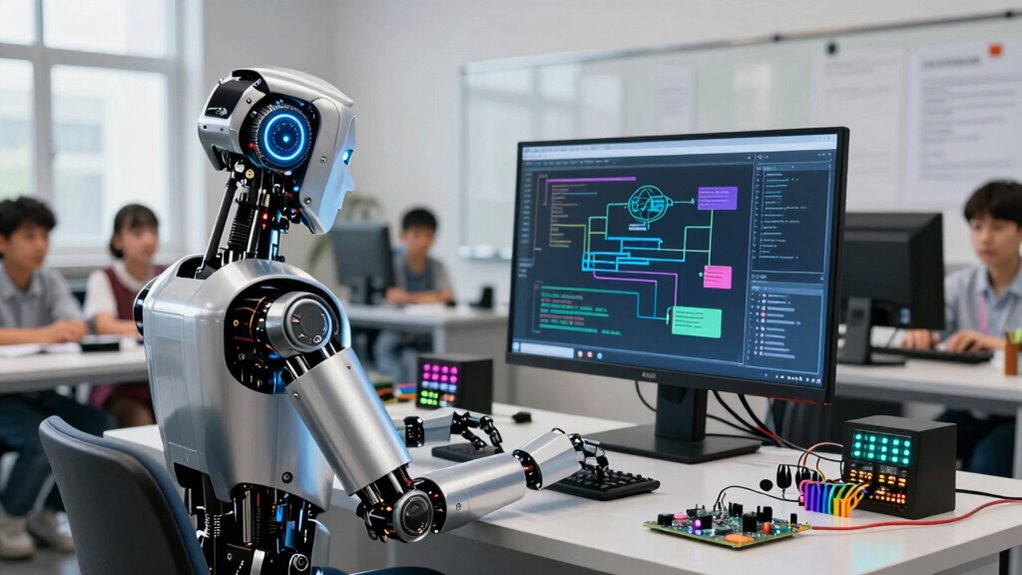

Coding robots make AI concepts easier to teach by providing hands-on, interactive experiences that turn abstract ideas into tangible actions. You can demonstrate decision-making, sensor integration, and learning algorithms in real time, making complex topics more accessible. These robots also help clarify programming paradigms and showcase how autonomous systems work. By engaging with robots, you’ll see how hardware and software interact, sparking curiosity. Keep exploring to discover more ways robots simplify AI education.

Get business pricing on tech for your team
- Business-only prices and quantity discounts
- Tax-exempt purchasing
- Multiple users, one account, clear invoices
Key Takeaways
- Robots provide tangible, interactive demonstrations that make abstract AI ideas more concrete and understandable.
- Coding robots visually illustrate programming paradigms like object-oriented and event-driven design.
- They showcase real-time responses, helping students grasp decision-making and sensor integration in AI systems.
- Robots demonstrate AI applications such as automation and learning, linking theory to practical use cases.
- Hands-on robot programming fosters curiosity, promotes exploration, and deepens understanding of complex AI concepts.
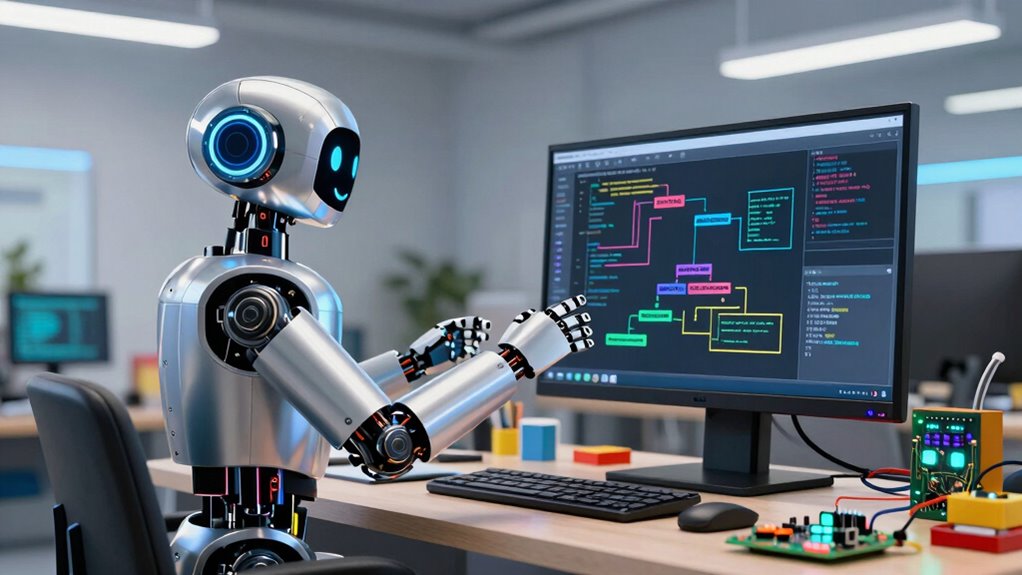
As artificial intelligence becomes more integral to our daily lives, teaching its concepts can be challenging, but coding robots are making the process much easier. These robots act as engaging, tangible tools that help you demonstrate complex AI ideas through interactive, hands-on experiences. Instead of relying solely on abstract theories, you can show how robotic automation works in real time, making the learning process more concrete and accessible. When students see robots perform tasks or respond to commands, they grasp AI principles like decision-making, learning algorithms, and sensor integration more effectively.
Coding robots make teaching AI engaging and hands-on, transforming abstract concepts into real-time, accessible learning experiences.
One of the main advantages of using coding robots in AI education is their ability to illustrate various programming paradigms clearly. Whether you’re demonstrating procedural programming, object-oriented design, or event-driven structures, robots provide a visual and practical context that simplifies understanding. For example, you can program a robot to follow a line, respond to obstacles, or navigate a maze, showcasing how different programming paradigms influence robot behavior. This hands-on approach helps you bridge the gap between theory and application, making complex AI concepts more tangible and less intimidating. Additionally, incorporating robotic automation into lessons emphasizes how autonomous systems operate in real-world scenarios, enhancing comprehension. Understanding how sensor data influences robot decisions further reinforces the integration of hardware and software in AI systems.
Robotic automation plays a vital role here, as it enables you to showcase how AI systems can be designed to perform repetitive or complex tasks autonomously. By programming robots to carry out specific functions, you demonstrate how automation streamlines processes and enhances efficiency. Students can see firsthand how AI-powered robotic systems adapt, learn, and improve over time, reinforcing their understanding of machine learning and adaptive algorithms. Incorporating practical applications of AI in robotics also helps students see the relevance of these concepts beyond the classroom, encouraging further exploration and innovation. These demonstrations also highlight the importance of careful programming and system design, giving learners a realistic view of AI’s capabilities and limitations. Furthermore, integrating hands-on learning experiences with robotics cultivates a deeper interest and curiosity about the field of AI, motivating students to explore further.
As an affiliate, we earn on qualifying purchases.
Frequently Asked Questions
What Age Groups Benefit Most From Coding Robots in AI Education?
You’ll find that younger students, around ages 8 to 12, benefit most from coding robots in AI education. These kids enjoy robot customization, which sparks their creativity and curiosity. Using engagement strategies like hands-on activities and gamified lessons keeps their attention. As a result, they develop a solid understanding of AI concepts early on, making learning fun and effective while building essential coding skills.
How Do Coding Robots Adapt to Different Learning Paces?
Coding robots act like tailored guides on your learning journey, adjusting as you progress. They use adaptive algorithms to sense your pace and understanding, ensuring you’re neither held back nor overwhelmed. Personalized feedback helps you recognize strengths and improve weaknesses in real-time. This dynamic approach keeps your experience engaging and effective, making complex AI concepts approachable, no matter how fast or slow you learn.
Are Coding Robots Cost-Effective for Large Classrooms?
Yes, coding robots can be cost-effective for large classrooms when you consider robot durability and a thorough cost analysis. While initial investments might seem high, their durability guarantees long-term use with minimal repairs. Plus, they reduce the need for additional teaching tools, saving money over time. When you evaluate the overall expenses and longevity, these robots offer a smart, scalable solution for engaging many students efficiently.
What Skills Besides Coding Do Students Develop With Robots?
Using robots in the classroom boosts more than just coding skills—you’re unlocking teamwork skills and critical thinking that are practically superpowers. As students work on robot programming projects, they learn how to collaborate, communicate, and solve problems together. These hands-on experiences develop their creativity and adaptability, preparing them for future challenges. Robots transform learning into an adventure where essential skills grow exponentially, making students more confident and capable learners.
How Do Coding Robots Integrate With Existing Curricula?
You integrate coding robots into your curriculum through structured lesson plans that combine robot programming with your existing lessons. These robots serve as engaging tools to reinforce concepts like programming logic, problem-solving, and teamwork. By aligning robot activities with learning standards, you guarantee seamless curriculum integration, making lessons more interactive and practical. This approach helps students grasp complex AI concepts more easily while enhancing their overall technical skills.
As an affiliate, we earn on qualifying purchases.
Conclusion
As you’ve seen, coding robots transform complex AI concepts into tangible learning experiences, making them accessible and engaging. With these tools, you’re not just teaching; you’re igniting curiosity—like a modern Leonardo da Vinci sketching the future. Embracing such technology today means preparing students for tomorrow’s innovations. So, don’t wait for the future to arrive—grab your robot and start exploring AI, turning the classroom into a launchpad for the next generation of tech pioneers.
programmable robotics kits for students
As an affiliate, we earn on qualifying purchases.
As an affiliate, we earn on qualifying purchases.
As an affiliate, we earn on qualifying purchases.
Halloween Picks
halloween
As an affiliate, we earn on qualifying purchases.