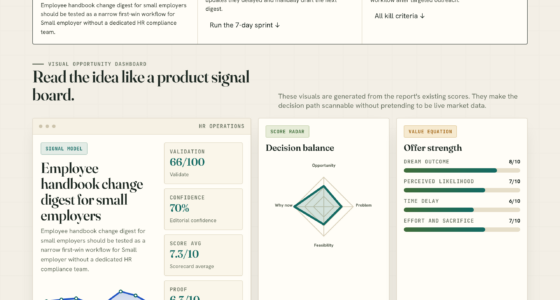
📊 Full opportunity report: CTOs Are Escaping on ThorstenMeyerAI.com — validation score, market gap, and execution plan.

Get business pricing on tech for your team
- Business-only prices and quantity discounts
- Tax-exempt purchasing
- Multiple users, one account, clear invoices
TL;DR
A growing trend shows senior technical leaders from SaaS and enterprise firms moving into hands-on roles at Anthropic. This shift reflects a changing power dynamic in tech, prioritizing model-layer access over traditional org-chart authority. The movement signals a broader industry transition toward frontier AI development.
Several senior CTOs and technical leaders from prominent SaaS and tech companies have recently joined Anthropic in technical roles, marking a significant shift in industry talent dynamics and signaling a focus on frontier AI development.
Notable figures include Peter Bailis from Workday, Bryan McCann from You.com, Henry Shi from Super.com, and Niki Parmar from Adept AI Labs. These executives are moving from traditional CTO roles or senior engineering positions to Anthropic as Members of Technical Staff or similar roles. This trend indicates a preference among top technical talent to work directly on AI models, reinforcement learning, and related frontier research, rather than managing large engineering organizations. The pattern crosses sectors, including SaaS, AI search, consumer software, and enterprise tools, emphasizing a broader industry shift towards model-centric work. Anthropic’s approach blurs research, engineering, and product, offering these leaders influence over core AI capabilities rather than organizational hierarchy.Why Senior AI Talent Is Flocking to Anthropic
This movement reflects a fundamental shift in industry power structures, where influence now hinges on proximity to AI models and their capabilities rather than traditional organizational authority. It indicates a transition in how tech companies value technical expertise, with frontier AI work becoming a key driver of innovation and talent attraction. For the broader industry, this suggests a potential redefinition of leadership roles and the future of enterprise software, as AI models increasingly become central to product and workflow design.As an affiliate, we earn on qualifying purchases.
Recent Industry Shifts Toward AI Model-Centric Roles
Over the past year, there has been a notable migration of senior technical personnel from established SaaS and enterprise firms to AI-focused startups and labs like Anthropic. This trend is partly driven by the allure of working on cutting-edge AI models that are shaping the future of software and enterprise workflows. Historically, CTO roles involved managing large teams and platform strategies; now, many are choosing roles that offer direct influence over AI behavior, training, and deployment, often with less organizational hierarchy but more technical impact. The trend underscores a broader industry recognition that AI models are becoming the new platform, shifting power from traditional software layers to model-layer access.“Joining Anthropic allows me to work directly on the core AI systems that are transforming how software and workflows operate.”
— Henry Shi, former COO/CTO of Super.com
machine learning model training server
As an affiliate, we earn on qualifying purchases.
As an affiliate, we earn on qualifying purchases.
Extent and Future of CTO Migration to AI Labs
While multiple high-profile moves have been confirmed, it is still unclear how widespread this trend will become across the entire tech industry or whether it will lead to a long-term shift in organizational structures. It is also uncertain whether traditional CTO roles will evolve or diminish as AI becomes central to enterprise strategy.As an affiliate, we earn on qualifying purchases.
Industry Response and Talent Landscape Evolution
Expect further announcements of senior engineers and CTOs transitioning into AI-focused roles, particularly at frontier labs like Anthropic. Companies may begin rethinking leadership structures, and AI model development could become a core criterion for technical influence. Monitoring industry hiring patterns will clarify whether this is a temporary trend or a lasting industry shift.enterprise AI model deployment tools
As an affiliate, we earn on qualifying purchases.
As an affiliate, we earn on qualifying purchases.
Key Questions
Why are CTOs leaving their roles for Anthropic?
Many CTOs are seeking closer involvement with AI model development and experimentation, which offers more direct influence over core technology and product capabilities than traditional organizational management.
Does this trend threaten traditional SaaS companies?
While it may shift talent and influence away from traditional SaaS roles, these companies are likely to adapt by integrating more AI capabilities into their products and potentially attracting similar talent in new ways.
Is this a sign that AI is replacing traditional software roles?
It indicates a shift in influence and focus toward AI models as central platforms, but traditional software roles continue to exist; the landscape is evolving to prioritize AI-centric expertise.
Will this movement affect how enterprise software is built?
Yes, as AI models become more integral, enterprise workflows and SaaS products may evolve to become more intelligent, adaptive, and less dependent on traditional dashboards or interfaces.
Source: ThorstenMeyerAI.com
Halloween Picks
halloween
As an affiliate, we earn on qualifying purchases.