

To make AI greener, focus on developing energy-efficient algorithms like pruning, quantization, and knowledge distillation, which reduce model size and computation without sacrificing accuracy. Leveraging specialized hardware and optimizing data center operations—such as cooling and power management—also cuts energy use. Emerging technologies, improved hardware, and smarter practices all help lower environmental impacts. Keep exploring further to discover how innovations are transforming AI into a more sustainable force for the planet.
Key Takeaways
- Advanced optimization techniques like pruning, quantization, and knowledge distillation reduce AI model size and energy consumption.
- Hardware-aware design and specialized AI chips enhance computational efficiency and lower power use.
- Developing smaller, efficient models minimizes resource requirements without sacrificing accuracy.
- Implementing energy-efficient cooling and renewable energy sources in data centers decreases environmental impact.
- Promoting multidisciplinary collaboration and sustainable policies accelerates greener AI innovations and deployment.

Claude AI Comprehensive Guide: Transform Your Business With AI Automation & AI Agents: AI Workflows, Automation, Agents, API Development, Coding, Security, Cost Optimization & Real-World Case Studies
As an affiliate, we earn on qualifying purchases.
The Growing Energy Footprint of AI and Data Centers
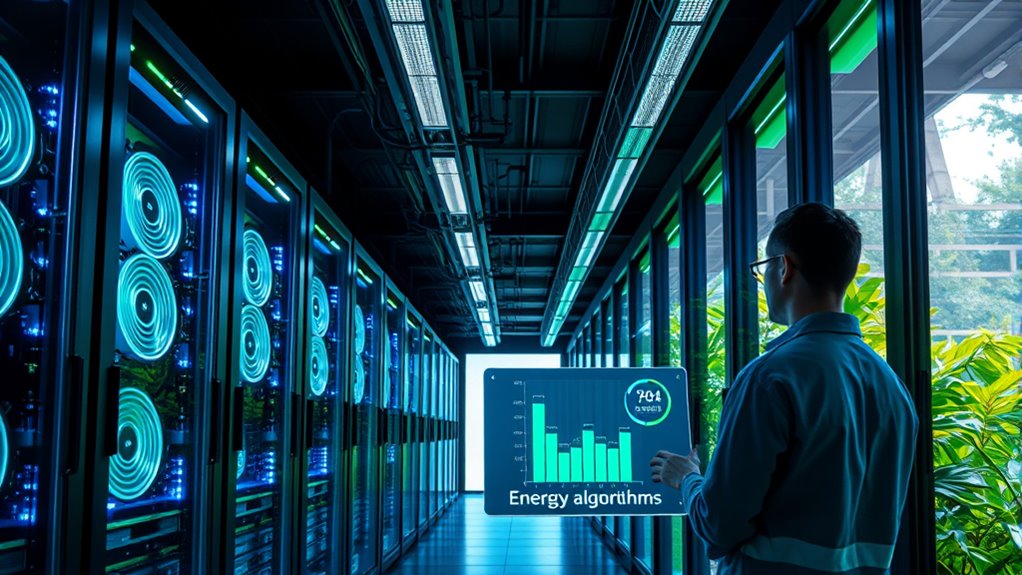
As AI continues to expand, its energy footprint is growing rapidly, largely driven by the increasing demand for data center services. You should know that global data center electricity consumption is projected to more than double by 2030, reaching about 945 terawatt-hours—more than Japan’s entire energy use. AI-related electricity consumption is expected to grow by roughly 50% annually from 2023 to 2030, further straining power grids. Data centers, which accounted for around 1% of global energy demand in 2022, are expected to surpass 3% by 2030 due to AI growth. Unfortunately, about 60% of this increased demand may rely on fossil fuels, adding millions of tons of CO2 emissions annually. By 2030, data centers could consume up to 9% of U.S. electricity, mainly driven by AI development and deployment. Additionally, developing energy-efficient algorithms could significantly reduce the environmental impact of AI technologies. Incorporating sustainable computing practices can further mitigate this environmental impact and promote greener AI solutions.

1001 Prompts for Unlocking Generative AI in Local Government
As an affiliate, we earn on qualifying purchases.
Innovations in AI Algorithm Efficiency

You can substantially cut AI energy use by adopting advanced optimization techniques that make models more efficient. Smaller model sizes and improved training methods help reduce computational costs without sacrificing performance. These innovations are key to making AI development more sustainable and energy-friendly. Additionally, optimizing the use of model efficiency strategies can further decrease energy consumption in AI workflows. Incorporating hardware-aware design principles can also significantly enhance overall efficiency, especially when tailored to specific hardware architectures. Moreover, leveraging energy-efficient algorithms can lead to substantial reductions in power consumption during AI operations. As cyber threats continue to evolve, integrating AI security solutions into energy-efficient frameworks ensures both safety and sustainability in AI deployments.
Reduced Training Costs
Innovations in AI algorithm efficiency have markedly lowered training costs, making advanced models more accessible and sustainable. You can now train powerful AI systems with less computational resources, reducing energy consumption and expenses. Techniques like model pruning, quantization, and knowledge distillation cut down the size and complexity of models without sacrificing accuracy. Optimized training methods, such as curriculum learning and transfer learning, accelerate convergence and decrease training time. Hardware improvements, including specialized AI chips, enhance energy efficiency during training. As a result, you spend less on infrastructure and power, lowering barriers for researchers and organizations. These innovations enable faster deployment of AI solutions, promote greener practices, and democratize access to cutting-edge technology, all while reducing the environmental impact of training large-scale models. Additionally, understanding training environments helps in designing more efficient and environmentally friendly AI systems, especially by considering energy consumption during development. Incorporating sustainable AI practices and energy-efficient algorithms further minimizes the ecological footprint of AI advancements. Furthermore, advancements in hardware efficiency contribute significantly to reducing overall energy use during model training.
Smaller Model Sizes
Have smaller AI models truly made a difference in reducing energy consumption? Yes, they have. By designing models that deliver comparable performance with fewer parameters, you cut down on training and inference costs considerably. Smaller models require less computational power, lowering energy use during deployment and reducing hardware demands. This shift also enables faster inference times, making AI more accessible and sustainable. Additionally, smaller models use less storage and bandwidth, further decreasing their environmental footprint. Innovations like model pruning, quantization, and knowledge distillation make it possible to shrink models without sacrificing accuracy. Furthermore, hardware efficiency improvements complement smaller models in reducing overall energy consumption across the AI lifecycle. As automation technologies evolve, optimizing energy efficiency becomes increasingly important to minimize environmental impact. When combined, these strategies lead to a significant reduction in the carbon footprint of AI applications. Overall, focusing on model efficiency helps you reduce energy consumption across the AI lifecycle, contributing to a greener future.
Advanced Optimization Techniques
Advanced optimization techniques are transforming AI algorithm efficiency by reducing the computational resources needed for training and inference. You can now leverage methods like model pruning, which removes redundant parameters, and quantization, which simplifies calculations without sacrificing accuracy. These innovations decrease energy consumption and speed up processing. Techniques like knowledge distillation compress large models into smaller, more efficient ones, making deployment less resource-intensive. You also benefit from adaptive learning algorithms that optimize training processes, reducing the number of iterations required. Additionally, hardware-aware optimizations tailor algorithms to specific energy-efficient hardware, maximizing performance per watt. Incorporating energy-efficient hardware further enhances sustainability by aligning algorithm design with hardware capabilities and limitations. By integrating these advanced techniques, you help lower AI’s environmental impact while maintaining high performance, making sustainable AI development more feasible and accessible. The role of AI in sustainable development continues to grow as researchers focus on energy-efficient solutions.

Building Agentic AI with Local LLMs: The Hands-On Python Guide to Autonomous Agents Using Ollama, Llama 3, and LangGraph in VS Code
As an affiliate, we earn on qualifying purchases.
Hardware Advances and Data Center Optimization Strategies

Hardware advances are transforming data center efficiency by introducing energy-efficient chips and specialized accelerators designed for AI workloads. These innovations reduce power consumption while maintaining high performance. AI-specific hardware, like low-power GPUs and purpose-built AI chips, optimize energy use during processing. Additionally, improvements in cooling systems, such as AI-optimized cooling and liquid cooling, cut energy needs for temperature regulation. Data centers also adopt smarter power management, minimizing idle energy waste and balancing load more effectively. The Power Usage Effectiveness (PUE) metric helps monitor and improve overall efficiency, ensuring cooling, power distribution, and operational overhead are minimized. Incorporating solar-powered cooling solutions can further decrease energy consumption and environmental impact. These strategies collectively lower energy footprints, making data centers more sustainable and better suited for the increasing demand from AI applications.

Artificial Intelligence Bible (3-in-1): AI Agents, Prompt Engineering & Generative AI. Automate & Scale — Beginner's Guide to Slash Costs, Save Time & Accelerate Growth: ChatGPT Insights Included
As an affiliate, we earn on qualifying purchases.
AI’s Role in Accelerating Renewable Energy Adoption

Can AI truly accelerate the adoption of renewable energy? Yes, it can. By streamlining grid interconnection studies, AI reduces delays that often hold up renewable projects. Generative AI helps optimize system designs and enhances integration, making renewables more reliable and cost-effective. Machine learning models forecast energy production and demand more accurately, stabilizing grids and decreasing reliance on fossil fuels. Additionally, AI-driven predictive maintenance improves the efficiency and lifespan of renewable infrastructure, cutting operational waste. These applications enable faster deployment, better resource management, and more resilient energy systems. Moreover, understanding Relationships – Personality Test can further enhance AI’s positive impact on sustainable development. While some argue that energy consumption by AI systems raises concerns, the overall benefits in accelerating the transition to cleaner, sustainable power outweigh these issues. Although AI consumes energy itself, its strategic use accelerates the transition to cleaner, sustainable power, ultimately supporting a greener energy future. Properly harnessed, AI plays a crucial role in expanding renewable energy adoption worldwide. Furthermore, integrating renewable energy sources with smart grid technologies ensures a more efficient and adaptive energy distribution system. Incorporating advancements in Vegetable Juices can also promote healthier lifestyles among communities involved in renewable energy initiatives, fostering overall well-being.
Policy and Investment Trends Supporting Sustainable AI

You’ll notice that global regulations on AI are rapidly increasing, with countries expanding their legislative frameworks to promote sustainability. Major investments, like China’s semiconductor fund and Saudi Arabia’s AI initiative, are fueling innovation and infrastructure growth. Additionally, more countries are integrating AI into K–12 education, building a workforce equipped to develop and deploy energy-efficient AI solutions. Efforts to develop sustainable AI practices that prioritize health and sustainability reflect a broader trend toward environmentally conscious consumer choices.
Rising Global Regulations
As AI’s influence expands globally, governments are increasing their regulatory efforts and investments to promote sustainable development. These policies aim to curb energy consumption, incentivize greener technologies, and ensure responsible AI deployment. Countries are introducing standards for energy-efficient algorithms and data center operations, as well as funding research into low-power AI hardware. International collaborations are emerging to harmonize regulations and share best practices. Some governments are also tying funding and compliance incentives to environmental performance, encouraging companies to adopt sustainable AI solutions. This regulatory landscape pushes industry players to innovate faster, integrating energy efficiency into AI development and deployment.
- Implementation of energy efficiency standards for AI hardware and data centers
- Increased funding for sustainable AI research and innovation
- International agreements on environmental AI practices
- Incentives for companies adopting greener AI technologies
Major Investment Initiatives
Major investment initiatives are shaping the future of sustainable AI by fueling innovation and infrastructure development. Governments worldwide are pouring billions into AI research, focusing on energy-efficient algorithms and green hardware. For example, Canada’s $2.4 billion fund, China’s $47.5 billion semiconductor investment, and Saudi Arabia’s $100 billion AI drive aim to accelerate sustainable AI deployment. These investments support the development of low-power hardware, optimized data centers, and advanced algorithms that reduce energy consumption. Public-private partnerships are also emerging, combining resources to scale green AI solutions faster. Such initiatives not only promote technological breakthroughs but also encourage the adoption of sustainable practices across industries. By channeling funding into research and infrastructure, these investments are critical to balancing AI growth with environmental responsibility.
Education and Workforce Development
Investments in education and workforce development are essential to advancing sustainable AI, ensuring that the next generation of professionals is equipped to create energy-efficient solutions. You need a skilled workforce familiar with green algorithms, efficient hardware, and sustainable practices. Governments and institutions are expanding AI and computer science curricula, integrating sustainability topics into K–12 and higher education. Workforce training programs are also emerging to upskill current professionals in green AI techniques. These efforts promote innovation and adoption of energy-conscious AI technologies.
- Integrating sustainability into AI curricula at all education levels
- Funding training programs for green AI skills
- Encouraging public-private partnerships for workforce development
- Promoting policies that support inclusive access to AI education
Overcoming Challenges in Developing Greener AI Solutions

Developing greener AI solutions faces significant hurdles, primarily because balancing performance with energy efficiency is complex. You must optimize algorithms to reduce computational demands without sacrificing accuracy or functionality. Hardware limitations also pose challenges; even with energy-efficient chips, hardware upgrades require investment and standardization. Data centers need to adopt smarter cooling and power management, but these improvements take time and resources to implement. Additionally, measuring true energy consumption is difficult, as overhead and idle capacities often go untracked. You must navigate regulatory uncertainties and foster collaboration among researchers, industry, and policymakers to create unified standards. Overcoming these obstacles demands innovative thinking, cross-disciplinary efforts, and a commitment to transparency. Only then can we develop sustainable AI solutions that truly minimize environmental impact.
The Importance of System-Level Energy Accounting

System-level energy accounting is essential for accurately measuring the true environmental impact of AI. Without it, you risk overlooking significant energy use, including overhead, idle capacities, and hardware inefficiencies. Proper accounting helps identify hidden energy drains and guides targeted improvements. It guarantees that efficiency gains from algorithms, hardware, and data centers are meaningful and not offset by untracked overhead. By capturing the full energy footprint, you can make informed decisions for sustainable AI deployment. This thorough view supports policy development, investment strategies, and technological innovation. Ultimately, system-level energy accounting provides transparency, accountability, and a clearer path toward greener AI solutions.
- Tracks total energy use, including overhead and idle capacities
- Identifies hidden inefficiencies in hardware and infrastructure
- Supports data-driven policy and investment decisions
- Guides targeted improvements for overall sustainability
Emerging Technologies for Energy-Efficient AI

Emerging technologies are paving the way for more energy-efficient AI by advancing hardware designs, algorithms, and model architectures. You can now utilize specialized AI chips and accelerators tailored to reduce power consumption while boosting performance. Smaller, optimized models like pruning and quantization markedly cut energy needs without sacrificing accuracy, making AI deployment more sustainable. Hardware improvements, such as energy-efficient memory and cooling innovations, further minimize overhead. Algorithmic breakthroughs, including more efficient training and inference techniques, lower computational demands. Additionally, new model architectures focus on reducing complexity and resource use. These developments enable you to deploy AI solutions that deliver high performance with less environmental impact, accelerating the shift toward greener AI practices.
Building Multidisciplinary Efforts for a Sustainable Future
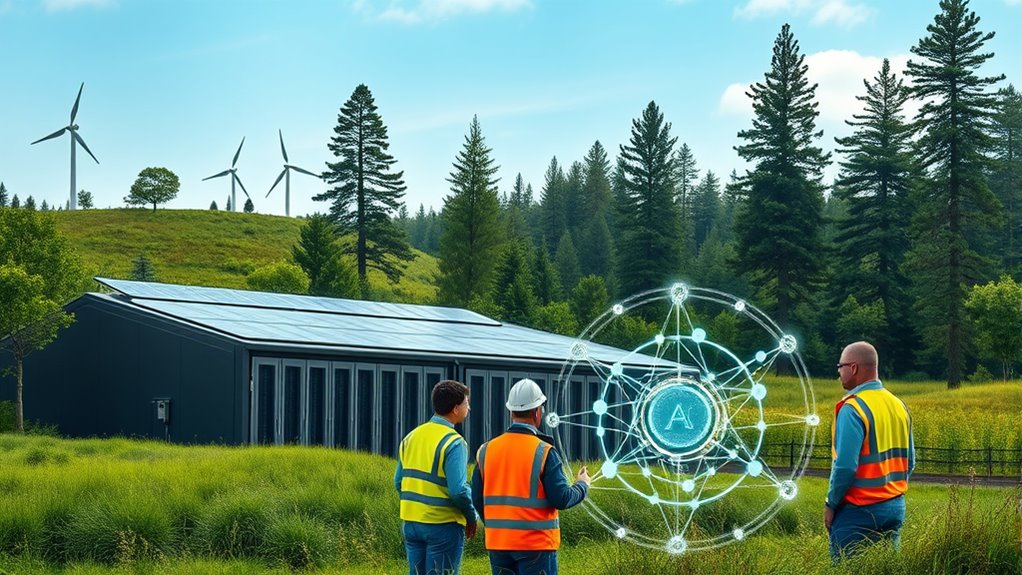
Building a sustainable future with AI requires collaboration across diverse disciplines, including researchers, policymakers, engineers, and environmental experts. By working together, you can develop innovative solutions that balance technological advances with environmental responsibility. Cross-disciplinary efforts enable the sharing of knowledge, resources, and strategies to optimize AI efficiency and reduce energy consumption. This cooperation can foster policy frameworks that promote sustainable practices, drive technological innovations, and ensure equitable access to clean energy solutions. Engaging stakeholders from multiple sectors helps identify gaps, set realistic goals, and implement effective actions. Ultimately, your combined efforts can accelerate the adoption of greener AI technologies and ensure that AI’s growth benefits both society and the planet.
- Foster collaborative research initiatives
- Develop supportive policies and regulations
- Share best practices across industries
- Promote education and public awareness
Frequently Asked Questions
How Can AI Developers Measure the True Energy Impact of Their Models?
You can measure the true energy impact of your models by tracking total energy consumption during training and inference, including hardware, cooling, and overhead. Use system-level metrics like Power Usage Effectiveness (PUE) and account for idle capacities. Incorporate energy consumption data from all hardware components, and compare it with performance outputs. Regularly benchmark your models against efficiency standards to make certain you’re minimizing environmental impact effectively.
What Are the Best Practices for Integrating Renewable Energy Into AI Infrastructure?
You should prioritize integrating AI infrastructure with renewable energy sources, as AI data centers could consume up to 9% of US electricity by 2030. To do this, implement direct renewable energy sourcing, use AI to optimize energy demand and grid stability, and invest in energy-efficient hardware and cooling systems. These steps diminish carbon footprints and ensure cleaner, more sustainable AI operations, making your AI infrastructure more eco-friendly and resilient.
How Do Small Language Models Compare to Large Models in Energy Efficiency?
You’ll find that small language models are much more energy-efficient than large ones. They require less computational power for training and inference, which means they consume considerably less energy overall. Smaller models also run faster and need less hardware, making them ideal for deployment in resource-constrained environments. By choosing smaller, optimized models, you can reduce your AI’s carbon footprint while still achieving strong performance, aligning with sustainable AI practices.
What Policies Can Effectively Promote Greener AI Innovations Globally?
What policies can push greener AI innovations worldwide? You should advocate for global regulations that encourage transparency in energy use, incentivize energy-efficient hardware, and support R&D funding for sustainable algorithms. Implementing carbon pricing and renewable energy mandates can also motivate companies to adopt cleaner practices. Are governments willing to prioritize environmental impact alongside technological advancement? With strong policies, you can accelerate the development and deployment of eco-friendly AI solutions globally.
How Can Cross-Sector Collaboration Accelerate Sustainable AI Development?
You can accelerate sustainable AI development by fostering cross-sector collaboration. Engage governments, industry, academia, and environmental groups to share research, set common standards, and develop innovative technologies. Promote open data and transparency to identify best practices. Encourage joint funding initiatives and policy alignment to scale eco-friendly solutions. By working together, you’ll drive faster adoption of greener algorithms, improve efficiency, and guarantee AI benefits both innovation and the planet.
Conclusion
As you embrace greener AI, remember that every small step fuels a brighter, sustainable future. Just like a single spark can ignite a wildfire, your efforts in adopting energy-efficient algorithms and supporting innovative solutions can transform our planet’s destiny. By working together, we turn the tide on AI’s energy footprint, proving that even the smallest actions can ripple outward, creating waves of positive change for generations to come.