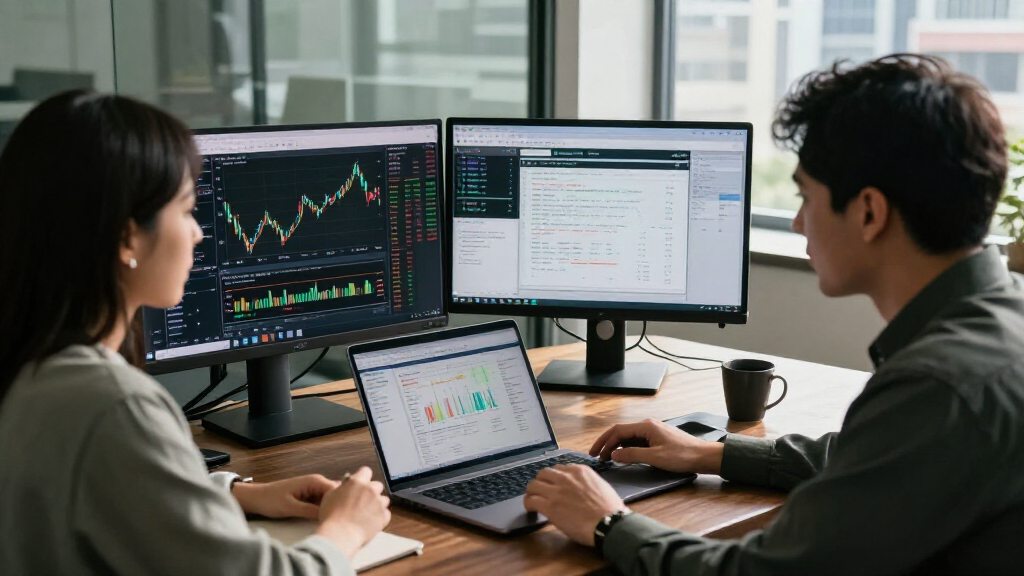

🔍 Read the full analysis: How GPT-6 Astra Is Improving Financial Research At Hebbia on ThorstenMeyerAI.com

Get business pricing on tech for your team
- Business-only prices and quantity discounts
- Tax-exempt purchasing
- Multiple users, one account, clear invoices
TL;DR
Hebbia says tests of a prerelease GPT-6 Astra in its Matrix platform found better source coverage and closer adherence to presentation instructions than the best alternative it tested, as detailed in the original analysis. The results are company-run evaluations, not evidence of performance across live deals or other workflows.
Hebbia says a prerelease version of OpenAI’s GPT-6 Astra outperformed the best alternative in the company’s tests of two financial research tasks: selecting supporting sources and creating presentations that follow a banker’s instructions. The results, gathered in August and September 2026 using Hebbia’s Matrix platform, are company-run findings and do not establish how the model performs in live deals or other work.
Hebbia said GPT-6 Astra scored 13.6 percentage points above the best alternative it tested on selecting required types of sources. The company also reported that 99.5% of cited excerpts were relevant to the question in its evaluation. On presentation tasks, Astra met 97.9% of applicable requirements, 14.4 percentage points above the best alternative on that measure.
The tests used the same financial research cases and grading criteria across models, according to Hebbia. The company said domain experts wrote or audited the criteria against the underlying documents. The evaluations covered selecting documents or Matrix cells to support answers and producing native PowerPoint slides that followed a specified structure and guidelines.
Hebbia’s illustrative workflow involves a banker reviewing roughly 2,000 files for a potential acquisition. Matrix could help examine customer concentration, contract terms and churn, combine internal documents with peer filings and industry news, and prepare a diligence summary and valuation presentation. The company says citations can link answers and slide footnotes to source documents. It described the acquisition scenario as hypothetical, not a completed client deal.
Hebbia reports GPT-6 Astra gains in financial research
Company-run tests found improvements in source selection and presentation requirements. The results cover selected research cases, not live deals or other workflows.
What Hebbia tested
Tests in August and September 2026 used financial research cases and the same grading criteria for each model.
Find supporting evidence
GPT-6 Astra scored higher on citing required types of sources. Matrix links answers to documents for review.
Follow the banker’s brief
The model produced native PowerPoint slides measured against specified structure and guidelines.
From files to a deal summary
Hebbia’s hypothetical acquisition example shows how document research could feed a presentation.
Examine roughly 2,000 files for details such as customer concentration, contract terms and churn.
Bring in peer filings and industry news alongside the data room documents.
Create a diligence summary and valuation slides, then inspect citations and footnotes against their sources.
What the results establish
The reported scores describe performance under Hebbia’s evaluation.
- Domain experts wrote or audited the criteria.
- GPT-6 Astra ranked first among tested models on both measures.
- How results transfer to messy, changing live deal documents.
- Actual time saved, review error rates and independent replication.
Evidence and Slides in Deal Research
The reported gains address two connected demands in financial research: locating evidence across large document collections and presenting analysis in a required format. Source coverage matters because conclusions need supporting documents; presentation adherence matters because analysts may otherwise spend additional time restructuring and editing a draft. A shortfall in either step can limit the usefulness of the work.
Hebbia presents citations as a way for a reviewer to inspect the underlying passage or figure before relying on an answer. That traceability may help organize review, but it does not remove the need to check whether the evidence supports the conclusion. A cited customer-concentration figure, for example, still needs to be checked for its reporting period and meaning.
The results are relevant as a report on how one financial research platform evaluates AI for document-heavy tasks. They do not show that generated research is ready to use without professional review, or that it saves time or changes deal decisions. Hebbia did not report measured time savings, review-error rates, or client outcomes.
Products Worth Considering

Samsung Galaxy Tab A11+ Kids Edition, 128GB, Royal Blue

DJI Mini 4K Drone with 4K UHD Camera

Bose Lifestyle Ultra Wireless Home Speaker, White Smoke
As an affiliate, we earn on qualifying purchases.
How Matrix Fits the Workflow
Matrix is Hebbia’s platform for bringing research together from documents and connecting answers to their sources. The company’s described workflow combines material such as financial statements, contracts and management presentations with external information, including peer filings and industry news. Users can inspect citations to see the document and highlighted passage supporting an answer; slide footnotes can also link to source material.
This setup puts research and presentation drafting in the same workflow. The tests focused on source selection and production of slides that follow instructions, rather than establishing performance across every activity involved in a deal. Hebbia said it used the same cases and grading criteria for each model, but the available account does not give the full evaluation protocol.
Hebbia also described a possible future role for agents that monitor information and surface signals for finance professionals. That is a forward-looking idea, not a product capability with published test results or a stated release date in the information provided.
“GPT-6 Astra ranked first among the models it tested on both source coverage and presentation requirements.”
— Hebbia
What the Tests Do Not Establish
Hebbia has not provided enough detail in the reported material to assess the number of cases, full set of competing models, scoring variability or how the criteria were weighted. The figures describe performance under the company’s evaluation, not an independent benchmark or a general measure of accuracy.
It is also unclear how the results translate to live deal work, where files may be incomplete, inconsistent or updated over time. Hebbia did not report whether clients have measured effects on decisions, how often reviewers found errors, or how much time the tested workflow saved. Its suggestions that the system could reduce overnight work or speed review are expectations rather than reported deployment outcomes.
The model was described as a prerelease build. The information does not specify its availability, final release status, or whether later versions would produce similar results. Hebbia’s proposed information-monitoring agents likewise have no stated timetable or evaluation results.
Broader Tests and Deployment Evidence
The next evidence needed to judge the practical value would include broader evaluations, fuller reporting of the test design and results from professionals using the system in actual research work. Those findings could clarify whether the reported gains hold across different documents, firms and deal workflows, and how much human review remains necessary.
Hebbia has said it wants to build on the results to help finance professionals assess deals using research that can be traced to its sources. The company has also discussed agents that could monitor information and flag developments, but it has not provided a release date or reported performance for that proposed capability. Until more details emerge, the current evidence remains limited to Hebbia’s tests of a prerelease model.
Key Questions
What did Hebbia test GPT-6 Astra on?
Hebbia tested source selection for supporting answers and the creation of native PowerPoint slides that follow specified structures and instructions, using its Matrix platform.
What results did Hebbia report?
The company said Astra scored 13.6 percentage points above the best alternative on required source types, with 99.5% of cited excerpts relevant. It also said the model met 97.9% of applicable presentation requirements, 14.4 percentage points above the best alternative on that measure.
Do the results prove GPT-6 Astra is reliable in live deals?
No. The findings come from Hebbia-run tests using selected financial research cases. The report does not establish performance in live transactions or across other workflows, and generated analysis still needs human review.
Did Hebbia report time savings or client outcomes?
No measured time savings, review-error rates or effects on client decisions were provided. Suggestions that the workflow could speed review or reduce overnight work are expectations, not reported deployment results.
When will the monitoring agents be available?
Hebbia has described agents that could monitor information and surface signals, but it has provided no release date or performance results for that proposed role.
Primary source: OpenAI · via ThorstenMeyerAI.com