
📊 Full opportunity report: How Phone Photos Can Simplify Gauge Reading In Industrial Facilities on IdeaNavigator AI — validation score, market gap, and execution plan.

Get business pricing on tech for your team
- Business-only prices and quantity discounts
- Tax-exempt purchasing
- Multiple users, one account, clear invoices
TL;DR
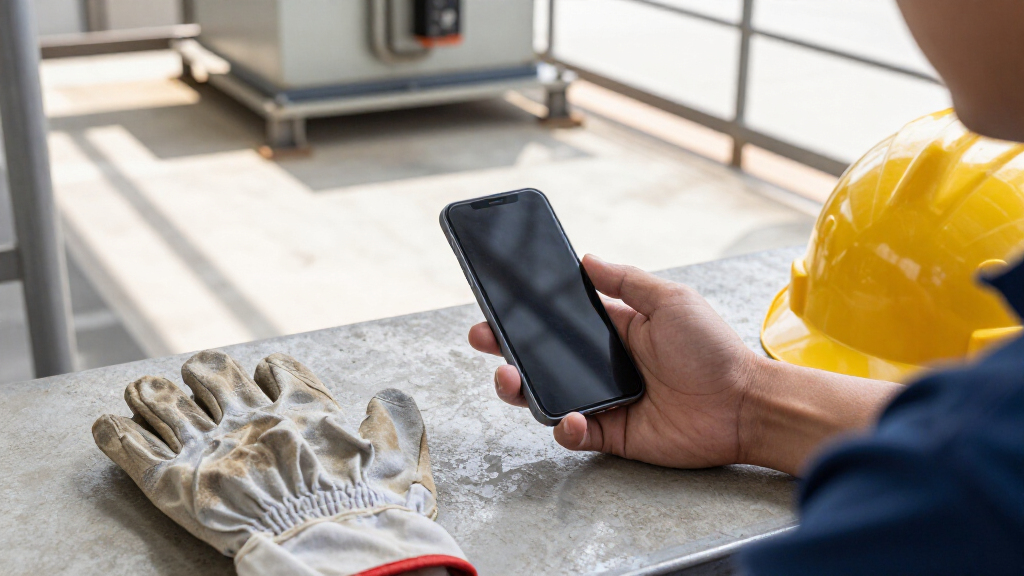
Industrial facilities are testing a new workflow where technicians use phone photos to read gauges, replacing manual transcription. This approach enhances accuracy, reduces errors, and enables trend analysis without costly sensor retrofits.
Industrial facilities are piloting a new workflow that uses phone photos to read gauges, replacing traditional clipboard transcription. This development aims to improve accuracy, reduce errors, and enable better trend analysis without the need for costly sensor retrofits. The approach is being tested at multiple facilities, with early results showing promise for broader adoption.
The core innovation involves technicians photographing analog gauges during routine rounds, with an app that automatically reads the gauge value, checks it against expected ranges, logs it with timestamp and location, and flags anomalies in real time. This process eliminates transcription errors associated with manual recording on paper, which often go unnoticed and hinder predictive maintenance efforts.
According to an anonymous industry expert, the method leverages recent advances in sight recognition models that reliably interpret analog dials, sight glasses, and counters from standard phone images. The pilot program involves parallel rounds—one using traditional clipboard transcription and the other using the photo-based system—at three facilities over a month to compare error rates and early anomaly detection.
Preliminary data indicates that the photo-based workflow reduces transcription errors and improves the timeliness of anomaly detection. Facilities report that technicians find the process straightforward, and the digital logs provide a more comprehensive history for trending and maintenance planning. The system is designed to be low-cost, with a tiered subscription model based on the number of gauges monitored per facility.
Implications for Maintenance and Data Accuracy
This development could significantly enhance preventive maintenance in industrial settings by providing more accurate, real-time data without the expense of retrofitting legacy equipment with IoT sensors. Improved data quality can lead to earlier detection of equipment failures, reducing downtime and maintenance costs. Additionally, the digital logs facilitate trend analysis, helping facilities move toward more data-driven operations.
Experts note that if the pilot proves successful, this approach could become a standard part of routine inspections, especially in facilities where installing sensors is impractical or cost-prohibitive. The simplicity and low cost of using existing smartphones make it accessible for a wide range of operations, from manufacturing plants to utilities.
As an affiliate, we earn on qualifying purchases.
Legacy Equipment and the Cost of Sensor Retrofits
Many industrial facilities operate with legacy equipment that lacks digital interfaces or built-in sensors, making real-time monitoring challenging. Retrofitting these systems with IoT sensors can be prohibitively expensive and technically complex, often requiring significant downtime and capital investment.
Traditional methods rely on manual transcription of gauge readings onto paper, which introduces errors and delays in data analysis. This approach limits the ability to perform effective trend analysis, which is critical for predictive maintenance and avoiding costly failures. The new phone-photo workflow offers a low-cost alternative that leverages existing equipment and technology.
Recent advances in sight recognition AI have made it feasible to accurately interpret analog gauges from simple phone images, opening new possibilities for data collection in legacy environments. The approach aligns with broader industry trends emphasizing digital transformation and operational efficiency.
As an affiliate, we earn on qualifying purchases.
Unconfirmed Aspects and Pilot Limitations
While early results are promising, it is not yet clear how well the system performs across different types of gauges, lighting conditions, and environmental factors. The pilot program’s duration is limited, and larger-scale testing is needed to confirm reliability and cost benefits. Additionally, the integration with existing maintenance workflows and potential resistance from technicians remain to be evaluated.
It is also uncertain whether the system can handle complex or ambiguous gauge displays without manual verification, and how it compares in long-term operational costs versus traditional methods.
As an affiliate, we earn on qualifying purchases.
Next Steps for Broader Adoption and Validation
The next phase involves expanding the pilot program to additional facilities and collecting comprehensive data on error reduction, anomaly detection timeliness, and user acceptance. Researchers plan to analyze the results over several months to assess scalability and robustness.
If the pilot continues to show positive outcomes, vendors may develop more advanced apps and integrate additional AI features, such as predictive alerts. Industry stakeholders will also evaluate the cost-effectiveness of widespread deployment and potential integration with existing maintenance systems.
industrial maintenance smartphone accessories
As an affiliate, we earn on qualifying purchases.
As an affiliate, we earn on qualifying purchases.
Key Questions
How accurate are phone photos for reading gauges compared to manual transcription?
Preliminary data suggests that phone-photo readings reduce transcription errors significantly, but comprehensive validation across different gauge types and conditions is ongoing.
Will this system work with all types of gauges and environments?
The technology is most effective with standard analog gauges; performance in complex or poorly lit environments remains under evaluation during the pilot phase.
What are the cost implications for facilities adopting this workflow?
Initial implementation involves minimal costs—mainly training and app subscriptions—making it a potentially cost-effective alternative to sensor retrofits, especially for legacy equipment.
When can facilities expect to see wider adoption of this technology?
If pilot results are favorable, broader deployment could occur within the next 12 to 24 months, depending on validation and industry acceptance.
Are there any security or data privacy concerns?
As with any digital data collection, facilities should ensure secure data handling, but the system primarily involves local image capture and cloud-based logging, which can be secured with standard practices.
Source: IdeaNavigator AI
Fall Picks
fall essentials
As an affiliate, we earn on qualifying purchases.