
📊 Full opportunity report: How To Check GLP-1 Availability And Prices Across Pharmacies on IdeaNavigator AI — validation score, market gap, and execution plan.

Get business pricing on tech for your team
- Business-only prices and quantity discounts
- Tax-exempt purchasing
- Multiple users, one account, clear invoices
TL;DR
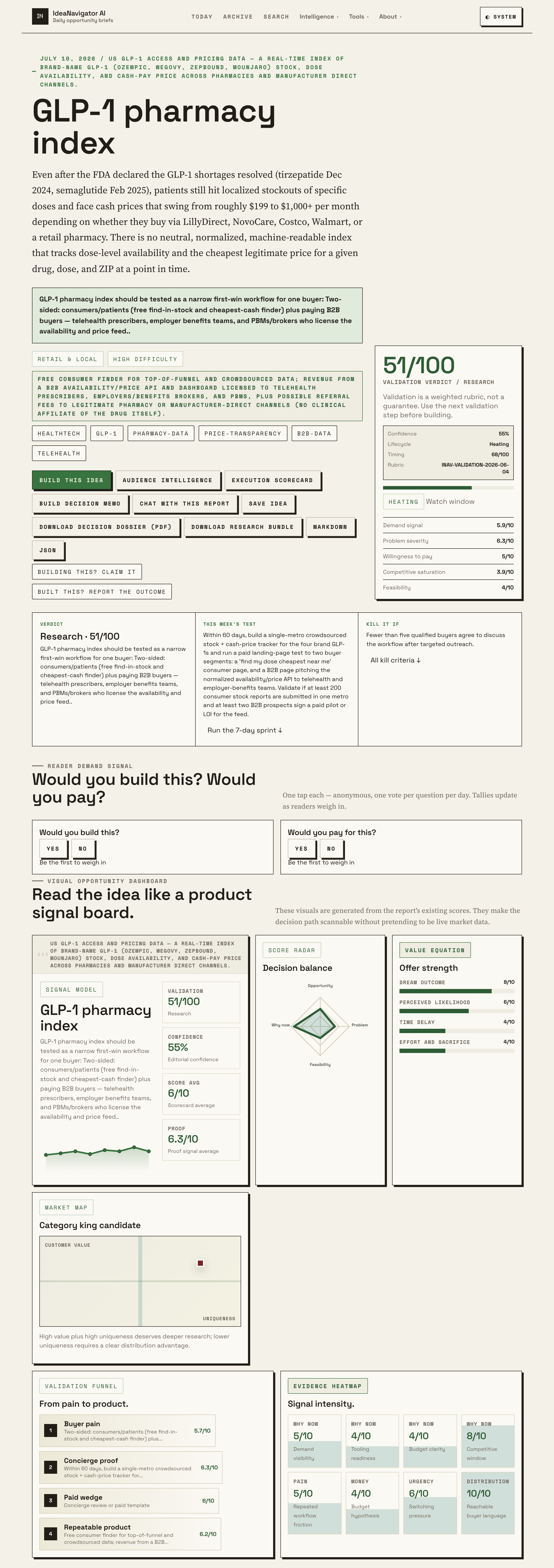
IdeaNavigator AI has proposed a pharmacy index to help patients compare cash prices and dose-level availability for four branded GLP-1 drugs. The proposal describes a free consumer finder and a paid data service for healthcare and benefits buyers; it does not announce an operating product, confirmed pharmacy partnerships or validated demand.
IdeaNavigator AI has proposed a pharmacy index that would let patients search for branded GLP-1 drugs by dose and ZIP code, comparing reported availability and cash prices across pharmacies and manufacturer-direct channels. The concept pairs a free consumer search tool with a paid data feed for telehealth providers, employers and pharmacy-benefit buyers, but no launched service or buyer agreement is identified.
The proposed index would cover Ozempic, Wegovy, Zepbound and Mounjaro. A patient would enter a drug, dose and ZIP code to look for reported stock and compare cash prices. The plan would combine crowdsourced stock reports with normalized public price information from manufacturer-direct services, Costco, Walmart and a discount-price layer described as similar to GoodRx. It also proposes alerts for dose availability.
IdeaNavigator AI describes a two-sided model: the consumer search tool would be free, while telehealth prescribers, employer-benefits teams, brokers and pharmacy benefit managers could pay for an API or dashboard. The proposal also mentions possible referral fees to legitimate pharmacy or manufacturer-direct channels. It specifies no signed contracts, participating pharmacies or pricing for the data service.
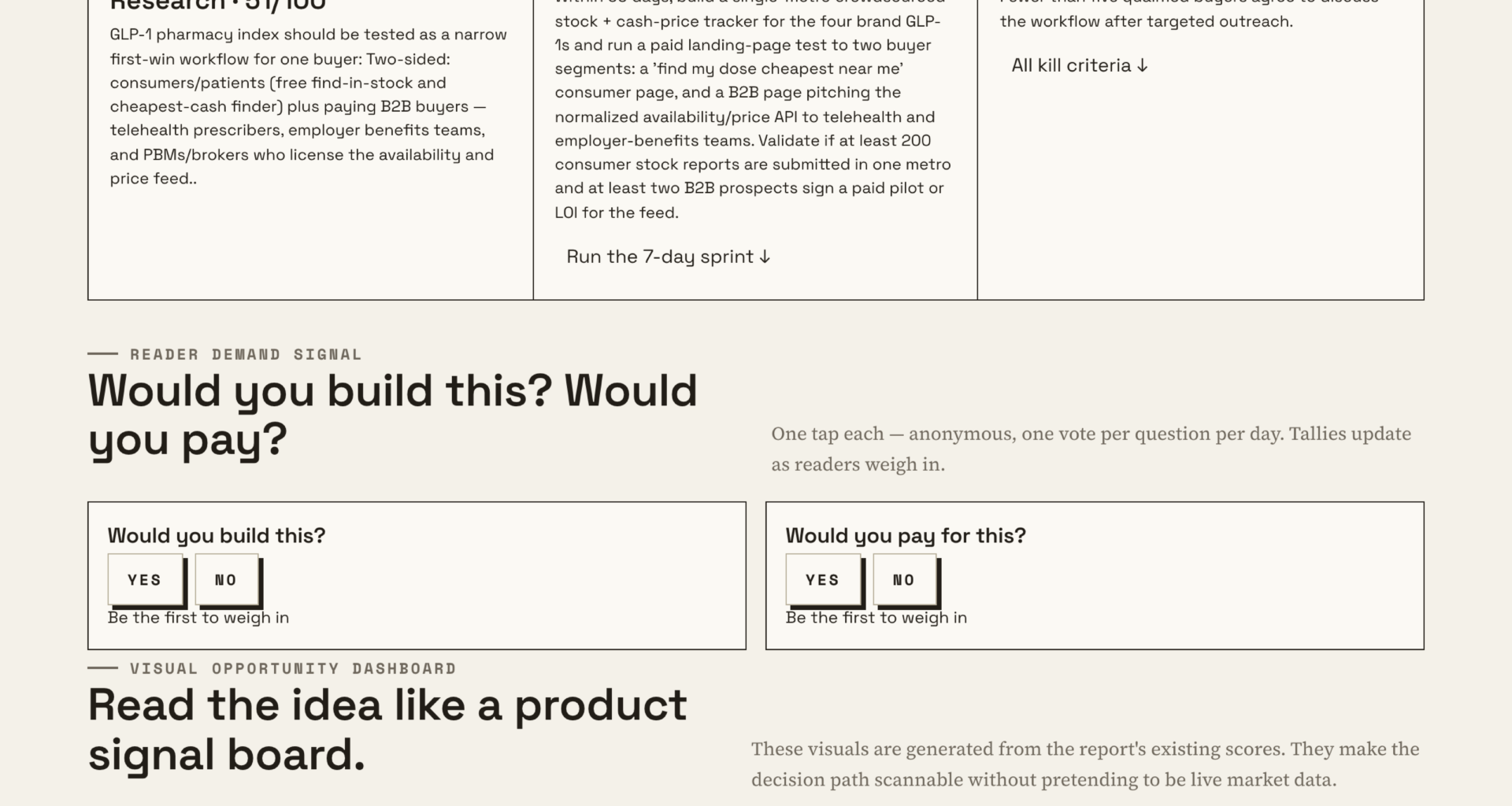
The suggested test would run for 60 days in one metro area. Its stated targets are at least 200 consumer stock reports and paid pilots or letters of intent from at least two business prospects. These are proposed validation thresholds, not results: the supplied material reports no completed test or evidence that the targets have been met.
Finding Stock After Shortages
The proposal addresses a practical access problem: a national shortage status does not tell a patient whether a specific dose is available nearby or what a legitimate cash purchase would cost. If the information could be kept current and compared on consistent terms, patients might have a clearer view of their options, while prescribers and benefits teams could see local availability and price differences.
For employers and other buyers, the proposed feed is pitched as a way to inform cost steering and access decisions. IdeaNavigator AI says GLP-1 drugs account for roughly 20% of pharmacy spending for employers, but the supplied material does not identify the employers or the measurement period behind that figure. The number should be treated as a claim in the proposal, not a verified market-wide statistic.
The concept depends on more than collecting prices. A useful comparison would need to distinguish drug, dose, location and purchase conditions, including any eligibility rules or fees that affect the amount a patient pays. Stock reports can also become outdated quickly. Without reliable timestamps and regular checks, a listing could give patients a misleading picture of availability.
Products Worth Considering

LG 27GR83Q-B 27-inch Ultragear QHD IPS Gaming Monitor

LG 27GS60QC-B Ultragear 27-inch Curved Gaming Monitor (QHD, 180Hz, 1ms, 1000R)

Bose QuietComfort Ultra Earbuds (2nd Gen), Wireless Noise-Cancelling Earbuds, Black
As an affiliate, we earn on qualifying purchases.
From Shortages to Local Gaps
The proposal frames the market as shifting from broad shortage concerns to fragmented local availability and pricing. It says the FDA declared shortages resolved for tirzepatide in December 2024 and semaglutide in February 2025. Those dates are presented in the proposal; the material does not provide FDA notices or explain how the status of individual doses or products may differ.
It also points to manufacturer-direct cash-pay channels and retail options, naming LillyDirect, NovoCare, Costco and Walmart. The proposal says compounded alternatives faced deadlines as shortage conditions changed and describes the TrumpRx portal as launching in February 2026. Those details form its explanation for why prices and access information may be spread across multiple channels; the material does not document the terms or current availability of each option.
The proposed index would focus on brand-name products and cash prices, rather than present itself as a clinical service. Its intended role is comparison and availability reporting. The material does not describe how the index would verify that a listed pharmacy is legitimate, confirm inventory, handle insurance prices or advise patients about whether a medicine is appropriate for them.
Data Quality and Buyer Demand
The proposal does not say whether a development team has been formed, when a public tool might launch or which metro area would be used for the test. It also names no pharmacies that have agreed to share inventory, no telehealth or employer buyers that have committed to a pilot, and no evidence of paid demand for the feed.
How the service would keep its information accurate is also unresolved. The plan combines user-submitted stock reports with public prices, but gives no method for confirming reports, resolving conflicts or marking stale listings. It does not specify how frequently prices would be checked or how discounts, eligibility rules and fees would be represented in comparisons.
The supplied material does not substantiate the stated employer spending share or provide a detailed comparison of current prices. Its estimate of cash prices ranging from roughly $199 to more than $1,000 per month is not accompanied by a date, drug and dose breakdown, or common pricing assumptions. Readers cannot tell from the proposal alone which products, channels or purchase conditions those figures represent.
A Proposed 60-Day Test
The next step described is a single-metro pilot that would collect stock reports and cash-price information for four branded drugs. IdeaNavigator AI proposes a consumer landing page for searching by dose and location, alongside a business-facing page pitching the availability and price feed to telehealth and employer-benefits teams.
The proposal sets out two thresholds for judging early interest: 200 consumer stock reports and at least two paid pilots or letters of intent from business prospects within 60 days. It does not state when that period would begin or identify an owner, budget or launch date. Whether the idea advances will depend on whether anyone builds the tracker, secures data sources and meets those targets.
Source: IdeaNavigator AI
Key Questions
Has the GLP-1 pharmacy index launched?
The supplied material describes a proposed product. It does not say that a public index has launched or provide a launch date.
Which medicines would it cover?
The proposal lists Ozempic, Wegovy, Zepbound and Mounjaro, with searches organized by drug, dose and ZIP code.
Would patients have to pay to use it?
The proposed consumer finder would be free. The business model would seek revenue from paid data feeds or dashboards for healthcare and benefits buyers, with possible referral fees also mentioned.
Are the listed prices guaranteed?
No price listings or guarantees are described. The concept would combine public price information and stock reports, but the proposal does not explain verification, update frequency or purchase conditions.
Source: IdeaNavigator AI