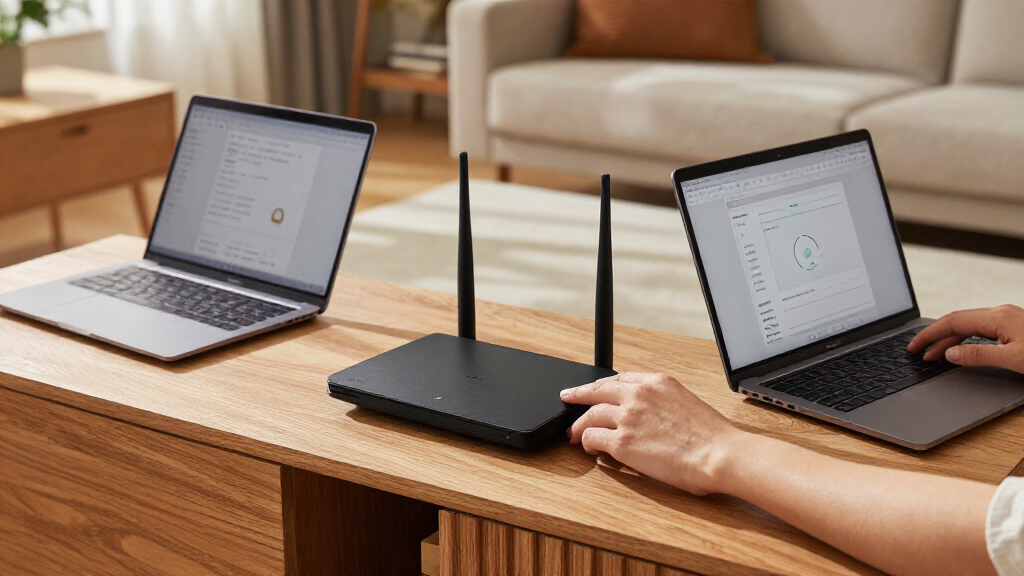

🔍 Read the full analysis: How To Choose Among The 9 Best Wi-Fi 7 Routers For Your Home In 2027 on ThorstenMeyerAI.com

Get business pricing on tech for your team
- Business-only prices and quantity discounts
- Tax-exempt purchasing
- Multiple users, one account, clear invoices
TL;DR
A comparison from ThorstenMeyerAI.com names the TP-Link Archer BE550 its best overall Wi-Fi 7 pick, while identifying eight alternatives for different network needs. The ranking is based on band configuration, wired connections and features—not a guarantee of real-world speed, which depends on a home’s layout, devices and internet service.
A Wi-Fi 7 router comparison from ThorstenMeyerAI.com ranks nine models for different home-network needs, naming the TP-Link Archer BE550 its best overall choice for its tri-band design and mix of wired connections, as detailed in the original analysis. The guide also points shoppers to a quad-band ASUS model for demanding setups and several dual-band routers for simpler networks, while cautioning that the Wi-Fi 7 label alone does not predict performance in a particular home.
The guide compares the routers by wireless band count, wired connectivity and feature set, with attention to everyday use, gaming and more involved setups; a Wi-Fi 7 router selection guide offers further help weighing the options. It says its ranking favors a practical balance rather than the highest advertised throughput or the most specialized controls. The BE550 leads that broad-use ranking, but the guide does not present its recommendation as a universal best choice.
The alternatives span tri-band, quad-band and dual-band designs. The ASUS ROG Rapture GT-BE98 Pro is positioned for buyers who value quad-band capacity and gaming-focused controls. The Archer BE230, Archer BE400, ASUS RT-BE82U, and NETGEAR RS90 or RS140 are described as more focused dual-band options. The NETGEAR BE9300 and TP-Link BE600 are additional tri-band choices to compare against the BE550.
The source says it treats advertised capabilities as selection clues, not promises of in-home results. It gives no comparable benchmark measurements, testing protocol, prices or detailed port-by-port specifications in the supplied material. Readers will need to verify current model specifications and pricing before buying, and can compare the picks with Wi-Fi 7 routers for AI home labs.
The 9 picks
- 1
 ASUS ROG Rapture GT-BE98 Pro Quad-Band WiFi 7 Gaming RouterView on Amazon →
- 2
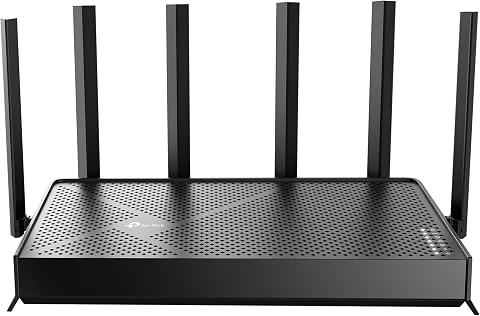 TP-Link Archer BE600 Tri-Band Wi-Fi 7 RouterView on Amazon →
- 3
 NETGEAR Nighthawk BE9300 Tri-Band WiFi 7 RouterView on Amazon →
- 4
 TP-Link Archer BE550 Tri-Band Wi-Fi 7 RouterView on Amazon →
- 5
 NETGEAR Nighthawk RS140 Dual-Band WiFi 7 RouterView on Amazon →
- 6
 ASUS RT-BE82U Dual-Band Wi-Fi 7 RouterView on Amazon →
- 7
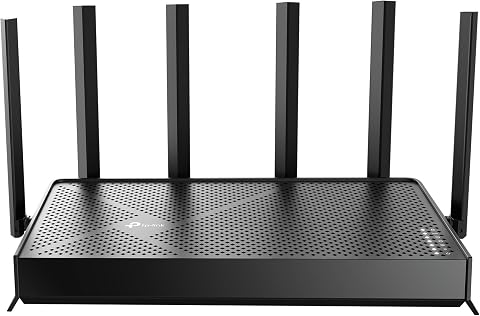 TP-Link Archer BE400 BE6500 Dual-Band Wi-Fi 7 RouterView on Amazon →
- 8
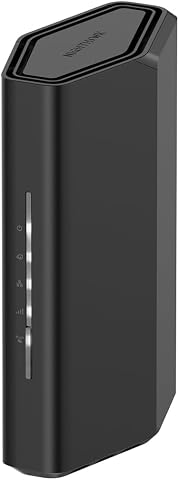 NETGEAR Nighthawk RS90 WiFi 7 Dual-Band RouterView on Amazon →
- 9
 TP-Link Archer BE230 Dual-Band Wi-Fi 7 RouterView on Amazon →
Match Router Capacity to Home Needs
The comparison’s practical point is that a router should fit the devices, traffic and wired equipment in a home, rather than being chosen by its Wi-Fi generation alone. More bands can offer flexibility for multiple active clients, but they do not automatically make each connection faster. A household with several simultaneous users may value tri-band capacity; a smaller network may not benefit enough to justify the added cost or complexity.
Wired ports can also shape the decision. A home with a desktop computer, network storage, consoles or a fast internet plan needs to check that the router’s ports suit its equipment. If a coverage problem comes from walls, floors or poor placement, a higher-capacity router may not fix it; mesh or access-point expansion may be more relevant.
Products Worth Considering

LG UltraGear 34GX90SA-W 34-inch WQHD Curved OLED Gaming Monitor

LG UltraGear 32GS60QC-B 32-inch Curved QHD Gaming Monitor (180Hz, 1ms, 1000R, AMD FreeSync, HDR10)

DJI Mini 5 Pro Fly More Combo with DJI RC 2
As an affiliate, we earn on qualifying purchases.
What the Nine-Model Ranking Measures
The guide groups its choices around two-, three- and four-band configurations and how those designs suit common home setups. Its stated approach weighs practical connectivity and controls alongside the burden of managing a more complex network. That explains why the BE550 is ranked ahead of more specialized options, while the GT-BE98 Pro is reserved for a narrower audience.
Wi-Fi 7 equipment can still connect older wireless devices, according to the source, but older clients will not gain every capability associated with the newer standard. The benefit of an upgrade therefore depends on the router and the client devices across the network, as well as internet service, placement and home construction.
“The Archer BE550 earns the overall lead by pairing tri-band Wi-Fi 7 with a practical feature mix, rather than focusing only on extreme throughput or gaming extras.”
— ThorstenMeyerAI.com comparison
Performance and Pricing Need Checking
The supplied comparison does not identify test dates, measured speeds, prices or a testing protocol. It is not possible from this material to verify how the nine models perform against one another in controlled tests or whether their prices make one a better value at the time of purchase. The guide’s ranking is an editorial recommendation, not a reported result from a standardized benchmark.
Actual results also remain dependent on home construction, router placement, client hardware and service speed. The source does not specify the exact port layout of each model in the supplied text, so shoppers should check manufacturer specifications for the connections they need. The timing of the comparison’s publication is not stated, despite its framing as a 2027 guide.
Check Devices, Ports and Coverage
Before choosing, list the devices that will use the network, identify which support Wi-Fi 7, and map wired equipment such as computers, consoles and storage. Then compare each router’s current price, supported features and exact port speeds and counts against that list. A router’s highest advertised capability is useful only if the devices and service connected to it can take advantage of it.
For a home with weak coverage, check placement options and whether mesh or access-point expansion fits the layout. The next useful step for readers is to consult up-to-date product specifications and independent testing for the shortlisted models; the supplied source does not provide a future test date or other announced milestone.
Key Questions
Which router does the comparison rank first?
ThorstenMeyerAI.com names the TP-Link Archer BE550 its best overall pick, citing its tri-band design and practical mix of wired connections. The source frames that as a broad-use recommendation, not a guarantee it will suit every home.
Is a quad-band router necessary for a typical home?
Not based on this comparison. It positions the ASUS ROG Rapture GT-BE98 Pro for demanding setups that may benefit from quad-band capacity and gaming-focused controls, while saying most homes may not need that scale or complexity.
Will older devices benefit from a Wi-Fi 7 router?
Older Wi-Fi devices can connect, according to the source, but they will not gain every Wi-Fi 7 capability. The immediate benefit depends on which devices are active and what wireless standards they support.
Does a router with more bands guarantee faster Wi-Fi?
No. The guide says band count is a way to distribute wireless capacity, not a direct speed guarantee. Results depend on active clients, placement, obstacles, client hardware and internet service.
Source: ThorstenMeyerAI.com