
AI supports inclusive education by offering personalized, accessible tools tailored to students with disabilities. It adapts content to individual needs, provides real-time feedback, and enhances engagement. AI-driven systems help bridge learning gaps, promote equity, and improve accessibility through features like speech-to-text and language translation. These technologies foster a more inclusive environment, ensuring every student has a chance to succeed. Continue exploring how AI can transform your approach to supporting diverse learners and making education truly inclusive.
Key Takeaways
- AI provides personalized learning plans and real-time feedback, addressing individual needs of students with disabilities.
- Adaptive technologies enhance accessibility, such as text-to-speech and translation tools for diverse learners.
- Intelligent Tutoring Systems support inclusive environments by bridging educational gaps and promoting engagement for all students.
- AI-driven monitoring helps educators identify struggles early and tailor interventions to foster equitable participation.
- Policies and ethical considerations ensure AI tools are used responsibly, safeguarding privacy and minimizing biases to promote inclusive education.

Assistive Technology in Special Education
As an affiliate, we earn on qualifying purchases.
As an affiliate, we earn on qualifying purchases.
The Impact of AI on Learning Outcomes for Students With Disabilities

AI has shown significant potential to improve learning outcomes for students with disabilities by providing personalized and accessible support. Systematic reviews reveal that AI-based interventions consistently produce positive results across different disabilities, from dyslexia to math challenges. For example, AI arithmetic practice systems have achieved large effect sizes, especially for students with math disabilities, boosting confidence and skills. These tools deliver targeted feedback, helping students fill knowledge gaps efficiently. The success isn’t limited to specific subjects; AI’s adaptability supports learners at all educational levels, from primary school to university. Additionally, adaptive learning technologies tailored to individual needs enhance engagement and retention. Integrating assistive technologies within AI systems ensures that students with diverse needs receive appropriate accommodations, fostering greater inclusion. Moreover, understanding the importance of accessible design in AI tools can further improve usability for students with various disabilities. While challenges remain, such as access disparities, the evidence indicates AI can be a powerful tool to promote better academic achievement and inclusion for students with disabilities.

AI for Educators Made Easy: Unlock the Power of Artificial Intelligence to Enhance Teaching Effectiveness, Boost Student Engagement, and Embrace Ethical Practices
As an affiliate, we earn on qualifying purchases.
As an affiliate, we earn on qualifying purchases.
Personalizing Education: How AI Adapts to Unique Student Needs

AI personalizes learning by tailoring content to each student’s strengths, gaps, and cultural background. It adjusts in real time, tracking progress and modifying resources to keep students engaged and supported. This adaptability helps guarantee every learner receives an education suited to their individual needs, including nutrients beneficial for cognitive function that can be integrated into personalized learning strategies. Incorporating educational technology tools enhances the ability to meet diverse learning requirements effectively. Recognizing the importance of proper nutrition, such as adequate intake of vitamins and minerals, further supports cognitive development and learning outcomes. Understanding the impact of sleep deprivation on decision-making and memory retention highlights the need for comprehensive support strategies in education. Additionally, automation in education can facilitate the deployment of adaptive learning systems at scale, ensuring broader access to personalized support.
Tailored Learning Experiences
Personalized learning experiences are transforming education by adapting to each student’s unique needs and strengths. With AI, you get customized content that fits your learning style, pace, and background. AI systems analyze your progress and identify gaps, then suggest targeted resources to help you improve. Whether you’re struggling with a specific concept or excelling in a subject, AI adjusts the difficulty level and offers relevant exercises. This dynamic approach keeps you engaged and motivated, making learning more effective. additionally, AI can incorporate your cultural context and preferences, ensuring content is relatable and accessible. By tailoring lessons to your individual needs, AI helps create a more inclusive environment where everyone, regardless of ability or background, can thrive and reach their full potential. Furthermore, AI enhances predictive analytics to better anticipate student needs and optimize learning pathways.
Real-Time Progress Adjustment
As students progress through their lessons, intelligent systems continuously monitor their performance and adapt accordingly, guaranteeing that each learner receives support tailored to their current needs. When you’re working through a math problem or reading activity, AI detects whether you’re struggling or excelling. If you’re falling behind, the system quickly adjusts by providing additional explanations, hints, or alternative resources. Conversely, if you’re mastering a concept, it offers more challenging tasks to keep you engaged. This real-time feedback loop keeps your learning experience personalized and efficient. By dynamically responding to your progress, AI helps maintain motivation, reduces frustration, and accelerates understanding. Additionally, adaptive feedback mechanisms enhance the system’s ability to respond precisely to individual learning paces. This adaptive approach ensures that every student, especially those with special needs, receives the exact support needed to succeed at their own pace. Incorporating predictive modeling can further anticipate student needs based on historical data, allowing for more proactive adjustments to the learning experience. Moreover, understanding learning variability is crucial for developing systems that accurately support diverse learners and promote inclusive education.

The Crucial Need for AI in Education: Must Have Guide for Using Artificial Intelligence to Personalize Instruction, Reduce Workload, and Bring Innovation Into the Classroom
As an affiliate, we earn on qualifying purchases.
As an affiliate, we earn on qualifying purchases.
Promoting Equity and Inclusion Through Intelligent Tutoring Systems
You can leverage intelligent tutoring systems to create personalized learning experiences that meet diverse student needs. These tools help bridge educational gaps by adapting content and support, ensuring all learners have equitable access. By doing so, you promote a more inclusive environment where every student can succeed. Incorporating adaptive learning techniques further enhances these systems’ ability to address individual challenges and foster engagement. Recognizing the importance of resources and tools in education can lead to more effective implementation of inclusive strategies. Additionally, understanding the support hours of various educational services can optimize resource utilization and student assistance. Moreover, integrating appliance maintenance plans concepts can inspire the development of sustainable and reliable technology support systems within educational environments. Implementing holistic approaches ensures that the social, emotional, and educational needs of students are comprehensively addressed, promoting a truly inclusive learning environment.
Personalized Learning Experiences
How do intelligent tutoring systems (ITS) foster equity and inclusion in education? They adapt learning experiences to meet each student’s unique needs, ensuring everyone receives tailored support. ITS identify knowledge gaps and adjust content in real-time, making lessons more relevant and accessible. For students with disabilities or diverse backgrounds, these systems offer customized resources that align with their strengths and challenges. By providing personalized feedback and pacing, ITS create a supportive environment where learners can thrive without feeling left behind. This adaptability helps bridge gaps, allowing all students to engage meaningfully with the material. Incorporating personalized design principles, these systems enhance engagement and effectiveness. Additionally, the integration of cybersecurity measures ensures that student data remains protected as these systems collect sensitive information. Implementing inclusive design strategies further supports diverse learners, fostering a more welcoming and equitable educational space. Moreover, embracing adaptive learning technologies helps to tailor instruction even more precisely to individual student profiles. Recognizing the importance of vetted educational tools, educators can be more confident in integrating these systems into their classrooms. Ultimately, personalized learning experiences foster a more equitable classroom where each student’s journey is valued and supported through intelligent, responsive technology.
Bridging Educational Gaps
Intelligent Tutoring Systems (ITS) play a crucial role in bridging educational gaps by offering personalized support that addresses diverse student needs. These systems adapt content and teaching methods, making learning more accessible for all students. They help reduce disparities by providing tailored resources, especially for learners with disabilities or those from underserved communities. Incorporating AI content clusters into educational content can also help enhance engagement and retention among students. Additionally, integrating vetted Halloween product reviews can serve as engaging and relatable examples that resonate with students’ interests and experiences.

Translation Pen, Reading Pen for Student & Adults, Assistive Tool for Dyslexia & Scan Reader Pen OCR Digital Pen Reader, Reading Support & Language Learners, Translator Pen for 134+ Languages
Intelligent Translator Pen: Empower learners with our AI-powered translation pen featuring a 4.0" HD touchscreen and instant text…
As an affiliate, we earn on qualifying purchases.
As an affiliate, we earn on qualifying purchases.
Enhancing Accessibility With Ai-Driven Educational Technologies
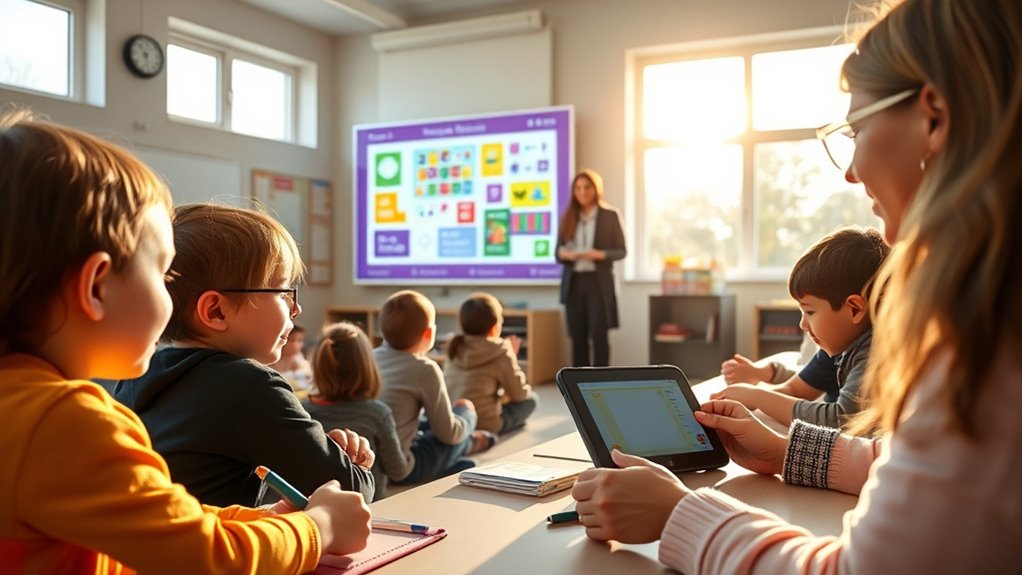
AI-driven educational technologies are transforming accessibility by providing tailored support for students with diverse needs. You can now access tools that adapt content to your learning pace, style, and challenges. These innovations help bridge gaps, ensuring everyone can participate fully. Imagine platforms that read aloud text for visually impaired students or translate lessons into multiple languages for multicultural classrooms. Below is a table highlighting how AI enhances accessibility:
| Positive Impact | Emotional Response |
|---|---|
| Personalized learning experiences | Feel confident and supported |
| Real-time content adaptation | Engage deeply without frustration |
| Bridge gaps for diverse learners | Feel empowered and included |
With AI, you gain equal opportunities, making education more inclusive and compassionate.
Overcoming Barriers: AI as a Tool for Inclusive Learning Environments
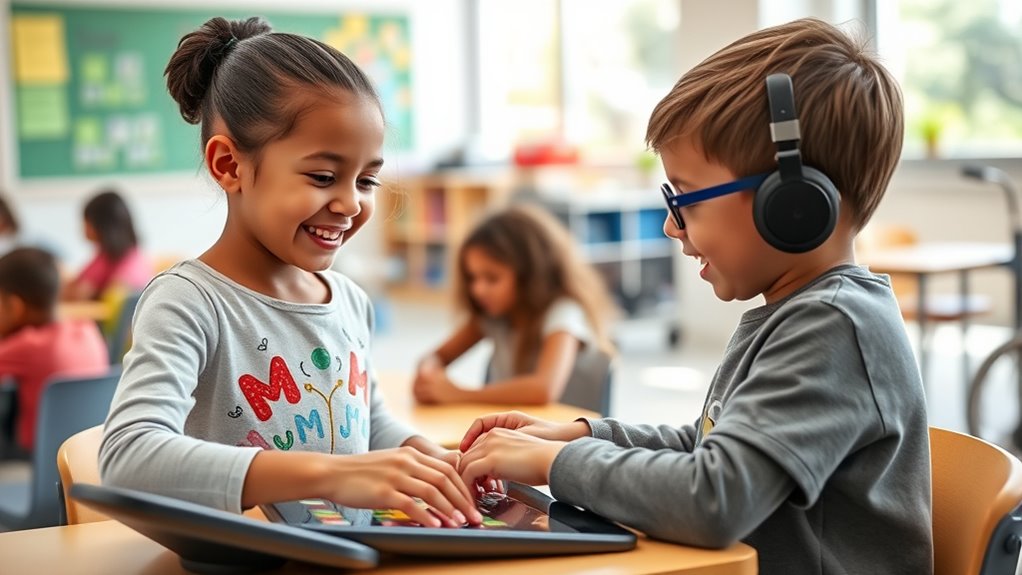
Despite technological advancements, many students still face significant barriers to inclusive learning environments. AI offers solutions to bridge these gaps by addressing access issues and personalization challenges. You can leverage AI to:
- Provide tailored support that adapts to each student’s needs, reducing learning gaps.
- Offer real-time feedback, keeping students engaged and motivated.
- Break down language and cultural barriers with multilingual and culturally relevant resources.
- Enable remote access, allowing students with disabilities or in remote areas to participate fully.
These tools help create equitable classrooms where every student can thrive. By continuously refining AI systems, you can foster an environment that minimizes barriers and promotes inclusion, ensuring no learner is left behind.
Addressing Challenges and Risks in AI-Enabled Education
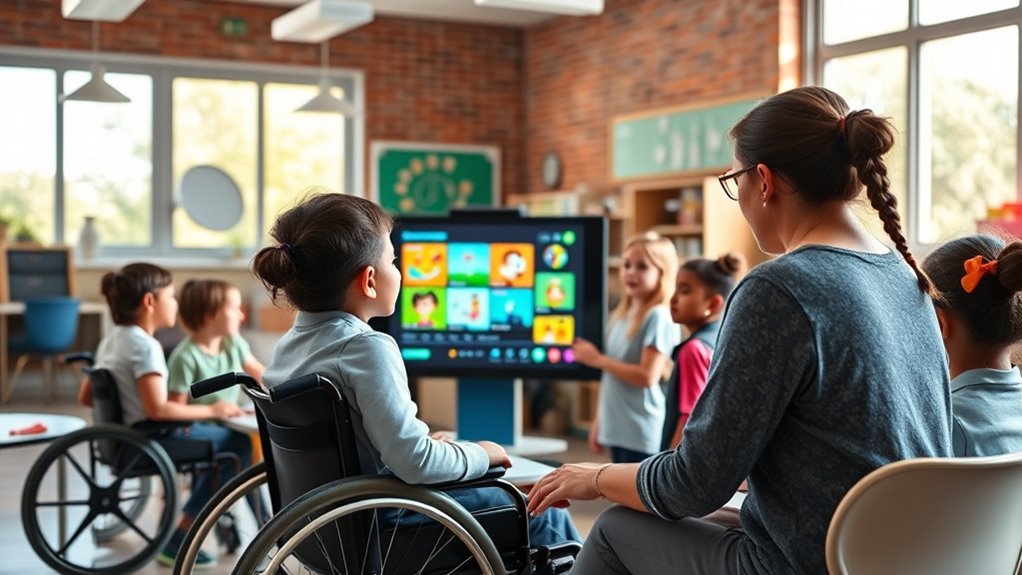
While AI offers promising opportunities for inclusive education, addressing its inherent challenges and risks is essential to guarantee equitable and safe implementation. You need to recognize that access disparities can limit benefits for students with disabilities, especially in underserved communities. Techno-ableism may lead to assumptions that AI can replace human support, risking dehumanization of learning. Biases embedded in algorithms can reinforce existing inequalities, disadvantaging vulnerable groups. Privacy concerns also pose serious threats, as sensitive student data might be mishandled or misused. Rapid AI development often outpaces policy discussions, leaving gaps in regulation and accountability. To ensure safe integration, you must advocate for transparent, inclusive policies that address these risks, promote equitable access, and prioritize ethical AI use in education systems.
Policy Frameworks Supporting Inclusive AI in Schools
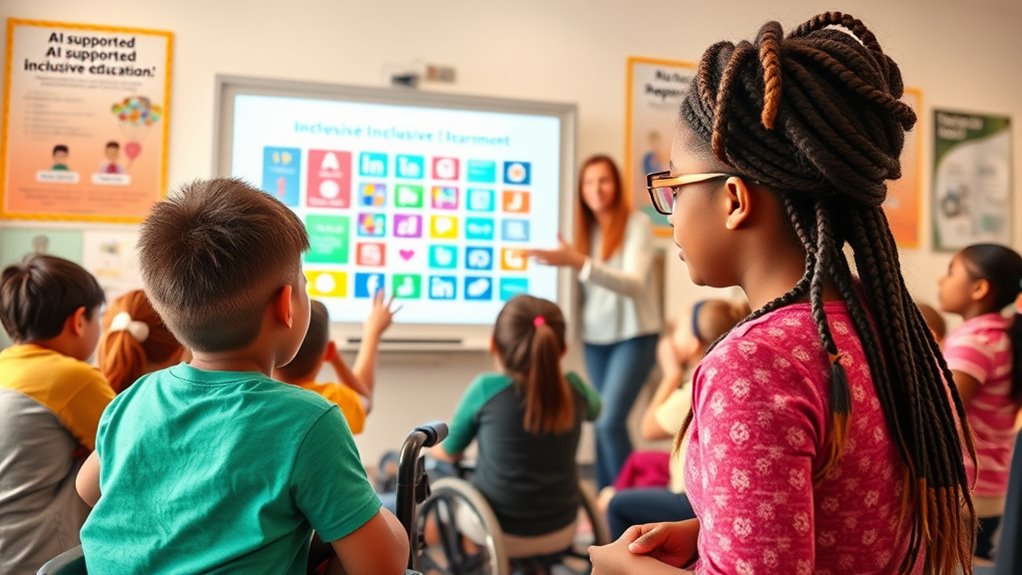
Effective policy frameworks are essential for guaranteeing that AI tools in education promote inclusion and equity. They establish standards, guide responsible implementation, and safeguard student rights. You need policies that:
Strong policies ensure AI in education fosters inclusion, equity, and protects student rights.
- Promote equitable access to AI technologies across diverse schools and communities
- Address data privacy, security, and ethical use of AI tools
- Ensure transparency and accountability in AI decision-making processes
- Support ongoing teacher training and digital literacy to maximize AI’s benefits
Global Efforts to Ensure Equitable AI Access in Education
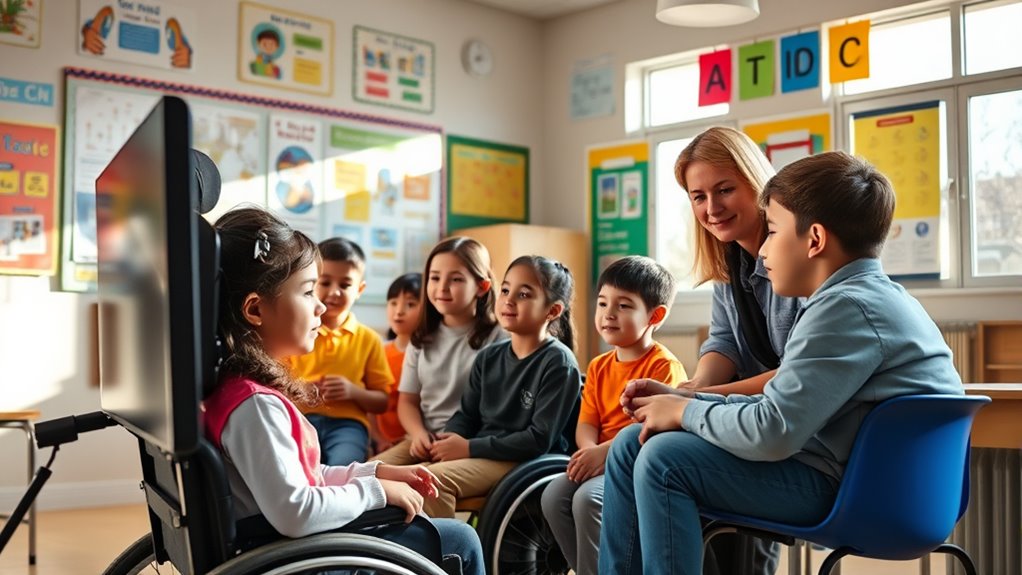
Global efforts are underway to guarantee that AI in education promotes equitable access across diverse regions and communities. International organizations like UNESCO lead initiatives to bridge the digital divide, creating guidelines and frameworks that support inclusive AI deployment. Many countries are investing in infrastructure, training educators, and developing localized AI tools to meet specific cultural and linguistic needs. Collaborative projects aim to share best practices, ensuring underserved populations benefit from AI innovations. Funding programs target low-income areas to improve device availability and connectivity. Additionally, policies emphasize safeguarding data privacy and reducing biases to prevent deepening inequalities. These combined efforts focus on making AI-driven educational resources accessible, affordable, and effective for all learners, regardless of geographic or socioeconomic barriers.
Future Directions for AI and Inclusive Education

The future of AI in inclusive education hinges on leveraging emerging technologies to create more personalized and accessible learning experiences. You can expect increased use of adaptive systems that tailor content in real-time, addressing individual needs efficiently. AI will also advance in cultural relevance, ensuring diverse learners feel represented and engaged. Additionally, innovations like multimodal interfaces will make learning more accessible for students with disabilities. To stay ahead, focus on:
- Developing transparent, bias-free algorithms to promote fairness
- Expanding global collaborations for equitable AI access
- Integrating AI with emerging educational tools for seamless experiences
- Strengthening policies that prioritize ethical, inclusive AI deployment
Frequently Asked Questions
How Can AI Prevent Biases From Affecting Students With Disabilities?
You can prevent biases from affecting students with disabilities by ensuring AI systems are trained on diverse, representative data and regularly audited for fairness. Incorporate inclusive design principles, involve experts and students in development, and apply transparent algorithms. By actively monitoring AI outcomes and updating models, you reduce bias risks, creating equitable learning experiences that genuinely support all students, especially those with disabilities.
What Training Do Educators Need to Effectively Use AI Tools?
Think of yourself as a navigator steering through a sea of AI tools—you need the right map. To do this, you should learn how to operate AI platforms effectively, understand their capabilities and limitations, and recognize potential biases. Training should include hands-on practice, understanding data privacy, and developing skills to adapt AI to individual student needs. Ongoing professional development guarantees you stay current and confident in harnessing AI’s full potential.
How Is Data Privacy Protected in Ai-Supported Inclusive Education?
You should prioritize strong data privacy measures in AI-supported inclusive education by ensuring secure data handling, encryption, and compliance with privacy laws. Regularly audit systems for vulnerabilities, obtain informed consent from students or guardians, and limit data access to authorized personnel. Incorporate privacy-focused design principles, such as anonymization and data minimization, to protect student information, fostering trust and safeguarding sensitive data while leveraging AI’s benefits.
Can AI Solutions Be Customized for Different Cultural Contexts?
Yes, AI solutions can be customized for different cultural contexts. You can tailor content and learning experiences by adjusting algorithms to respect local languages, traditions, and educational norms. AI platforms analyze cultural backgrounds and adapt resources accordingly, making learning more relevant and inclusive. By integrating cultural data, you guarantee that AI tools meet diverse needs, fostering engagement and equity across various communities.
What Policies Ensure Equitable Access to AI Resources Globally?
Imagine building a bridge across a vast canyon—your policies act as the supports that guarantee everyone can cross safely. To guarantee equitable access to AI worldwide, you need clear, inclusive policies that address disparities, promote infrastructure development, and prioritize digital literacy. International collaborations, like UNESCO’s frameworks, help set standards, while investments in technology and training ensure no student is left behind, creating a global educational landscape that’s accessible and fair.
Conclusion
As you explore AI’s role in inclusive education, remember that 85% of educators believe AI can profoundly improve learning for students with disabilities. By embracing these technologies, you can help create more equitable, personalized, and accessible learning environments. While challenges exist, the potential to transform education is immense. Together, you and AI can break down barriers, ensuring every student has the support they need to succeed and thrive.