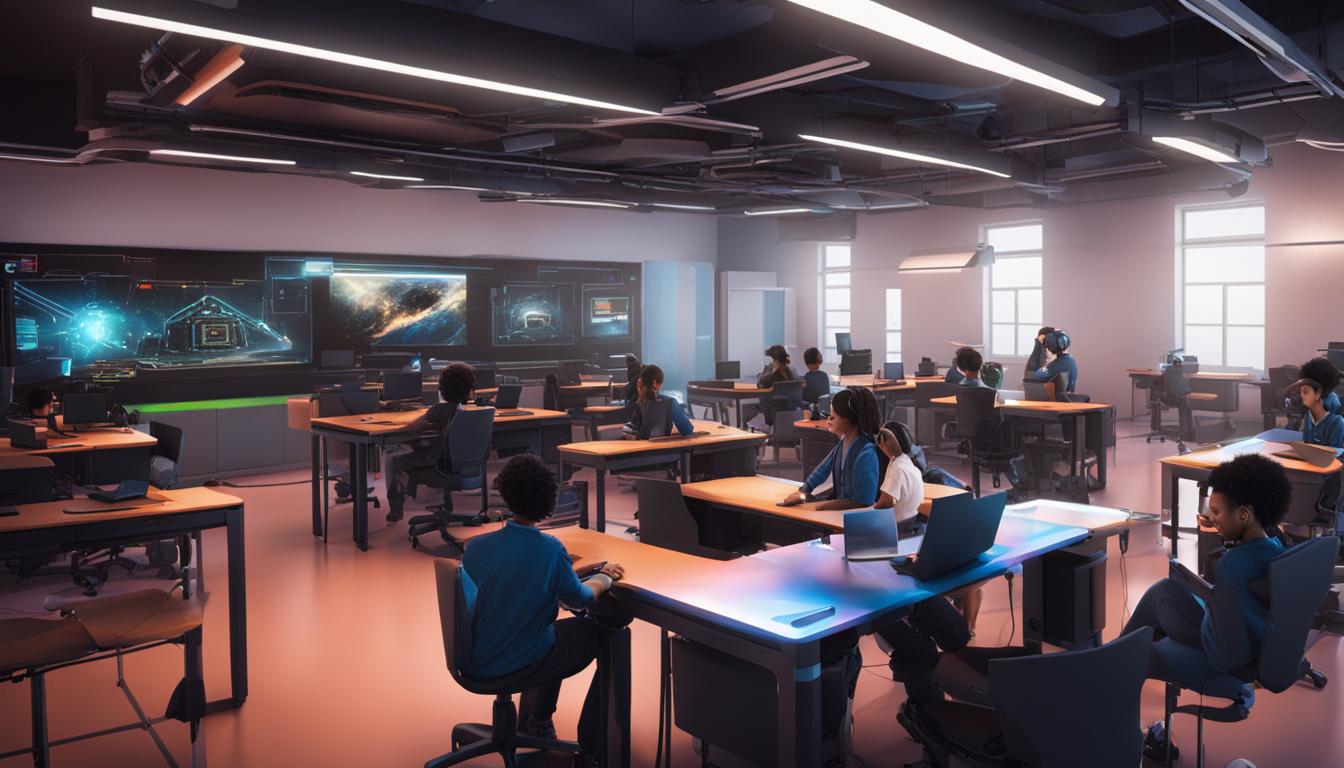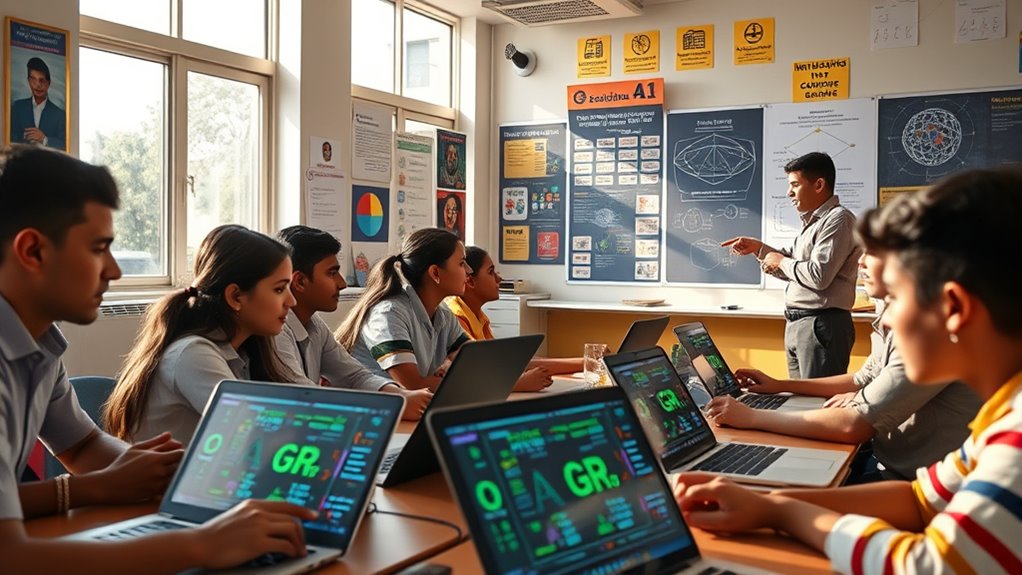

India has made AI education mandatory for high school students to help you develop essential tech skills early on. This initiative aims to prepare you for a future dominated by artificial intelligence, making you more competitive in a rapidly evolving job market. The curriculum balances theory and hands-on projects, fostering critical thinking and problem-solving. By exploring this further, you’ll understand how India’s strategy is shaping the next generation of tech talent.
Key Takeaways
- India has integrated mandatory AI education into high school curriculums nationwide.
- The initiative aims to develop essential tech skills and critical thinking among students.
- Curriculum balances theoretical AI concepts with practical projects and real-world examples.
- Teacher training programs ensure educators are prepared to deliver effective AI lessons.
- The move supports India’s goal to enhance its tech sector and prepare a future skilled workforce.
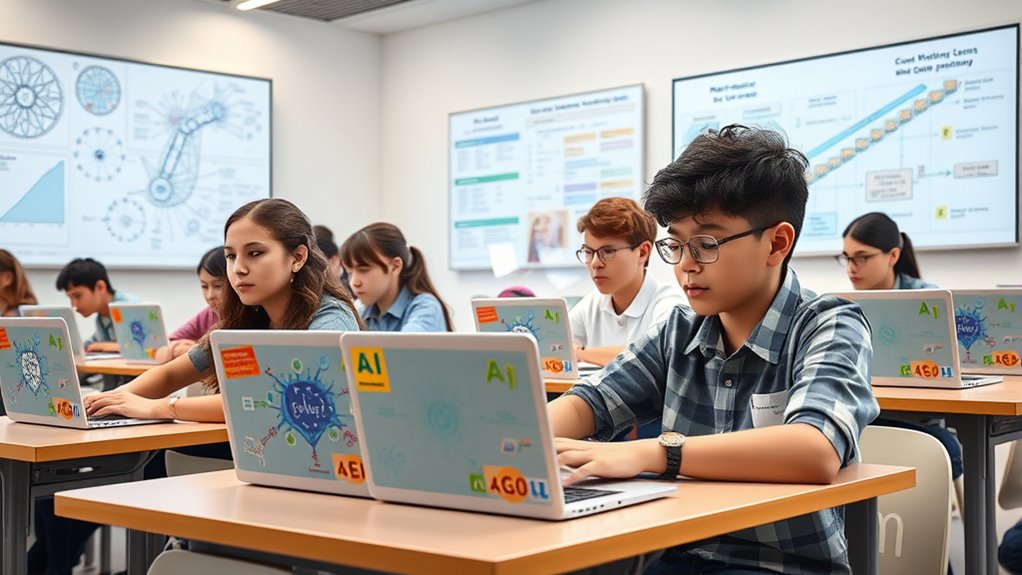
India has taken a significant step to boost its tech sector by making AI classes mandatory for high school students. This move aims to prepare the younger generation for a future where artificial intelligence plays a central role in various industries. By integrating AI into the high school curriculum, the government is encouraging students to develop essential skills early on, ensuring they stay ahead in the rapidly evolving technology landscape. You’re now part of a broader effort to embed AI into education, which involves careful curriculum development to make these courses relevant, engaging, and accessible.
India’s new AI classes in high schools prepare students for a tech-driven future.
The key to successful AI integration lies in designing a curriculum that balances theoretical knowledge with practical application. Educators and policymakers are working together to create a framework that covers fundamental concepts like machine learning, data analysis, and ethics in AI. This curriculum development process focuses on making complex topics understandable for high school students, using real-world examples and interactive projects. As a student, you’ll find that this approach aims to spark curiosity and foster a deeper understanding of AI’s potential and limitations. The goal is to cultivate not just technical skills but also critical thinking, problem-solving, and responsible usage of AI tools.
This initiative also emphasizes the importance of teacher training. Teachers need to be equipped with the right resources and knowledge to effectively deliver AI lessons. The government is investing in professional development programs to ensure educators can confidently teach these new subjects. This support helps bridge the gap between existing educational frameworks and the new AI-focused curriculum, making the integration seamless and effective. As a student, you’ll benefit from well-structured lessons that build on your existing knowledge while introducing you to advanced topics in AI gradually.
Furthermore, the curriculum development process is designed to be flexible, allowing schools to adapt AI lessons based on local needs and resources. This adaptability ensures that students across diverse regions and backgrounds have access to quality AI education. It also encourages innovation in teaching methods, incorporating online resources, coding labs, and collaborative projects. As someone stepping into this new educational landscape, you’ll find that these efforts aim to make AI learning engaging and inclusive.
AI educational kits for high school students
As an affiliate, we earn on qualifying purchases.
As an affiliate, we earn on qualifying purchases.
Frequently Asked Questions
How Will AI Classes Be Integrated Into Existing Curricula?
You’ll see AI classes integrated into existing curricula through thoughtful curriculum integration and innovative pedagogical strategies. This means teachers will blend AI concepts with subjects like math and science, using project-based learning and technology-driven activities. You’ll engage in hands-on projects and interactive lessons designed to make AI accessible and relevant, helping you develop essential skills and understanding that prepare you for future tech opportunities.
What Resources Will Be Provided to Schools for AI Education?
You’ll find that schools will receive specialized resources for AI education through dedicated educational resource allocation. These include access to AI curriculum development tools, training materials, and digital platforms that support interactive learning. The government and educational bodies aim to equip teachers with the necessary training and resources, ensuring your school can effectively implement AI classes. This all-encompassing support helps you and your peers develop essential tech skills for the future.
How Will Teacher Training Be Handled for AI Subjects?
You’ll find that teacher readiness is prioritized through specialized training programs focused on AI concepts and pedagogy. Curriculum development involves collaboration with experts to create all-encompassing, age-appropriate content. As a teacher, you’ll participate in ongoing workshops and certification courses, ensuring you’re well-equipped to deliver AI lessons confidently. This approach guarantees that educators stay updated, fostering a supportive environment where students can develop strong AI skills effectively.
Will AI Classes Be Available in Rural and Underserved Areas?
AI classes are expected to be available in rural and underserved areas, but the focus will be on improving rural infrastructure and bridging the digital divide. You’ll find initiatives aimed at providing necessary tech tools and internet access, ensuring students in remote regions can participate. While challenges remain, the government’s efforts aim to make AI education accessible, empowering more students to build tech skills regardless of their location.
How Will Student Privacy Be Protected During AI Education?
You’ll benefit from strong data privacy measures, ensuring your personal information remains secure during AI classes. Schools will obtain your student consent before collecting or using any data, respecting your rights. Strict regulations and secure systems will be in place to protect your privacy, so you can focus on learning AI without worries. This approach helps build trust and keeps your information safe while you develop essential tech skills.
machine learning beginner books for teens
As an affiliate, we earn on qualifying purchases.
As an affiliate, we earn on qualifying purchases.
Conclusion
Now, as you walk through the bustling hallways of your high school, imagine the glow of screens illuminating your path, sparks of curiosity lighting up your mind. With AI classes now part of your daily routine, you’re stepping into a future where innovation feels within reach, like a seed ready to bloom. Embrace this change, and let the world see the bright, tech-savvy person you’re becoming—ready to shape tomorrow with every keystroke.
programming coding kits for students
As an affiliate, we earn on qualifying purchases.
As an affiliate, we earn on qualifying purchases.
AI and data analysis online courses for teens
As an affiliate, we earn on qualifying purchases.
As an affiliate, we earn on qualifying purchases.