
TL;DR
Prime for Young Adults — start your free trial
Fast free delivery, streaming and member deals for eligible 18–24 year olds.
As an affiliate, we earn on qualifying purchases.
SpaceX’s Colossus 1 supercomputer, featuring heterogeneous GPU architecture, is now leased to Anthropic to help meet its growing AI compute demands. The cluster’s inefficiency stems from its mixed hardware, causing low utilization. This move highlights challenges in AI infrastructure scalability.
SpaceX has leased its Colossus 1 AI supercomputer to Anthropic, addressing the company’s urgent need for increased compute capacity amid rising demand and infrastructure constraints. The move underscores ongoing issues with the supercomputer’s mixed GPU architecture, which has led to low efficiency and underutilization.
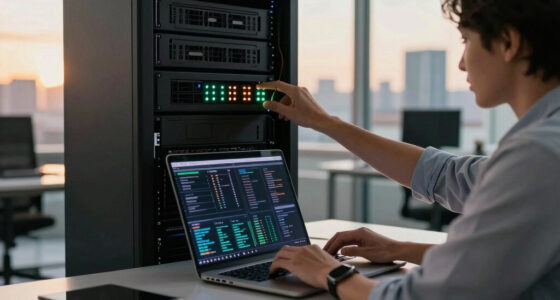
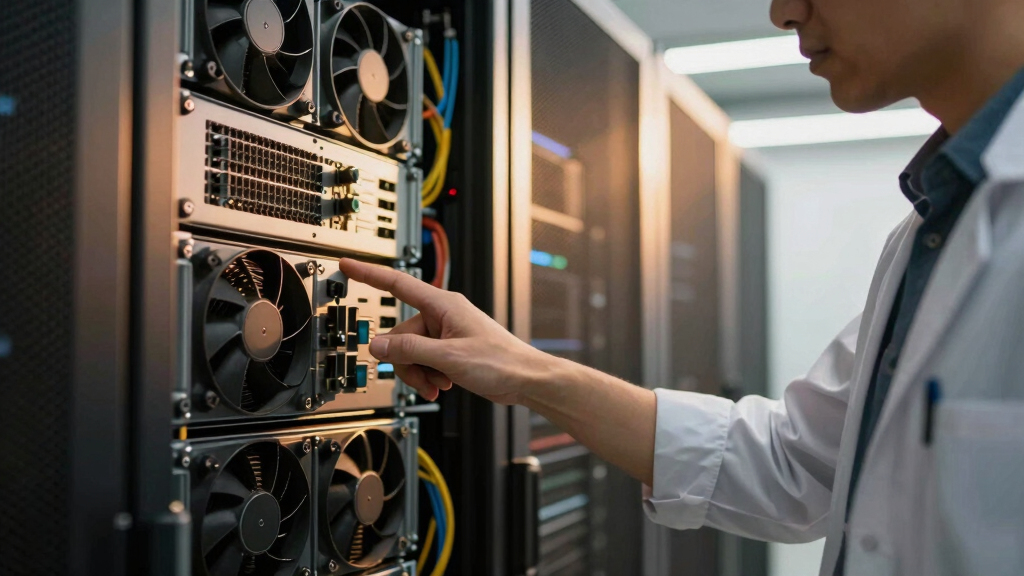
Colossus 1, a massive AI data center with over 220,000 Nvidia GPUs, was assembled rapidly by Musk’s xAI to compete at the forefront of AI development. However, its architecture is heterogeneous, combining different GPU generations—H100s, H200s, and GB200s—assembled as supply allowed, rather than designed uniformly. This configuration has caused significant efficiency problems, notably the ‘straggler effect,’ where slower GPUs delay overall processing, resulting in an estimated 11% GPU utilization.
Anthropic, facing escalating demand for its Claude AI services, has struggled with capacity limits, including message caps and throttling during peak times. While the company has pursued long-term solutions like deals with Amazon, Google, and Microsoft, the immediate need for high-capacity compute prompted the lease of Colossus 1. The system’s inefficiency, attributed to its mixed architecture, was a key reason Musk decided to lease it to Anthropic rather than expanding its own use.
Why It Matters
This development highlights the ongoing challenges in scaling AI infrastructure efficiently. The inefficiency of Colossus 1 underscores how heterogeneous GPU clusters can limit utilization, leading to wasted resources and higher operational costs. For AI companies, access to large-scale, ready-made supercomputing resources is crucial as demand outpaces the ability to build new data centers, which are costly and time-consuming to develop.
The lease also indicates a strategic shift for Musk’s xAI, possibly reflecting a reassessment of the supercomputer’s utility and the importance of resource optimization. For the broader AI industry, it exemplifies the importance of architectural efficiency in large-scale AI infrastructure and the potential for existing assets to be repurposed to meet immediate needs.
As an affiliate, we earn on qualifying purchases.
Background
Colossus 1 was assembled rapidly by Musk’s xAI, featuring a heterogeneous mix of Nvidia GPUs, including H100s, H200s, and GB200s. The cluster’s construction was driven by supply constraints rather than a unified design, leading to significant inefficiencies. Musk previously touted Colossus 1 as part of his broader plan to build a supercluster capable of reaching a million GPUs, but the current configuration has proven less effective in real-world applications.
Meanwhile, Anthropic has faced increasing pressure from demand for its Claude AI services, with usage restrictions tightening during peak periods. The company has sought long-term solutions through partnerships with cloud providers, but these are slow to materialize. The immediate need for capacity led to the lease of Colossus 1, which was previously seen as a flagship project for Musk’s AI ambitions.
“The heterogeneous GPU architecture of Colossus 1 results in a significant efficiency loss, with utilization rates reportedly around 11%.”
— Mirae Asset Securities
“We are committed to supporting AI development and are providing Colossus 1 to Anthropic to help address their compute needs.”
— SpaceX spokesperson
high performance AI supercomputer hardware
As an affiliate, we earn on qualifying purchases.
As an affiliate, we earn on qualifying purchases.
What Remains Unclear
It is not yet clear how long Anthropic will use Colossus 1 or whether Musk plans to upgrade or replace the system to improve efficiency. The full financial and operational implications of the lease are also still emerging.
As an affiliate, we earn on qualifying purchases.
What’s Next
Next steps include monitoring how Anthropic integrates Colossus 1 into its infrastructure, whether Musk’s team considers architectural upgrades, and how this move influences industry strategies for large-scale AI compute. Further announcements regarding system performance and future plans are expected in the coming months.
As an affiliate, we earn on qualifying purchases.
Key Questions
Why is the heterogeneous GPU architecture a problem?
Different GPU generations have varying speeds, causing slower units to delay the entire system’s processing, which results in low overall utilization and wasted resources.
How does this lease benefit Anthropic?
It provides immediate access to a large-scale supercomputing resource, helping to alleviate capacity constraints and improve service quality for users.
Will Musk upgrade Colossus 1 to fix efficiency issues?
It is currently unclear whether Musk plans to upgrade or modify the system; the focus appears to be on repurposing existing hardware to meet immediate needs.
What does this mean for the future of AI infrastructure?
This situation highlights the importance of architectural efficiency and the challenges of scaling AI hardware cost-effectively amidst supply and resource constraints.
NFL season / tailgating Picks
team gear
As an affiliate, we earn on qualifying purchases.