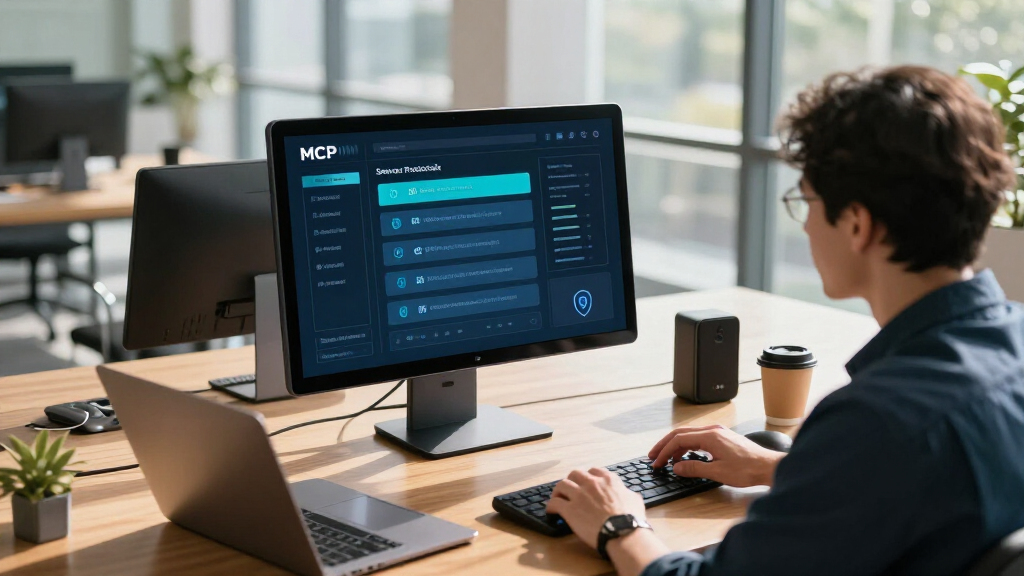

📊 Full opportunity report: Protecting MCP Servers: Security Layers For AI Agent Systems on IdeaNavigator AI — validation score, market gap, and execution plan.

Get business pricing on tech for your team
- Business-only prices and quantity discounts
- Tax-exempt purchasing
- Multiple users, one account, clear invoices
TL;DR
A security proxy for MCP servers is under development to address vulnerabilities in AI agent tool integration. This initiative aims to introduce permission models, audit logs, and safety gates, enhancing enterprise security. The project is in early testing, with broader deployment and validation upcoming.
Security engineers are testing a new proxy layer for MCP servers designed to add permission controls, audit logging, and safety gates for AI agent tool integrations, addressing critical security gaps as MCP becomes standard in enterprise AI deployment.
Currently, many organizations are wiring MCP servers into production without implementing permission models, audit trails, or guardrails, creating security vulnerabilities. The new proxy acts as an intermediary, enforcing per-tool allowlists, per-agent identity verification, human approval for destructive actions, and rate limits. This approach aims to mitigate risks such as prompt-injection attacks and unauthorized tool calls.
Developed as an open-source project, the proxy is being tested with a select group of enterprise teams. It offers a per-server subscription model, with enterprise features like single sign-on (SSO), policy packs, and compliance exports planned for future releases. The goal is to enable organizations to deploy MCP servers more securely while maintaining flexibility.
Why Enhanced Security for MCP Servers Matters
As MCP has become the standard for integrating AI agents with enterprise tools in 2025-2026, security concerns have grown. Without proper controls, connected agents can invoke any tool with full privileges, risking data breaches, operational disruptions, or malicious exploitation. Introducing security layers like permission controls and audit logs is essential to prevent abuse and ensure compliance, making this development critical for enterprise AI safety.
As an affiliate, we earn on qualifying purchases.
Background of MCP Security Challenges in Enterprise AI
Since its rise to prominence in 2025, MCP has enabled rapid deployment of AI agents that can call internal tools. However, many organizations have exposed MCP servers directly to production without adequate permission models or audit mechanisms. This has led to documented attack vectors, including prompt-injection and tool abuse. Industry experts have called for better security controls, prompting the development of dedicated security proxies and guardrails, now entering initial testing phases.
“The current lack of permission models and audit trails in MCP deployments exposes organizations to significant security risks.”
— an anonymous researcher
MCP server permission control software
As an affiliate, we earn on qualifying purchases.
As an affiliate, we earn on qualifying purchases.
Unresolved Questions About Deployment and Adoption
It is not yet clear how widely organizations will adopt the open-source proxy or what specific enterprise features will be prioritized in future releases. The effectiveness of the proxy in preventing sophisticated prompt-injection attacks remains under evaluation, and broader security implications are still being studied.
audit logging tools for AI systems
As an affiliate, we earn on qualifying purchases.
As an affiliate, we earn on qualifying purchases.
Next Steps for Security Proxy Development and Testing
The project will continue pilot testing with select enterprise teams, gathering feedback on usability and security effectiveness. Developers plan to release a stable version of the proxy, expand enterprise features like SSO and policy management, and promote adoption through community engagement and industry partnerships. Further research into attack mitigation strategies is also expected.
As an affiliate, we earn on qualifying purchases.
Key Questions
What is the main purpose of the new MCP security proxy?
The proxy is designed to add permission controls, audit logging, and safety gates to MCP servers, reducing security risks associated with AI agent tool calls.
Who is developing this security layer?
It is an open-source project developed by security engineers and researchers focusing on enterprise AI infrastructure security.
When will this security proxy be available for wider use?
The proxy is currently in testing with plans for a stable release and broader adoption in the coming months.
Will this solution prevent all types of attacks?
While it aims to mitigate common vulnerabilities like prompt-injection and unauthorized tool calls, its effectiveness against highly sophisticated attacks remains under evaluation.
What additional features are planned for future versions?
Future releases may include advanced policy management, integration with enterprise SSO, compliance reporting, and enhanced attack detection capabilities.
Source: IdeaNavigator AI
Fall Picks
fall essentials
As an affiliate, we earn on qualifying purchases.