

The publishing industry now uses AI to quickly generate books and translations, transforming traditional workflows. AI helps create concise summaries, enhance editing, and produce accurate translations rapidly, allowing publishers to meet reader demand faster than ever before. This technology reduces production times and expands market reach through multilingual releases. If you keep exploring, you’ll discover how these innovations are reshaping the way books are produced and shared worldwide.
Key Takeaways
- AI automates book summaries, enabling quick overviews for decision-making and targeted marketing strategies.
- Enhanced editing tools help editors rapidly improve manuscripts, reducing time from draft to publication.
- Neural network-driven translation tools facilitate fast, accurate multilingual book translations for global reach.
- Automation accelerates publishing workflows, allowing publishers to meet consumer demand and stay competitive.
- Rapid translations open new markets, increasing accessibility and expanding readership worldwide.

Have you ever wondered how artificial intelligence is transforming the publishing industry? It’s changing the game in ways you might not have expected, especially when it comes to speeding up the process of creating and translating books. AI tools now generate plot summaries automatically, giving publishers quick overviews of lengthy manuscripts or upcoming releases. These AI generated plot summaries save time for editors and marketing teams, helping them decide which books to prioritize or promote. Instead of reading through hundreds of pages, they get concise, accurate summaries that highlight the core story, allowing for faster decision-making and more targeted marketing strategies.
But it’s not just about summaries. AI-enhanced editing has become a significant part of the publishing process. Advanced AI algorithms now assist editors by catching grammatical errors, improving sentence structure, and even suggesting stylistic improvements. When you’re working with AI enhanced editing, you’re not just relying on basic spell-check tools—these systems understand context, tone, and flow, ensuring your manuscript is polished to a professional standard. This accelerates the editing phase dramatically, reducing the time from manuscript completion to publication. As a result, publishers can produce books more swiftly, which is particularly essential in today’s fast-paced market where readers expect new content regularly.
The impact of AI on translation is equally profound. With AI-driven translation tools, publishers can now translate books into multiple languages at an unprecedented speed. These systems utilize sophisticated neural networks that understand nuances of language, making translations more accurate and natural-sounding. Instead of waiting weeks or months for human translators, publishers are now able to reach global audiences almost instantly, opening up new markets and expanding reach. This rapid translation process supports the industry’s push to be more inclusive and diverse, giving readers worldwide access to stories that might have otherwise taken years to reach their language group.
AI Summarizer Text PDF Summary
Key Features:
As an affiliate, we earn on qualifying purchases.
As an affiliate, we earn on qualifying purchases.
Frequently Asked Questions
How Does AI Ensure the Quality of Generated Book Content?
AI guarantees the quality of generated book content through automated editing processes that catch grammatical errors and inconsistencies. It also verifies content authenticity by cross-referencing data sources and analyzing for originality. By continuously learning from human feedback, AI improves its accuracy over time. This combination helps maintain high standards, ensuring your books are polished, credible, and engaging before they reach readers.
What Ethical Concerns Arise From Ai-Generated Translations?
When it comes to AI-generated translations, you might be opening a can of worms. Ethical concerns include risking the loss of author authenticity, where the original voice gets watered down, and translation bias, which can skew meaning or misrepresent cultures. You need to be cautious, ensuring AI tools don’t compromise integrity or perpetuate stereotypes, because a fair translation respects both the source and the audience’s understanding.
How Does AI Impact Employment in the Publishing Industry?
AI impacts publishing employment by causing job displacement, especially in roles like editing, translation, and proofreading. You might find some positions shrinking as AI tools automate tasks faster and cheaper. However, it also creates new opportunities for tech-savvy professionals who can develop or manage AI systems. Overall, AI shifts the landscape of publishing employment, requiring industry workers to adapt or risk being left behind in this evolving field.
Can AI Accurately Capture Cultural Nuances in Translations?
You might be surprised that AI achieves about 85% accuracy in capturing cultural nuances in translations. While AI excels at machine cultural and nuance translation, it still struggles with subtle contexts and idiomatic expressions. You should remember that AI’s understanding is based on patterns, not genuine cultural insight. So, for complex cultural nuances, human translators remain essential to guarantee accurate and respectful translations.
What Are the Copyright Implications of Ai-Created Texts?
You should consider that AI-created texts raise complex copyright issues, especially around intellectual property and authorship rights. Since AI lacks human authorship, determining who owns the rights can be tricky. You might face questions about whether the AI or the user holds copyright, and whether existing laws fully protect AI-generated work. It’s essential to stay informed about evolving regulations to avoid infringing on someone’s rights.
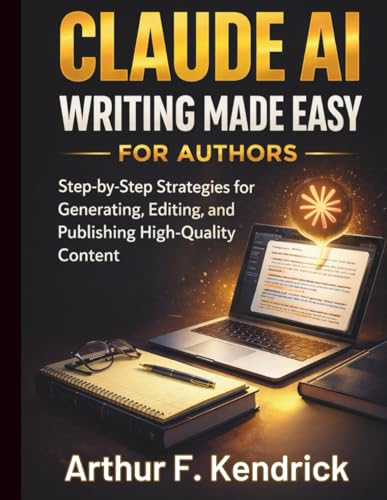
Claude Ai Writing Made Easy for Authors: Step-by-Step Strategies for Generating, Editing, and Publishing High-Quality Content
As an affiliate, we earn on qualifying purchases.
As an affiliate, we earn on qualifying purchases.
Conclusion
You might find it surprising that AI now helps produce thousands of books and translations every month, boosting the industry’s output by over 30%. This rapid pace means you could see more diverse stories and ideas hitting shelves faster than ever. As AI continues to evolve, it’s clear that the publishing world is shifting quickly, pushing boundaries and opening new opportunities for writers and readers alike. The future of publishing is more innovative—and faster—than you might have imagined.

Translation Pen 134 Languages Online Translation AI Scanning Smart Pen Assistive Tool Touchscreen Language Translator Device Language Learners Dyslexia Gift (Grey)
【Advanced AI Assistance】Benefit from real-time AI technology that offers step-by-step solutions and explanations for text and math problems,…
As an affiliate, we earn on qualifying purchases.
As an affiliate, we earn on qualifying purchases.
automated book translation software
As an affiliate, we earn on qualifying purchases.
As an affiliate, we earn on qualifying purchases.