
TL;DR
Google researchers are developing an AI-powered pointer that understands what users are pointing at and why it matters, enabling more seamless and intuitive interactions across applications. This innovation aims to reduce prompts and improve workflow fluidity, with early demos available in Chrome and Googlebook.
Google researchers have introduced an experimental AI-enabled mouse pointer designed to understand what users are pointing at and why it matters, aiming to revolutionize human-AI interaction across digital tools.
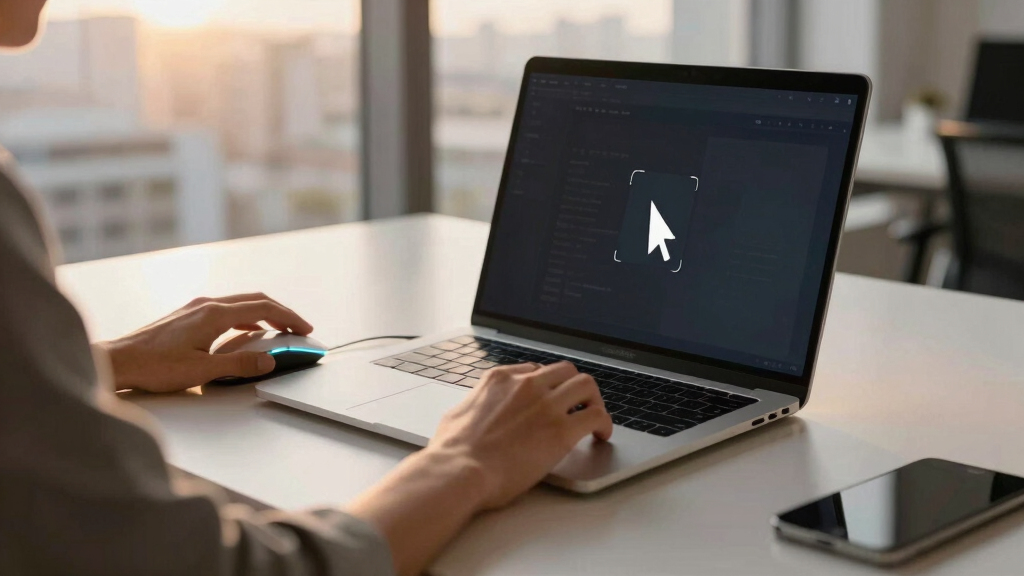
The new pointer leverages AI technology from Google’s Gemini project to interpret both visual and semantic context, allowing users to make complex requests with simple gestures and speech. Unlike traditional pointers, which only track location, this system recognizes specific objects, text, images, or regions, transforming pixels into actionable entities.
Initial demonstrations show users pointing at web elements, images, or documents and issuing natural language commands such as “Compare these products” or “Show me directions to this building.” The system is designed to work across all applications, reducing the need for detailed prompts and enabling more fluid workflows. It is currently integrated into Google Chrome and Googlebook, with plans to expand to other platforms like Google Labs’ Disco.
Why It Matters
This development could significantly impact how people interact with AI and digital content. By making AI understanding more intuitive and context-aware, it reduces friction in workflows, enhances productivity, and fosters more natural human-computer communication. The technology addresses long-standing limitations of traditional pointers, which only tracked location without grasping meaning, and aligns with broader trends toward human-centric AI interfaces.

Virtusx Jethro AI Mouse – Voice & Audio Recorder for Lecture & Meeting, Centralized Software with Voice Typing, Writing Tools, Transcribe, Translate & Summarize, Wireless Mouse for Computer, Laptop
- 6-in-1 Voice AI Mouse: Voice typing, transcription, translation, summarization
- Built-In Microphone: High precision microphone for accurate voice capture
- Centralized AI Software Platform: All-in-one platform for AI tools and productivity
As an affiliate, we earn on qualifying purchases.
As an affiliate, we earn on qualifying purchases.
Background
Over the past decades, computer pointers have remained largely unchanged, focusing solely on tracking location. Recent advances in AI, particularly in understanding visual and semantic context, have opened possibilities for more intelligent interaction tools. Google’s work builds on these developments, aiming to integrate AI understanding directly into everyday user interfaces. The concept aligns with ongoing efforts to make AI more accessible and natural for users, especially as AI becomes embedded in more applications.
“Our goal is to develop more seamless, intuitive ways to collaborate with AI, where the pointer understands not just where you’re pointing but also what it means.”
— ResearchAdrien Baranes and Rob Marchant
“Applying these principles in products like Chrome and Googlebook will enable users to interact more naturally with digital content, reducing prompts and enhancing flow.”
— Google research team

GAMINJA Ai Mouse with Voice Typing & ChatGPT Assistant,Smart Mouse Multi Language Voice to Text Recorder Ergonomic Silent Wireless BT Mouse 600mAH for Computer,PC,Laptop,2026 Upgraded(Grey)
- AI Voice Typing & Recording: 98% accuracy, supports multiple languages
- Multilingual Translation: 200+ languages, real-time translation
- Long Battery Life: 600mAh battery with fast charging
As an affiliate, we earn on qualifying purchases.
As an affiliate, we earn on qualifying purchases.
What Remains Unclear
It is not yet clear how widely this technology will be adopted, how it will perform across diverse real-world scenarios, or how it will handle complex or ambiguous requests. Details about user privacy, data security, and potential limitations are still emerging.

EASYTONE Air Mouse Remote Control, 2.4 GHz Wireless Voice Remote Control with IR Learning, Wireless Connection via USB Receiver Air Mouse for PC Android TV Box Laptop Projector Windows Android Mac OS
- 3-in-1 Remote Functionality: Air mouse, voice, IR learning remote
- Voice Input Capability: Built-in microphone for voice commands
- Intuitive Motion Controls: 6-axis gyroscope for precise movement
As an affiliate, we earn on qualifying purchases.
As an affiliate, we earn on qualifying purchases.
What’s Next
Google plans to continue testing the AI-enabled pointer in various platforms, gather user feedback, and refine the technology. Broader rollout across Google products and potential integration into third-party applications are expected in the coming months.

ZOOTEALY USB 2.0 Hub with AI Voice Tools: USB Multiport Adapter – Voice Transcription – Translation – Speech to Text Device for Laptop PC – 3 USB-A Data Ports – Plug and Play for Home Office
- 3-in-1 Value Pack: USB hub, voice recording, AI tools
- Multilingual Voice Interaction: Supports 57 languages recognition, 110 translations
- Multiport & Heat Resistant: Three USB ports, durable aluminum alloy design
As an affiliate, we earn on qualifying purchases.
As an affiliate, we earn on qualifying purchases.
Key Questions
How does the AI-enabled pointer understand what I’m pointing at?
The system uses AI models to interpret both the visual region and the semantic context, enabling it to recognize objects, text, or images and respond accordingly.
Can I use the AI pointer to perform complex tasks without typing prompts?
Yes, the technology is designed to allow natural gestures combined with speech to execute complex requests, such as comparisons, visualizations, or modifications, more intuitively.
Will this technology be available in all Google applications?
Initially, it is integrated into Chrome and Googlebook, with plans to expand to other platforms like Google Labs’ Disco and potentially third-party apps in the future.
What are the privacy implications of this technology?
Details are still emerging, but as with other AI integrations, privacy and data security considerations will be critical in its deployment and use.