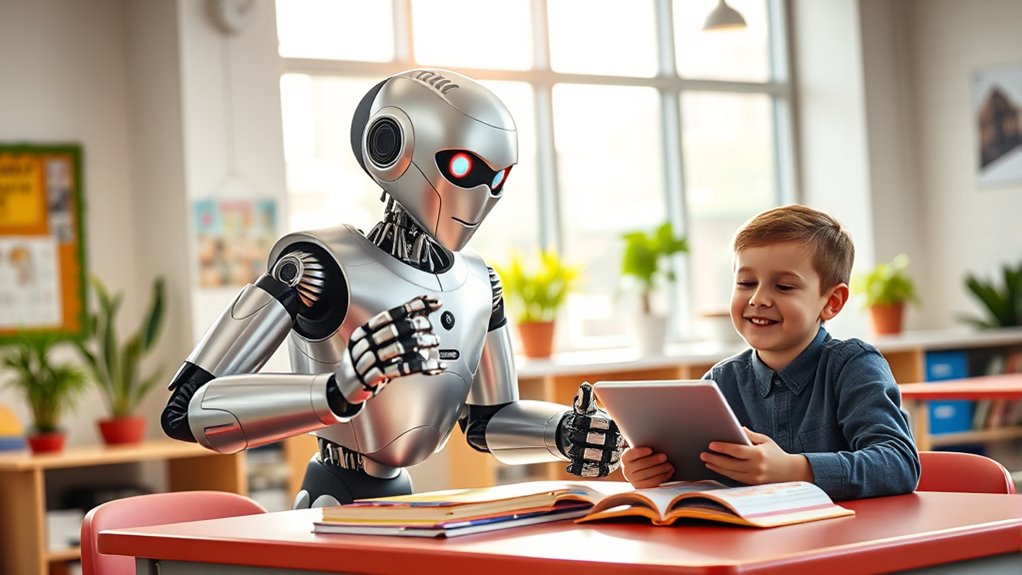

AI-powered robots are becoming valuable classroom companions by personalizing learning and boosting student engagement. They analyze responses in real-time, adapt activities, and provide instant feedback, helping students develop critical thinking, problem-solving, and creativity. These robots also support teachers by automating tasks and offering insights on student progress. As technology evolves, these smart assistants create inclusive, interactive learning environments. Keep exploring to discover how these innovations can transform your educational experience.
Key Takeaways
- AI-powered robots personalize learning experiences by analyzing student responses and adapting activities in real-time.
- Robots foster engagement and skill development in problem-solving, creativity, collaboration, and logical reasoning.
- They assist educators by automating grading, providing instant feedback, and supporting classroom management.
- Integrating AI in robots enhances immersive, interactive environments with visual technologies like projectors.
- Ethical considerations include privacy, equity, and balancing automation with human interaction for effective learning.
The Growing Role of AI in Educational Robotics

AI is increasingly transforming educational robotics by making them more intelligent and adaptable. As a result, these robots can personalize learning experiences to meet each student’s needs, boosting engagement and understanding. With AI capabilities, robots can analyze student responses in real-time, adjusting activities to challenge learners appropriately. This flexibility encourages active participation and promotes curiosity across various subjects. By 2025, nearly half of educational robots are expected to incorporate AI, signifying a rapid shift toward smarter classrooms. Teachers now have access to tools that support differentiated instruction, saving time and effort. The growing integration of AI in educational robots is paving the way for more interactive, responsive, and effective learning environments, ultimately transforming how students engage with content and develop skills. Additionally, advancements in projector technology demonstrate how visual tools can further enhance immersive learning experiences, making concepts more accessible and engaging for students. Incorporating adaptive learning algorithms allows these robots to continuously improve their teaching strategies based on student performance data, leveraging versatile features that adapt to different educational settings. Furthermore, ongoing research into AI-driven personalization promises to tailor educational content even more precisely to individual student needs, fostering a more inclusive learning environment. As these technologies evolve, they will likely incorporate pimple patch inspired solutions to optimize student well-being and focus during learning activities.
Enhancing Student Engagement and Learning Outcomes
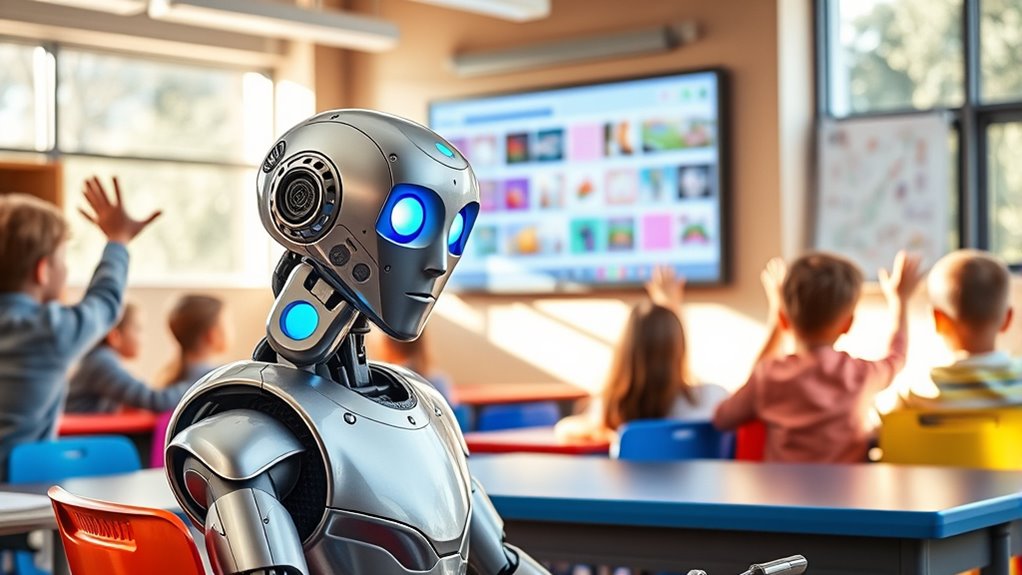
How can educational robots boost student engagement and improve learning outcomes? They do this by creating interactive, personalized learning experiences that adapt to your individual needs. When you use robots, you’re more likely to participate actively, ask questions, and stay focused because the technology makes lessons more engaging. AI-driven feedback from robots helps you understand mistakes instantly, reinforcing learning faster than traditional methods. Students in environments with AI-powered robots often score higher on tests and retain information longer. The engaging, hands-on nature of robotics keeps your curiosity alive and encourages exploration. As a result, you’ll develop better problem-solving skills, increased motivation, and a deeper understanding of complex subjects, all while enjoying a more dynamic classroom experience. Incorporating robotic technology into classrooms can also help educators tailor instruction to diverse learning styles, further enhancing educational outcomes. Additionally, integrating AI in educational robots ensures that lessons stay current with the latest advancements in AI Entertainment, making learning more relevant and exciting for students. Research shows that the use of personalized learning through AI tools can significantly improve individual student performance. Moreover, the adaptability of AI-powered robots allows for continuous adjustment to students’ evolving needs, ensuring effective and inclusive education. Furthermore, leveraging educational data collected by these robots can guide teachers in refining their instructional strategies, leading to more targeted support for each learner.
Developing Critical Skills Through Interactive Robots
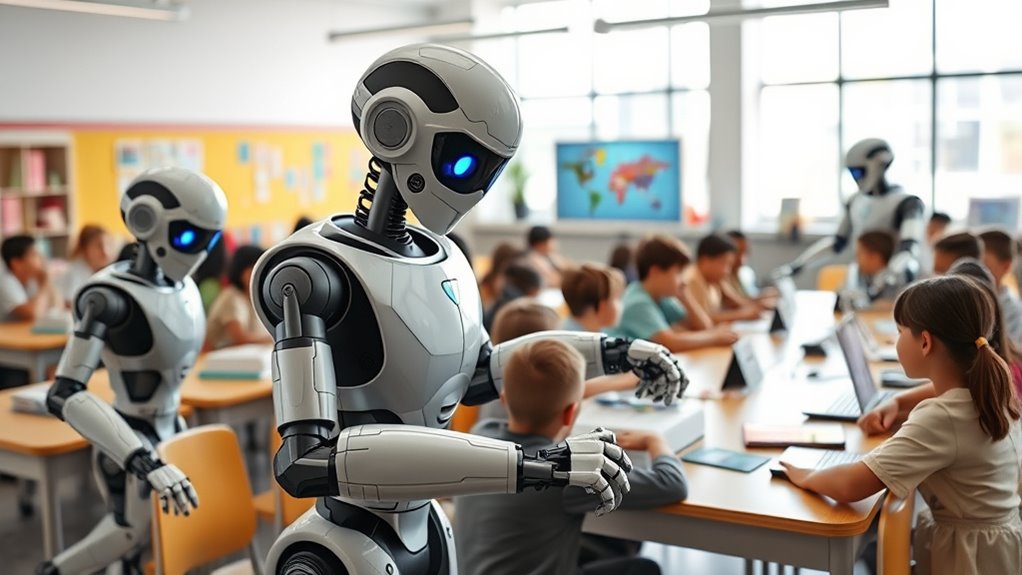
Interactive robots in the classroom actively promote the development of critical skills such as problem-solving, logical reasoning, and creativity. As you engage with these robots, you’re encouraged to think critically about how to solve challenges, troubleshoot issues, and develop innovative solutions. Robots often present open-ended tasks that require you to analyze situations, make decisions, and iterate on your approaches. Through hands-on activities, you learn to break complex problems into manageable steps, fostering logical reasoning. Additionally, working with robots boosts your creativity as you design new programs or experiment with different strategies. Incorporating modern technologies into learning environments enhances engagement and accelerates skill development. The integration of interactive robots can also improve collaborative learning, encouraging teamwork and communication among students. This active participation helps you develop essential skills that transfer beyond the classroom, preparing you for future academic and real-world challenges. Embracing educational robotics can also cultivate adaptability and resilience as students learn to overcome unforeseen obstacles. Introducing such tools also emphasizes the importance of a learning environment that supports innovation and adaptability, especially as it relates to the use of specialized dog breeds in various roles.
Supporting Teachers With Ai-Driven Classroom Tools
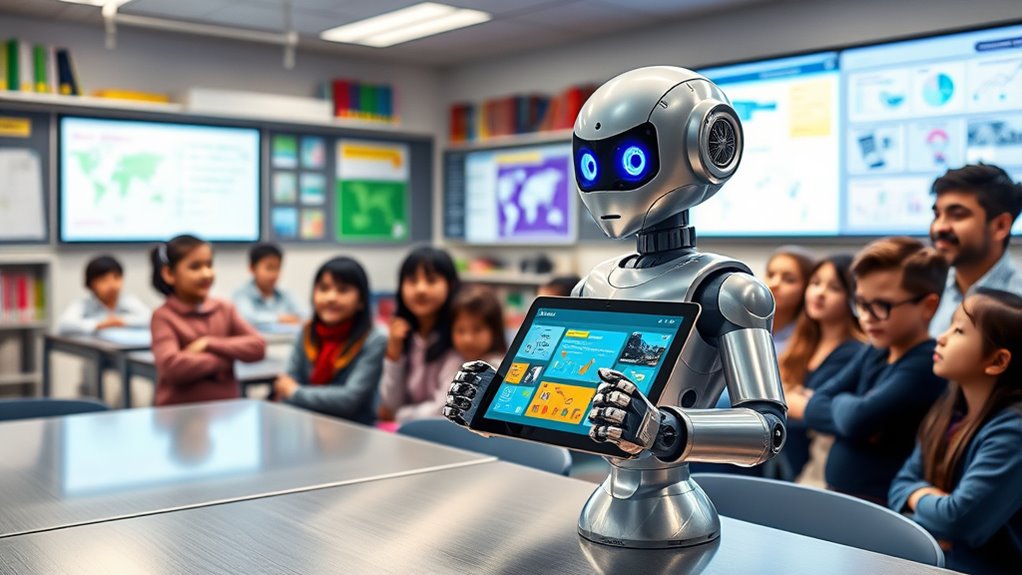
Supporting teachers with AI-driven classroom tools has become essential for enhancing instructional efficiency and addressing diverse student needs. These tools help you personalize lessons, reduce administrative workload, and quickly identify students who need extra support. By automating grading and providing real-time feedback, AI allows you to focus more on engaging with students directly. You can also leverage adaptive resources that cater to different learning styles, ensuring all students stay challenged and motivated. Incorporating vetted and safe educational products ensures the tools are reliable and effective in the classroom. AI helps you allocate time more effectively, freeing you from routine tasks. It offers insights into student progress, enabling targeted interventions. Additionally, AI can support classroom safety by monitoring student activity and identifying potential issues promptly. Implementing learning analytics can further enhance your understanding of student performance and guide instructional adjustments. The use of personalized learning strategies, supported by AI, further enhances student engagement and success. AI fosters inclusive classrooms by customizing learning paths for individual needs. Furthermore, understanding the importance of legal representation can help schools navigate policies related to student rights and privacy concerns related to AI monitoring systems.
Navigating Challenges and Future Opportunities
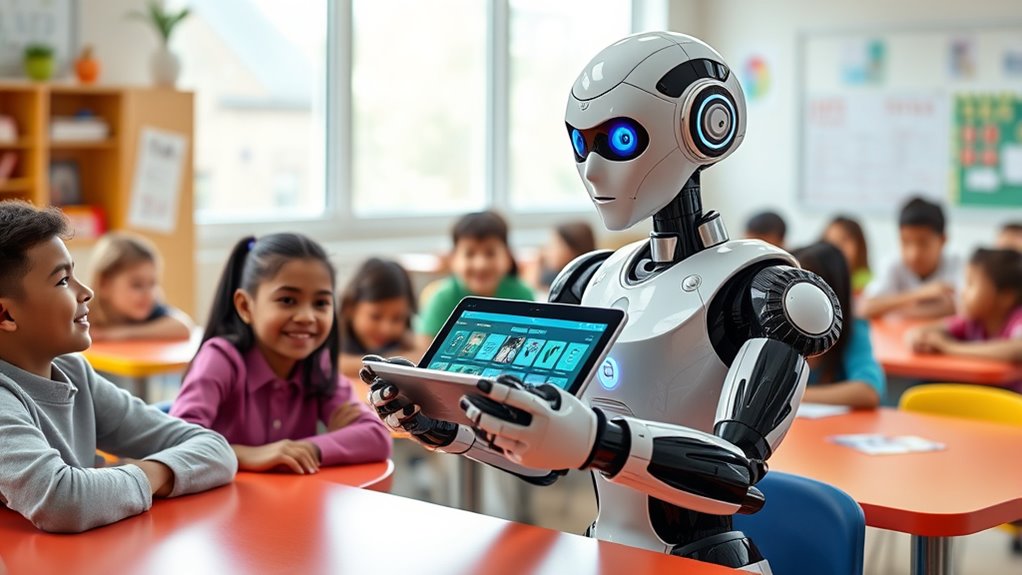
Navigating the integration of AI and robotics in education presents both significant opportunities and pressing challenges. You’ll need to carefully design AI tools to guarantee they complement, not replace, human interaction. Addressing barriers like cost, training, and infrastructure is essential to expand access across diverse schools and subjects. Ethical concerns around privacy, equity, and misuse require clear policies and safeguards. As adoption grows, ongoing teacher professional development becomes crucial to maximize benefits and prevent over-reliance on automation. Future opportunities include advancing adaptive tutoring, fostering creativity, and personalizing learning experiences at scale. Embracing these innovations could revolutionize education, but success depends on thoughtful implementation, equitable access, and continuous assessment of AI’s impact on student outcomes and classroom dynamics. Incorporating principles of Yoga, such as mindfulness and balance, can also promote a healthy approach to integrating new technologies in educational settings. Additionally, fostering a culture of emotional intelligence can help educators and students navigate the emotional aspects of technological change. Recognizing the importance of subconscious power in shaping perceptions and behaviors can further enhance the effectiveness of AI-driven learning environments.
Frequently Asked Questions
What Are the Costs Associated With Implementing Ai-Powered Educational Robots?
The costs of implementing AI-powered educational robots include purchasing the robots themselves, which can be expensive, and ongoing expenses like maintenance, software updates, and training. You may also need to invest in infrastructure upgrades, such as reliable internet and technical support. Additionally, budgeting for teacher training guarantees effective integration. While initial costs can be high, these investments aim to improve student engagement and learning outcomes over time.
How Do Schools Ensure Equitable Access to Robotic Learning Tools?
You can guarantee equitable access by securing funding through grants, government programs, or partnerships with tech companies. Prioritize training teachers and staff to maximize resource use and reach underserved areas first. Implement scalable solutions that adapt to different school needs and infrastructure. Advocate for policies promoting affordability and inclusivity. Finally, foster community involvement to support awareness and acceptance, ensuring all students benefit from robotic learning tools regardless of socioeconomic background.
What Training Is Necessary for Teachers to Effectively Use AI Robots?
Think of teacher training as planting seeds for growth. To effectively use AI robots, you need extensive professional development covering AI literacy, classroom integration strategies, and troubleshooting skills. Hands-on workshops, ongoing coaching, and access to resources are essential. You should also learn ethical considerations and data privacy. With proper training, you’ll navigate AI tools confidently, transforming your classroom into a vibrant, tech-enabled learning environment where students thrive and curiosity blossoms.
How Is Student Data Privacy Protected When Using Educational Robots?
You protect student data privacy by implementing strict security measures, such as encryption and access controls, to prevent unauthorized access. You guarantee compliance with privacy laws like GDPR or FERPA, and regularly update policies to address emerging risks. Additionally, you educate teachers and students on responsible data use, and choose AI tools that prioritize transparency and data minimization. This proactive approach minimizes data breaches and maintains student trust.
What Are the Long-Term Cognitive Impacts of Using AI Robots in Early Education?
Imagine planting seeds in a garden; AI robots nurture early learners, shaping their cognitive landscape over time. In the long run, using AI robots fosters stronger problem-solving skills, creativity, and critical thinking, much like tending to diverse plants boosts a healthy ecosystem. These interactions encourage curiosity and experiential learning, leading to better knowledge retention and cognitive flexibility that benefits students well beyond early education, preparing them for lifelong learning.
Conclusion
As you explore AI-powered robots in classrooms, consider the theory that they’ll revolutionize education by making learning more personalized and engaging. While some worry about over-reliance on technology, evidence suggests these tools can truly enhance critical thinking and collaboration. Embracing this innovation could prepare students for a future where human and AI teamwork is essential. So, don’t dismiss the potential—your role in shaping this new educational landscape is more important than ever.