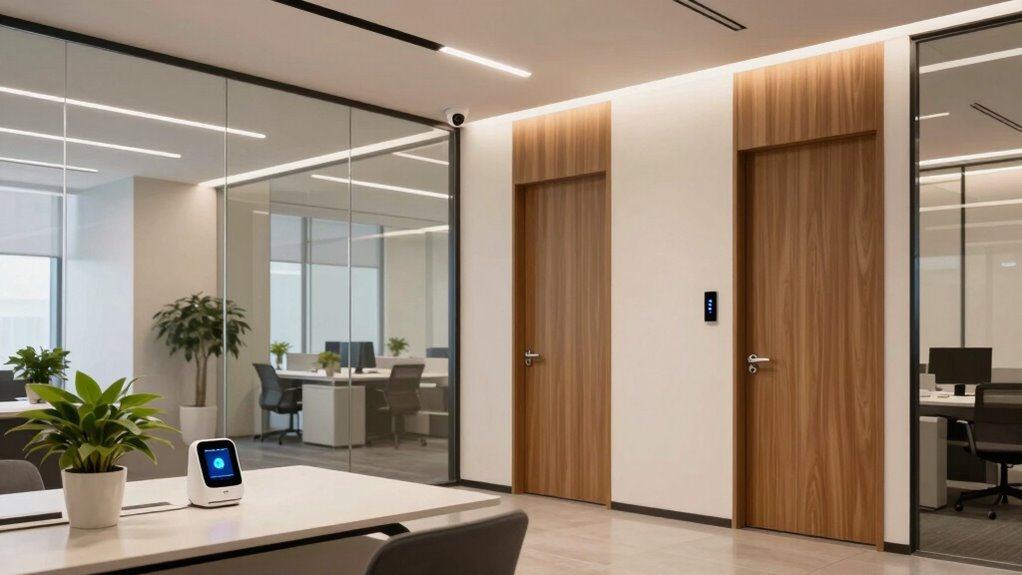

To build a safer smart office without feeling intrusive, focus on transparency and respecting privacy. Clearly explain how data is collected and used, involve staff in decisions, and prioritize encryption to protect sensitive information. Limit access to only essential personnel and implement strong security protocols. Foster trust by openly communicating security measures and emphasizing respect for privacy. If you keep exploring, you’ll discover additional strategies to balance innovation with a comfortable, trust-filled environment.

Get business pricing on tech for your team
- Business-only prices and quantity discounts
- Tax-exempt purchasing
- Multiple users, one account, clear invoices
Key Takeaways
- Implement transparent data collection policies and keep staff informed to foster trust and reduce discomfort.
- Use encryption and strict access controls to protect sensitive information from breaches.
- Calibrate sensors carefully to collect only necessary data, avoiding intrusive monitoring.
- Involve employees in decisions about data usage to promote collaboration and acceptance.
- Promote a culture of respect, emphasizing privacy, security, and open communication alongside technological upgrades.
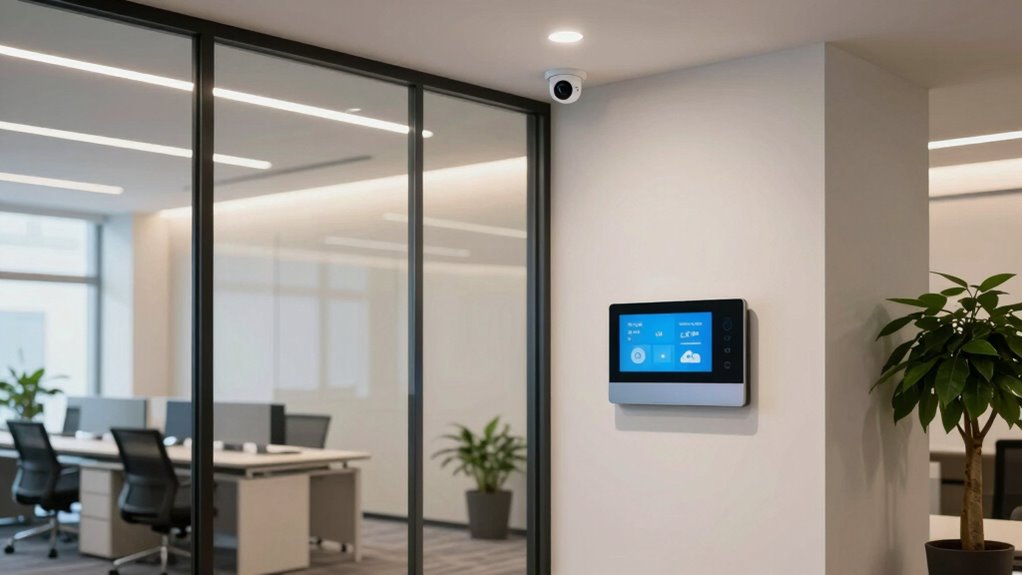
Creating a smart office that enhances productivity without feeling intrusive can be a delicate balance, but it’s achievable with thoughtful planning. The key is to implement technology that supports staff without infringing on their employee privacy. When deploying smart systems, prioritize transparency about what data is collected and how it’s used. Employees should feel confident that their personal information isn’t being monitored excessively or used against them. Clear policies and open communication foster trust, making the smart office feel like an asset rather than an invasion.
Data encryption plays an essential role in safeguarding sensitive information within your smart office. By encrypting data at rest and in transit, you protect employee information from cyber threats and unauthorized access. It’s not enough to just collect data; you need to guarantee it’s secure. Use robust encryption protocols, and regularly update security measures to stay ahead of potential vulnerabilities. When employees see that their data is protected with strong encryption, they’re more likely to accept and even embrace smart technologies. This reinforces a culture of security and respect for privacy.
Smart devices and sensors should be calibrated to gather only necessary information. For example, occupancy sensors can help optimize lighting and climate control without tracking individual movements or identities. When implementing these systems, involve employees in the decision-making process, and explain how the data will be used. This transparency reduces suspicion and helps create a collaborative environment where everyone understands the benefits without feeling watched. Incorporating accurate sensor technology, such as high-precision projectors, can further improve the efficiency of your smart office setup. Additionally, understanding how reliable sensor calibration impacts data accuracy can prevent unnecessary privacy concerns. Moreover, implementing data privacy regulations ensures your smart office remains compliant and trustworthy.
Another important consideration is access control. Limit who can view or manage sensitive data, and use multi-factor authentication to prevent unauthorized access. This way, even if data is stored securely, it remains protected against internal misuse or external breaches. Regular audits of your security protocols and compliance with data privacy regulations further reinforce your commitment to safeguarding employee privacy.
Ultimately, building a safer smart office isn’t just about technology; it’s about cultivating a culture of respect and trust. When you prioritize employee privacy, use encryption diligently, and communicate openly about data practices, you create an environment where innovation can thrive without the creepiness factor. Your team will feel valued and secure, which enhances engagement and productivity. Striking this balance takes effort, but with thoughtful planning, you’ll develop a smart office that’s both efficient and respectful of everyone’s privacy.
Products Worth Considering

Sonos Era 100 Wireless Smart Speaker, Black

DJI Osmo Mobile 8 Phone Gimbal with Mic Mini Transmitter, Infinity Black

LG UltraGear 27-Inch QHD OLED Gaming Monitor, 240Hz, 0.03ms, G-SYNC Compatible, FreeSync Premium Pro, HDMI 2.1
As an affiliate, we earn on qualifying purchases.
Frequently Asked Questions
How Can I Ensure Employee Privacy in a Smart Office?
You can guarantee employee privacy by establishing clear privacy policies that define acceptable employee monitoring practices. Communicate openly about what data is collected and how it’s used, giving employees confidence. Use monitoring tools responsibly, focusing on productivity and security rather than invasive tracking. Regularly review and update policies to stay transparent, fostering trust and respect in your smart office environment while protecting employee privacy effectively.
What Are the Best Data Encryption Methods for Smart Devices?
You should use End-to-End encryption for your smart devices, ensuring data remains secure from sender to receiver. Incorporate Data Masking techniques to hide sensitive information during processing or storage, adding an extra layer of protection. These methods work together to safeguard your data, prevent breaches, and maintain privacy, making your smart office safer without compromising functionality or employee trust.
How Do I Prevent Unauthorized Access to Smart Office Systems?
Think of your smart office as a high-security vault. To prevent unauthorized access, you need strong access control and user authentication. Set up multi-factor authentication for all systems, ensuring only trusted users can enter. Regularly update passwords, and restrict access rights based on roles. Monitor activity logs for suspicious actions. By tightening these security layers, you keep your office safe, just like a vault’s sturdy lock keeps valuables secure.
What Legal Regulations Govern Smart Office Security?
You need to guarantee your smart office complies with legal regulations like GDPR, HIPAA, or CCPA, depending on your location. Establish clear privacy policies that outline data collection, storage, and sharing practices. Regularly review these policies to stay compliant and protect user privacy. Stay informed about evolving laws to avoid penalties, and implement security measures that align with legal requirements, safeguarding your office and your employees’ rights.
How Can I Balance Smart Technology Use and Personal Privacy?
You can balance smart technology use and personal privacy by prioritizing employee comfort and transparent technology integration. Clearly communicate how data is collected and used, and give employees control over their information. Incorporate privacy-focused features into your smart systems, and regularly review policies to guarantee they respect individual boundaries. This approach fosters trust, making your smart office safer and more comfortable for everyone without feeling invasive.
Conclusion
So, here’s the irony: in trying to create a smarter, safer office, you might just end up feeling a little less human. But with mindful tech choices and transparent practices, you can strike the perfect balance—keeping your space secure without turning it into a creepy surveillance zone. After all, a truly safe office is one where everyone feels trusted and valued, not watched. Turns out, a little human touch still beats all the fancy gadgets.