
AI is transforming social engineering defense by helping you detect phishing scams more effectively. It automates target reconnaissance, analyzes email content, links, and sender behavior to identify suspicious activity, often in real-time. AI systems adapt to new tactics and improve over time through continuous learning, reducing false positives and costs. Combining AI with human expertise yields more accurate detection and faster responses, strengthening your overall security. If you explore further, you’ll discover strategies to enhance your defenses even more.
Key Takeaways
- AI analyzes sender reputation, content patterns, URL structures, and email metadata to detect suspicious phishing attempts.
- Continuous learning enables AI systems to adapt to evolving social engineering tactics, enhancing detection accuracy.
- AI automates reconnaissance and message personalization, improving targeting while reducing manual security efforts.
- Human-AI collaboration ensures nuanced judgment and faster response to complex or suspicious phishing emails.
- Integration of AI-driven alerts and simulations strengthens organizational awareness and resilience against social engineering attacks.
The Rise of AI-Enhanced Phishing Campaigns
The rise of AI-enhanced phishing campaigns has drastically transformed cyber threats, making them more sophisticated and harder to detect. Attackers now leverage AI to craft convincing emails, mimicking legitimate communication styles and exploiting personal or organizational data. These campaigns boast a success rate of 54%-60%, far surpassing traditional phishing efforts. AI automates target reconnaissance by harvesting information from social media, websites, and open-source platforms, enabling highly personalized attacks. With AI’s ability to generate contextually relevant messages rapidly, attackers can execute large-scale campaigns at minimal cost. They also utilize multi-channel methods like smishing, vishing, and deepfake videos to broaden their reach. As a result, AI-driven phishing campaigns continue to grow exponentially, posing a significant challenge for traditional detection and mitigation strategies. Additionally, understanding personality traits and preferences can help organizations develop better awareness and defense mechanisms against such sophisticated scams. Incorporating cybersecurity vulnerabilities awareness into training programs can further bolster defenses against these evolving threats. Moreover, the use of phishing detection techniques can be enhanced with AI to identify subtle signs of deception more effectively. Recognizing the emotional support needs of individuals targeted by these scams can also improve response strategies and victim assistance. Furthermore, applying principles from the Law of Attraction Resource Guide could help organizations foster a positive mindset that enhances vigilance and resilience against cyber threats.
Key Features Used by AI to Detect Phishing Attempts
AI detects phishing attempts by analyzing a variety of distinctive features that set malicious emails apart from legitimate ones. You can expect AI to scrutinize several key indicators. It examines:
AI identifies phishing by analyzing email features like sender reputation, content patterns, and link structures.
- Sender reputation scores to identify suspicious origins
- Linguistic patterns and inconsistencies in email content
- Email forwarding and relationship networks for unusual activity
- URL structures, including mismatched or obfuscated links
- Email metadata, such as timestamps and headers, for anomalies
- Additionally, AI employs machine learning algorithms to continuously improve detection accuracy by learning from new threat patterns. These algorithms also leverage encryption techniques to securely analyze sensitive email data without compromising privacy. By integrating behavioral analytics, AI can better identify insider threats and targeted attacks, further strengthening defenses against social engineering tactics. Incorporating continuous monitoring allows AI systems to adapt rapidly to evolving scam techniques and maintain effective defense mechanisms. Moreover, ongoing research into threat intelligence sharing enhances AI’s ability to stay ahead of emerging phishing strategies.
Advanced Techniques in AI-Powered Phishing Detection
Advanced techniques in AI-powered phishing detection leverage sophisticated models that analyze multiple data points simultaneously to identify subtle signs of malicious activity. You use deep learning algorithms combined with data mining to examine features like sender behavior, email content anomalies, and linguistic patterns. Large Language Models (LLMs) analyze email intent beyond keywords, detecting nuanced spear-phishing tactics. Reputation databases such as VirusTotal and PhishTank help cross-reference suspicious links and sender histories. Incorporating behavioral analytics enhances the system’s ability to detect deviations from normal user activity, making identification more accurate. Reputation databases such as VirusTotal and PhishTank help cross-reference suspicious links and sender histories. Continuous retraining and real-time feedback loops keep these systems adaptive, enabling you to spot emerging threats quickly. Additionally, AI security enhancements are crucial to stay ahead of evolving cyber tactics. Implementing machine learning models that adapt to new attack methods further strengthens detection capabilities. These advanced methods considerably improve detection precision, reducing false positives and enhancing your overall defense against sophisticated phishing campaigns. To further improve detection accuracy, integrating user behavior analysis can help identify unusual actions that may indicate compromised accounts or targeted attacks.
How AI Automates the Phishing Attack Lifecycle
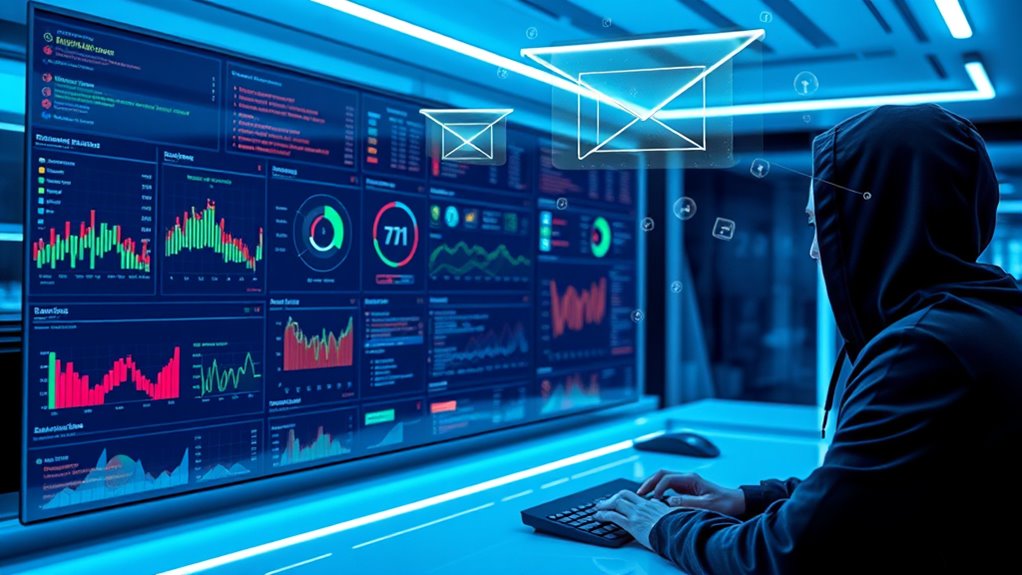
By automating each stage of the attack lifecycle, AI enables cybercriminals to execute highly targeted and efficient phishing campaigns with minimal manual effort. AI streamlines reconnaissance by harvesting open-source intelligence from social media, websites, and professional networks. It then builds detailed profiles based on real projects, certifications, or communication styles, increasing the attack’s precision. AI also crafts convincing, contextually relevant messages that boost click-through rates. During delivery, AI can generate personalized emails or messages at scale, reducing costs and increasing success. Finally, AI monitors responses, adapts tactics in real-time, and exploits newly exposed data for further targeting. Additionally, advancements in prophetic dreams understanding and symbolism can inform the creation of more persuasive and emotionally resonant messages. Recognizing cultural symbolism allows attackers to tailor messages that resonate deeply with specific audiences, enhancing their effectiveness. Moreover, the integration of psychological triggers into message design can significantly increase the likelihood of user engagement and compliance.
Cost Benefits of AI-Driven Phishing Defense Strategies
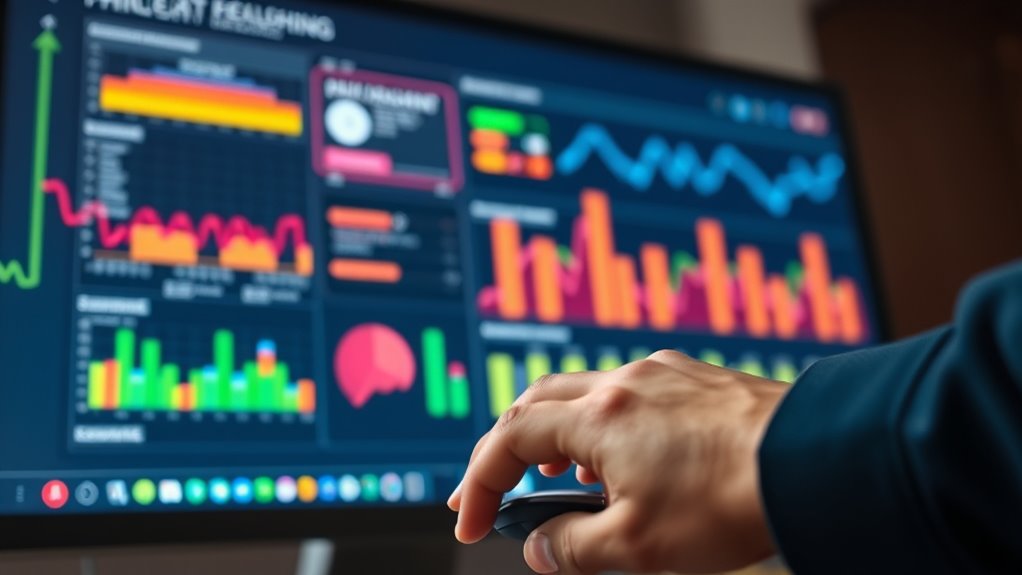
Implementing AI-driven phishing defense strategies can substantially cut organizational costs by preventing costly breaches and reducing manual security efforts. AI quickly detects and blocks phishing attempts, minimizing the financial impact of breaches—studies show organizations save nearly 50% on breach-related expenses. AI systems analyze trillions of data signals, intercepting over 35 billion attacks annually, which would otherwise require extensive human resources. This automation speeds up incident detection and response, lowering operational costs and reducing downtime. Major corporations like Visa prevented over $40 billion in fraudulent transactions in 2023 using AI, illustrating its cost-effectiveness. Additionally, AI reduces reliance on manual monitoring, freeing cybersecurity teams to focus on complex threats. Security effectiveness is further enhanced by continuous learning capabilities, allowing AI systems to adapt to evolving scam tactics. Overall, AI-driven defense strategies offer a scalable, efficient way to safeguard assets while controlling operational expenses.
Combining Human Expertise With AI for Superior Protection

While AI has considerably enhanced phishing detection and response, human expertise remains essential for achieving the highest level of security. Your team provides contextual understanding, intuition, and judgment that AI can’t replicate. Combining these strengths creates a powerful defense system. You can:
- Use AI to flag suspicious emails, then have experts assess complex cases.
- Train staff with AI-driven simulations to recognize evolving scams.
- Analyze false positives and negatives to improve AI accuracy.
- Leverage human insights to update AI algorithms against new tactics.
- Foster collaboration where AI handles routine detection, freeing humans for strategic analysis.
This synergy ensures faster responses, reduces errors, and adapts to emerging threats. Your combined efforts create a resilient, dynamic shield against sophisticated social engineering attacks.
Frequently Asked Questions
How Does AI Differentiate Between Legitimate and Malicious Email Content?
AI differentiates between legitimate and malicious emails by analyzing various features like sender behavior, linguistic patterns, and email structure. It uses machine learning models trained on vast datasets to spot anomalies, suspicious wording, and unusual metadata. AI also cross-references reputation databases and examines context, intent, and writing styles. This continuous learning helps it identify subtle signs of phishing, ensuring high accuracy—often above 98%—and swiftly flagging malicious content before it reaches you.
What Are the Limitations of Current AI Phishing Detection Systems?
You face a digital battlefield where AI acts like a vigilant sentinel, yet it’s not infallible. Current systems struggle with evolving attack tactics, such as polymorphic emails that change shape like chameleons. They can be fooled by cleverly crafted messages that mimic legitimate communication, and false positives can overwhelm your defenses. Additionally, AI’s reliance on historical data limits its ability to catch novel threats instantly, leaving gaps in your armor.
Can AI Adapt to New, Unseen Phishing Tactics Automatically?
Yes, AI can adapt to new, unseen phishing tactics automatically through continuous retraining and feedback loops. You’ll find that modern AI systems analyze emerging patterns, learn from new threats, and update their detection models in real time. This adaptive capability helps you stay ahead of attackers who constantly evolve their techniques, making your defenses more resilient and effective against sophisticated, previously unseen phishing campaigns.
How Do Attackers Bypass Ai-Based Detection Methods?
Attackers bypass AI detection by crafting highly sophisticated, polymorphic emails that change features like wording, sender info, and embedded links constantly. They use deepfake videos, AI-generated content, and mimic legitimate communication styles to evade pattern recognition. By exploiting gaps in AI training data and leveraging real-time reconnaissance, they stay ahead of detection methods, making it critical for you to stay vigilant and combine AI tools with user awareness training.
What Is the Role of User Training in Ai-Driven Phishing Defense?
User training plays a crucial role in AI-driven phishing defense by raising awareness, reinforcing vigilance, and fostering skepticism. You can recognize suspicious emails, question unusual requests, and verify sources effectively. By combining your understanding of common tactics with AI’s rapid detection, you create a layered defense that adapts, responds, and resists. Together, your awareness and AI’s precision form a robust barrier, preventing attacks before they succeed.
Conclusion
By harnessing AI to detect phishing scams, you stay one step ahead of cybercriminals. These advanced tools act as your first line of defense, catching threats before they strike. While AI handles the heavy lifting, combining it with human expertise creates a robust shield. Remember, don’t put all your eggs in one basket—use technology and intuition together to keep your digital world safe and sound.