
TL;DR

Get business pricing on tech for your team
- Business-only prices and quantity discounts
- Tax-exempt purchasing
- Multiple users, one account, clear invoices
One Night, One Founder, 21 Verified Packages
Gewerkton — a voice-first construction documentation platform — was built in a single night by a solo founder directing AI coding agents, with verification discipline doing the heavy lifting.
Verification, Not Just Generation
The Platform’s Three Components
Gewerkton Field
Site dictation and defect capture — real-time voice documentation from the construction site.
Gewerkton Studio
Browser-based plan and model creation — on-site modeling, even without pre-existing models.
Gewerkton Cloud
Data coordination — seamless data flow between all project stakeholders.
Built for German Industry Standards
At a Glance
Gewerkton, a new construction documentation platform, was built in a single night by a solo founder using AI coding agents with rigorous verification. It aims to revolutionize site reporting and defect management through voice and digital workflows, as detailed in Gewerkton’s original analysis.
Gewerkton, a voice-first construction documentation platform, was built in a single night by a solo founder using AI-powered coding agents, marking a significant step in software verification and industry digitization. The platform aims to streamline site reporting, defect management, and data flow in construction projects, with a focus on proven, trustworthy software development.
The development process involved a founder directing a fleet of AI coding agents based on OpenAI’s Codex and Anthropic’s Claude, producing 21 verified software packages within 24 hours. For more details, see the original analysis here. These packages underwent rigorous verification, including negative controls and mutation testing, to ensure their reliability and correctness. This approach emphasizes the importance of verification discipline over mere code generation, setting Gewerkton apart from typical AI-driven software claims.
Gewerkton’s platform is designed for global construction markets, with deep integration into German industry standards such as GAEB, REB, XRechnung, and DATEV. It comprises three main components: Gewerkton Field for site dictation and defect capture, Gewerkton Studio for browser-based plan and model creation, and Gewerkton Cloud for data coordination. The platform enables real-time voice documentation, on-site model creation, and seamless data flow between project stakeholders, even on projects without pre-existing models.
Impact of AI-Driven Verification on Construction Software
This development highlights a shift in software creation, where verification and trustworthiness are prioritized through rigorous testing rather than just rapid coding. For the construction industry, it offers a more reliable, efficient way to document and manage projects, reducing delays caused by manual reporting and data discrepancies. The approach could influence broader software practices, emphasizing proof and validation, especially in safety-critical sectors.
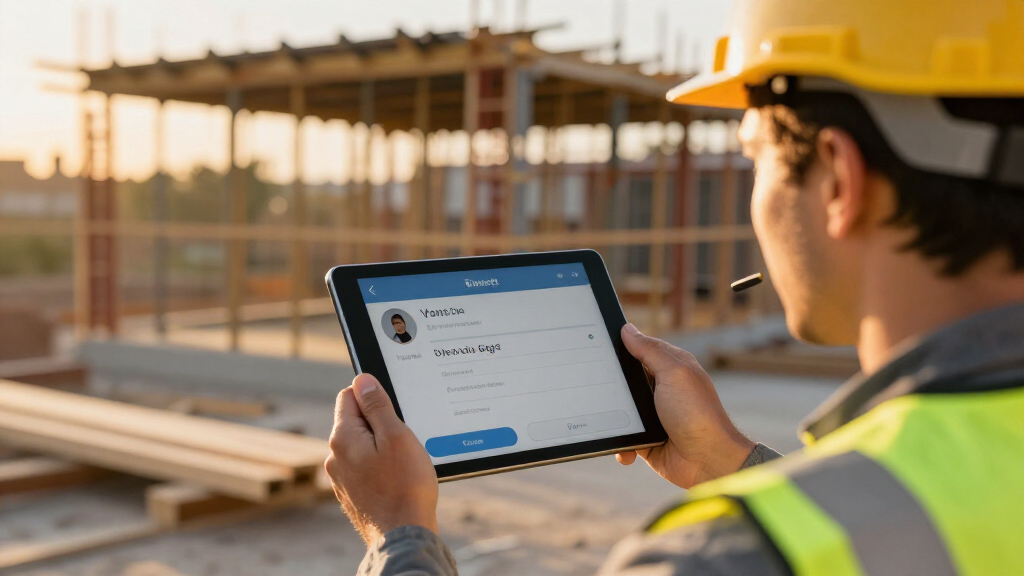
voice-activated construction documentation device
As an affiliate, we earn on qualifying purchases.
As an affiliate, we earn on qualifying purchases.
Background of AI in Construction Software Development
While AI’s potential in construction has been discussed for years, most efforts focus on automation or project planning. Gewerkton’s origin story is notable for its emphasis on verified code, achieved in a single night by a solo founder using advanced AI coding tools. This approach contrasts with industry norms, where software development often involves lengthy, team-based processes with limited verification rigor. The platform’s design aligns with a broader industry need for trustworthy digital tools that can operate reliably in complex, safety-sensitive environments.
“Building 21 verified packages overnight demonstrates that verification discipline is now the bottleneck, not coding speed.”
— Thorsten Meyer, founder of Gewerkton
construction defect capture voice recorder
As an affiliate, we earn on qualifying purchases.
As an affiliate, we earn on qualifying purchases.
Unconfirmed Aspects of Platform Maturity and Adoption
It is still unclear how the platform will perform in large-scale, real-world projects beyond the beta phase. The long-term reliability of the AI-generated code in diverse construction environments remains to be tested. Additionally, the extent of industry adoption and integration with existing workflows is yet to be seen, as Gewerkton is currently in beta and early deployment stages.
construction project management software with voice input
As an affiliate, we earn on qualifying purchases.
As an affiliate, we earn on qualifying purchases.
Next Steps for Gewerkton and Industry Integration
The platform is planned to enter a public beta in fall 2026, with ongoing development focused on expanding features and integrations. Gewerkton aims to demonstrate scalability across different markets and project sizes, while further validating its verification methods in live environments. Industry adoption will depend on user feedback, regulatory acceptance, and the platform’s ability to integrate seamlessly with existing construction management systems.
AI-powered construction site reporting tools
As an affiliate, we earn on qualifying purchases.
As an affiliate, we earn on qualifying purchases.
Key Questions
How does Gewerkton ensure the trustworthiness of its software?
Gewerkton employs rigorous verification methods, including negative controls and mutation testing, to confirm that its software packages perform correctly and reliably before deployment.
What are the main features of the Gewerkton platform?
The platform includes voice-first site documentation, defect management, browser-based plan and model creation, and data coordination through the cloud, tailored for construction workflows.
When will Gewerkton be generally available?
The platform is currently in beta, with a planned public beta release scheduled for fall 2026.
Can Gewerkton be used on projects without existing models?
Yes, one of its key features is enabling site teams to create models directly in the browser, even if no model exists at project start.
What impact might this development have on the construction industry?
It could lead to more reliable digital documentation, reduce manual reporting delays, and set new standards for software verification in safety-critical sectors.
Source: ThorstenMeyerAI.com
Fall Picks
fall essentials
As an affiliate, we earn on qualifying purchases.