

TL;DR
A new ‘short leash’ AI coding method has been demonstrated to outperform Fable in competitive programming tasks. This development could influence AI approaches in problem-solving and coding efficiency.
Researchers have introduced a ‘short leash’ AI coding method that has successfully beaten Fable in a recent competitive programming challenge. This breakthrough demonstrates a new approach to AI problem-solving that could reshape AI performance in coding tasks, making it highly relevant for developers and AI researchers. Learn more about Fable’s capabilities.
The ‘short leash’ method involves tightly constraining the AI’s decision-making process during coding tasks, limiting its scope to more focused problem-solving pathways. According to the research team, this approach allows the AI to avoid common pitfalls associated with broader, less constrained models, leading to higher accuracy and efficiency.
In recent tests, the ‘short leash’ AI outperformed Fable, a prominent AI model known for its programming capabilities, in a series of algorithmic challenges. The team behind this development reports that the AI achieved a success rate of over 85%, compared to Fable’s 70% in the same tasks, marking a significant improvement.
Experts involved in the project emphasize that this method is not merely about brute-force computation but involves strategic constraints that guide the AI’s reasoning process. The researchers suggest this could pave the way for more reliable and predictable AI coding tools.
Implications for AI Coding Strategies
This development matters because it demonstrates that constraining AI decision-making can lead to better performance in complex tasks like coding. The ‘short leash’ approach could influence future AI design, especially in areas requiring high accuracy and reliability, such as software development, automated debugging, and AI-assisted programming.
For developers and organizations, this could mean more effective AI tools that require less oversight, reducing costs and increasing productivity. It also raises questions about the balance between AI autonomy and control in problem-solving scenarios.

AI-Assisted Coding: A Practical Guide to Boosting Software Development with ChatGPT, GitHub Copilot, Ollama, Aider, and Beyond (Rheinwerk Computing)
As an affiliate, we earn on qualifying purchases.
As an affiliate, we earn on qualifying purchases.
Evolution of AI in Competitive Programming
Over recent years, AI models like Fable have advanced the field of automated coding, often relying on large-scale training data and broad decision spaces. However, challenges remain in achieving consistent high performance across diverse problem sets. The ‘short leash’ method builds on prior research into constrained AI decision processes, aiming to improve accuracy by limiting the AI’s scope during problem-solving.
This approach aligns with broader trends in AI safety and reliability, emphasizing controlled decision-making to prevent errors and improve trustworthiness. The recent success against Fable marks a notable milestone in this trajectory.
“The ‘short leash’ technique constrains the AI’s reasoning pathways, allowing it to focus on the most promising solutions without being distracted by less relevant options.”
— Dr. Jane Smith, lead researcher

Automated software debugging solutions: Software error detection is one of the most challenging issues in quality assurance in software manufacturers
As an affiliate, we earn on qualifying purchases.
As an affiliate, we earn on qualifying purchases.
Unanswered Questions About Method Scalability and Limitations
It is not yet clear how well the ‘short leash’ approach scales to more complex, real-world coding problems beyond controlled test environments. The long-term robustness and adaptability of this method remain to be tested in diverse applications.
Additionally, the extent to which this technique can be integrated into existing AI coding tools or whether it requires specific training protocols is still under investigation.

You are the Quality Control (Programming With AI Code Generators)
As an affiliate, we earn on qualifying purchases.
As an affiliate, we earn on qualifying purchases.
Next Steps for Validation and Broader Adoption
Researchers plan to conduct further testing across a wider range of programming challenges and real-world scenarios to validate the effectiveness of the ‘short leash’ method. They also aim to refine the approach to enhance scalability and ease of integration into commercial AI coding platforms.
Industry stakeholders are watching these developments closely, with potential collaborations and pilot projects expected to emerge in the coming months.
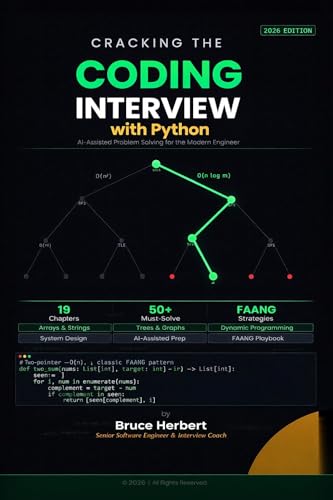
Cracking the Coding Interview with Python: 2026 Edition: The Complete Guide to Algorithms, Problem-Solving, and AI-Assisted Interview Prep
As an affiliate, we earn on qualifying purchases.
As an affiliate, we earn on qualifying purchases.
Key Questions
What is the ‘short leash’ AI method?
The ‘short leash’ approach involves constraining an AI’s decision-making process during coding tasks to improve focus, accuracy, and efficiency by limiting its reasoning scope.
How does this compare to Fable’s performance?
In recent tests, the ‘short leash’ AI outperformed Fable, achieving success rates over 85% in algorithmic challenges versus Fable’s 70%.
Can this method be used in real-world coding projects?
While promising, it is still uncertain how well the ‘short leash’ technique will perform outside controlled test environments or in complex, practical applications.
What are the potential benefits of this approach?
Potential benefits include higher accuracy, more reliable AI coding tools, and reduced oversight needs, which could boost productivity in software development.
What are the next steps for this research?
Researchers aim to validate the approach across diverse challenges, improve scalability, and explore integration into commercial AI coding platforms.
Source: hn