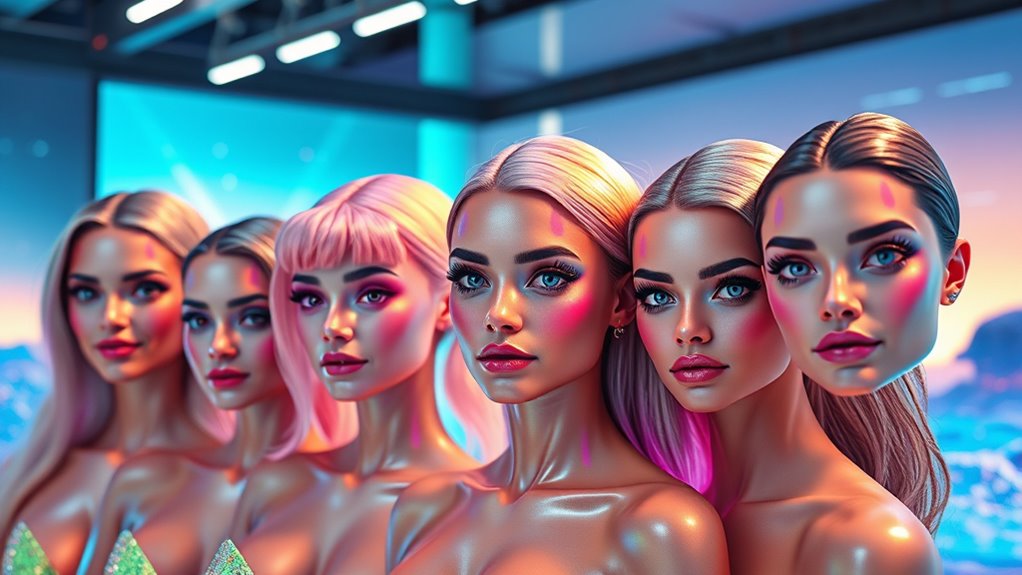

Virtual stars are AI-generated influencers and idols transforming how you engage with digital culture. They gain massive followings and shape trends in fashion, music, and social issues, often offering brands cost-effective ways to connect with audiences. Their realistic appearances and customizable personas challenge perceptions of authenticity but also raise ethical questions. As their influence grows—projected to reach nearly $46B by 2030—understanding their impact and future developments can help you stay ahead in this evolving digital world.
Key Takeaways
- Virtual stars are AI-generated influencers and idols shaping fashion, music, and social movements through innovative digital personas.
- The virtual influencer market is rapidly expanding, projected to reach $45.88 billion by 2030.
- Brands benefit from cost-effective, controllable virtual influencers, enhancing engagement while reducing risks associated with human influencers.
- Ethical concerns include transparency, manipulation, and authenticity, necessitating regulatory frameworks and industry standards.
- Future developments focus on hyper-realistic avatars, cross-platform integration, and balancing technological innovation with responsible use.

The New Content Creation Empire: Building Your Virtual AI Influencer
As an affiliate, we earn on qualifying purchases.
As an affiliate, we earn on qualifying purchases.
The Rise of Digital Personas in the Influencer Landscape
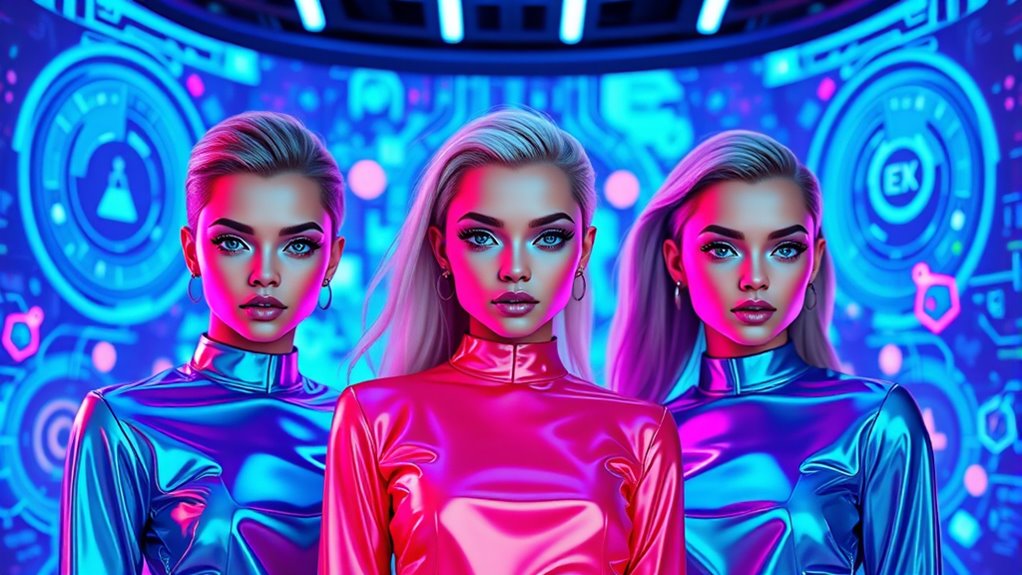
The rise of digital personas has transformed the influencer landscape by introducing virtual influencers—computer-generated characters that actively engage audiences and promote brands. You now see these virtual personalities on social media, gaining millions of followers and collaborating with major brands. They deliver consistent, tailored content without fatigue or personal issues, making them reliable marketing assets. AI influencers can quickly adapt their style based on audience analytics, boosting engagement. They also eliminate concerns like scandals or human error, providing brands with greater control over brand image. As these digital personas become more lifelike through advanced CGI and AI, they blur the line between reality and fiction. Additionally, color accuracy plays a vital role in creating convincing virtual influencers by ensuring their visual presentation appears authentic and appealing. The development of AI-generated content allows these characters to produce dynamic and personalized interactions, further enhancing their appeal. Moreover, tuning techniques used in the creation of these characters help improve their visual and behavioral realism, making them more relatable to audiences. As technology advances, these virtual influencers can incorporate real-time data to respond more naturally to audience interactions, increasing their effectiveness. This shift reshapes how brands connect with audiences, offering new opportunities for brand marketing and targeted strategies.

Virtual Influencer Cashflow in 6 Steps: How to Build, Grow and Monetize AI-generated Personas
As an affiliate, we earn on qualifying purchases.
As an affiliate, we earn on qualifying purchases.
Market Growth and Economic Impact of Virtual Influencers
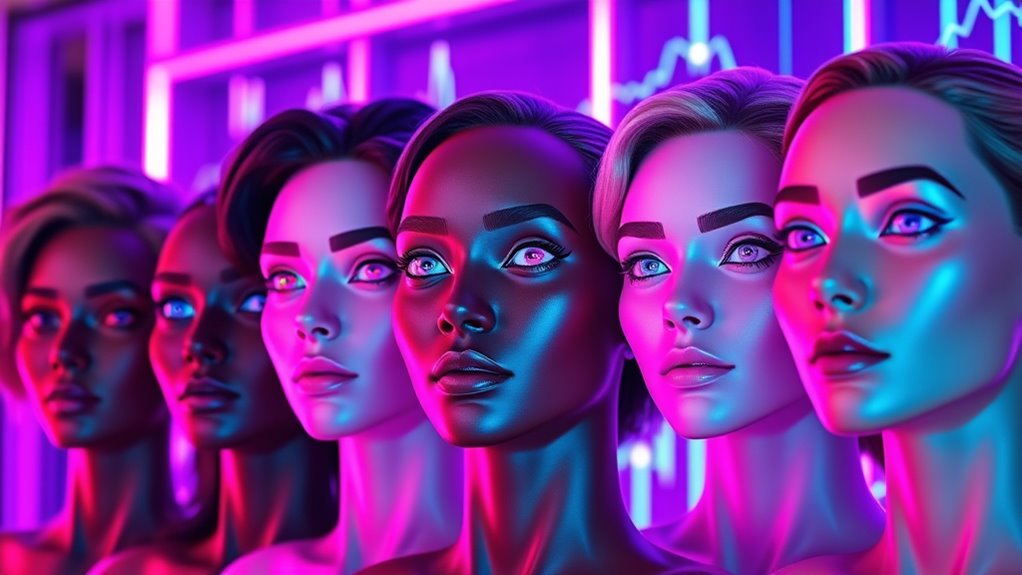
As virtual influencers gain popularity, their market size is expanding rapidly, transforming the digital advertising landscape. The global virtual influencer market is projected to grow from $6.06 billion in 2024 to $45.88 billion by 2030, with a CAGR of about 40.8%. Influencer marketing, valued at $32.5 billion in mid-2025, sees a growing share allocated to AI influencers, who now account for over 15% of branded content engagement on Instagram. Brands spent nearly $11 billion on influencer marketing in 2025, increasingly favoring AI due to cost efficiency and control. Over 114,000 mentions of AI influencers appeared on social media in early 2025, showing a 50% increase from the previous year. This rapid growth signals a significant shift in marketing strategies and economic influence across industries. Additionally, the integration of AI influencers often relies on sophisticated content generation capabilities, highlighting the importance of technological advancements in this emerging field. Moreover, the ongoing development of machine learning enhances the realism and appeal of virtual influencers, further accelerating their market expansion. The evolution of virtual avatar technology also plays a crucial role in improving the authenticity and engagement levels of these digital personalities. As these technologies advance, the realism of virtual influencers continues to improve, making them increasingly indistinguishable from human counterparts. The emergence of digital identity management systems is also helping to establish trust and authenticity for these virtual personas.
CGI virtual influencer figurine
As an affiliate, we earn on qualifying purchases.
As an affiliate, we earn on qualifying purchases.
Leading Virtual Icons and Their Cultural Reach

Leading virtual icons have made a remarkable impact on global culture by blending technology, creativity, and marketing to shape new forms of digital influence. These influencers transcend borders, shaping trends, and inspiring millions. Consider:
- Their ability to spark fashion movements, with brands showcasing AI personalities in runway shows and campaigns. Additionally, their collaborations often explore innovative visual presentation techniques, captivating audiences worldwide.
- How they influence music, collaborating with artists to produce viral content and virtual concerts. Additionally, their creative practices often involve embracing failure as a stepping stone, allowing them to experiment and innovate in their digital presentations.
- Their presence in social issues, raising awareness and shaping opinions through carefully crafted narratives. Their work often incorporates practical mindfulness techniques to maintain authenticity amid digital chaos.
- Their use of digital identity management to build authentic and engaging personas that resonate with diverse audiences. Moreover, their strategic use of emerging technologies enhances their credibility and expands their reach across various platforms.
These icons aren’t just online figures; they have become cultural symbols, influencing consumer behavior and popular culture worldwide. Their reach extends beyond social media, impacting fashion, music, and social debates, blurring the line between virtual and real-world influence.
realistic digital avatar for social media
As an affiliate, we earn on qualifying purchases.
As an affiliate, we earn on qualifying purchases.
Benefits and Challenges for Brands Embracing AI Influencers
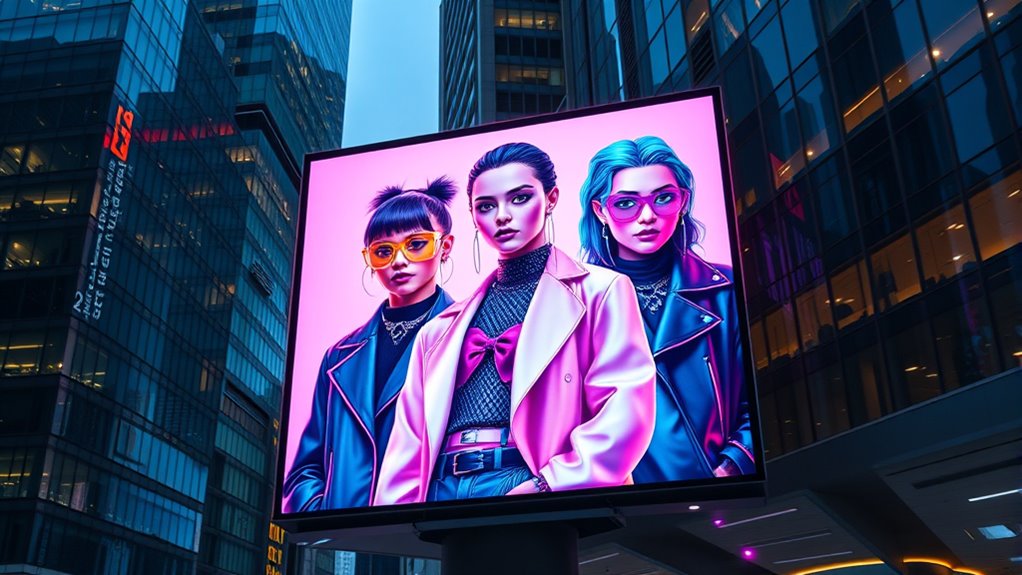
Embracing AI influencers offers brands significant advantages, from cost savings to enhanced control over content and brand image. You can guarantee consistent messaging, schedule posts precisely, and avoid issues like influencer fatigue or unpredictable behavior. AI influencers typically charge lower fees—sometimes as little as $4,000 per campaign—making your marketing budget go further. Plus, they don’t age, make mistakes, or require privacy, providing flawless brand safety. You can quickly adapt their style and content based on audience analytics, optimizing engagement. Additionally, the use of digital engagement tools can further enhance campaign effectiveness. However, challenges exist. Consumer backlash and lower-than-expected engagement have led some brands to pull back. Ethical concerns about manipulation, transparency, and authenticity also pose risks, especially as audiences struggle to distinguish virtual personas from real people. Balancing innovation with trust remains key. Additionally, as the popularity of anime movies continues to grow worldwide, brands exploring AI influencers might consider leveraging anime-inspired virtual characters to connect with diverse audiences.
Future Trends and Ethical Considerations in Virtual Celebrity Development
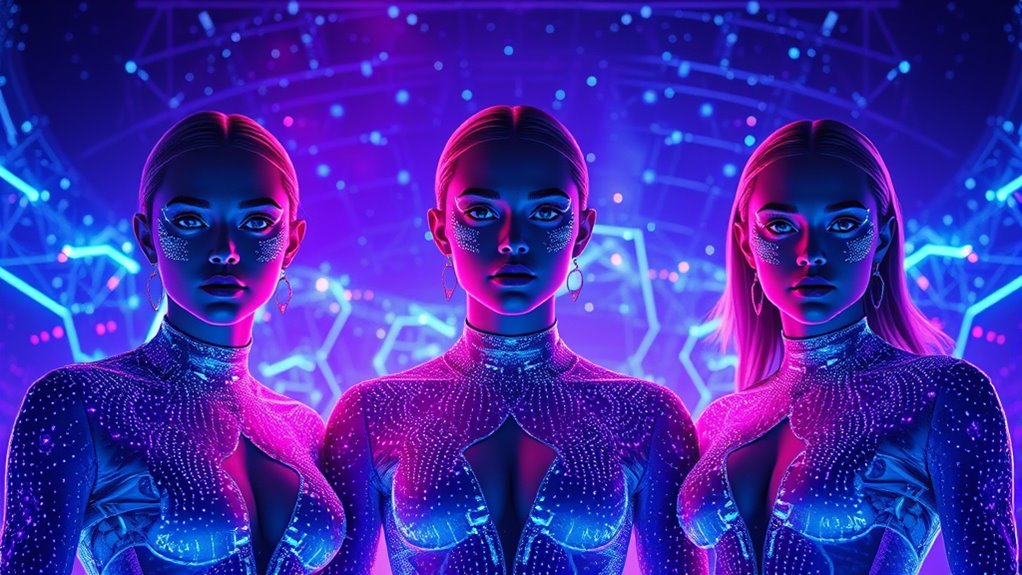
The development of virtual celebrities is poised to advance rapidly, driven by innovations in AI, CGI, and data analytics. You’ll see trends like:
- Hyper-realistic avatars becoming indistinguishable from real humans, blurring lines between reality and virtuality. These avatars will utilize advanced rendering techniques to achieve unprecedented realism, challenging perceptions of authenticity. The integration of visual fidelity will make these avatars more convincing than ever before.
- Cross-platform integration, where influencers participate seamlessly across social media, music, and fashion industries.
- Enhanced personalization using AI to tailor content precisely to audience preferences, boosting engagement.
- The importance of regulatory frameworks to ensure ethical standards keep pace with technological advancements, protecting audiences and creators alike. These frameworks will need to address the complexities of beauty hours, ensuring virtual influencers adhere to appropriate engagement times and ethical guidelines. Additionally, understanding store hours can be relevant in planning collaborations or events involving virtual influencers, especially when considering regional differences and audience accessibility.
However, ethical considerations are fundamental. You’ll need to address issues like transparency, ensuring audiences know when they’re interacting with AI. Concerns about manipulation, unrealistic standards, and trust erosion demand regulation and responsible use. As these trends evolve, balancing innovation with ethics will define the future of virtual celebrities.
Frequently Asked Questions
How Do AI Influencers Influence Real Human Behavior and Social Norms?
You’re influenced by AI influencers through their curated content, which shapes your perceptions of beauty, lifestyle, and social norms. They set trends that you may follow or emulate, often reinforcing certain ideals without real human flaws. Their consistent, polished image can influence your expectations for authenticity and perfection, subtly molding your behavior and attitudes. As they become more lifelike, their impact on your views of social standards intensifies, guiding your choices and beliefs.
What Methods Are Used to Create and Animate AI Virtual Personalities?
You use a combination of advanced CGI, motion capture, and AI-driven algorithms to create and animate AI virtual personalities. First, you design realistic digital avatars with detailed 3D modeling. Then, motion capture technology records human movements, which you apply to the avatars. Finally, AI algorithms generate dynamic content, speech, and expressions, allowing virtual personalities to interact seamlessly across platforms, maintaining lifelike appearances and engaging audiences effectively.
How Do AI Influencers Impact Traditional Celebrity Endorsements?
Think of AI influencers as lightning bolts striking traditional celebrity endorsements—they’re reshaping the scene fast. You’ll notice brands shifting budgets from human celebrities to these digital stars, appreciating their predictability, lower costs, and full control. While some consumers prefer real faces, others are captivated by the innovation. Overall, AI influencers are forcing traditional endorsements to evolve, blending digital magic with marketing, and creating a new playground for brands to engage audiences.
What Measures Exist to Prevent Manipulation and Misinformation by AI Influencers?
You should promote transparency measures like clear disclosures about AI-generated content, enforce regulations requiring ethical standards, and promote industry guidelines to prevent manipulation. Supporting technology that flags AI content and educating consumers about distinguishing AI from real influencers also helps. By implementing these steps, you can reduce misinformation risks, build trust, and ensure ethical use of AI influencers in marketing campaigns.
How Do Consumers Develop Trust in Ai-Generated Personalities?
You develop trust in AI-generated personalities by paying attention to their transparency, consistency, and authenticity. When they openly share that they’re AI, you’re more likely to accept their content. You also trust influencers who deliver high-quality, relatable content and show some human-like traits, even if they’re digital. Over time, regular, honest interactions help you feel more comfortable with AI personalities, making their influence seem more genuine.
Conclusion
As you explore the world of virtual stars, you’ll see their influence is growing fast—by 2025, the market value of virtual influencers could hit $15 billion. This shift offers exciting opportunities for brands but also raises questions about authenticity and ethics. Embracing this digital evolution means staying ahead of trends and understanding its impact on culture and marketing. Ultimately, virtual influencers are shaping a future where technology and creativity collide in fascinating ways.