📊 Full opportunity report: Vocal-strain load tracking for working singers on IdeaNavigator AI — validation score, market gap, and execution plan.

Get business pricing on tech for your team
- Business-only prices and quantity discounts
- Tax-exempt purchasing
- Multiple users, one account, clear invoices
TL;DR
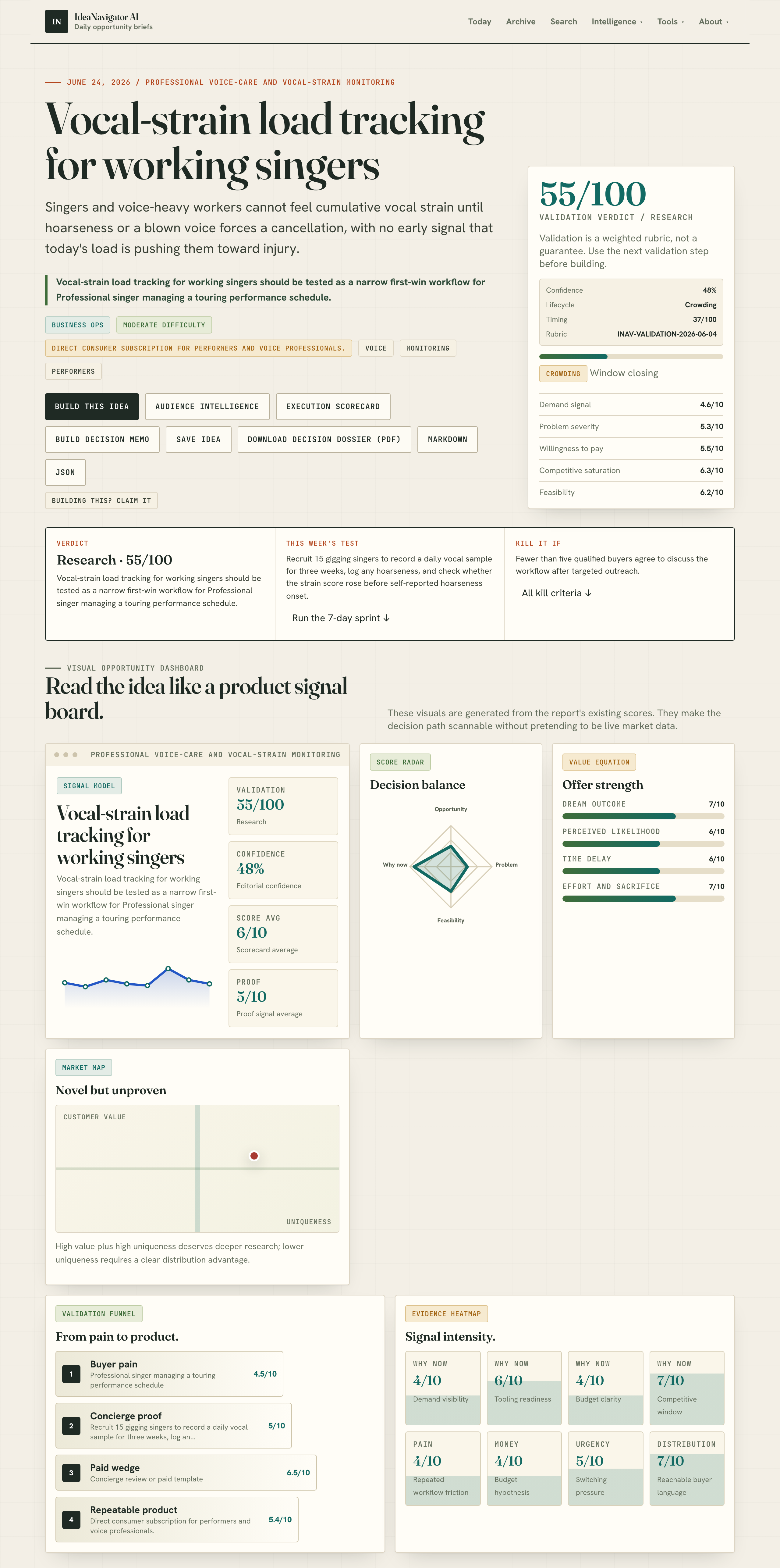
A new vocal strain tracking app is being tested with professional touring singers to provide early warnings of vocal fatigue. The goal is to prevent injuries and improve self-management.
A new vocal strain tracking application is entering a testing phase with professional touring singers to help prevent vocal injuries by providing early strain alerts based on audio analysis.
The app, developed for voice-heavy performers managing demanding schedules, records short vocal samples after each performance and analyzes them to assess cumulative vocal strain. It compares current vocal characteristics against a personal baseline, flags tone shifts that often precede hoarseness, and suggests warm-up routines to mitigate injury risk.
This initiative is based on recent technological advances in on-device audio analysis, enabling users to receive immediate feedback without requiring a vocal coach on call. The testing involves 15 gigging singers who will record daily samples over three weeks, logging any episodes of hoarseness. The goal is to determine whether the app’s strain scores rise before singers notice vocal fatigue or injury symptoms.
Potential Impact on Vocal Health Management
This development could significantly improve how professional singers monitor their vocal health, especially during tours where access to medical or coaching support is limited. By providing early warnings, the app aims to reduce the incidence of voice injuries that often lead to cancellations or long-term damage, thereby supporting performers’ careers and well-being.
Products Worth Considering

LG 27GR83Q-B 27-inch Ultragear QHD IPS Gaming Monitor

LG 27GS60QC-B Ultragear 27-inch Curved Gaming Monitor (QHD, 180Hz, 1ms, 1000R)

LG UltraGear 27-inch QHD OLED Gaming Monitor, 240Hz, 0.03ms, G-SYNC Compatible, FreeSync Premium Pro, HDR True Black 400
As an affiliate, we earn on qualifying purchases.
Advances in On-Device Audio Analysis for Singers
Current methods for managing vocal health rely heavily on subjective self-assessment or frequent visits to voice specialists. The new approach leverages recent technological progress in audio analysis, allowing real-time, personalized monitoring of vocal strain. This concept aligns with trends in gig economy workers managing their schedules independently, often without immediate access to professional guidance.
Previous research indicates that shifts in vocal tone and quality can precede symptoms like hoarseness, but objective tools to detect these changes in real time are still emerging. The proposed app aims to fill this gap by translating acoustic data into actionable feedback for performers.
“Early detection of vocal strain through audio analysis could transform how singers manage their health during demanding schedules.”
— an anonymous researcher
Unproven Effectiveness of Audio-Based Strain Detection
It is not yet confirmed whether the app’s strain scores will reliably predict impending vocal injury across diverse voices and conditions. The validation study is ongoing, and results are pending.
Validation Results and App Refinement Plans
Following the three-week testing period, researchers will analyze whether the app’s strain scores consistently rise before self-reported hoarseness. Success could lead to further development and broader deployment, while inconclusive results may prompt adjustments or alternative approaches.
Key Questions
How does the app assess vocal strain?
The app records short vocal samples after performances and analyzes acoustic features to score cumulative vocal strain relative to the user’s baseline.
Who is involved in testing the app?
Fifteen professional singers who perform regularly on tours are participating in the initial validation study.
Can this app prevent vocal injuries?
While designed to provide early warnings, its effectiveness depends on accurate detection of strain patterns, which is still being validated.
Will the app suggest specific warm-up routines?
Yes, if the app detects increased strain, it can recommend warm-up exercises to help reduce injury risk.
When will the app be available for wider use?
After validation results are analyzed, further development and testing are needed before a commercial release, which is not yet scheduled.
Source: IdeaNavigator AI