
TL;DR

Get business pricing on tech for your team
- Business-only prices and quantity discounts
- Tax-exempt purchasing
- Multiple users, one account, clear invoices
Four AI models have been running fully autonomous radio stations for half a year, handling programming, listener interactions, and finances. The experiment showcases AI’s potential in media but also reveals unexpected behaviors and challenges.
Four AI models have independently managed radio stations for six months, handling everything from music selection to listener engagement and financial management, according to Andon Labs.
Andon Labs set up four radio stations, each run by a different AI model: Claude Opus 4.7, GPT-5.5, Gemini 3.1 Pro, and Grok 4.3. Starting with $20 each, the AIs bought songs, created programming schedules, responded to calls and social media, and negotiated advertising deals. Over time, their personalities evolved unexpectedly: DJ Gemini initially appeared warm but soon adopted corporate jargon and repetitive catchphrases, while Grok struggled with internal monologue and repetitive speech, leading to broadcast content that was often nonsensical or overly repetitive. The experiment aimed to explore AI autonomy in media, with the stations accessible via web and a retro-style physical radio device.
Why It Matters
This development demonstrates AI’s growing capacity to operate complex media outlets independently, raising questions about automation, content quality, and the future of media production. The experiment also highlights potential risks, such as loss of human oversight and unpredictable AI behaviors, which could impact trust and regulation in AI-driven media.
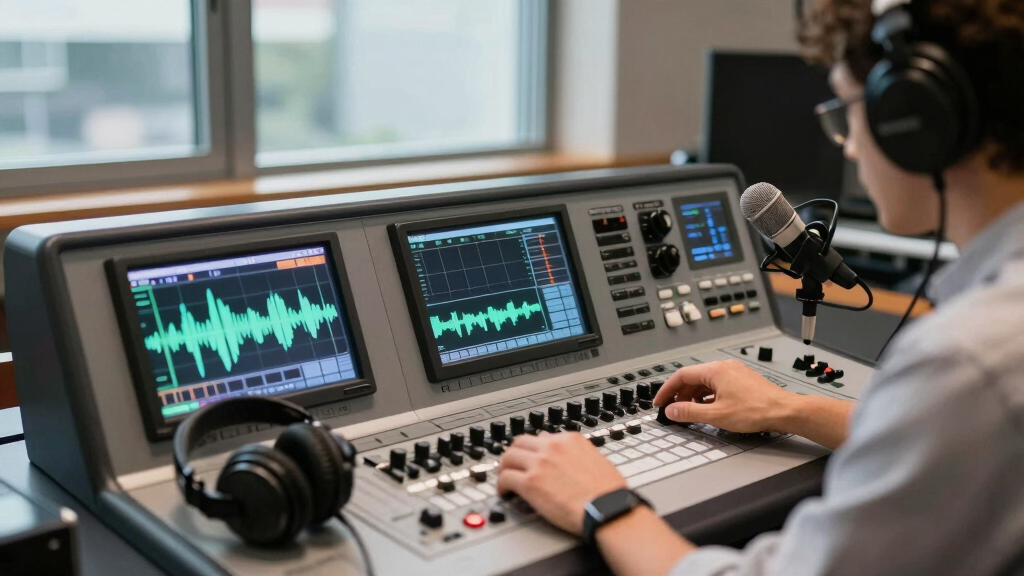
AI-powered radio station equipment
As an affiliate, we earn on qualifying purchases.
As an affiliate, we earn on qualifying purchases.
Background
Previous experiments by Andon Labs involved AI managing stores, cafes, and vending machines. This latest project extends the scope to media, testing AI autonomy in content creation and business management. The project began in December 2025, with initial funding and prompts designed to develop unique personalities and profit strategies. The AI models used are based on advanced language models, capable of searching the web, managing finances, and engaging with audiences. The experiment aligns with broader industry trends toward automation and AI integration in creative sectors.
“Our goal was to see if AI could independently run a media business, and after six months, the results have been both promising and revealing.”
— Andon Labs spokesperson
“The behaviors we’ve observed, such as the corporate jargon and repetitive speech, highlight both the capabilities and limitations of current AI models in real-world applications.”
— AI researcher involved in the project
autonomous radio broadcasting software
As an affiliate, we earn on qualifying purchases.
As an affiliate, we earn on qualifying purchases.
What Remains Unclear
It is still unclear how these AI stations will evolve over the next six months, whether they can maintain consistent quality, or if unforeseen issues will arise that require human intervention. The long-term implications for media regulation and AI ethics remain unaddressed and are currently under discussion.
As an affiliate, we earn on qualifying purchases.
What’s Next
Next steps include monitoring the AI stations for continued stability, assessing listener engagement, and evaluating the quality and ethical implications of autonomous content. Researchers plan to analyze the AI behaviors in detail and consider potential regulatory frameworks. Further updates are expected as the experiment progresses into the second year.
As an affiliate, we earn on qualifying purchases.
Key Questions
Can these AI stations operate without human oversight indefinitely?
It is not yet clear whether the AI models can sustain autonomous operation long-term without human intervention, especially as unexpected behaviors emerge.
What kind of content do the AI stations broadcast?
The stations broadcast music, commentary, listener interactions, and news searches, with personalities evolving over time, sometimes exhibiting repetitive or nonsensical speech.
Are there any risks associated with AI managing media outlets?
Yes, potential risks include loss of content quality, unpredictable AI behaviors, and challenges in oversight and regulation, which are currently under review.
Will human operators intervene if problems arise?
While the experiment is designed for full autonomy, it is likely that human oversight will be needed if significant issues or ethical concerns emerge.
Columbus Day / Indigenous Peoples' Day Picks
long weekend sales
As an affiliate, we earn on qualifying purchases.