
TL;DR

Get business pricing on tech for your team
- Business-only prices and quantity discounts
- Tax-exempt purchasing
- Multiple users, one account, clear invoices
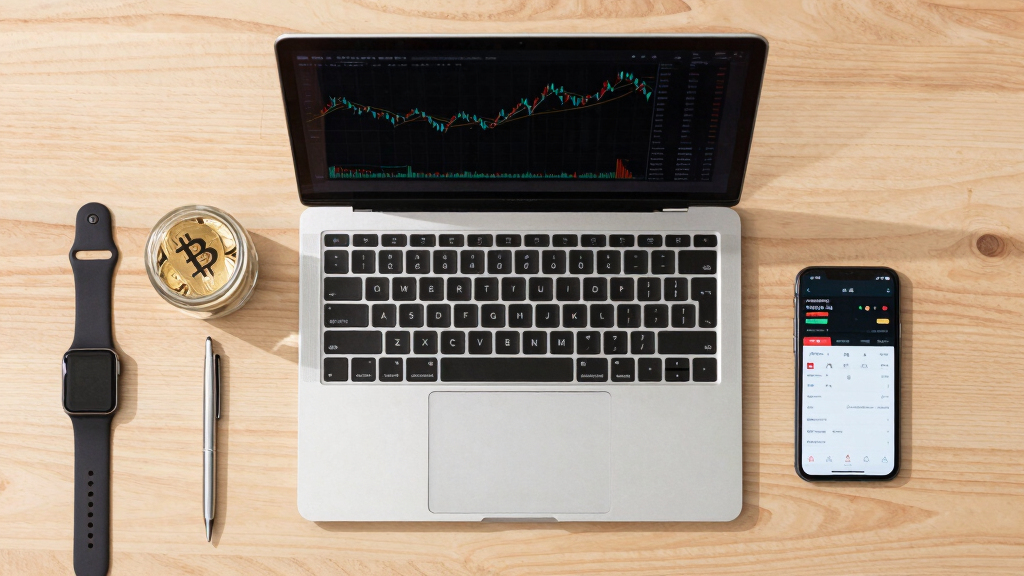
A week three comparison of Kronos, a foundation model, against traditional Brownian motion for short-term Bitcoin predictions found no statistically significant advantage. The tests used historical trade data and out-of-sample validation, showing Brownian motion remains competitive.
Recent testing shows that Kronos, a large open-source foundation model, does not outperform the traditional Brownian motion model in predicting five-minute Bitcoin price movements, according to new analysis based on historical trade data.
The analysis involved 497 paired trades recorded by the Polybot trading system, with models predicting whether Bitcoin would close above its open price within five minutes. Kronos was run on historical market data, with its predictions compared to a Brownian baseline and market-implied probabilities. Results showed that Kronos’s predictive accuracy, measured by Brier score and log-loss, was statistically indistinguishable from Brownian motion in out-of-sample tests, with no clear advantage. Specifically, on the full sample, Brownian slightly outperformed Kronos, and on the out-of-sample half, the difference was negligible, within the margin of noise. The methodology was transparent and reproducible, with the entire process executed in roughly 11 minutes on a standard Mac system.
Why It Matters
This matters because it challenges the assumption that modern, learned models necessarily outperform traditional mathematical models like Brownian motion in short-term crypto trading. The findings suggest that, at least in this context, advanced models may not provide a reliable edge over simpler, well-understood baselines, emphasizing the importance of rigorous testing before deploying AI-based trading strategies.
Bitcoin five-minute prediction tools
As an affiliate, we earn on qualifying purchases.
As an affiliate, we earn on qualifying purchases.
Background
For two weeks, the author ran Polybot, a simulated trading bot, against Polymarket’s five-minute Up/Down markets, finding that only one of over 21 strategy variants showed any genuine edge. That led to testing whether a foundation model like Kronos could improve predictions. Kronos, trained on millions of candlesticks from global exchanges, is designed for research rather than live trading. Previous research indicated that many perceived edges in trading algorithms are often artifacts that do not hold up in new data. This latest test aimed to evaluate whether Kronos could provide a meaningful prediction advantage over the classical Brownian motion model, which assumes independent, normally-distributed log-returns—a mathematical abstraction dating back over a century.
“Kronos does not outperform Brownian motion in predicting five-minute BTC movements in out-of-sample tests, with differences falling within the margin of statistical noise.”
— Thorsten Meyer AI
“Kronos is explicitly a research model, not a trading system, and its predictions should be interpreted within that context.”
— Research team behind Kronos
cryptocurrency trading analysis software
As an affiliate, we earn on qualifying purchases.
As an affiliate, we earn on qualifying purchases.
What Remains Unclear
It remains unclear whether different configurations, training data, or real-time deployment might yield different results. The current tests are limited to offline, historical data, and the performance in live trading environments may differ. Additionally, the models’ capabilities to adapt to rapid market shifts are still untested in this context.
As an affiliate, we earn on qualifying purchases.
What’s Next
Further research is expected to explore whether larger or differently trained models can outperform Brownian motion in short-term predictions. Continuous testing with live data and different market conditions will help determine if foundation models can eventually offer a genuine trading edge. Updates on model improvements and real-time testing are anticipated in upcoming weeks.
Brownian motion trading simulation
As an affiliate, we earn on qualifying purchases.
As an affiliate, we earn on qualifying purchases.
Key Questions
Does Kronos currently offer a trading advantage over traditional models?
Based on recent offline tests, Kronos does not demonstrate a statistically significant advantage over Brownian motion in predicting five-minute BTC movements.
Why was Brownian motion used as a baseline?
Brownian motion is a well-understood, classical model that assumes independent, normally-distributed log-returns, serving as a standard benchmark for short-term financial predictions.
Can foundation models like Kronos be improved for trading?
Potentially, but current results suggest that more research and development are needed before these models can reliably outperform traditional approaches in live trading.
What are the implications for crypto traders?
Traders should be cautious about assuming that advanced AI models will automatically yield better predictions; rigorous testing and validation remain essential.
Source: Thorsten Meyer AI
Halloween Picks
halloween
As an affiliate, we earn on qualifying purchases.