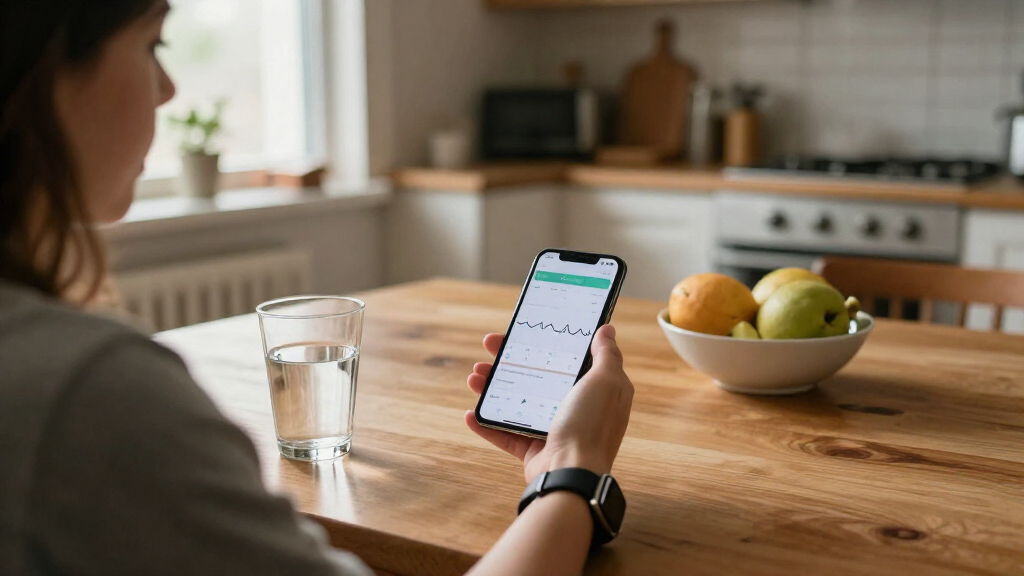

🔍 Read the full analysis: What Will Apple’s New Study Reveal About AI And Health Questions? on ThorstenMeyerAI.com

Get business pricing on tech for your team
- Business-only prices and quantity discounts
- Tax-exempt purchasing
- Multiple users, one account, clear invoices
TL;DR
Apple announced a U.S. research study on Nov. 15 to examine how people interact with conversational AI for health questions. Up to 200,000 adults can take part using an eligible iPhone; Apple says participation is voluntary and study data will not train AI models.
Apple announced the Apple Health AI Usage Study on Nov. 15, a virtual U.S. research project that will examine how people use conversational AI for health questions and whether they understand its answers or act on them. The study will use an iPhone app developed with OpenEvidence, and Apple says it is intended to inform the responsible design of health AI rather than serve as a new Siri feature.
The study is open to up to 200,000 U.S. residents aged 21 and older who have an Apple Intelligence-enabled iPhone—an iPhone 15 Pro or later—running iOS 26 or later. Participants can use the app to ask everyday health questions, explore medical information in more accessible language and view linked peer-reviewed clinical citations, Apple said. The App Store description also lists using personal Health data for context, preparing for a medical visit, and creating exercise or meal plans as possible uses.
Apple says the research will examine trust, response quality, comprehension and everyday health actions. It will also explore whether integrating optional Health app data, such as resting heart rate, sleep information or lab results, changes how relevant or understandable answers seem, and whether the tool helps people prepare for appointments with their own doctors. Apple says sharing such data is optional.
The answers are provided in collaboration with OpenEvidence, which Apple describes as a clinical AI platform used by healthcare professionals. Apple says the platform draws on established medical sources and that responses include citations. Apple cautions that the study app is not meant to diagnose or treat conditions or replace advice from medical professionals. It also says study data will not be used to train AI models. CNET and MacRumors reported that OpenEvidence deletes question-and-response data within 24 hours; that detail was not included in the supplied description of Apple’s announcement.
Apple Health AI Usage Study · Nov 15, 2026
How a health question travels through Apple’s study app
From your iPhone to a cited answer and back, as Apple and reporting on its press briefing describe it.
The path of one question (schematic)
Six steps in the study app
- You askType an everyday health question; sharing Health data is optionalApple
- On the iPhoneTools remove details that could identify youas reported by CNET
- Study cloudA contractor’s environment delinks the question from your participant ID and screens it againas reported by CNET
- OpenEvidenceWrites the answer from clinical sources, with linked peer-reviewed citationsApple
- GuardrailCertain concerning questions: a suggestion to follow up with a provider or other resourcesApple; no live monitoring, CNET reports
- You rateRate each answer, plus a baseline survey and monthly surveysas reported by CNET
Source: Apple Newsroom, “Apple launches research study to explore the use of AI for health”, Nov 15, 2026; CNET and MacRumors reporting on Apple’s press briefing, Nov 15–16, 2026. Schematic, not the real app screen.
Graphic: Powered by Thorsten Meyer AI
Measuring What Users Do With Answers
The study targets a gap in evidence about consumer health AI: not only whether a system produces an answer, but whether people understand it, trust it and change what they do afterward. Those outcomes matter because health information can shape decisions about symptoms, appointments and treatment, even when a tool is not a medical professional.
A KFF poll published in March 2026 found that 32% of U.S. adults said they had used AI chatbots for health information in the prior year. That figure describes respondents’ reported use during that period; it does not establish how often they rely on chatbots or whether the answers affected their care. Apple’s study could add information about those interactions, though its findings will reflect the people who enroll and the study’s methods.
For Apple and other technology companies, the results may help identify when an answer is confusing, unhelpful or likely to be misunderstood. The research could also shed light on whether personal health data or appointment preparation changes users’ experience. Those are questions the study is designed to investigate, not outcomes Apple has already established.
Products Worth Considering

LG 27GR83Q-B 27-inch Ultragear QHD IPS Gaming Monitor

LG 27GS60QC-B Ultragear 27-inch Curved Gaming Monitor (QHD, 180Hz, 1ms, 1000R)

Bose QuietComfort Ultra Earbuds (2nd Gen), Wireless Noise-Cancelling Earbuds, Black
As an affiliate, we earn on qualifying purchases.
From Chatbots to Health Research
Apple framed the project as a research study with a dedicated app, not the launch of a general-purpose health chatbot feature. Its announcement says consumer health technologies powered by large language models can sometimes provide responses that are incomplete or unclear, and presents research as a way to better understand how people engage with such tools.
The study’s clinical AI partner, OpenEvidence, says on its own website that it has content agreements with medical publishers and organizations including NEJM, JAMA, Nature, NCCN and Cochrane. Apple says answers in the study will include linked, peer-reviewed citations. Citations can show where information came from, but their presence alone does not establish that every answer is accurate or suitable for an individual’s circumstances.
Apple’s announcement also quoted UCSF physician Robert M. Wachter, who said patients and clinicians are turning to AI while the tools they use are being built and tested in separate settings. The study’s focus on people’s use of health AI outside the clinic reflects that gap, while its stated goal remains to gather evidence rather than provide clinical care.
“Conducting a dedicated research study is the most thoughtful way to understand how people engage with, comprehend, and evaluate health AI in everyday life.”
— Sumbul Desai, Apple’s vice president of Health and Fitness
Study Duration and Results Remain Open
Apple’s announcement does not state how long the overall study will run or provide a timetable for results. CNET reported that each participant may be asked to take part for up to 12 months, while TechCrunch reported that Apple aims to run the study for more than 12 months. Those descriptions may refer to different timeframes; Apple’s announcement, as described in the source material, does not resolve the difference.
Further details about the study’s surveys and answer-rating process come from press-briefing coverage, not Apple’s announcement. CNET reported that participants will rate responses and complete surveys, including monthly surveys and ones related to doctor visits; The Verge reported that evaluation criteria include accuracy, detail and relevance. Apple has not yet provided findings, and the source material does not specify how results will be analyzed or published.
It is also unknown whether the study’s participants will represent the broader U.S. population of people who ask AI health questions. Eligibility requires a recent compatible iPhone, and participation is voluntary. The study can measure the experiences of those who enroll, but no results are available yet on whether users trust the answers, understand them or make different health decisions.
Enrollment and Findings Ahead
Eligible adults can join through Apple’s study app, subject to the 200,000-person limit and the listed age, location, device and software requirements. Apple has not announced a date for enrollment to close or a date when results will be released.
The next evidence to watch for is information about participation, the study’s duration and how Apple will report its findings. Until results are published, the project should be understood as an effort to study consumer interactions with health AI—not proof that the tools improve care or that cited answers are appropriate for every user.
Key Questions
What is Apple’s Health AI Usage Study?
It is a virtual U.S. research study announced Nov. 15, 2026, that uses an iPhone app to examine how people interact with conversational AI for health questions.
Who can participate?
Apple says eligibility is limited to U.S. residents aged 21 or older with an Apple Intelligence-enabled iPhone, such as an iPhone 15 Pro or later, running iOS 26 or later. The study is open to up to 200,000 people.
Will participants have to share Health app data?
No. Apple says sharing Health app information, including data such as sleep or resting heart rate, is optional. The study will explore whether such information affects the relevance or understanding of answers.
Can the app diagnose a health condition?
No. Apple says the study app is not intended to diagnose or treat a condition or replace advice from medical professionals.
When will Apple publish the study’s results?
Apple has not announced a results date. The study’s duration and publication schedule are not clear from the announcement; reports about participation length have cited differing timeframes.
Source: ThorstenMeyerAI.com