TL;DR
Labour MP Jess Asato is suing SpaceX Super Intelligence LLC over sexualised fake images generated with Grok, alleging misuse of private information and data protection breaches. The company denies liability, arguing that the images were implausible and that users supplied the prompts. The High Court has not decided the case.
Asato filed her claim in England’s High Court on June 3, 2026, seeking a declaration, damages and an order requiring the company to put in place measures to prevent Grok from making manipulated images of her. Her lawyers at AWO say the system’s design and training enabled the generation of sexualised content. Those are allegations in the claim, not findings by a court.

Get business pricing on tech for your team
- Business-only prices and quantity discounts
- Tax-exempt purchasing
- Multiple users, one account, clear invoices
Reuters reported on November 19 that the company’s written defence, dated October 29, denies liability. SpaceXSI says it removed images that breached its terms. It argues that other images would be understood by reasonable viewers as AI-generated, fictitious and implausible, rather than realistic, and says it did not determine the content of the users’ prompts. The company also disputes Asato’s entitlement to the order she seeks.
Asato’s lawyers challenge the company’s position. In her response, she said: “SpaceX SI wants to have it both ways.” The dispute therefore concerns both the harm alleged and whether responsibility should fall on the person prompting the tool, the company operating it, or the business that designed it.
Who Bears Responsibility for AI Images
The case puts a difficult question before a UK court: when an AI system generates sexualised images of an identifiable person, can its maker be liable for the system’s design and operation, or does responsibility rest with the users who requested the images? The answer could shape how people targeted by image-generation tools seek remedies and how companies assess their safeguards.
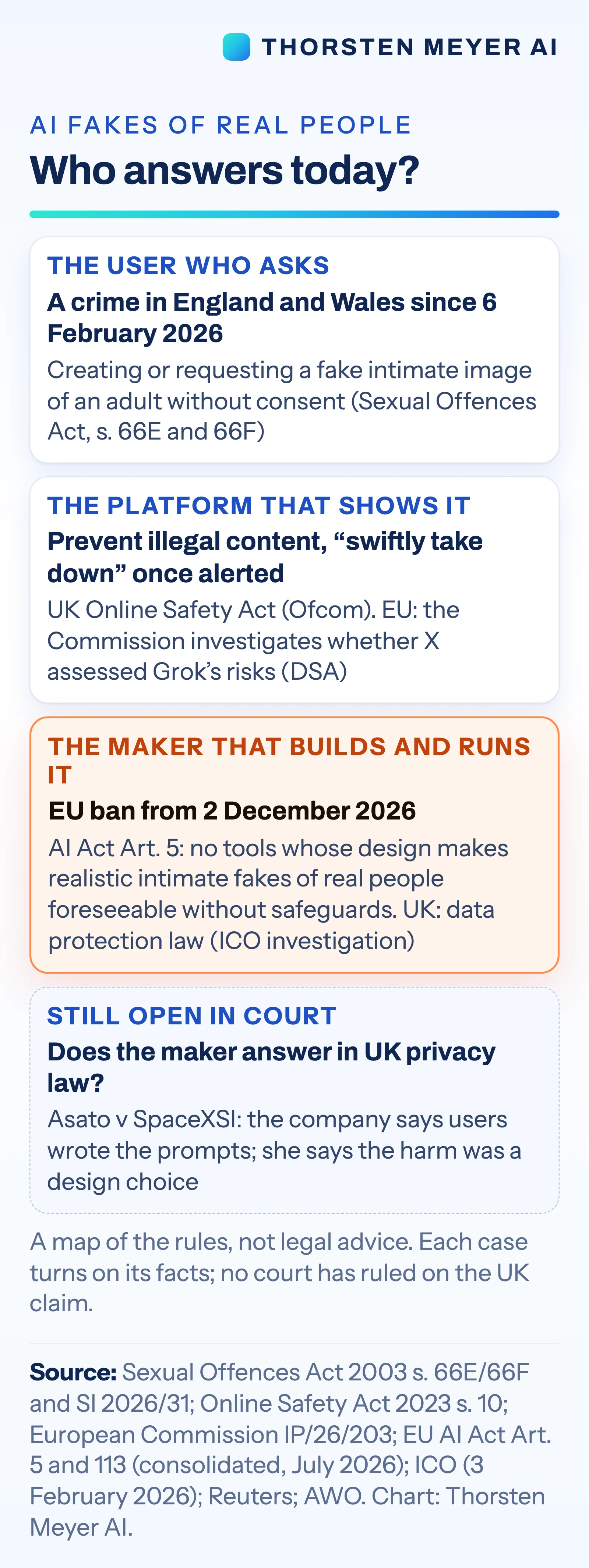
The question has practical consequences for businesses offering generative image features. Their system design, safeguards and response to reports may become relevant evidence in disputes, though the Asato case has not established a legal standard. For users, UK law has separately made it a crime, since February 6, 2026, to create or request a fake intimate image of an adult without consent, according to the source material.
Regulatory investigations and court action elsewhere add pressure, but they are separate from the High Court claim. A decision in Asato’s case could clarify how privacy and data protection arguments apply to an AI image tool; the outcome and its wider reach remain uncertain.
Products Worth Considering

DJI Mini 3 Drone with DJI RC Controller

LG UltraGear 34-Inch Curved QHD Gaming Monitor, 160Hz, FreeSync Premium

Bose QuietComfort Ultra Headphones (2nd Gen), Wireless Noise-Cancelling Over-Ear Headphones, Driftwood Sand
As an affiliate, we earn on qualifying purchases.
From Image Reports to a High Court Claim
AWO says Grok was used to manipulate images of Asato in early January 2026. On January 7, the UK Information Commissioner’s Office (ICO) said it had contacted X and xAI to seek information about measures to comply with UK data protection law. The ICO opened formal investigations into X and X.AI LLC on February 3, according to the source material.
The European Commission opened a Digital Services Act investigation of X on January 26. On March 26, an Amsterdam court ordered Grok and X to stop undressing images, with a penalty of €100,000 per day, the source material reports. These are distinct regulatory and court actions; none determines the outcome of Asato’s UK claim.
The source material says the EU AI Act’s ban on certain systems that generate realistic intimate images of identifiable people without consent takes effect on December 2, 2026, where the outcome is foreseeable from the system’s design and safeguards are missing. That rule is due to apply after the defence was reported and is not a ruling in this case.
“The images would be understood by reasonable and sensible persons viewing that content to be AI-generated, fictitious and implausible … rather than as realistic images.”
— SpaceX Super Intelligence LLC, as quoted in its defence and reported by Reuters
Questions the Court Has Yet to Resolve
No ruling has been made on Asato’s allegations or the company’s defence. The court has not determined whether the images breached privacy or data protection law, whether Grok’s design contributed to the alleged harm, or whether SpaceXSI must take the measures Asato requests.
The source material does not give a hearing date or a timetable for a judgment. It also does not establish how many images are at issue in the claim, what evidence each side will present about the system’s safeguards, or whether the company’s arguments will succeed. The separate UK and EU regulatory inquiries are ongoing in the account provided, with their outcomes not stated.
The Claim Moves Through Court
The next step is for the High Court to consider the claim and the company’s defence under the applicable privacy and data protection rules. The court process and any further filings or hearings may clarify which arguments are disputed and what evidence the parties rely on. No next court date is provided in the source material.
Separately, the ICO and European Commission investigations may produce findings or other actions, while the EU AI Act provision cited in the source is scheduled to apply from December 2, 2026. Those developments could add regulatory context, but they will not by themselves decide whether SpaceXSI is liable to Asato.
Key Questions
Who is suing Grok’s maker?
Jess Asato, a Labour member of the UK Parliament, filed a High Court claim on June 3, 2026, over sexualised fake images generated using Grok.
What does Asato allege?
Her claim alleges misuse of private information and data protection breaches. Her lawyers say the system’s design and training enabled sexualised content. The court has not decided whether those allegations are established.
How does SpaceXSI respond?
The company denies liability. According to Reuters, it argues that the images would be recognised as fictitious and implausible, says users supplied the prompts, and disputes Asato’s entitlement to the order she seeks.
Has the court decided who is responsible?
No. The High Court has not ruled on the claim. The case’s central questions about the company’s role, user prompts and the alleged privacy and data protection harms remain unresolved.
What other actions involving Grok are mentioned?
The source material says the UK ICO and European Commission opened investigations and that an Amsterdam court ordered limits on Grok and X. These are separate proceedings and do not decide Asato’s UK claim.
Source: Thorsten Meyer AI