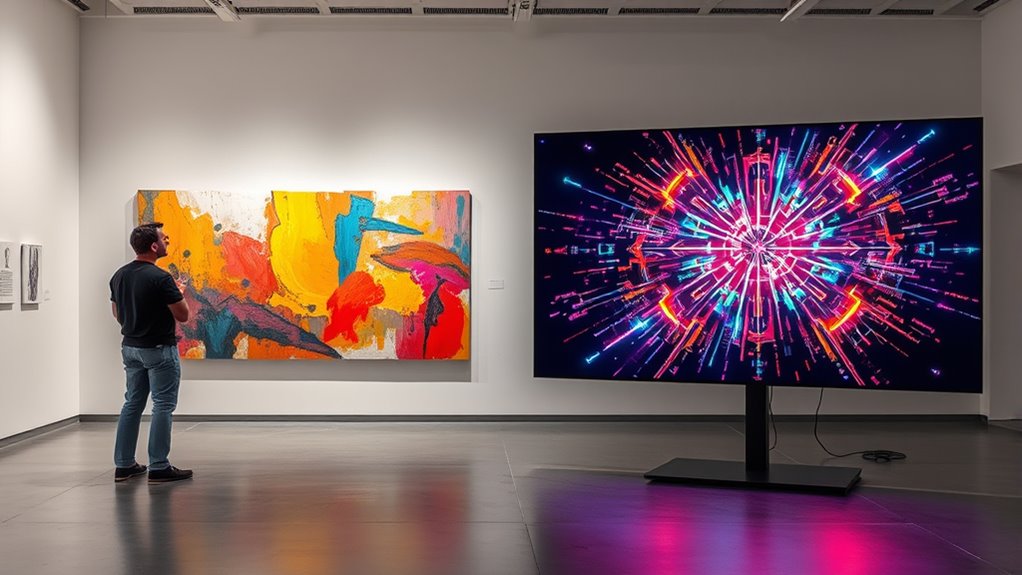

Artists face legal and ethical challenges as AI algorithms generate art without clear human authorship, which current laws prioritise. Courts generally exclude pure AI works from copyright protection, forcing creators to involve humans for rights and revenue. Training AI on copyrighted material raises concerns around infringement and cultural exploitation. As policymakers debate rules and international laws differ, the future of this battle depends on balancing innovation with protecting artists’ rights. If you keep exploring, you’ll uncover how these issues evolve globally.
Key Takeaways
- U.S. law requires human authorship for copyright; AI-only works are generally ineligible.
- Artists’ legal rights are challenged by AI models trained on copyrighted materials without explicit consent.
- The debate centers on whether AI-generated art can be protected or is considered infringement.
- Transparency and attribution in AI training data are critical issues impacting artists’ rights.
- International legal differences complicate enforcement and protections for artists against AI-generated content.

Media, Art, & Money – Protecting Your Livelihood In The Creative Industries
As an affiliate, we earn on qualifying purchases.
As an affiliate, we earn on qualifying purchases.
The Current Legal Landscape for AI-Generated Works

The legal landscape for AI-generated works is firmly rooted in the principle that only human authors can hold copyright protection. U.S. copyright law explicitly requires a human element for an work to qualify. Recent court rulings, including a 2025 decision by the U.S. Court of Appeals, affirm that works created solely by AI lack copyright eligibility because they lack direct human authorship. While works with significant human input may qualify, pure AI-generated content does not. Only natural persons—people—can be recognized as authors under current law. Ongoing legal challenges, such as Dr. Stephen Thaler’s Supreme Court petition, aim to change this standard, but no legal precedent yet allows nonhuman entities to hold copyrights. This strict stance shapes how AI art is legally understood today. Additionally, the definition of authorship is closely linked to content creation practices and the role of human intervention in the artistic process.
![Stylus Pen for touch screens [4 Pack] with Pink 3-Layer Palm Rejection Drawing Gloves [2 Pack]](https://m.media-amazon.com/images/I/51wnMQ+jlFL._SL500_.jpg "Artists Vs Algorithms: the Battle Over Ai-Generated Art and Copyright 5")
Stylus Pen for touch screens [4 Pack] with Pink 3-Layer Palm Rejection Drawing Gloves [2 Pack]
- Universal Stylus Compatibility: Works with iPad, iPhone, Android devices
- Dual-Ended Tips: Disk and fiber tips for different feels
- Metal Body Design: Non-slip, durable construction
As an affiliate, we earn on qualifying purchases.
As an affiliate, we earn on qualifying purchases.

You need to understand that current copyright law requires human creativity to qualify for protection. Without clear legal definitions of authorship, AI-generated works often fall outside these protections. This focus on human involvement directly impacts which creations can be legally recognized and protected. Implementing quality assurance practices can help clarify the role of human input in creative processes. Additionally, the absence of standardized device compatibility standards complicates the integration of AI-generated art into existing legal frameworks.
Necessity of Human Creativity
Because copyright law hinges on the idea of human creativity, the requirement for human authorship remains a fundamental principle that AI-generated works cannot bypass. This means that only works with meaningful human input qualify for copyright protection. Without human involvement, AI creations lack legal recognition, regardless of their complexity or originality. To clarify this, consider the following:
| Human Input | AI Output | Copyright Status |
|---|---|---|
| Sketching | Final art | Protected |
| Writing | Edited text | Protected |
| Algorithm design | Generated image | Not protected |
If you want your work to be protected, your creative contribution must be evident. Purely AI-generated content, with no human input, doesn’t meet the legal standard of authorship. In fact, the distinction between human and AI-generated works is central to copyright law and its application. Ensuring human creativity and input remains essential for legal recognition of creative works.
Legal Definition of Authorship
Human authorship remains the fundamental requirement for copyright protection, as current law explicitly recognizes natural persons as the sole creators eligible for legal rights. This means that only individuals, not machines or AI programs, can be considered authors under U.S. copyright law. The law emphasizes human originality, creativity, and intent as essential components of authorship. Courts have consistently denied copyright for works created solely by AI, asserting that genuine authorship must originate from a person’s direct input or control. This legal definition forms the backbone of copyright eligibility, ensuring that rights are reserved for human creators. As a result, AI-generated works lacking human involvement cannot be granted copyright protection, reinforcing the central role of human authorship in the legal system.
Impact on Copyright Eligibility
The strict adherence to the human authorship requirement directly shapes what qualifies for copyright protection in the United States. If a work lacks meaningful human input, it generally can’t be protected. This leaves AI-generated art outside the scope of copyright, as it’s produced without direct human creation. To understand this impact, consider the following:
| Human Involvement | Copyright Eligibility |
|---|---|
| Significant | Likely protected under current law |
| Minimal | May be contested, but generally excluded |
| None | Not eligible for copyright |
| Unknown | Pending legal clarification |
This framework emphasizes that human creativity remains essential. Without it, AI art can’t secure legal protection, affecting creators and industries relying on copyright. Additionally, ongoing regulatory developments may influence future rulings on AI-authored works. For example, the evolving landscape of copyright law continues to grapple with defining the boundaries of human versus machine creation. Furthermore, understanding personality traits related to creativity can offer insights into the human element involved in artistic expression and authorship. Recognizing the importance of home improvement principles can also be beneficial for artists seeking to organize their creative spaces efficiently and foster inspiration. A clear understanding of legal precedents is crucial as courts continue to interpret the scope of human authorship in digital art.

How To Legally Protect AI ART: A Step-byStep Guide to Ownership and Security
As an affiliate, we earn on qualifying purchases.
As an affiliate, we earn on qualifying purchases.
The Economic Impact of AI Art on Creative Industries
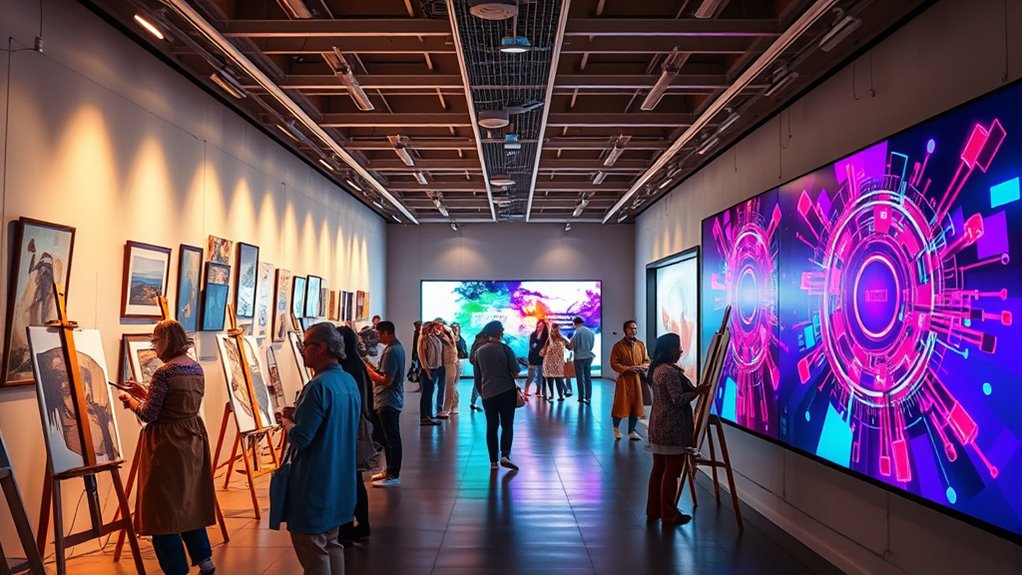
AI-generated art is transforming creative industries by profoundly impacting their economic landscape. The industry, valued at around $257 million in 2022, is projected to surpass $900 million by 2030, reflecting rapid growth. However, legal uncertainties and copyright restrictions limit fully AI-driven projects, forcing creators to showcase significant human input to protect their work and secure licensing. This shift influences how artists, musicians, and writers monetize their creations, often requiring more active involvement. Major institutions now demand human contribution for recognition, which may dampen enthusiasm for purely AI-generated content. Conversely, businesses investing in AI tools face challenges due to unclear copyright protections and potential infringement issues, impacting innovation and investment. Overall, AI art reshapes the economic dynamics, balancing technological advancement with legal and ethical considerations. Additionally, the use of aesthetic wall organization solutions can help artists and creators present their work more effectively, emphasizing the importance of presentation in the digital age. Recognizing the copyright implications of AI-generated content is essential for shaping future policies and protecting creators’ rights. As the technology advances, understanding the copyright restrictions associated with AI art becomes increasingly crucial for ensuring fair compensation and legal compliance. Furthermore, the evolving nature of projector technology underscores the importance of staying informed about innovations that can enhance creative displays and presentations.

Avid Pro Tools Ultimate – Music Production Software – Perpetual License
- Download Card Included: Includes download instructions and serial key
- Track Presets for Efficiency: Save and recall effects and settings easily
- Enhanced MIDI Control: Finesse notes, transpose, and build chords
As an affiliate, we earn on qualifying purchases.
As an affiliate, we earn on qualifying purchases.
Challenges Surrounding Training Data and Copyright Infringement
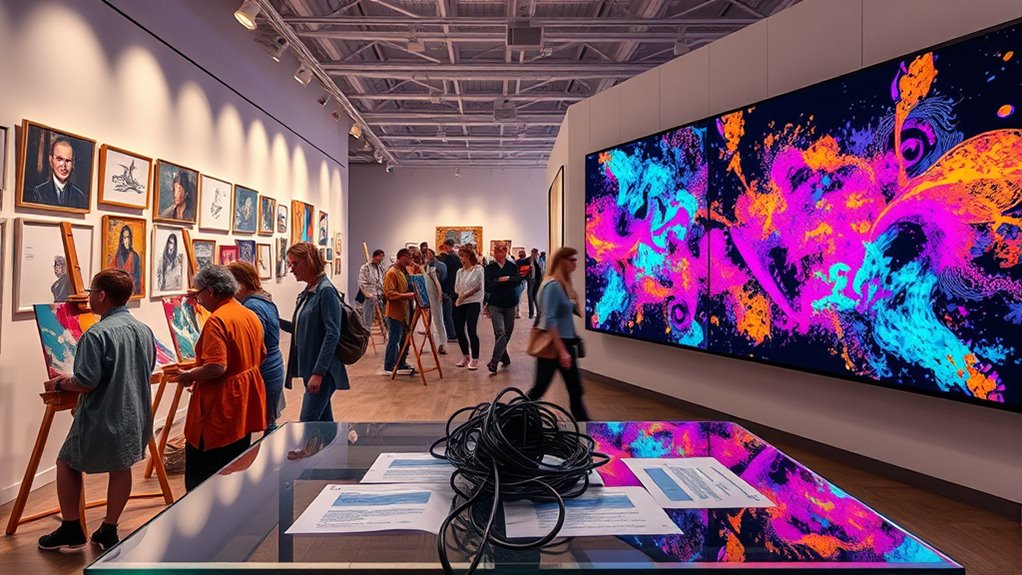
Training data for generative AI models often consists of millions of copyrighted images, texts, and sounds, raising significant legal and ethical concerns. You might wonder if using these works without permission infringes on creators’ rights. Courts are divided on whether training AI with protected content constitutes fair use or outright infringement. Some legal cases argue that training copies are reproductions, infringing on original rights. The lack of transparency in datasets makes it difficult to identify which works are used and who owns them. This ambiguity complicates enforcement and attribution, leaving creators uncertain about their rights. As AI models learn from vast, protected works, the risk of copyright infringement increases, fueling ongoing debates about legality, ethics, and the need for clearer regulations. Additionally, understanding the subconscious power during sleep and how it influences manifesting can shed light on how creators might protect their work through vibrational alignment and awareness.
Regulatory Developments and Policy Debates

Regulatory developments surrounding AI and copyright are advancing rapidly as policymakers seek to address the legal uncertainties created by new technologies. The U.S. Copyright Office’s January 2025 policy report emphasizes the importance of human authorship, reinforcing existing standards. In response, over 10,000 public comments highlight concerns from artists, tech companies, and legal experts. Policymakers are focusing on three key areas:
Regulatory focus on human authorship and AI transparency aims to balance innovation with creators’ rights.
- Requiring transparency and disclosure of AI involvement in creative works.
- Clarifying training data rights and addressing potential infringement issues.
- Developing balanced regulations that promote innovation while safeguarding human creators.
Current laws don’t mandate AI disclosure, complicating enforcement. Ongoing debates aim to strike a balance between fostering technological progress and protecting artists’ rights, but legal clarity remains elusive. Understanding toilet disposal practices in the context of environmental impact and proper maintenance can inform broader discussions about responsible AI development and regulation, especially considering how dog names and breed-specific naming conventions reflect cultural nuances that may influence how AI-generated content is perceived and regulated. Additionally, considering copyright law adaptations can help shape effective policies that address these emerging challenges.
Furthermore, integrating insights from creative practice principles, such as embracing failure and fostering innovation within constraints, can guide the development of fair and forward-thinking legal frameworks.
Ethical Questions and Cultural Concerns

You might wonder if AI art risks cultural appropriation by using protected works without permission, raising ethical questions about respect and ownership. At the same time, the challenge to artistic originality questions whether AI can truly create or simply remix existing ideas. As you consider these issues, reflect on how consent and fair compensation play critical roles in maintaining artistic integrity and cultural fairness. Additionally, ongoing debates about AI’s trustworthiness highlight the importance of establishing robust safety measures to prevent misuse and uphold ethical standards in AI-generated content. Implementing standardized sound recording techniques and equipment can help ensure that AI tools are used responsibly, preserving the authenticity and integrity of creative works. Furthermore, incorporating hackathons, especially virtual or internal company events, can serve as innovative platforms for developing ethical frameworks and safety protocols for AI art.
Cultural Appropriation Risks
As AI-generated art becomes more prevalent, concerns about cultural appropriation grow sharper. You might not realize that AI can unintentionally reproduce cultural symbols, styles, or artifacts without context or consent. This raises ethical questions, such as:
- How can AI accurately represent diverse cultures without perpetuating stereotypes or inaccuracies?
- What responsibilities do developers have to prevent cultural exploitation in training datasets?
- How can creators ensure that AI-generated works respect cultural origins and avoid misuse?
Without transparency about training data, there’s a risk of commodifying or misrepresenting cultural elements. You need to contemplate whether AI art respects the cultural significance of the sources it draws from or if it risks appropriating and diluting meaningful traditions.
Artistic Originality Challenges
Artificial intelligence challenges traditional notions of artistic originality by generating works that often resemble existing styles or themes, raising ethical questions about authenticity and value. You might wonder if AI art is truly creative or just a copycat remix of human works. Since AI models learn from vast datasets of copyrighted images, texts, and sounds, their outputs often mirror existing art, blurring the line between inspiration and imitation. This raises concerns about cultural appropriation and the potential devaluation of original human creativity. You may question whether AI can produce genuinely novel ideas or if it’s merely recombining past works. As AI continues to evolve, so does the debate over what constitutes authentic art and whether machine-generated pieces hold the same cultural and artistic significance as human-made creations.
Consent and Compensation
The debate over AI-generated art extends beyond questions of originality to include pressing ethical issues surrounding consent and compensation. You must consider that many artists and creators haven’t granted permission for their works to be used in training AI models, raising concerns about unauthorized sampling. Without clear consent, your work’s use feels like exploitation. Additionally, compensation remains uncertain; creators often see no royalties when AI models replicate their styles or works.
- Artists deserve recognition and fair pay when their work influences AI outputs.
- Training data should involve explicit consent from original creators.
- New compensation models are needed to ensure artists benefit from AI’s commercial success.
The Future of Copyright Law and AI Creativity
Legal frameworks are currently struggling to keep pace with rapid advances in AI technology, leaving the future of copyright protection for AI-generated art uncertain. You face a landscape where works created solely by AI are ineligible for copyright under U.S. law due to the human authorship requirement. Court decisions affirm that only natural persons can hold copyrights, but ongoing challenges, like Dr. Thaler’s Supreme Court petition, threaten to change this. Policymakers are considering new rules for transparency and attribution, yet laws remain unchanged. As AI continues to evolve, legal systems must balance fostering innovation with protecting human creators’ rights. This evolving legal environment will shape how AI-generated art is protected, used, and valued in the coming years.
International Perspectives and Legal Harmonization

As countries develop their own rules for AI-generated content, discrepancies in copyright laws create challenges for international creators and companies. These differences can hinder cross-border collaboration, complicate licensing agreements, and increase legal risks. To address these issues, you should consider:
- Harmonization efforts—international organizations are working to establish common standards for AI and copyright, but progress remains slow.
- Legal divergence—some jurisdictions, like the U.S., emphasize human authorship, while others may adopt more flexible approaches, creating uncertainty.
- Enforcement challenges—varying laws make it difficult to enforce rights globally, especially concerning training data and attribution.
Navigating these complexities requires understanding regional regulations and anticipating future shifts toward broader international cooperation, ensuring your creative work remains protected worldwide.
Navigating the Balance Between Innovation and Rights Protection
Balancing the rapid pace of AI innovation with the need to safeguard human creators’ rights presents a complex challenge. You must find ways to encourage technological progress without undermining artists’ incentives or eroding originality. To achieve this, consider transparency, fair use policies, and clear attribution standards. The table below highlights key aspects to navigate this balance:
| Innovation | Rights Protection | Shared Goal |
|---|---|---|
| Promote AI research | Enforce copyright laws | Foster creative growth |
| Encourage transparency | Respect original works | Support sustainable industry |
| Develop fair policies | Ensure artists’ rights | Cultivate trust |
Frequently Asked Questions
Can Ai-Generated Art Ever Qualify for Copyright Protection Under Future Legal Changes?
No, AI-generated art likely won’t qualify for copyright protection, at least under current laws. You’d need to demonstrate meaningful human contribution, which is still a requirement. However, future legal changes might challenge this, especially if courts or policymakers decide to relax the human authorship rule. Until then, you’ll need to make certain your work involves significant human input to secure copyright, and keep an eye on evolving regulations that could shift this landscape.
How Do Courts Determine the Extent of Human Contribution Needed for Copyright Eligibility?
You should know that courts look for meaningful human involvement in creating a work to determine copyright eligibility. They consider whether a person contributed original, creative input that shaped the final piece. If you use AI tools, your contribution must be substantial and creative, not just minimal adjustments. Courts prioritize human authorship, so your active, creative role is key to securing copyright protection.
What Are the Legal Implications of Using Copyrighted Works to Train AI Models?
When you use copyrighted works to train AI models, you risk infringing on original creators’ rights. Courts are still debating whether such use qualifies as fair use, but many view it as potential infringement, especially if done without permission. You should consider transparency, seek licenses when possible, and stay informed about evolving legal standards to avoid legal challenges or liability for unauthorized use of protected content.
Are There Any Proposed Legal Reforms to Address Ai’s Role in Creative Authorship?
You should know that proposed legal reforms aim to clarify AI’s role in creative authorship. Some suggest updating copyright laws to recognize AI-assisted works with significant human input, while others explore new frameworks like AI-specific rights or licensing systems. These reforms seek to balance innovation with protecting human creators’ rights, addressing current legal gaps, and ensuring fair attribution and compensation in AI-generated art.
How Do Different Countries’ Laws Compare Regarding Ai-Created Works and Copyright Rights?
You’ll find that countries vary widely in their laws on AI-created works. The U.S. emphasizes human authorship, denying copyright to purely AI-generated content. In contrast, the European Union is exploring new regulations to address AI’s role, considering more flexible approaches. Some nations are still developing policies, and others may adopt differing standards, creating a complex global landscape. This inconsistency impacts creators, companies, and the future of AI-driven art worldwide.
Conclusion
As you navigate this evolving landscape, remember that over 60% of artists feel their work is threatened by AI-generated art. Balancing innovation with protecting human creativity is essential. Embrace the debates and policies shaping the future, knowing that your voice can influence fair regulations. By staying informed and engaged, you help guarantee that technology enhances, rather than diminishes, the value of authentic artistic expression.